
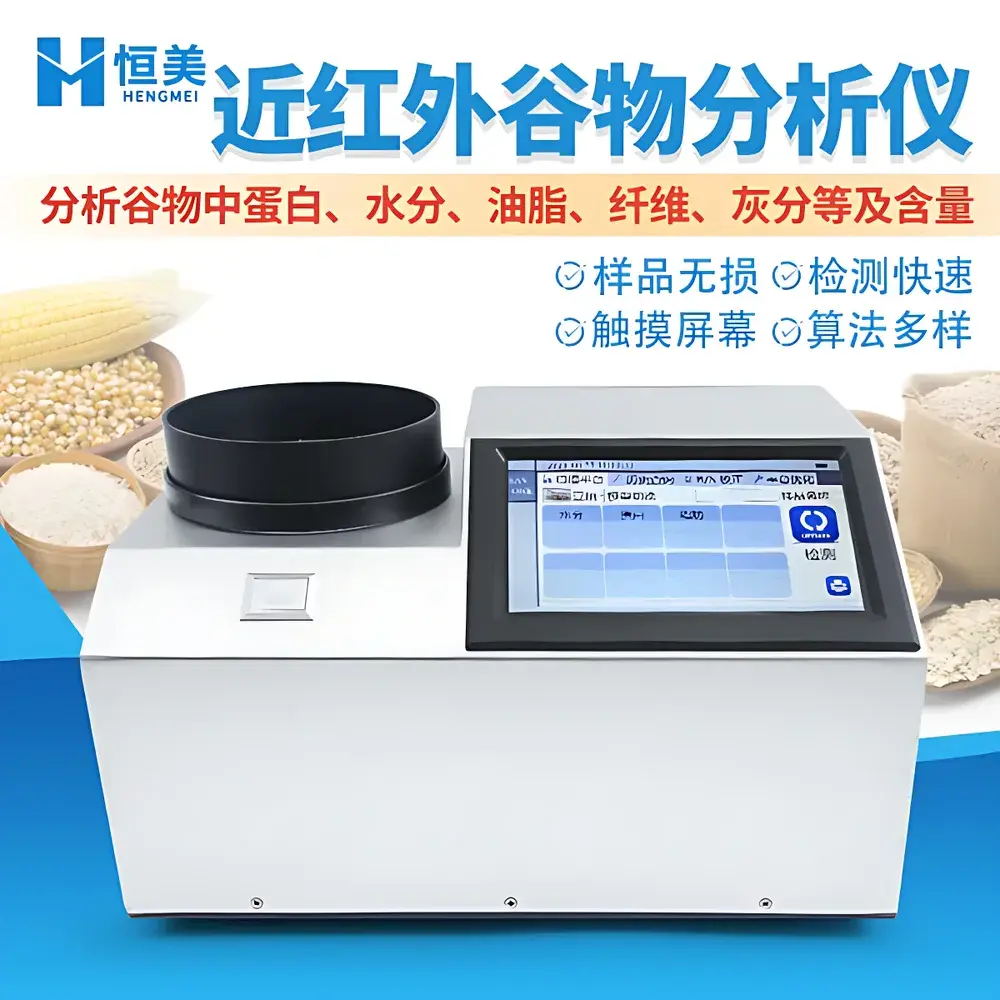
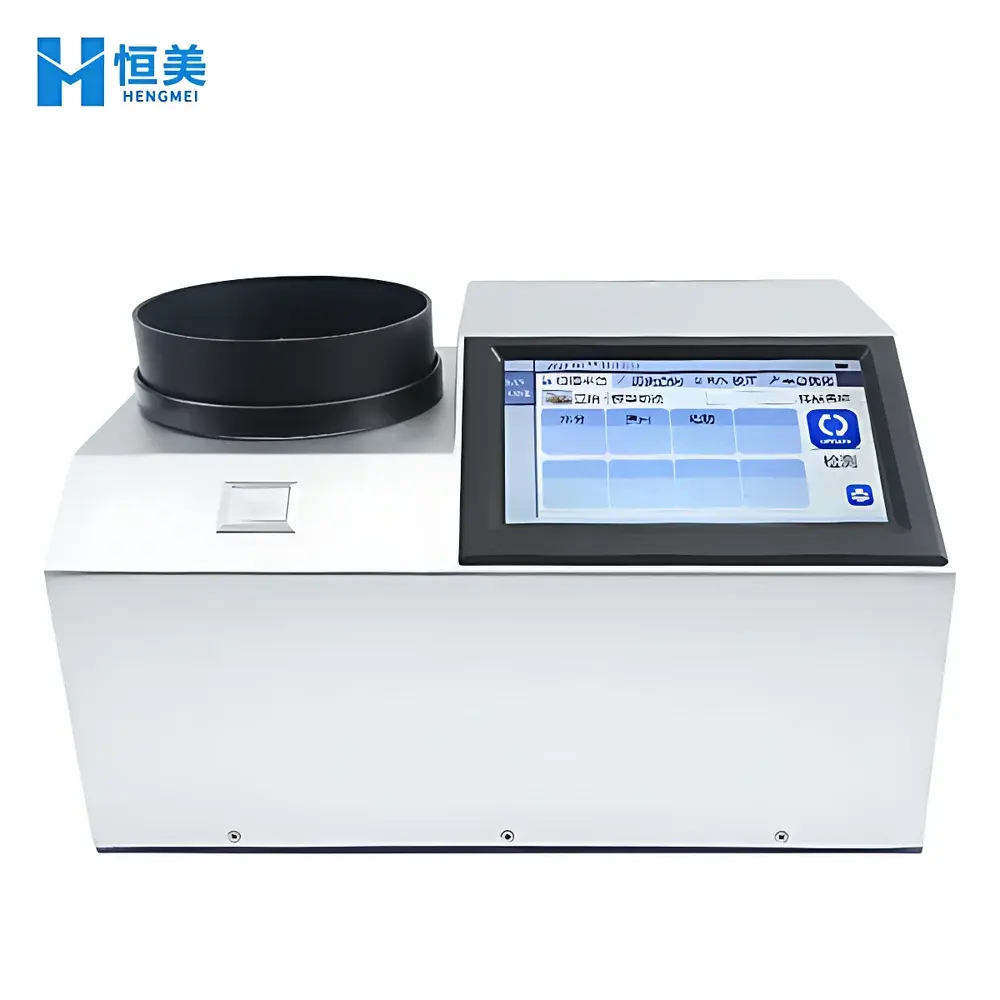
Hengmei HM-GP200 Near-Infrared Grain Analyzer
| Brand | Hengmei |
|---|---|
| Origin | Shandong, China |
| Manufacturer Type | Manufacturer |
| Country of Origin | China |
| Model | HM-GP200 |
| Price | USD 12,000 (FOB) |
| Spectral Range | 900–1700 nm |
| Optical Resolution | 7 nm |
| Measurement Mode | Transmission |
| Sample Throughput | Up to 15 subsamples per single measurement |
| Dimensions | 366 × 255 × 210 mm |
| Weight | 6 kg |
| Display | 7-inch TFT LCD |
| Light Source Lifetime | 20,000 hours |
| Operating Temperature | 5–35 °C |
| Relative Humidity | ≤85% RH (non-condensing) |
| Power Input | AC 220 V |
| Battery | Removable Li-ion |
| Compliance | Meets GB/T 35887–2018 (Chinese National Standard for NIR Grain Analyzers), ISO 12099:2017 (Animal Feeding Stuffs — General Requirements for Instrumental Analysis), and ASTM E1655–22 (Standard Practices for Infrared Quantitative Analysis) |
Overview
The Hengmei HM-GP200 Near-Infrared Grain Analyzer is a portable, transmission-mode spectrometer engineered for rapid, non-destructive quantification of key compositional parameters in cereals, oilseeds, and processed grain products. It operates on the principle of near-infrared (NIR) spectroscopy—specifically within the 900–1700 nm spectral window—where molecular overtones and combination vibrations of C–H, N–H, and O–H bonds generate characteristic absorption features. These spectral signatures are correlated with reference laboratory values via chemometric calibration models (e.g., partial least squares regression, PLS-R), enabling accurate prediction of moisture, crude protein, total fat/oil, crude fiber, ash, starch, gluten, and other analytes without chemical reagents or sample preparation. Designed for use in grain receiving stations, feed mills, flour mills, research laboratories, and field inspection units, the HM-GP200 delivers lab-grade repeatability under variable environmental conditions while maintaining compliance with internationally recognized method validation frameworks.
Key Features
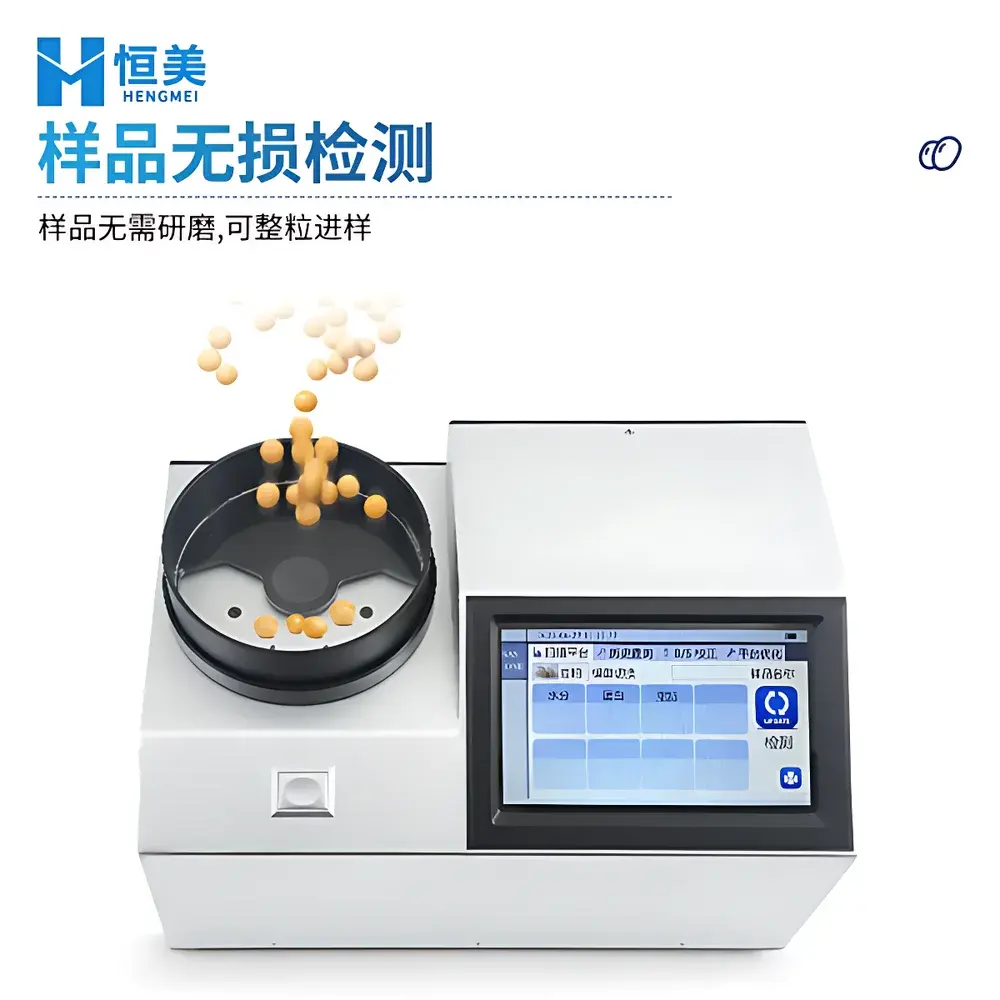
- Non-invasive analysis: Whole-grain or powdered samples require no grinding, sieving, or solvent extraction—preserving sample integrity and eliminating operator exposure to hazardous reagents.
- High-throughput transmission optics: Single-measurement capability for up to 15 subsamples ensures statistical robustness for heterogeneous bulk lots.
- Multi-algorithm engine: Integrates adaptive PLS, principal component regression (PCR), and support vector regression (SVR) models—user-selectable per matrix to optimize predictive accuracy across diverse grain types.
- Field-deployable architecture: 6 kg mass, integrated rechargeable Li-ion battery, and AC adapter enable operation in mobile labs, silos, or remote procurement points without fixed infrastructure.
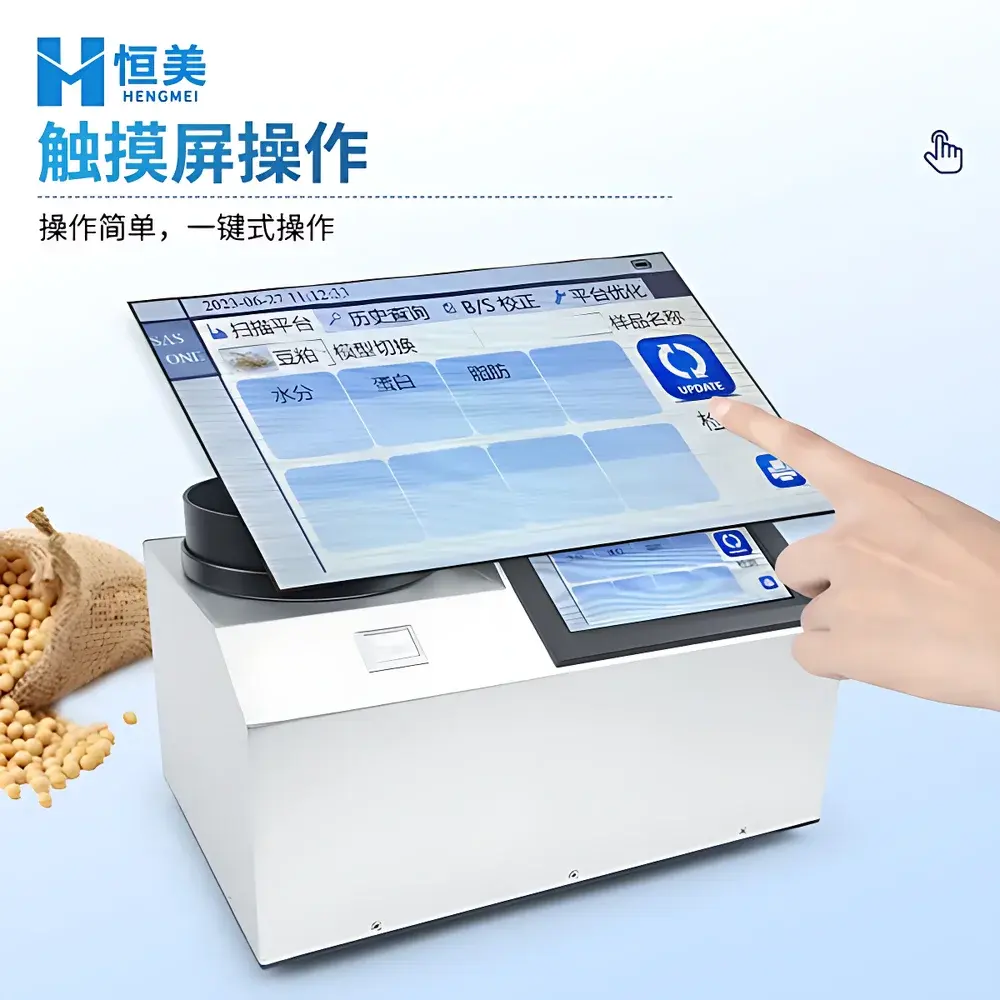
- Voice-assisted interface: Supports Mandarin voice commands for instrument startup, model selection, measurement initiation, and result export—reducing training burden in multilingual operational environments.
- Self-diagnostic firmware: Real-time optical path verification, detector dark-current monitoring, and wavelength calibration drift compensation ensure long-term measurement stability.
- Remote technical support: Secure cloud-enabled remote access (ISO/IEC 27001-compliant encryption) allows authorized Hengmei engineers to perform diagnostics, recalibration assistance, and software updates without onsite visits.
Sample Compatibility & Compliance
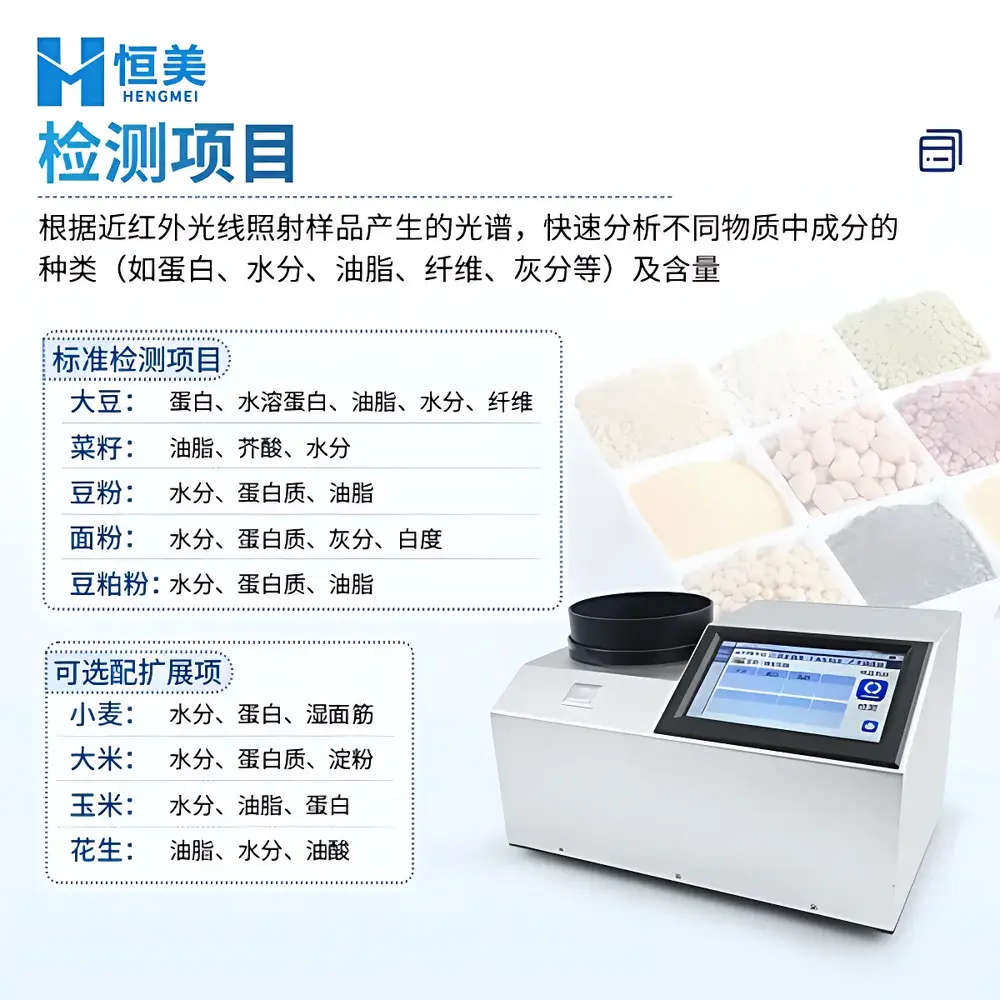
The HM-GP200 supports standardized calibration models for soybeans (protein, water-soluble protein, oil, moisture, fiber), rapeseed (oil, erucic acid, moisture), soybean meal (moisture, protein, oil), wheat flour (moisture, protein, wet gluten, ash, whiteness), rice (moisture, protein, starch), corn (moisture, oil, protein), peanuts (oil, moisture, oleic acid), and milled barley and oats (upon model customization). All factory-installed calibrations are developed and validated per ISO 12099:2017 Annex A and GB/T 35887–2018 requirements—including linearity, precision (RSD ≤ 1.5% for major constituents), bias assessment against AOAC 991.21 and ICC 167 reference methods, and robustness testing across instrument-to-instrument and day-to-day variability. The system supports user-defined model development using supplied chemometrics software compliant with ASTM E1655–22 Section 8 guidelines.
Software & Data Management
Embedded firmware runs on a Linux-based real-time OS with dual-channel data acquisition (spectral + environmental sensor logging). The HM-GP200 Connect desktop application (Windows/macOS) enables full audit trail management: all measurements are timestamped, geotagged (via optional GPS module), and associated with operator ID, sample ID, calibration version, and raw spectrum files (.jdx or .spc format). Data export supports CSV, PDF reports, and LIMS-compatible XML schema (ASTM E2500-21). Software features FDA 21 CFR Part 11-compliant electronic signatures, role-based access control (administrator/operator/auditor), and automatic backup to network drives or SFTP servers. Calibration model versioning includes metadata tracking for traceability during GLP/GMP audits.
Applications
- Grain procurement quality gate: Rapid acceptance/rejection decisions at elevator intake based on contractual specifications for protein, moisture, and oil content.
- Feed formulation optimization: Real-time adjustment of soybean meal, corn, and rapeseed meal inclusion rates in compound feed batches.
- Flour milling process control: Monitoring protein content and ash levels across roller mill streams to maintain flour grade consistency.
- Research & breeding programs: High-throughput phenotyping of breeding lines for nutritional traits (e.g., high-oleic peanuts, low-gluten wheat).
- Regulatory compliance verification: On-site verification of labeling claims (e.g., “high-protein” soy flour, “low-moisture” rice) per national food labeling regulations.
- Export documentation support: Generation of certified analytical reports meeting import requirements of ASEAN, EU, and Middle Eastern markets.
FAQ
What reference methods are used to develop factory calibrations?
Factory calibrations are built using primary reference data generated by AOAC Official Methods (e.g., 984.13 for moisture, 984.27 for crude protein, 920.39 for ether extract) and cross-validated against ISO 20483, ICC 167, and GB 5009 series standards.
Can the HM-GP200 be used for regulatory submissions?
Yes—when operated under documented SOPs, with calibrated reference standards, and with full audit trail enabled, data meets evidentiary requirements for internal quality records and third-party certification bodies (e.g., ISO 22000, FSSC 22000, BRCGS).
Is spectral data export supported for independent chemometric modeling?
Yes—raw interferograms and absorbance spectra (with metadata) are exportable in open-format .jdx and .spc files compatible with Unscrambler, Pirouette, and R packages such as prospectr and pls.
How often does the instrument require wavelength recalibration?
The built-in self-check algorithm performs daily wavelength verification; full recalibration is recommended every 6 months or after 500 operating hours, using the included NIST-traceable polystyrene standard.
Does the system support multi-language UI beyond Mandarin?
English and Spanish interfaces are preloaded; additional languages (Arabic, Vietnamese, Russian) can be deployed via firmware update upon request.




