
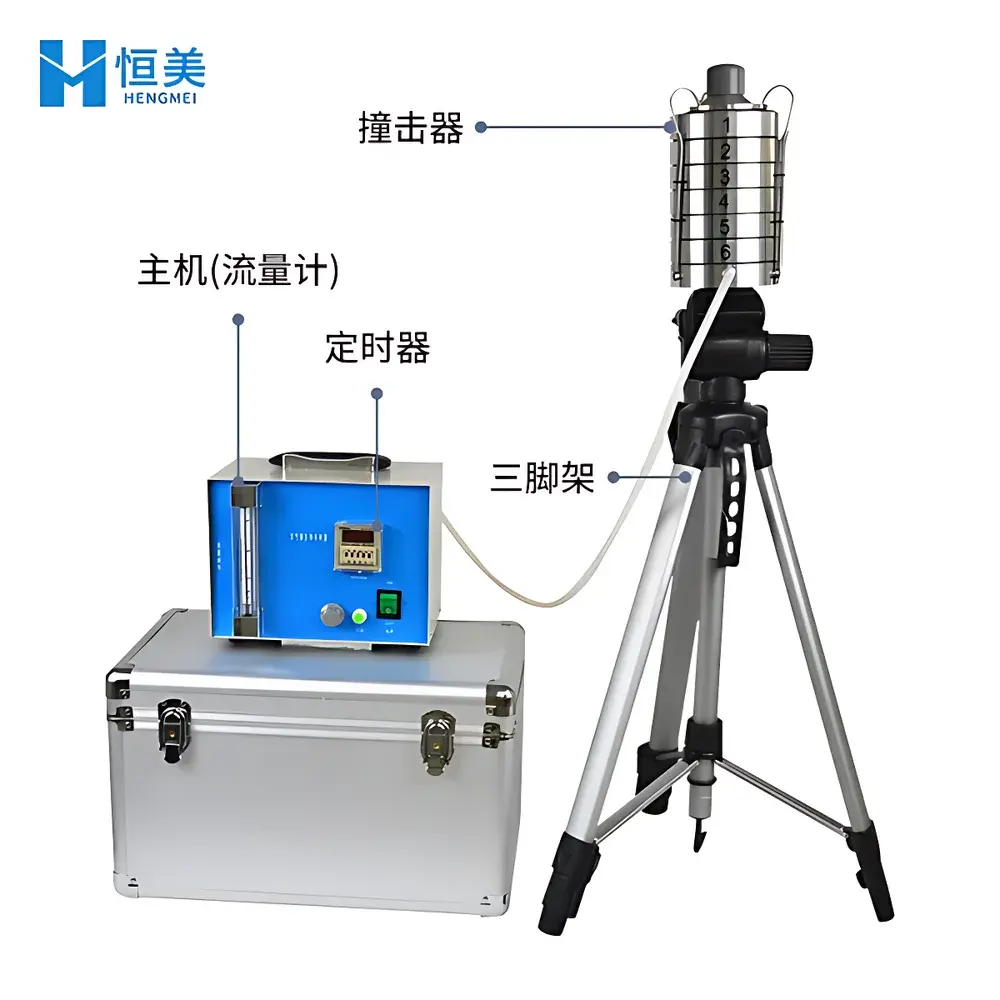
Hengmei HM-QW6 Six-Stage Andersen-Style Impaction Air Microbial Sampler
| Brand | Hengmei |
|---|---|
| Origin | Shandong, China |
| Manufacturer Type | OEM Manufacturer |
| Country of Origin | China |
| Model | HM-QW6 |
| Sampling Principle | Inertial Impaction |
| Flow Rate | 28.3 L/min |
| Flow Accuracy | ≤5% |
| Timing Range | 0–99 min |
| Operating Temperature | −20–50°C |
| Operating Relative Humidity | 20–50% RH |
| Particle Capture Efficiency | ≥98% |
| Cut-Point Diameters | Stage 1: >7.0 µm (orifice Ø 1.18 mm) |
| Stage 2 | 4.7–7.0 µm (Ø 0.91 mm) |
| Stage 3 | 3.3–4.7 µm (Ø 0.71 mm) |
| Stage 4 | 2.1–3.3 µm (Ø 0.53 mm) |
| Stage 5 | 1.1–2.1 µm (Ø 0.34 mm) |
| Stage 6 | 0.65–1.1 µm (Ø 0.25 mm) |
| Noise Level | ≤60 dB(A) |
| Timer Accuracy | <1% |
| Power Supply | AC/DC dual-mode |
Overview
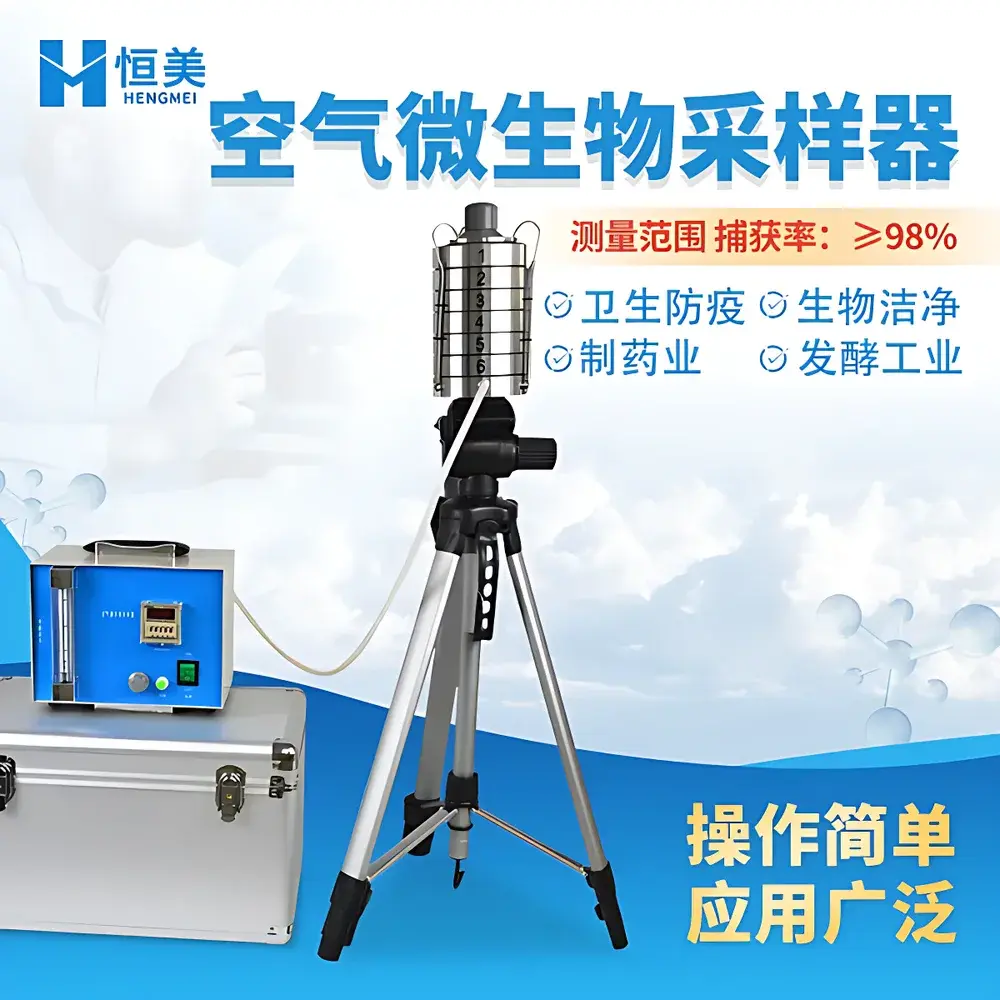
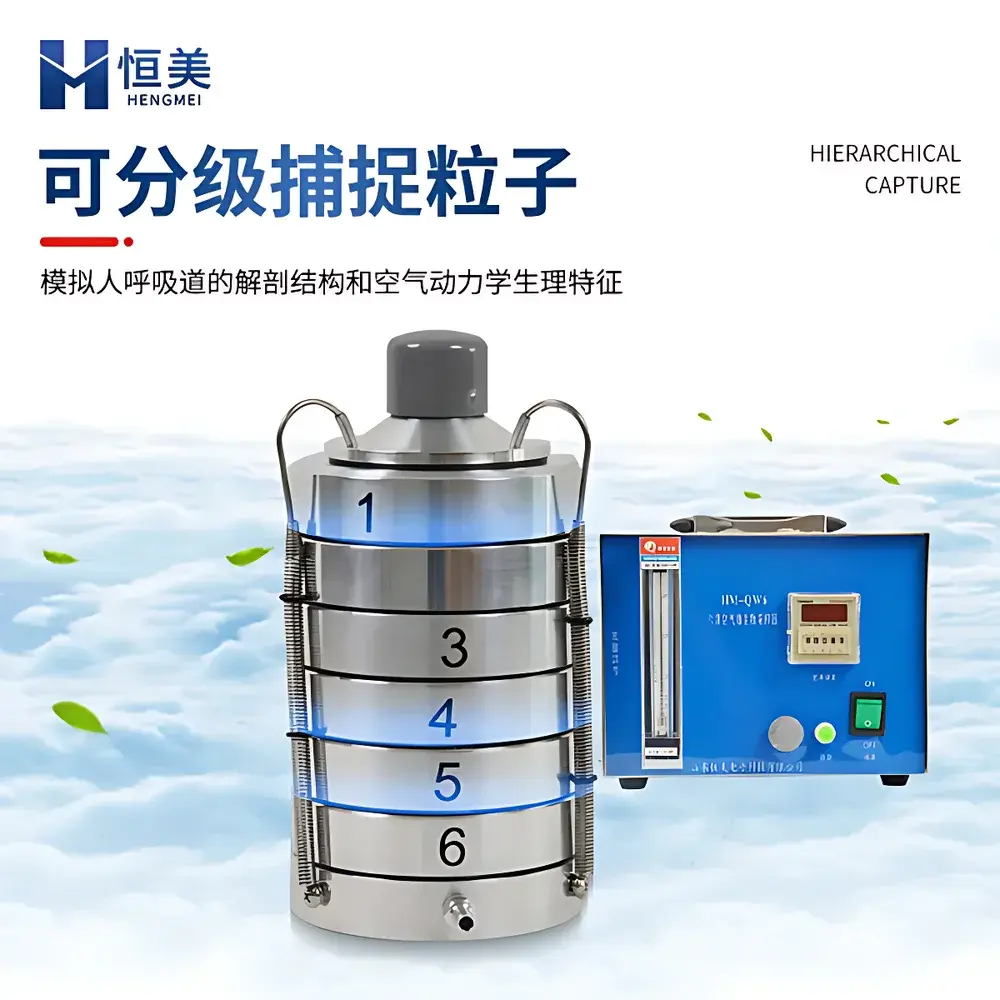
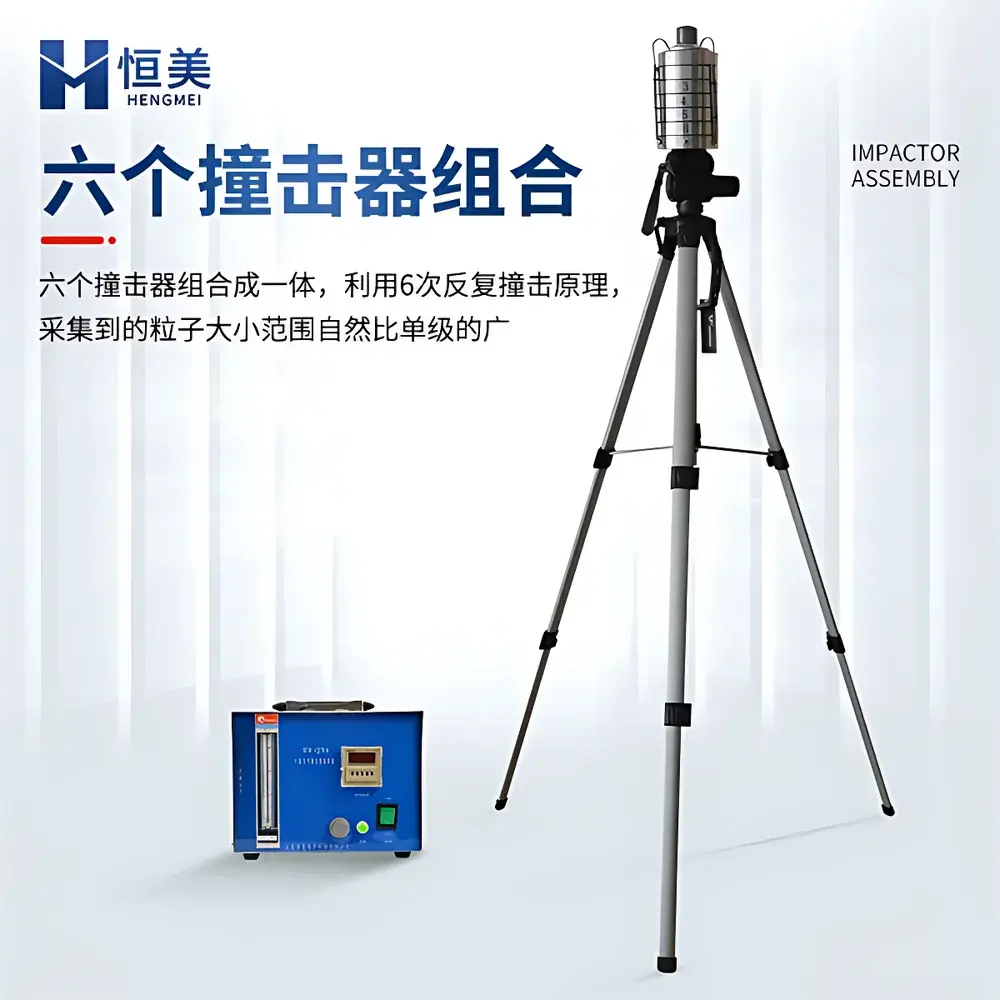
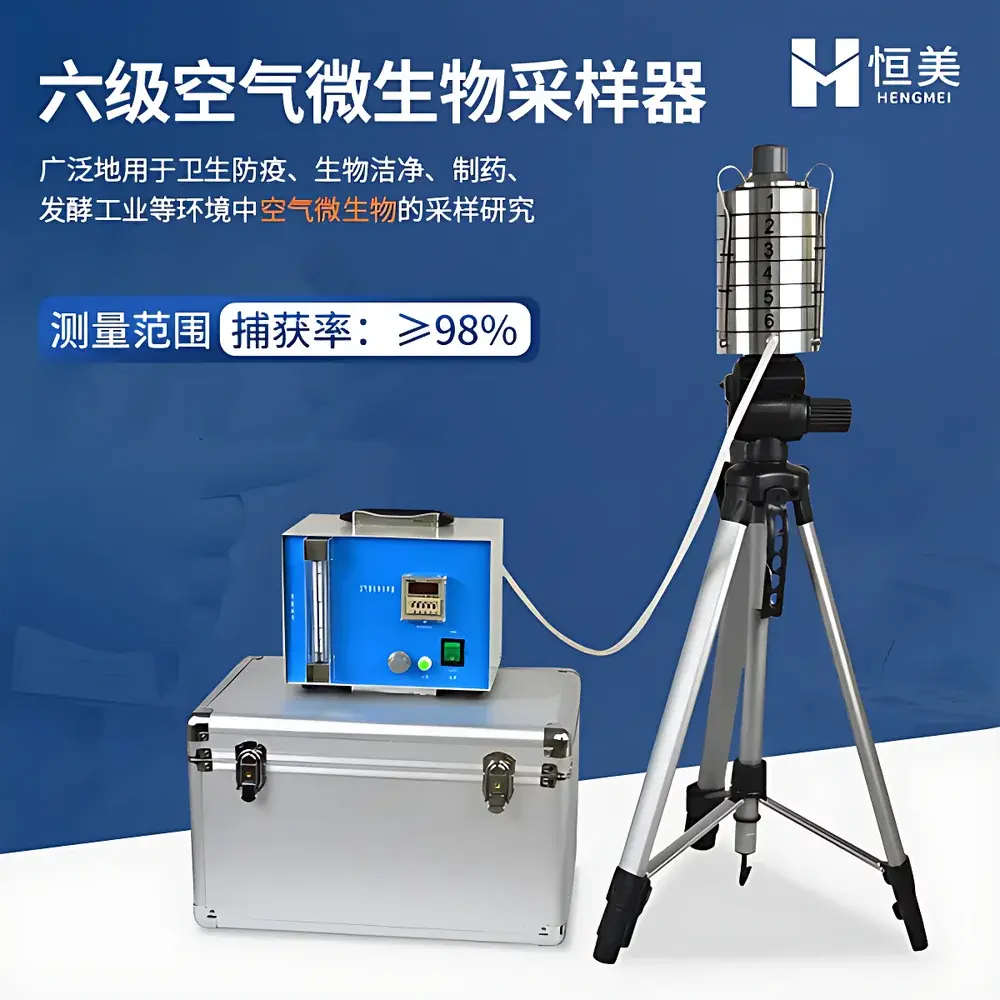
The Hengmei HM-QW6 Six-Stage Andersen-Style Impaction Air Microbial Sampler is a precision-engineered, gravity-fed, multi-stage inertial impactor designed for quantitative and size-resolved collection of viable airborne microorganisms. Based on the well-established Andersen cascade impactor principle—adapted to simulate human respiratory tract deposition dynamics—the HM-QW6 enables stratified capture of culturable bacteria, fungi, yeasts, and fragile viral particles across six discrete aerodynamic size fractions. Each stage consists of a precision-machined aluminum plate with 400 circular orifices arranged in concentric rings; orifice diameters decrease progressively from 1.18 mm (Stage 1) to 0.25 mm (Stage 6), generating controlled jet velocities that induce inertial impaction onto nutrient agar surfaces placed beneath each stage. At the standard volumetric flow rate of 28.3 L/min (1 ft³/min), the device achieves ≥98% particle collection efficiency for target size ranges and replicates regional deposition patterns observed in upper (Stages 1–2) and lower (Stages 3–6) human airways—making it suitable for exposure assessment, infection control validation, and bioaerosol risk modeling in controlled environments.
Key Features
- Six-tier modular impactor assembly with calibrated orifice plates (1.18 mm to 0.25 mm), enabling size-selective microbial capture across six aerodynamically defined fractions (0.65–>7.0 µm)
- Integrated digital timer (0–99 min range, <1% accuracy) and mass flow meter (28.3 L/min nominal, ±5% full-scale accuracy) housed within a single compact host unit
- AC/DC dual-power architecture supporting field deployment in laboratories, cleanrooms, pharmaceutical production suites, and outdoor monitoring stations
- Optimized humidity gradient across stages (39% → 88% RH) preserves viability of labile pathogens—including enveloped viruses—during impaction and incubation
- Robust mechanical design: stainless steel springs, silicone O-rings between stages, and precision-ground aluminum discs ensure repeatable sealing and minimal cross-contamination
- Low acoustic signature (≤60 dB[A]) compliant with ISO 7235 and ANSI S1.13 standards for laboratory instrumentation noise limits
Sample Compatibility & Compliance
The HM-QW6 is compatible with standard 100 mm Petri dishes containing tryptic soy agar (TSA), Sabouraud dextrose agar (SDA), or other microbiologically appropriate media. Its physical configuration conforms to the geometric and operational specifications outlined in ISO 14698-1 (Biocontamination control — Part 1: General principles and methodology) and ASTM D6077-18 (Standard Test Method for Bioaerosol Sampling Using the Andersen Cascade Impactor). While not certified to FDA 21 CFR Part 11, its deterministic sampling mechanics, traceable flow calibration, and documented timing accuracy support GLP-compliant data generation when paired with validated laboratory procedures. The instrument’s cut-point performance aligns with the U.S. EPA Compendium Method TO-11A and EU GMP Annex 1 requirements for environmental monitoring in Grade A–D cleanrooms.
Software & Data Management
The HM-QW6 operates as a standalone hardware platform without embedded firmware or proprietary software. All operational parameters—including elapsed time, flow rate verification logs, and maintenance records—are manually documented per SOP. Users integrate collected agar plates into existing colony-counting workflows (e.g., automated imaging systems such as ProtoCOL 3 or manual CFU enumeration per ISO 8573-7). For audit readiness, laboratories may pair HM-QW6 usage with electronic lab notebooks (ELNs) supporting ALCOA+ principles (Attributable, Legible, Contemporaneous, Original, Accurate), ensuring full traceability from sampling event through microbial identification and reporting.
Applications
- Environmental monitoring in aseptic manufacturing areas (ISO Class 5–8), isolators, and RABS per EU GMP Annex 1 and PIC/S PI 007-6
- Healthcare-associated infection (HAI) risk assessment in operating theaters, ICU ventilation ducts, and patient isolation rooms
- Evaluation of HVAC filtration efficiency and disinfection system efficacy (e.g., UVGI, bipolar ionization)
- Research-grade aerosolized pathogen deposition studies in biosafety level 2 (BSL-2) containment facilities
- Validation of cleanroom gowning protocols and personnel movement impact on bioburden dispersion
- Field-based bioaerosol surveillance in agricultural settings, wastewater treatment plants, and animal housing facilities
FAQ
What is the recommended agar medium for bacterial and fungal recovery?
Tryptic Soy Agar (TSA) is recommended for total viable count (TVC) of mesophilic bacteria; Sabouraud Dextrose Agar (SDA) supplemented with chloramphenicol is preferred for mold and yeast enumeration.
Can the HM-QW6 be used for non-viable particle sampling?
No—the HM-QW6 is specifically designed for viable microorganism collection via impaction onto growth media; it does not support filter-based or electrostatic non-viable sampling methods.
Is calibration required before each use?
Yes—flow rate must be verified using a NIST-traceable primary standard (e.g., dry gas meter or bubble flowmeter) prior to each sampling session to ensure compliance with ≤5% accuracy tolerance.
How often should the orifice plates be cleaned?
Plates must be ultrasonically cleaned in 70% ethanol and rinsed with sterile distilled water after every 10 sampling cycles—or immediately following use with high-biomass samples—to prevent orifice clogging and maintain aerodynamic fidelity.
Does the HM-QW6 meet ISO 14644-1 classification requirements?
While the HM-QW6 itself is not an ISO 14644-1 measuring device, its output (colony-forming units per cubic meter) is a key input parameter for ISO 14644-1 cleanroom classification when combined with ISO 14698-1 sampling strategy and statistical analysis.







