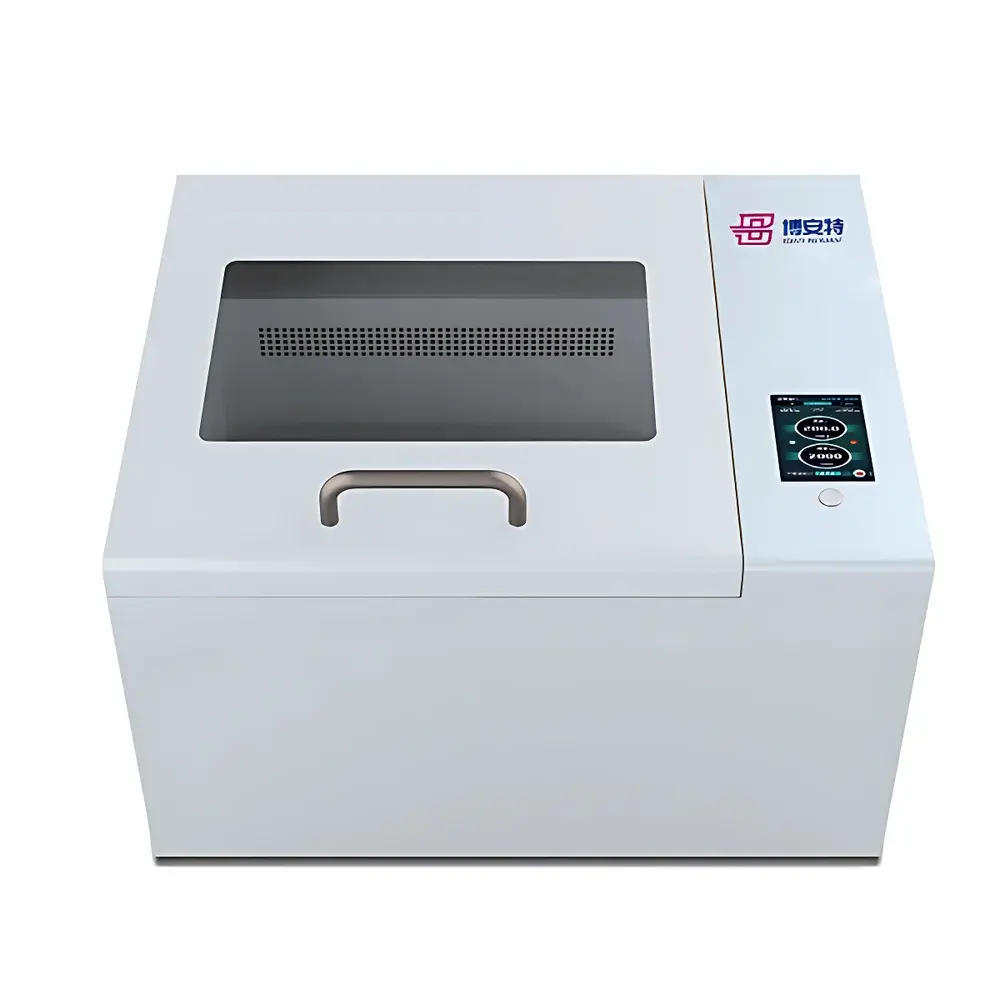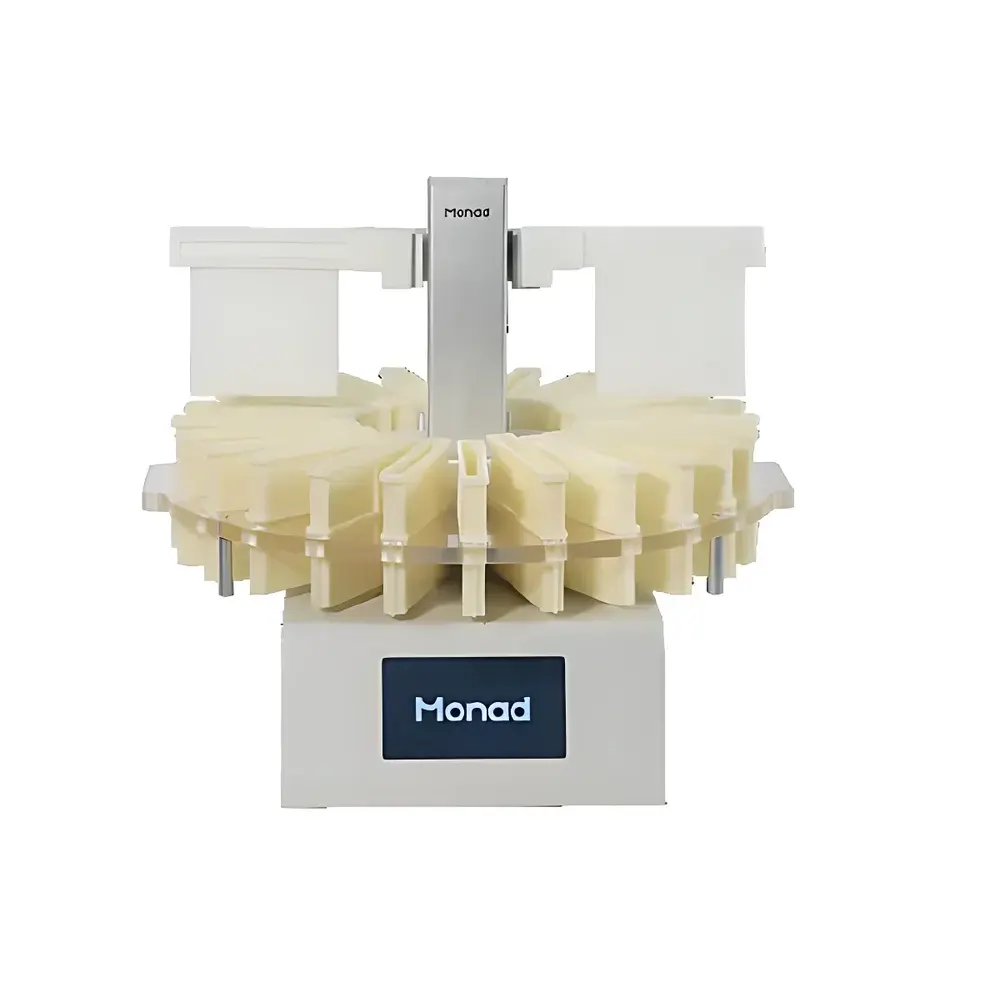
Monad BlotEZ Automated Western Blot Processing System
| Brand | Monad |
|---|---|
| Origin | Jiangsu, China |
| Manufacturer Type | Authorized Distributor |
| Product Origin | Domestic (China) |
| Model | BlotEZ |
| Pricing | Available Upon Request |
Overview
The Monad BlotEZ Automated Western Blot Processing System is an engineered platform designed to standardize and streamline the critical post-electrophoresis steps of Western blotting—including blocking, primary and secondary antibody incubation, and multi-stage washing—within a single, programmable instrument. It operates on a robust immersion-based fluidic architecture, where membranes are suspended in reagent baths via precision-engineered carrier arms, ensuring uniform reagent contact across the entire membrane surface while minimizing edge effects and non-specific binding. Unlike manual or semi-automated methods that rely on rocking or agitation, the BlotEZ system maintains consistent immersion depth, temperature stability (ambient to 40 °C), and precise dwell-time control—parameters directly linked to assay reproducibility, signal-to-noise ratio, and inter-laboratory comparability. The system is purpose-built for laboratories performing routine or high-throughput protein detection workflows under GLP-aligned operational practices, particularly where protocol adherence, operator independence, and audit-ready process documentation are required.
Key Features
- Programmable multi-step workflow: Up to 12 independently configurable steps per protocol—including blocking, antibody incubation (primary/secondary), wash cycles (up to 6× with variable duration and agitation intensity), and optional stripping—each with adjustable time, temperature, and agitation mode.
- Dual carrier arm architecture: Interchangeable square-arm and strip-arm configurations support both full-size PVDF/NC membranes (e.g., 7 × 8.5 cm) and pre-cut strip formats (e.g., 1–3 mm wide strips), enabling flexibility across experimental designs and sample throughput requirements.
- Modular reagent compartmentalization: Dedicated single-well (full-tray) and triple-well (segmented) reagent trays physically isolate blocking, antibody, and wash solutions—eliminating carryover risk and cross-contamination between sequential reagents without requiring manual tray replacement.
- Temperature-controlled incubation chamber: Integrated ambient-to-40 °C thermal regulation ensures optimal conditions for temperature-sensitive antibodies and enzymatic detection systems (e.g., HRP- or AP-conjugated secondaries).
- Reagent volume optimization: Minimum working volumes of 15 mL per well reduce consumable costs and support sustainable lab operations without compromising coverage or mixing efficiency.
- Membrane retention system: Patented hydrophobic, low-temperature-resistant membrane fixation tape secures blots during immersion and agitation, preventing curling, folding, or displacement—critical for consistent exposure and quantitative densitometry.
Sample Compatibility & Compliance
The BlotEZ system accommodates standard nitrocellulose (NC) and polyvinylidene difluoride (PVDF) membranes ranging from mini-gel (e.g., 8 × 10 cm) to full-size (e.g., 13.5 × 16 cm) formats. It supports all common Western blot detection chemistries—including chemiluminescent (ECL), fluorescent (IRDye®, Alexa Fluor®), and chromogenic substrates—without hardware modification. The system’s operation log records timestamped step execution, reagent lot tracking (via user-input fields), and environmental parameters (e.g., chamber temperature), supporting traceability in regulated environments. While not certified to ISO 13485 or FDA 21 CFR Part 11 out-of-the-box, its structured protocol execution, electronic audit trail export (CSV/Excel), and user-access controls align with core principles of GLP and GMP documentation standards for analytical method validation and quality control laboratories.
Software & Data Management
The BlotEZ Control Suite (v3.2+) provides intuitive graphical protocol builder with drag-and-drop step sequencing, real-time status dashboard, and remote monitoring via Ethernet/Wi-Fi. All protocols are stored with version history and user attribution; password-protected administrator mode enables role-based access (e.g., technician vs. supervisor). Raw execution logs—including start/end timestamps, temperature profiles, and error codes—are exportable for inclusion in study reports or internal QA reviews. The software supports LIMS integration through standardized CSV output and optional API extension for enterprise-scale deployment.
Applications
- Routine QC of recombinant protein expression and purification batches
- Validation of monoclonal antibody specificity and affinity profiling
- Phosphoprotein signaling pathway analysis in cell lysates under stimulus-response paradigms
- High-sensitivity detection of low-abundance biomarkers in clinical tissue extracts
- Standardization of training protocols in academic core facilities and teaching labs
- Supporting orthogonal verification in multi-omics workflows integrating proteomics and transcriptomics data
FAQ
Can the BlotEZ process both full-size and strip-format membranes in the same run?
No—carrier arms and trays must be matched (square arm + full-tray or strip arm + triple-tray) per protocol. However, users can save and recall distinct configurations rapidly via the software interface.
Is the system compatible with fluorescent detection systems?
Yes—optical path design avoids UV exposure during processing, and all reagent contact surfaces are non-autofluorescent. Protocols may include dark-incubation steps for light-sensitive fluorophores.
Does the BlotEZ support automated stripping and re-probing?
Yes—predefined stripping protocols (acid- or base-based) are included, with optional post-strip blocking steps to restore membrane integrity before secondary probing.
What maintenance is required for long-term reliability?
Daily wipe-down of tray wells and carrier arms; quarterly calibration of temperature sensors and fluid level detectors using supplied verification kits.
Can third-party reagents and membranes be used without compatibility issues?
Yes—the system imposes no proprietary reagent locks. All commercially available NC/PVDF membranes and standard Western blot buffers (e.g., TBST, 5% non-fat milk, BSA-based blockers) are fully supported.