
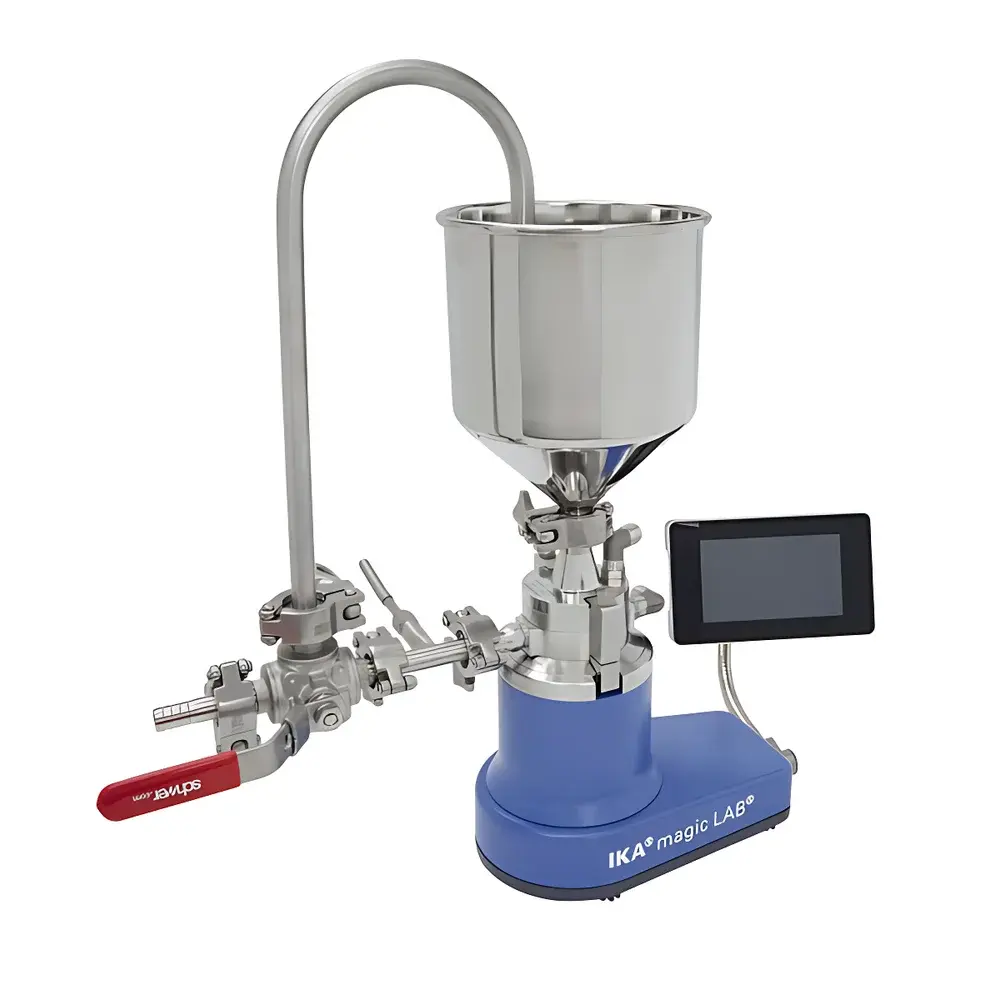
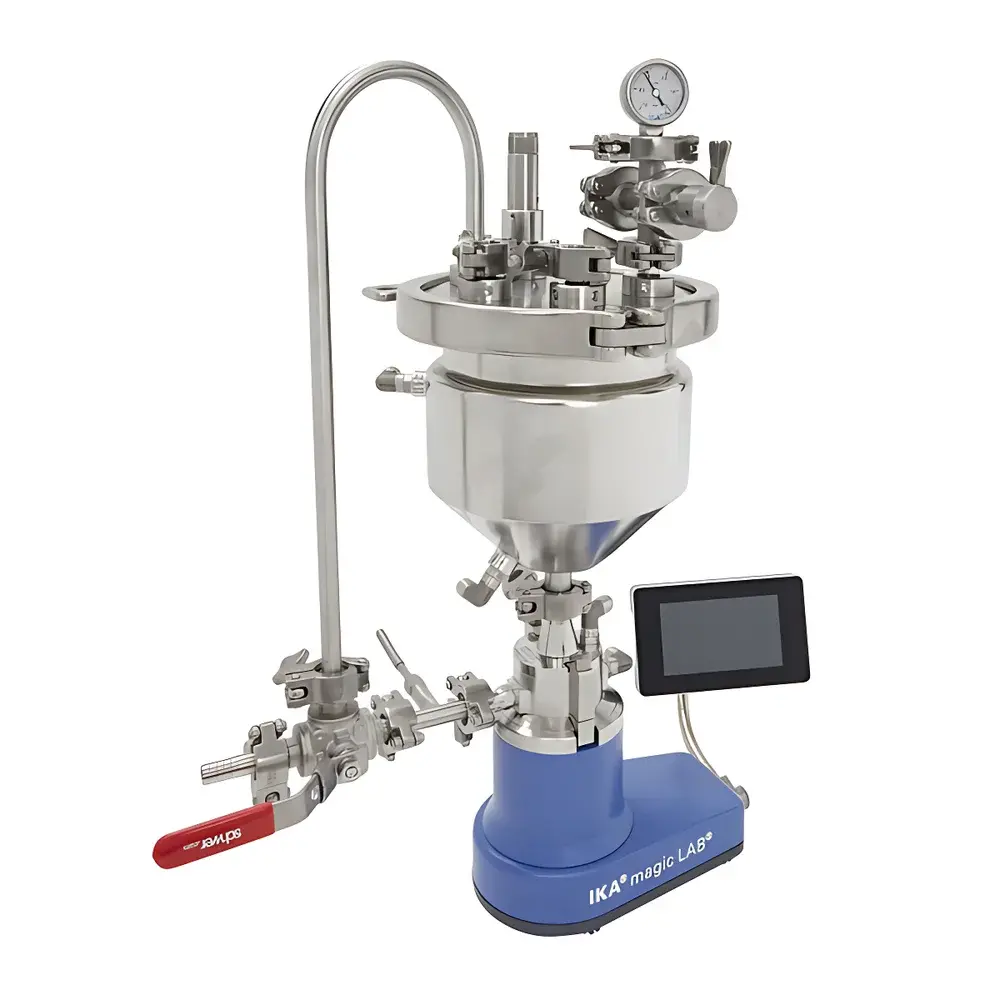
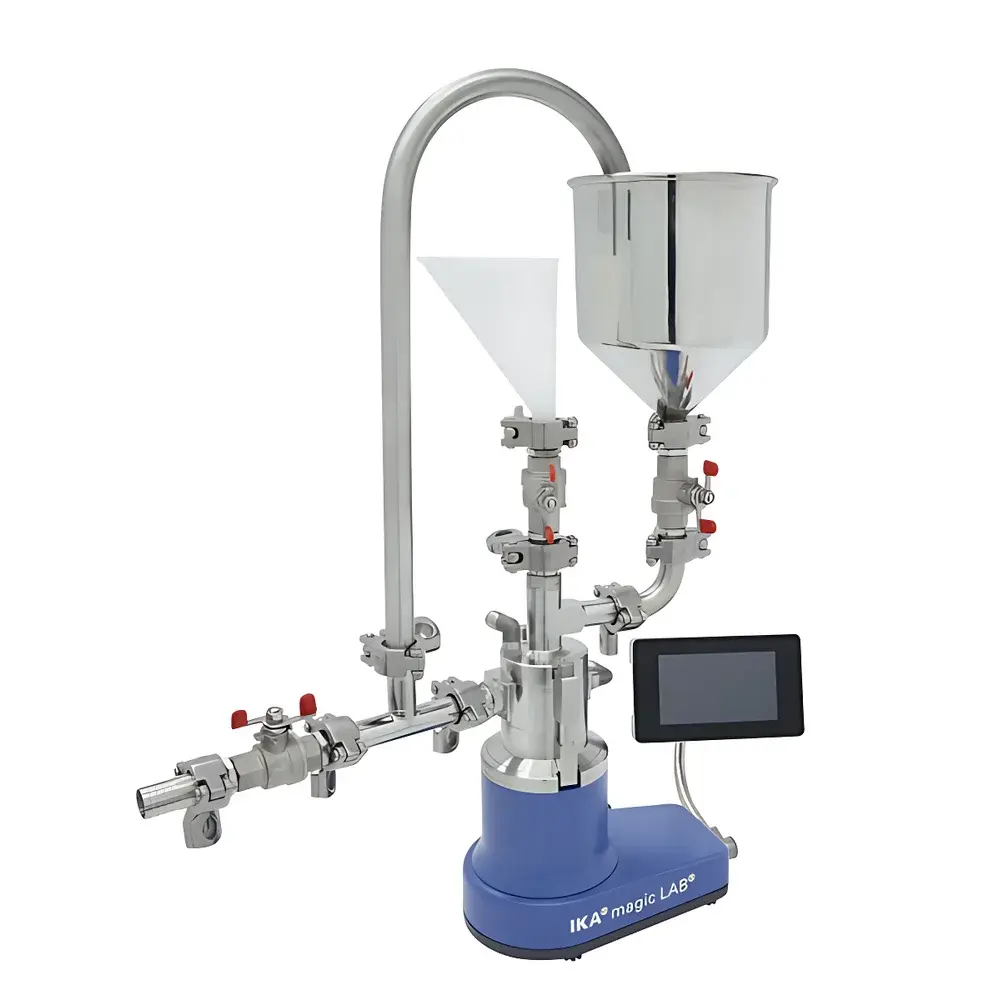
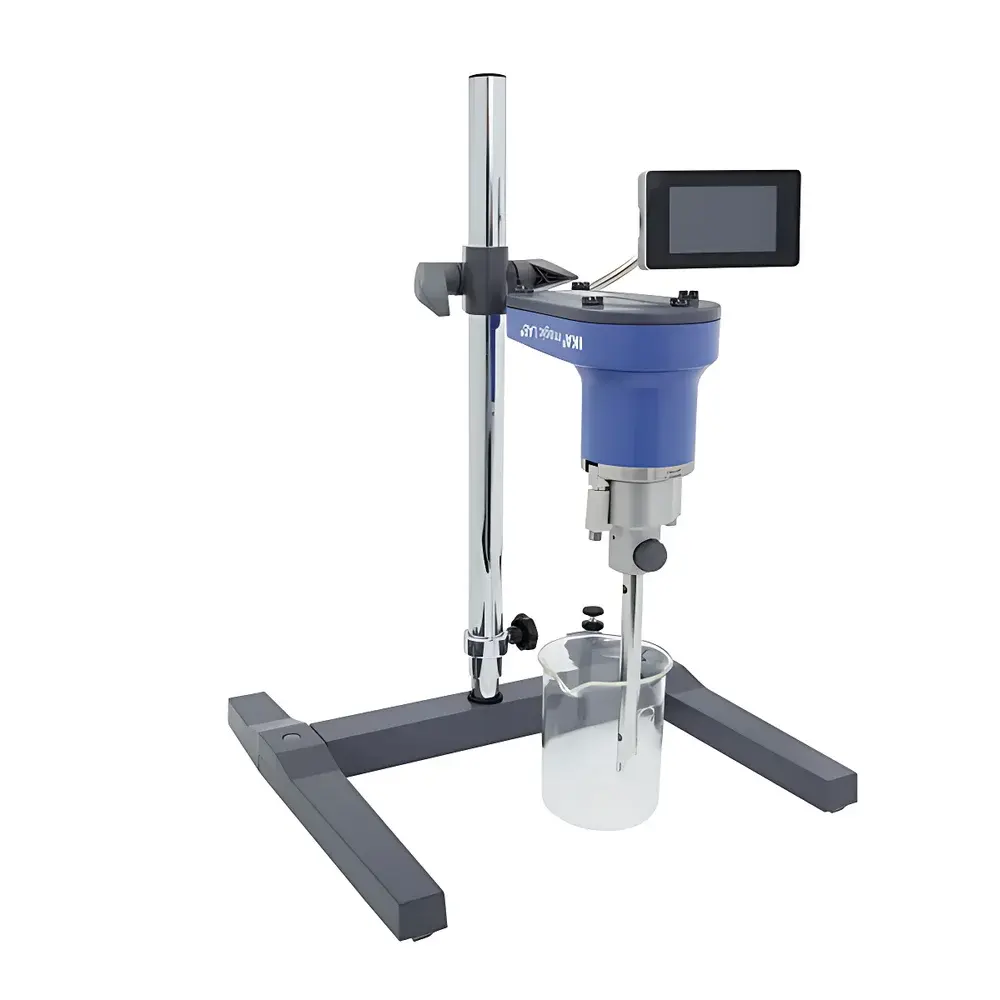
IKA magic LAB Multi-Function Laboratory Homogenizer
| Brand | IKA |
|---|---|
| Origin | Germany |
| Manufacturer Type | Original Equipment Manufacturer (OEM) |
| Product Origin | Imported |
| Model | magic LAB |
| Pricing | Upon Request |
Overview
The IKA magic LAB is a benchtop multi-function laboratory homogenizer engineered for high-fidelity process simulation across R&D and pilot-scale development. Unlike conventional batch mixers or single-mode dispersers, the magic LAB operates on the principle of controlled hydrodynamic shear, cavitation, and mechanical attrition—enabling reproducible emulation of both continuous and batch industrial unit operations. Its modular architecture allows seamless transition between dispersion, wet milling, emulsification, powder-liquid incorporation, and high-shear homogenization—all within a single platform. Designed to replicate the kinematic and thermodynamic boundary conditions of production-scale IKA 2000-series inline systems, the magic LAB ensures scalability with minimal process revalidation. With rotor tip speeds up to 40 m/s and standardized flow dynamics, it delivers consistent energy input profiles critical for correlating lab-scale data to full-scale manufacturing—particularly under GLP, GMP, and FDA 21 CFR Part 11–aligned workflows.
Key Features
- Modular platform supporting seven interchangeable processing modules: UTL (batch dispersion), DR (multi-stage high-shear emulsification), CMS (vacuum-assisted powder induction), MHD (continuous powder-liquid mixing), MK (colloid mill for wet grinding), MKO (tungsten carbide-coated conical mill), and UTC (inverted batch dispersion configuration)
- Standardized mechanical interface enabling tool-free module exchange in under 90 seconds without recalibration
- Integrated temperature control compatibility across all modules—supports external heating/cooling circulators via standard 1/4″ NPT ports
- Dedicated LABOR-PILOT CONTROLLER with programmable ramping, torque monitoring, real-time RPM feedback, and audit-trail-enabled operation logging
- Full compliance with IEC 61000-6-2 (immunity) and IEC 61000-6-4 (emission) standards; CE-marked per Machinery Directive 2006/42/EC
- Two operational variants: Basic (atmospheric pressure) and XP (rated for continuous operation up to 10 bar backpressure)
Sample Compatibility & Compliance
The magic LAB accommodates a broad range of sample rheologies—from low-viscosity aqueous solutions (<1 mPa·s) to highly concentrated suspensions (up to 80% w/w solids) and viscous pastes (≤50 Pa·s). Its modular design ensures compatibility with aggressive solvents, heat-sensitive actives, and abrasive particulates. All wetted parts conform to USP Class VI biocompatibility requirements; stainless steel components meet ASTM A276 Type 316L specifications. The system supports validation protocols aligned with ISO 22000 (food), ISO 13485 (medical devices), and ICH Q5C (biopharmaceutical stability). When operated with LABOR-PILOT CONTROLLER, electronic records comply with FDA 21 CFR Part 11 for electronic signatures, audit trails, and data integrity controls.
Software & Data Management
The LABOR-PILOT CONTROLLER provides deterministic control over rotational speed (0–12,000 rpm), time-based sequencing, and real-time torque profiling. All operational parameters—including setpoints, actual values, timestamps, and error codes—are logged in CSV and XML formats with SHA-256 hash integrity verification. Data export supports direct integration into LIMS platforms (e.g., LabWare, Thermo Fisher SampleManager) via OPC UA or FTPS. Optional software add-ons enable statistical process control (SPC) charting, DOE parameter mapping, and automated report generation compliant with ISO/IEC 17025 documentation requirements.
Applications
- Pharmaceutical formulation: Nanoemulsion development for oral lipid-based delivery systems (LBDDS), sterile suspension stabilization, and excipient compatibility screening
- Personal care R&D: High-stability silicone-in-water emulsions, pigment dispersion for color cosmetics, and rheology modifier activation in thickened gels
- Food science: Plant-protein isolate hydration kinetics, clean-label fat replacer dispersion, and enzymatic reaction medium homogenization
- Materials chemistry: Carbon nanotube dispersion in polymer matrices, ceramic slurry deagglomeration, and battery electrode slurry preparation
- Academic research: Shear-thinning behavior quantification, Ostwald ripening inhibition studies, and interfacial tension modulation in Pickering systems
FAQ
Can the magic LAB be used for sterile processing?
Yes—when equipped with autoclavable modules (UTL, UTC, MK) and operated under ISO 5 laminar flow conditions, the system supports aseptic trials. All seals are EPDM or FKM-certified per USP .
What is the maximum allowable solid loading for continuous operation with the MHD module?
Up to 80% w/w solids is achievable with Newtonian-like slurries; non-Newtonian systems require viscosity-dependent flow rate adjustment per IKA Technical Bulletin TB-ML-MHD-03.
Is torque measurement traceable to national standards?
Yes—factory calibration uses NIST-traceable load cells; optional annual recalibration services include ISO/IEC 17025-accredited certification.
Does the system support remote monitoring via Ethernet?
Standard Ethernet port enables Modbus TCP communication; optional Wi-Fi adapter available for cloud-based dashboard integration (IKA Connect Platform).
How does the magic LAB ensure scalability to production-scale IKA inline systems?
All modules replicate identical shear rate distributions, residence time distributions, and energy dissipation densities as their 2000-series counterparts—validated via laser Doppler velocimetry and computational fluid dynamics (CFD) benchmarking per IKA White Paper WP-SCALE-2022.



