
Senbe FD216 Environmental Radon Monitor
| Brand | Senbe |
|---|---|
| Origin | Jiangsu, China |
| Manufacturer Type | Manufacturer |
| Product Origin | Domestic |
| Model | FD216 |
| Sampling Method | Active Pump-Driven Sampling |
| Measurement Range (Air Radon) | 3–100,000 Bq/m³ |
| Minimum Detectable Activity | 3 Bq/m³ |
| Response Time (Air) | 30 min |
| Detector | ZnS(Ag) Scintillation Screen Coupled with Photomultiplier Tube (PMT) |
| Sensitivity | ≥0.68 cpm/(Bq·m⁻³) |
| Background Count Rate | ≤0.3 cpm |
| Repeatability Error | ≤5% (at 2000 Bq/m³, 65% RH, 25°C) |
| Stability | ≤10% drift over 8 h |
| Power Supply | Rechargeable Li-ion Battery (30 h continuous operation) or AC Adapter |
| Operating Temperature | −10 to +40 °C |
| Relative Humidity | ≤90% at +40 °C |
| Data Storage Capacity | 2000 records |
| Display | LCD |
| Dimensions | 330 × 210 × 170 mm |
| Weight | 5 kg (main unit) |
Overview
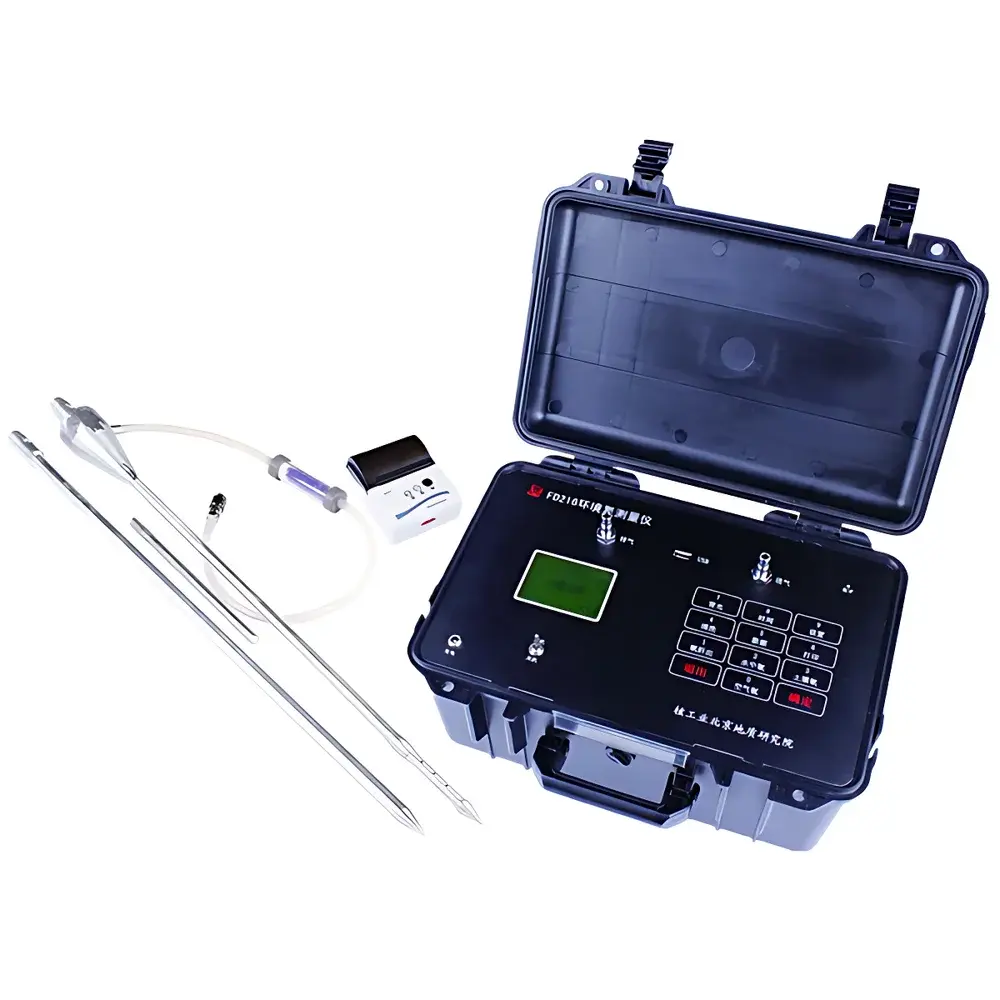
The Senbe FD216 Environmental Radon Monitor is a portable, active-sampling scintillation-based instrument engineered for precise, field-deployable measurement of radon-222 (²²²Rn) activity concentration in air, soil gas, water, and radon exhalation rate from building materials or ground surfaces. It operates on the principle of alpha-particle-induced scintillation: radon progeny (primarily ²¹⁸Po and ²¹⁴Po) decay within a sealed detection chamber lined with zinc sulfide doped with silver (ZnS(Ag)), generating flashes of visible light upon alpha interaction. These scintillations are detected and amplified by a low-noise photomultiplier tube (PMT), enabling high-efficiency counting with minimal background interference. The FD216 is designed to meet the metrological and procedural requirements of key Chinese national and industry standards—including GB 50325-2010 (2013 edition), T/CECS 569-2019, and GB/T 16147-1995—making it suitable for regulatory-compliant indoor air quality assessments, geological radon potential surveys, and construction material screening.
Key Features
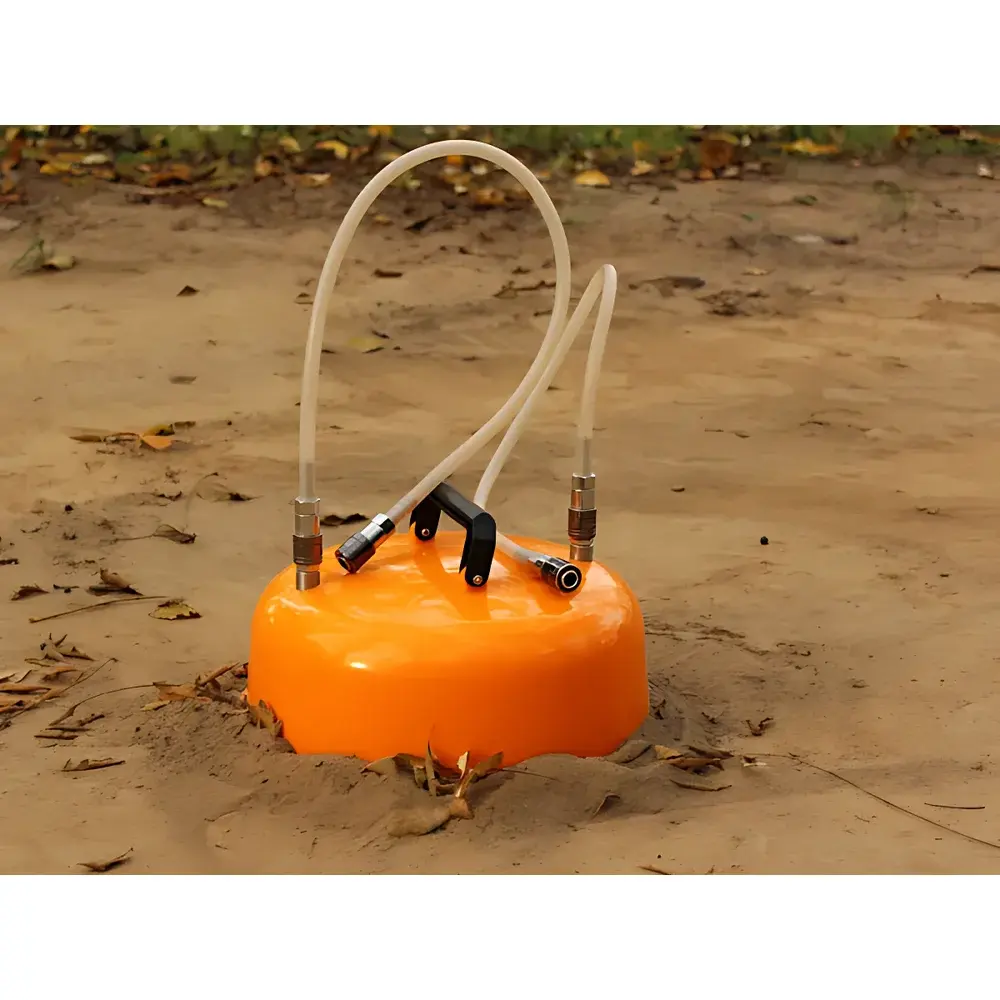
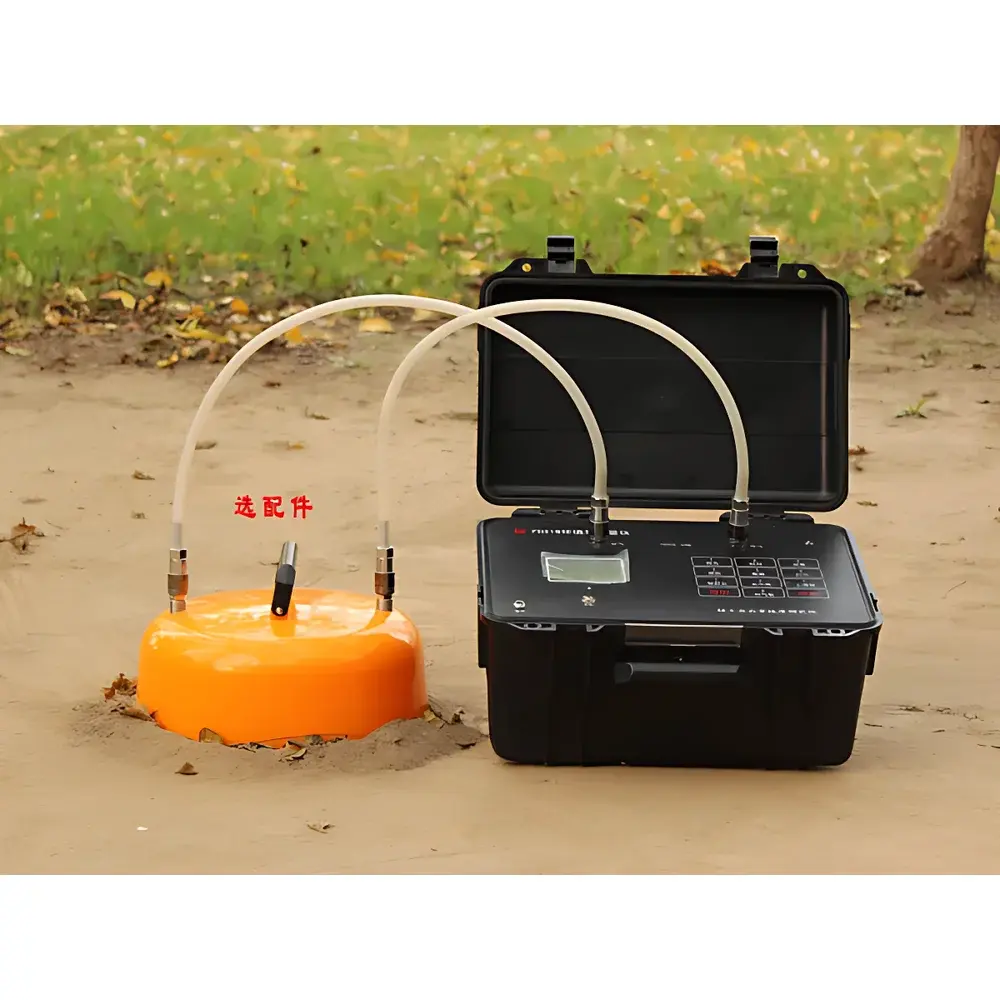
- Quad-mode measurement capability: simultaneous support for air radon, soil gas radon, waterborne radon (via degassing module, optional), and radon exhalation rate (optional accessory kit required).
- Active pump-driven sampling ensures consistent volumetric flow control and eliminates dependence on ambient diffusion—critical for reproducible low-concentration measurements and short response times (30 min for air, 11 min for soil gas).
- High intrinsic sensitivity (≥0.68 cpm/(Bq·m⁻³)) combined with ultra-low background count rate (≤0.3 cpm) enables reliable quantification down to 3 Bq/m³—the lower limit recommended by WHO for long-term exposure assessment.
- Robust embedded architecture with dual power options: rechargeable lithium-ion battery (rated for ≥30 h continuous operation) and universal AC adapter, supporting unattended field deployments in remote or off-grid locations.
- Integrated LCD interface with intuitive menu navigation; real-time display of measured activity, elapsed time, battery status, and environmental conditions (temperature/humidity via internal sensors).
- Onboard data storage for up to 2000 complete measurement records, each timestamped and geotagged (if external GPS module is connected), compliant with GLP traceability requirements.
Sample Compatibility & Compliance
The FD216 accommodates diverse sampling matrices through standardized interfaces and protocol-specific accessories. For air monitoring, it uses a calibrated axial-flow pump and electrostatically shielded sampling line to minimize plate-out losses. Soil gas measurements employ a stainless-steel probe and membrane-filtered intake to exclude moisture and particulates. Water analysis requires an integrated water-air equilibration vessel (optional), while radon exhalation rate determination utilizes a sealed accumulation chamber with controlled surface contact area and pressure compensation. All operational modes adhere to ISO 11665-2:2019 (Measurement of radon-222 in air — Part 2: Integrated measurement method for determining average activity concentration) and align with technical validation criteria specified in ASTM D6762-22 (Standard Guide for Radon Measurements in Homes). Instrument calibration is traceable to national primary standards maintained by the National Institute of Metrology (NIM), China, or the Nuclear Industry Radioactive Survey and Metrology Station—certificates available upon request.
Software & Data Management
Data export is facilitated via USB 2.0 interface, enabling direct transfer to Windows-based desktop applications for statistical analysis, trend visualization, and report generation. Optional Bluetooth 4.2 connectivity supports wireless thermal printing of measurement reports—including date, time, location ID, sample type, raw counts, efficiency-corrected activity, uncertainty estimate, and operator ID—ensuring audit-ready documentation. Firmware supports configurable averaging intervals (1–24 h), alarm thresholds (user-defined Bq/m³ limits), and automatic zero-background subtraction. All stored data include metadata headers conforming to ISO/IEC 17025:2017 documentation requirements, including instrument ID, calibration date, detector serial number, and environmental correction factors applied. While native software does not implement FDA 21 CFR Part 11 electronic signature functionality, exported CSV files are compatible with validated LIMS platforms supporting full audit trails and user access controls.
Applications
- Indoor air quality (IAQ) assessment in residential, educational, and healthcare facilities per GB 50325-2010 compliance protocols.
- Site characterization for radon-prone geological formations during pre-construction environmental impact assessments.
- Verification testing of radon mitigation systems (e.g., sub-slab depressurization, membrane barriers) before and after installation.
- Research-grade studies on radon transport mechanisms in unsaturated soils, groundwater interfaces, and building envelope materials.
- Regulatory monitoring of radon exhalation from granite countertops, phosphogypsum boards, or recycled concrete aggregates in accordance with T/CECS 569-2019 Annex C.
- Field validation of passive detector networks (e.g., CR-39, electret ion chambers) through co-located active reference measurements.
FAQ
What is the minimum detectable activity concentration for air radon?
The FD216 achieves a minimum detectable activity of 3 Bq/m³ under standard operating conditions (30-minute counting interval, 25°C, 65% RH), verified per ISO 11929:2019 uncertainty evaluation methodology.
Can the instrument be used for continuous unattended monitoring?
Yes—its 30-hour battery life, internal clock, and 2000-record memory enable autonomous operation over multi-day campaigns; however, periodic manual data download is required as no cellular or Wi-Fi telemetry is built-in.
Is calibration traceable to international standards?
Calibration is traceable to national primary radon standards held by NIM (China) or the Nuclear Industry Radioactive Survey and Metrology Station, both accredited to ISO/IEC 17025; certificates include uncertainty budgets and reference source details.
Does the FD216 correct for temperature and humidity effects?
Yes—internal sensors automatically apply empirically derived correction coefficients to raw count rates based on real-time ambient conditions, improving accuracy across the full operating range (−10 to +40°C, ≤90% RH).
What accessories are required for soil gas measurement?
A stainless-steel soil probe (1 m length, 2 cm diameter), PTFE membrane filter, and flexible sampling tubing are included in the soil gas configuration; no additional electronics or power sources are needed.
Related Products







