
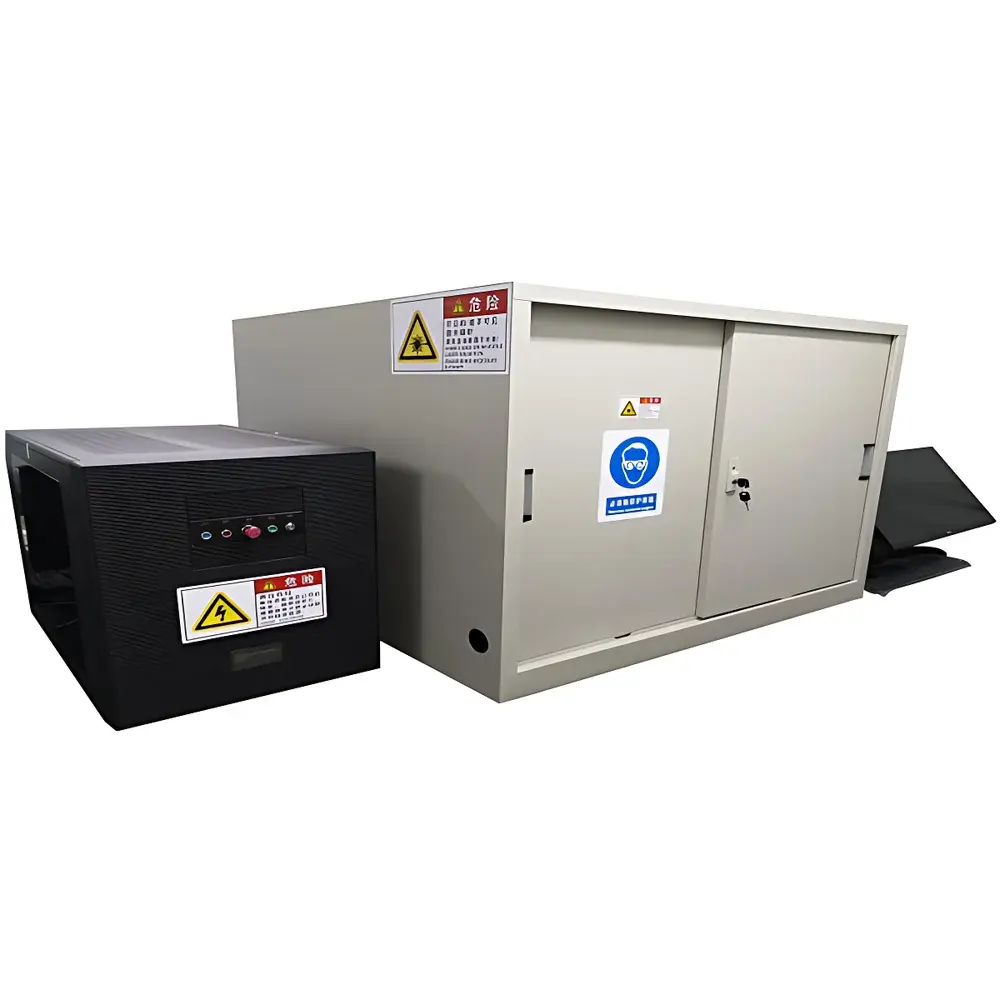
Huawei HW-HURRICANE Single-Cell Analysis and Droplet-Based Sorting System
| Brand | Huawei (Dalian Huawei) |
|---|---|
| Origin | Liaoning, China |
| Manufacturer Type | Direct Manufacturer |
| Region of Origin | Domestic (China) |
| Model | HW-HURRICANE |
| Pricing | Upon Request |
Overview
The Huawei HW-HURRICANE is a high-precision, integrated microfluidic platform engineered for single-cell analysis, droplet generation, on-chip encapsulation, and label-free or fluorescence-activated droplet sorting. It operates on the principle of hydrodynamic focusing and electrokinetic or optical detection–triggered dielectrophoretic (DEP) or piezoelectric actuation for selective droplet deflection. Unlike conventional flow cytometry systems that rely on high-shear laminar flow and pneumatic/hydraulic pressure-driven sorting—often compromising cell viability—the HW-HURRICANE employs proprietary “soft droplet manipulation” technology. This approach maintains physiological integrity of sensitive biological entities—including mammalian cells, bacteria, yeast, viruses, enzymes, and even Caenorhabditis elegans—throughout encapsulation, incubation, interrogation, and sorting stages. The system enables Poisson-distributed monodisperse droplet generation (1–100 pL per droplet), real-time identification of empty, multi-occupant, or target-positive droplets, and deterministic ejection with >99.9% sorting fidelity. Designed for reproducible, low-contamination workflows, it supports end-to-end single-entity isolation without cross-talk—critical for clonal expansion, functional genomics, and phenotypic screening under GLP-compliant laboratory conditions.
Key Features
- Proprietary soft droplet manipulation architecture minimizing mechanical stress and preserving >95% post-sorting viability across diverse cell types
- Integrated droplet generation, on-the-fly detection (fluorescence, impedance, or bioelectrical signature), and high-speed sorting in a single microfluidic cartridge
- Throughput range: 300–5,000 monodisperse droplets per second, scalable via parallelized chip design
- Tunable reagent consumption: programmable dispensing from 1 pL to 10 µL per reaction unit
- Real-time threshold-based gating: configurable multi-parameter logic (e.g., intensity + width + pulse shape) for precise event classification
- Modular software interface supporting sequential iterative sorting—enabling multi-round enrichment (e.g., “sort → amplify → re-sort”) within <3 hours for ultra-rare population isolation
- Chip-based operation with standardized PDMS/glass or thermoplastic microfluidic cartridges compatible with sterile handling and ISO Class 5 cleanroom integration
Sample Compatibility & Compliance
The HW-HURRICANE accommodates a broad spectrum of biological samples: suspension-cultured mammalian cells (e.g., CHO, HEK293, primary T cells), prokaryotes (E. coli, Bacillus spp.), fungal spores, viral particles (lentiviral, AAV), subcellular components (exosomes, ribonucleoprotein complexes), and model organisms (C. elegans L1–L4 stages). Sample preparation requires minimal pre-processing—standard fluorescent labeling (e.g., Calcein AM, SYTOX dyes), impedance-compatible buffers, or native bioelectrical profiling. All fluidic pathways are chemically inert (biocompatible fluoropolymer coatings) and autoclavable or ethanol-sterilizable. The platform adheres to ISO 13485 design controls for IVD-adjacent instrumentation and supports audit-ready electronic records per FDA 21 CFR Part 11 when deployed with optional secure login and electronic signature modules. Full traceability—including timestamped sorting logs, parameter snapshots, and raw signal files—is retained for GMP-aligned QC/QA documentation.
Software & Data Management
The HW-HURRICANE Control Suite is a Windows-based application offering intuitive workflow configuration, live visualization, and export-ready analytics. Core modules include: (1) Chip Setup Wizard for rapid calibration and pressure/flow initialization; (2) Detection Engine with real-time histogramming, scatter plots, and Boolean gate builder; (3) Sort Logic Editor enabling cascaded decision trees (e.g., “IF GFP+ AND FSC-high THEN sort to Channel A, ELSE discard”); (4) Batch Processing Mode for unattended overnight enrichment runs; and (5) Data Export Hub supporting CSV, HDF5, and .fcs (Flow Cytometry Standard) formats. Audit trails record all user actions, parameter changes, and hardware events with SHA-256 hashing. Optional cloud synchronization enables remote monitoring and cross-site collaboration while maintaining on-premise data sovereignty per GDPR and HIPAA-compliant deployment profiles.
Applications
- Ultra-rare circulating tumor cell (CTC) isolation from whole blood with concurrent viability assessment
- Directed evolution of industrial enzymes via compartmentalized self-replication (CSR) in aqueous droplets
- High-throughput screening of antibody-secreting B-cell clones post-immunization or phage display
- Construction of ultra-deep single-cell transcriptomic or CRISPR perturbation libraries
- Rapid phenotypic antimicrobial resistance (AMR) profiling of clinical isolates at single-bacterium resolution
- Selection of synthetic biology chassis strains with optimized metabolic flux (e.g., PHA producers, nitrogen-fixing consortia)
- Microencapsulation of therapeutic cells (e.g., iPSC-derived beta cells) for controlled release assays
FAQ
What sample preparation is required prior to loading?
Minimal preparation is needed: cells must be suspended in low-conductivity, non-viscous buffer (e.g., PBS + 0.1% Pluronic F-68); fluorescent labeling is optional if impedance or native electrical properties are used for discrimination.
Can the system sort based on non-fluorescent parameters?
Yes—integrated microelectrode arrays enable label-free detection via dielectric contrast, capacitance change, or transient current blockade during droplet passage.
Is chip reuse supported?
Cartridges are designed for single-use to ensure sterility and prevent carryover; however, reusable glass/PDMS chips with validated cleaning protocols are available under custom OEM agreements.
How is sorting accuracy validated?
Each instrument ships with NIST-traceable polystyrene droplet standards and includes built-in QC routines that quantify misclassification rate, droplet uniformity (CV <3%), and recovery yield using post-sort imaging or qPCR quantification.
Does the system support regulatory submissions?
Yes—full validation documentation (IQ/OQ/PQ templates), cybersecurity risk assessments, and 21 CFR Part 11 compliance packages are provided upon request for clinical or manufacturing use cases.




