
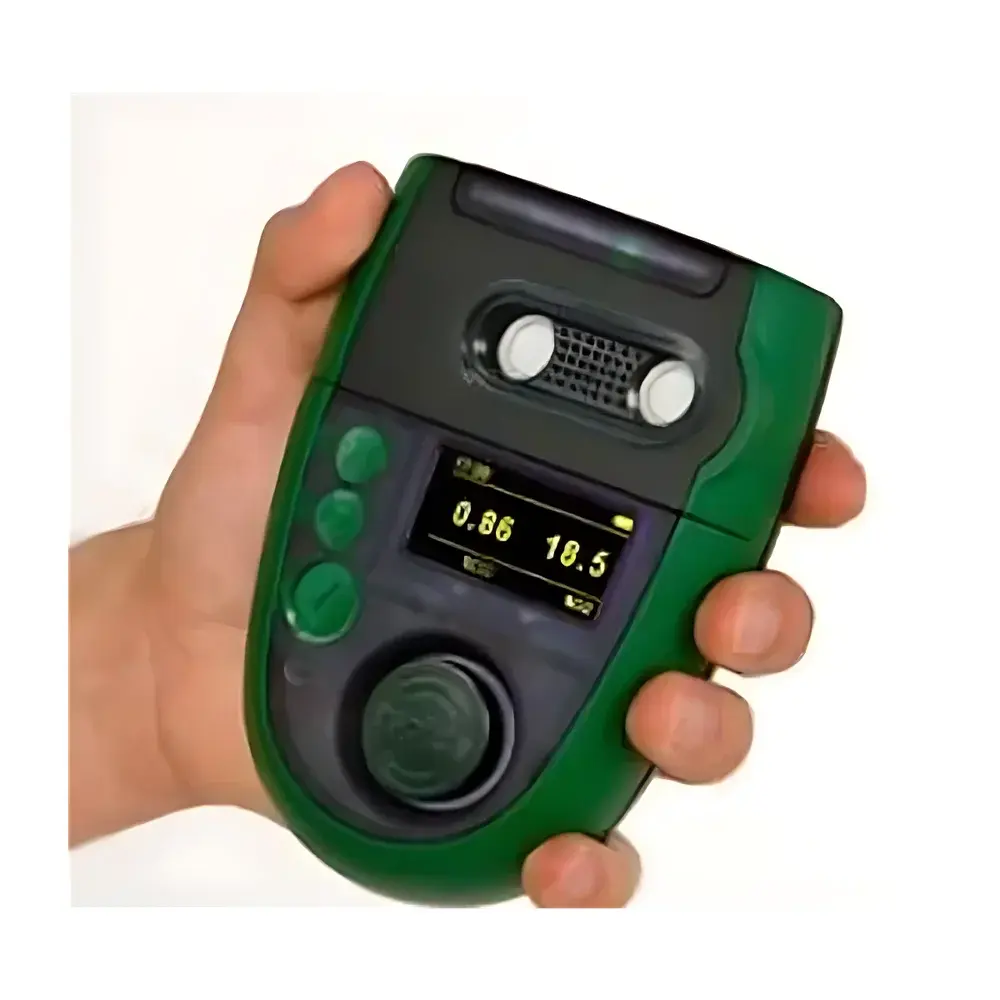
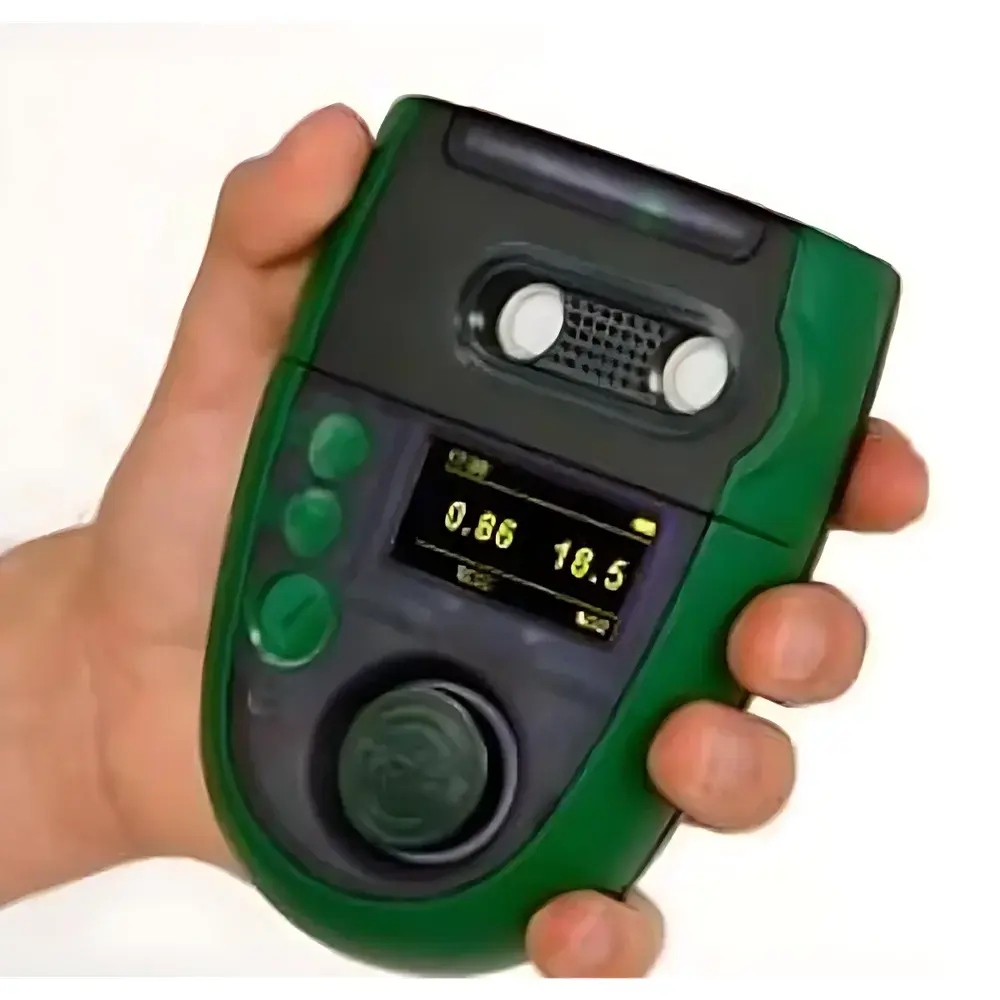
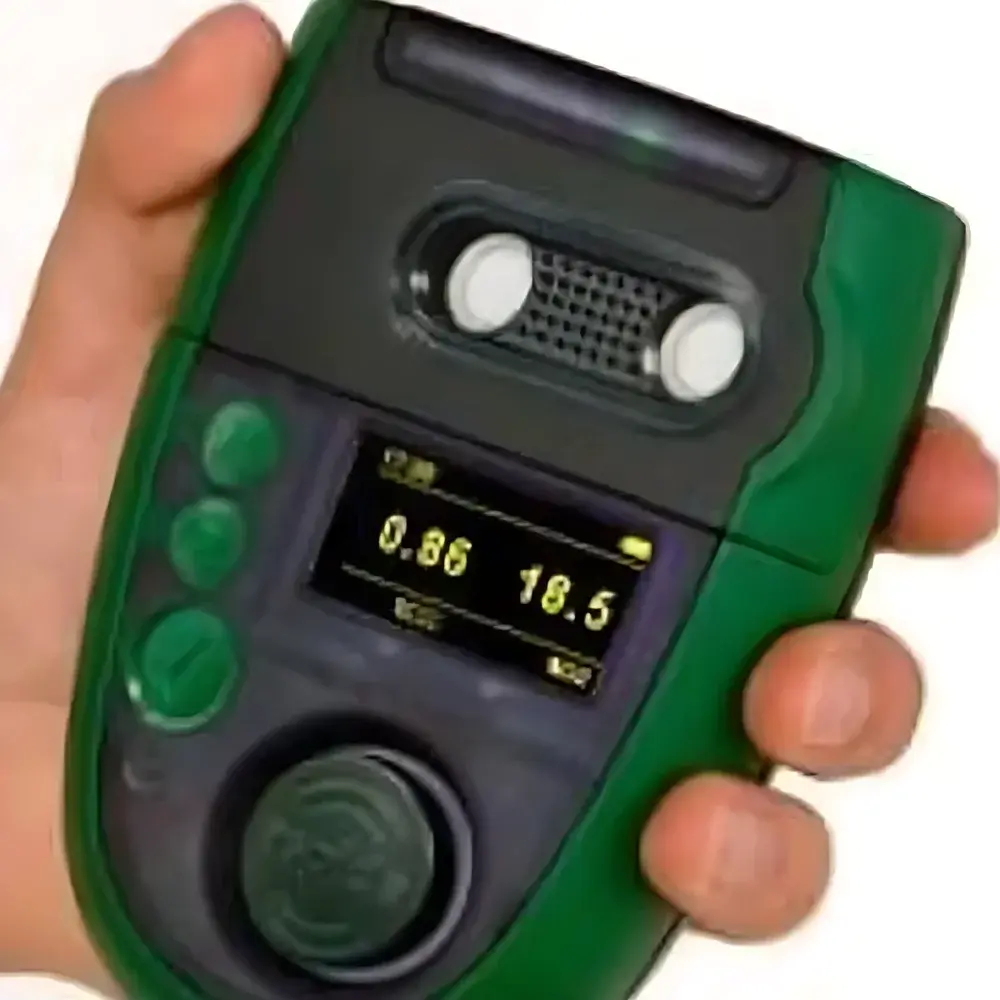
Analox Aspida O₂ Personal Oxygen Monitor
| Brand | Analox |
|---|---|
| Origin | United Kingdom |
| Model | Aspida O₂ |
| Instrument Type | Portable |
| Measurement Range | 0.1–25% O₂ (v/v) |
| Accuracy | ±0.0075% O₂ |
| Resolution | 0.1% O₂ |
| Repeatability | ±1% of reading |
| Zero Drift | <1% O₂ per month |
| Span Drift | <1% O₂ per month |
| Linearity Error | ±1% of full scale |
| Visual Indication | Green (normal), Amber (fault), Triple Red (alarm) |
| Audible Alarm | 95 dB @ 30 cm |
| Emergency Alarm | 110 dB @ 30 cm |
| Vibration Alert | Yes |
| T90 Response Time | <30 s |
| Operating Temperature | −5 °C to +50 °C |
| IP Rating | IP65 |
| Dimensions | 127 mm × 44 mm × 90 mm |
| Weight | 355 g |
| Power | Dual-mode — rechargeable Li-ion battery or two AA alkaline cells |
| Data Logging | Time-weighted average (TWA), STEL, peak hold |
| Compliance | ATEX II 2G Ex ib IIC T4 Gb, IECEx Ex ib IIC T4 Gb, UKCA, CE |
Overview
The Analox Aspida O₂ is a certified intrinsically safe, portable personal oxygen monitor engineered for continuous real-time detection of ambient oxygen concentration in potentially hazardous industrial environments. Based on electrochemical sensing technology, the device measures O₂ partial pressure within the range of 0.1–25% (v/v) and delivers high-fidelity readings with an accuracy of ±0.0075% O₂ — critical for confined space entry, hydrocarbon processing, inert gas blanketing, and cryogenic operations where hypoxic or hyperoxic conditions pose acute physiological risk. Its compact, ergonomic form factor (127 × 44 × 90 mm; 355 g) enables unobtrusive belt-clip deployment, while the IP65-rated enclosure ensures reliable operation under dust-laden or intermittently wet conditions. The Aspida O₂ complies with international safety standards including ATEX II 2G Ex ib IIC T4 Gb and IECEx Ex ib IIC T4 Gb, making it suitable for Zone 1 and Zone 2 classified areas across oil & gas, chemical manufacturing, pharmaceutical cleanrooms, and marine applications.
Key Features
- Intrinsically safe design certified for explosive atmospheres (ATEX/IECEx/UKCA)
- Triple-stage visual alarm system: green (normal operation), amber (sensor fault or calibration due), triple red LED (O₂ deviation beyond user-defined thresholds)
- Dual-mode audible alert: standard 95 dB warning at 30 cm and emergency 110 dB distress signal activated automatically upon motion cessation or manually via panic button
- Haptic feedback via integrated vibration motor — essential in high-noise environments where audio cues may be inaudible
- Smart maintenance scheduling: onboard firmware monitors sensor health, battery status, and calibration intervals, providing predictive alerts to ensure regulatory compliance and operational continuity
- Shared-use capability: supports dual-user profiles with independent TWA, STEL, and peak exposure logging — optimized for shift-based personnel rotation without hardware duplication
- Flexible power architecture: operates on either rechargeable lithium-ion battery (with USB-C charging) or two standard AA alkaline cells — eliminating downtime during unexpected battery depletion
Sample Compatibility & Compliance
The Aspida O₂ is designed exclusively for ambient air monitoring and does not require sample conditioning or external pumping. It interfaces directly with the breathing zone environment and is validated for use in non-corrosive, non-silicon-laden atmospheres. Sensor performance remains stable across its specified operating temperature range (−5 °C to +50 °C) and relative humidity up to 95% non-condensing. Regulatory alignment includes conformity with EN 60079-0, EN 60079-11, and EN 45544-1 for personal gas detectors. While not intended for quantitative laboratory analysis, its metrological traceability supports workplace exposure monitoring in accordance with OSHA 29 CFR 1910.146 (Permit-Required Confined Spaces) and HSE INDG235 guidance. Device firmware and data logs are structured to support GLP-aligned record retention practices, though native 21 CFR Part 11 compliance requires integration with approved third-party data management platforms.
Software & Data Management
Data capture is handled via the embedded microcontroller, which records time-stamped O₂ values, alarm events, TWA (8-hour), STEL (15-minute), and peak exposure metrics. Logged data is retained onboard for up to 30 days (circular buffer) and exportable via Bluetooth 5.0 or USB-C interface using Analox’s proprietary PC software suite. The software provides configurable alarm thresholds, calibration history tracking, user access logs, and PDF report generation compliant with ISO/IEC 17025 documentation requirements. Firmware updates are delivered over-the-air (OTA) or via local installation, ensuring continued alignment with evolving IEC 61508 functional safety guidelines. Audit trails include timestamps, operator IDs, and change metadata — supporting internal QA audits and external regulatory inspections.
Applications
- Confined space entry monitoring (tanks, vessels, silos, trenches)
- Workplace atmospheric verification prior to hot work or lockout/tagout procedures
- Monitoring inert gas purging processes in petrochemical refineries and LNG facilities
- Life-support system integrity checks in offshore platforms and submarine compartments
- Emergency response team deployment in fire suppression zones using nitrogen or CO₂ flooding
- Validation of ventilation efficacy in pharmaceutical isolators and cleanroom pass-throughs
FAQ
What is the expected service life of the electrochemical O₂ sensor?
The factory-calibrated sensor has a nominal operational lifespan of 24 months under typical field conditions. Actual longevity depends on cumulative exposure to extreme temperatures, mechanical shock, and high-humidity environments.
Can the Aspida O₂ be calibrated in the field without dedicated equipment?
Yes — zero calibration is performed using certified ambient air (20.9% O₂); span calibration requires a certified 10% O₂ in N₂ test gas and is supported via the built-in calibration wizard accessible through the device menu.
Is the instrument compatible with enterprise-wide gas detection management systems?
It supports Modbus RTU over RS-485 when connected via optional docking station, enabling integration into centralized SCADA or EHS dashboards for fleet-level oversight.
Does the emergency alarm function require network connectivity?
No — the motion-triggered and manual panic alarm operate autonomously using onboard accelerometers and tactile switches, independent of wireless infrastructure.
How is data integrity ensured during firmware updates?
All firmware images are cryptographically signed and validated prior to installation; rollback capability preserves last-known-good configuration in case of interrupted update sequences.







