
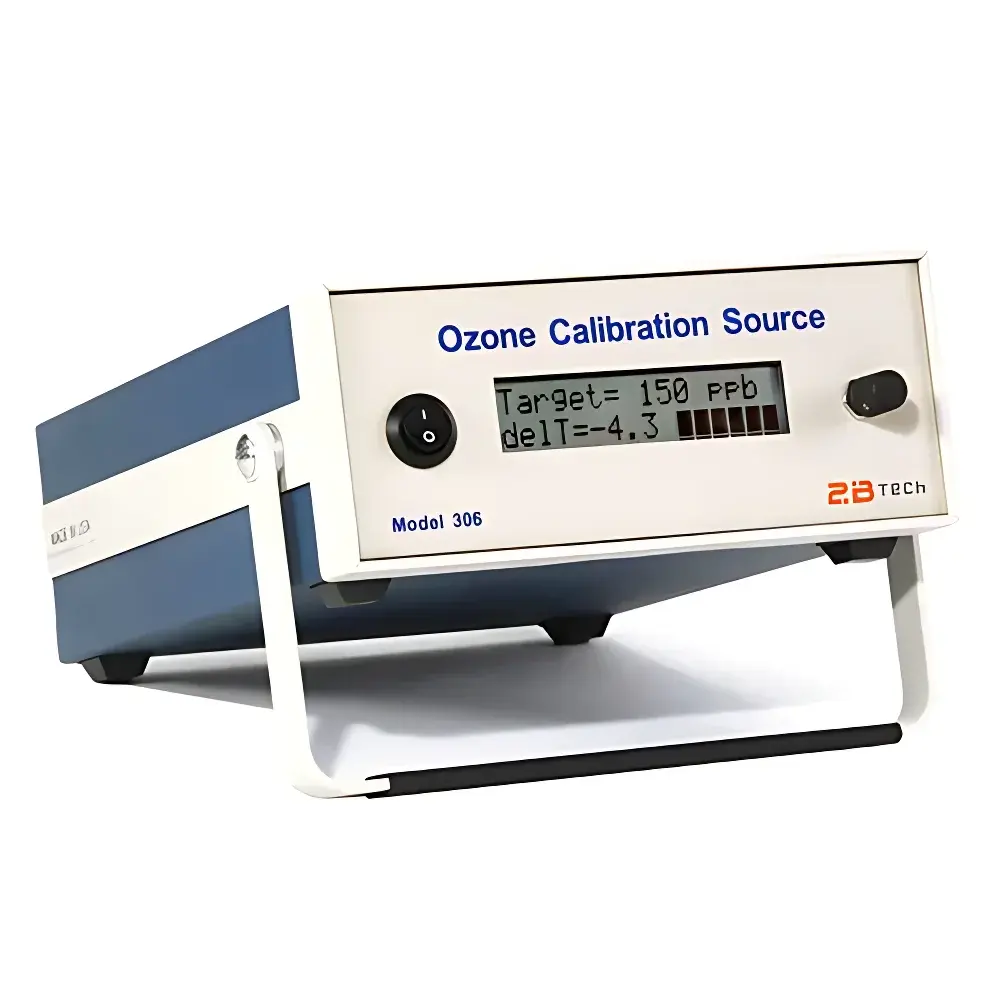
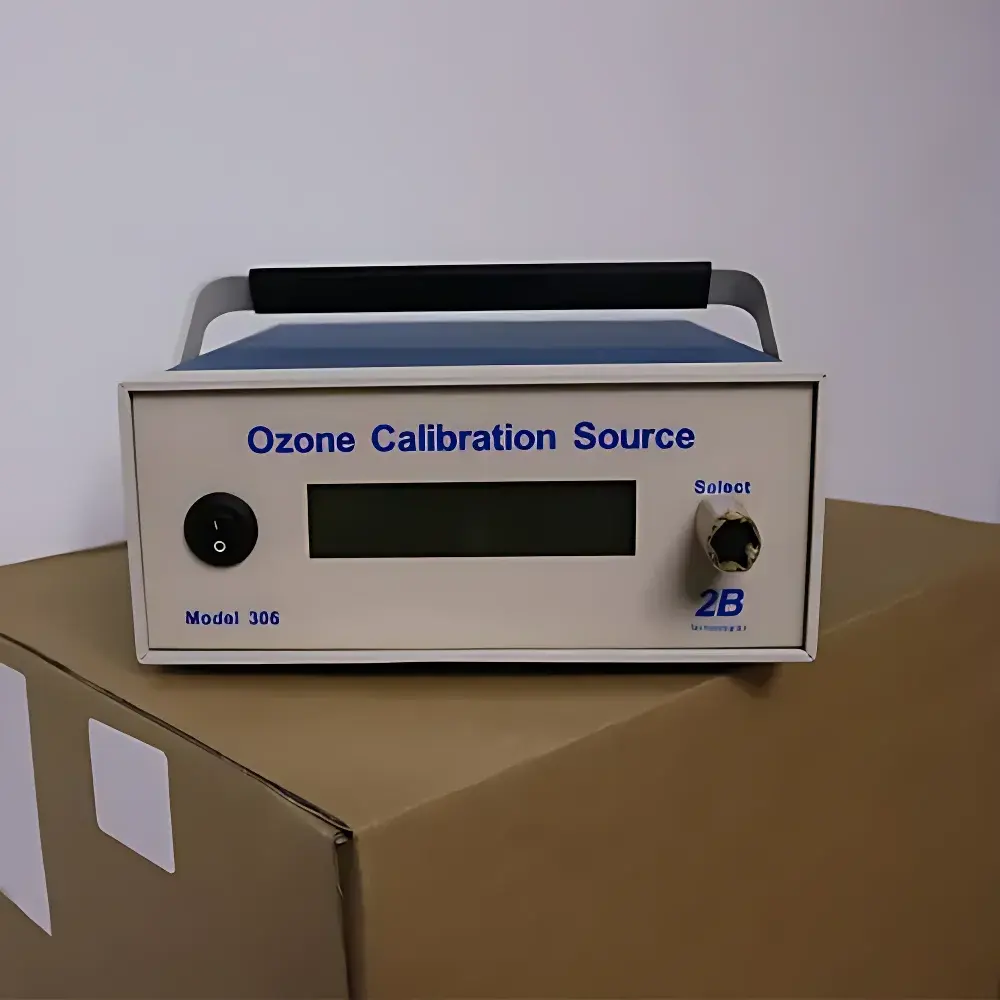
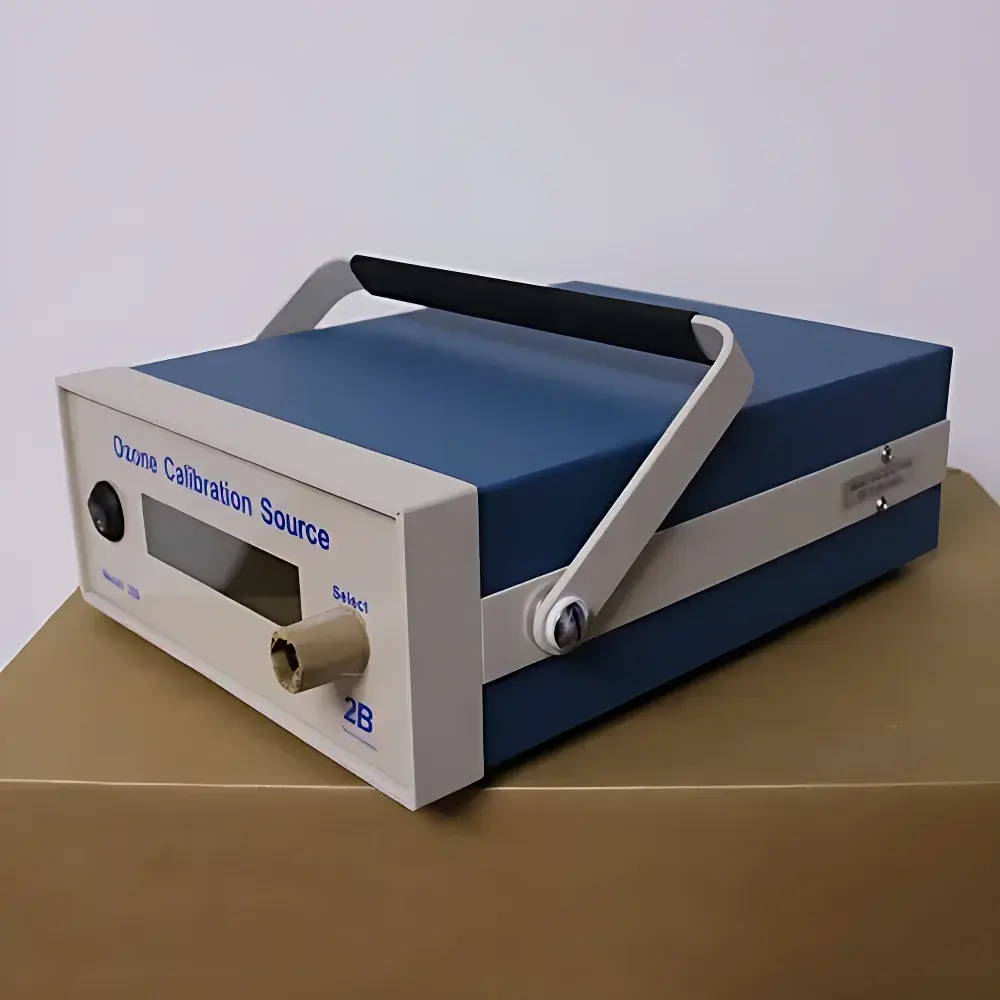
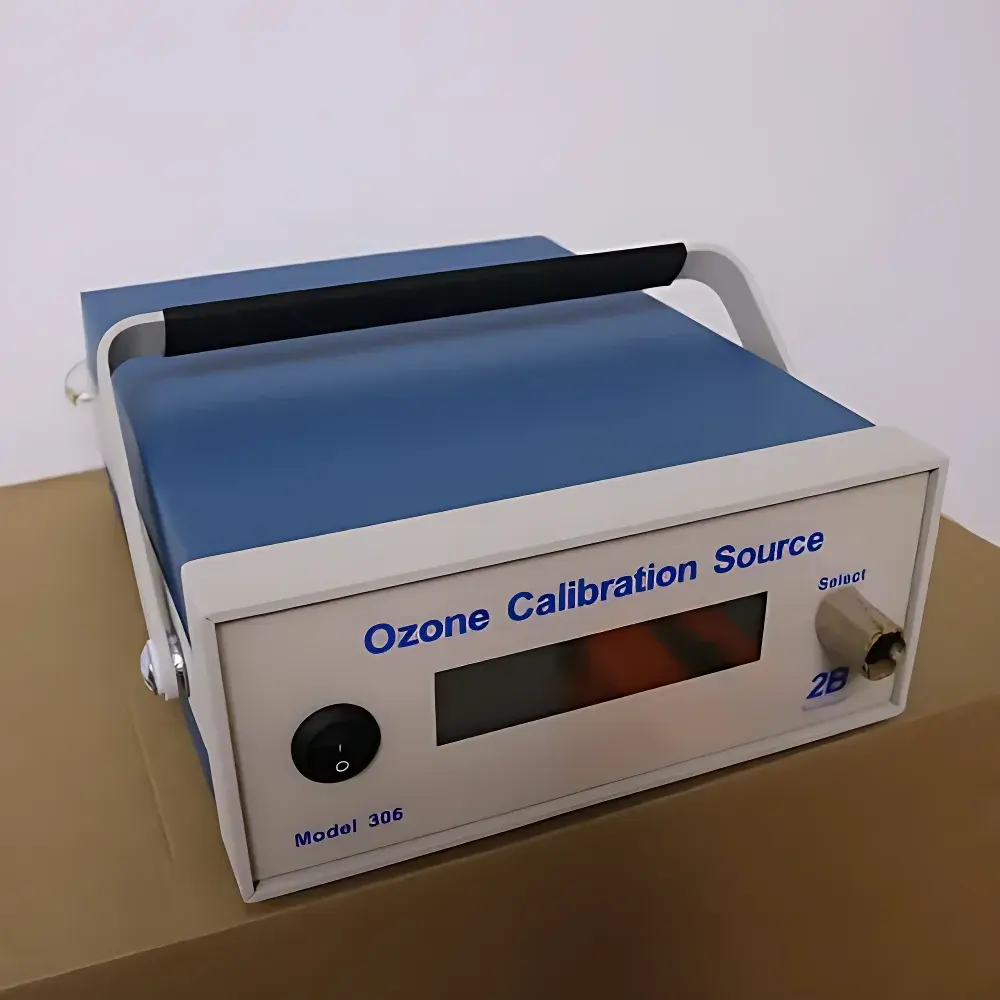
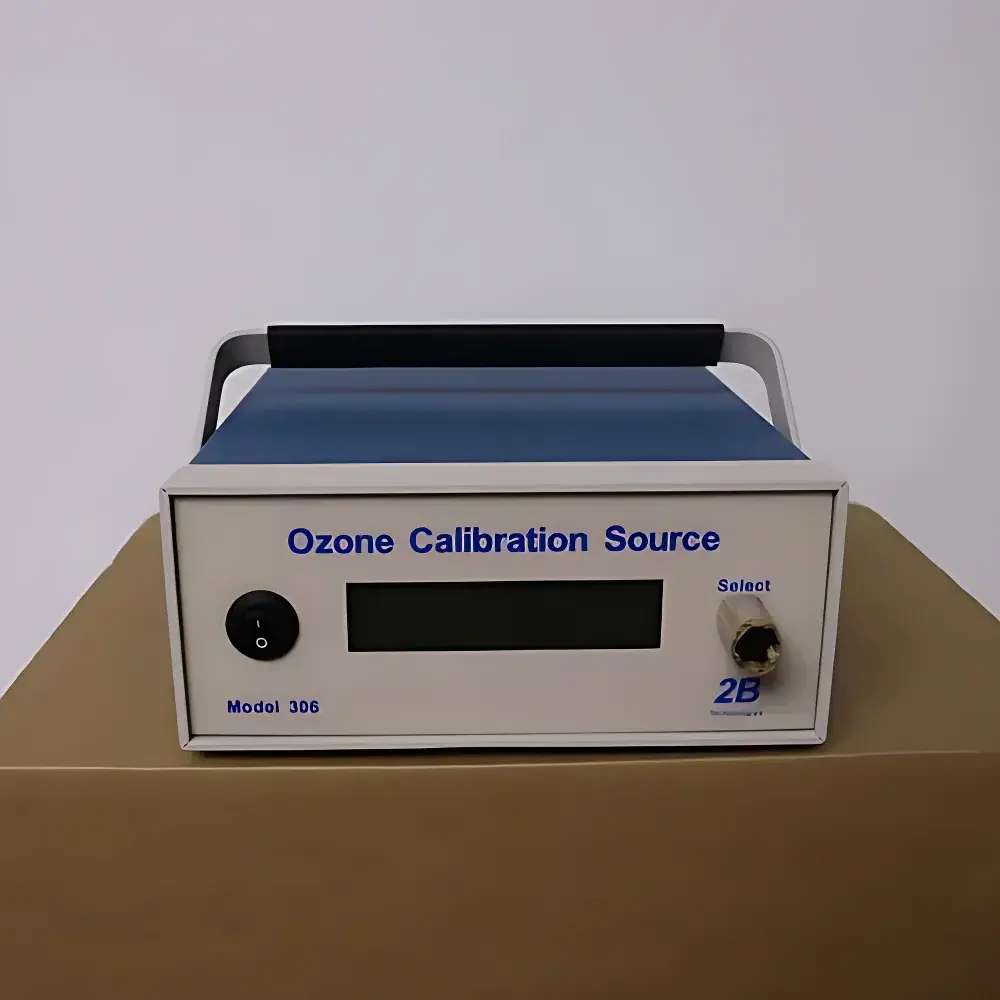
2B Technologies Model 306 Ozone Calibration Source (OCS)
| Brand | 2B Technologies |
|---|---|
| Origin | USA |
| Manufacturer Type | Authorized Distributor |
| Product Origin | Imported |
| Model | Model 306 OCS |
| Instrument Type | Portable |
| Measurement Range | 0–1,000 ppbv (selectable from 0, 30, 50, 100, 200, 500, 1000 ppbv) |
| Detection Limit | 0 ppbv (zero reference capability) |
| Response Time (t₉₅) | <35 s |
| Zero Drift | ≤1% of full scale per 24 h |
| Resolution | 2 ppbv |
| Ozone Generation Principle | Photolysis of O₂ at 185 nm |
| Total Flow Rate | 2.5 L/min (±5%) |
| Dimensions | 90 × 210 × 290 mm |
| Weight | 2.6 kg |
| Power Supply | 12 VDC or 100–240 VAC, 50/60 Hz, 18 W |
| NIST-Traceable Calibration | Yes |
| Environmental Independence | Controlled ozone mixing ratio unaffected by ambient temperature, pressure, or humidity |
Overview
The 2B Technologies Model 306 Ozone Calibration Source (OCS) is a portable, NIST-traceable ozone generator engineered for high-fidelity calibration and verification of ozone analyzers across environmental monitoring, industrial hygiene, atmospheric research, and laboratory QA/QC applications. Unlike passive permeation or chemical generation methods, the Model 306 employs vacuum-ultraviolet (VUV) photolysis of ambient oxygen at 185 nm to produce ozone with metrological stability and compositional fidelity. This principle ensures that ozone is generated *in situ* from purified ambient air—eliminating reliance on compressed gas cylinders or reactive precursors—and delivers a stable, well-characterized output stream traceable to primary NIST ozone standards. The instrument operates as a transfer standard: it does not measure ozone but generates certified concentrations with known uncertainty, enabling direct calibration of UV photometric, electrochemical, or chemiluminescence-based ozone detectors. Its compact architecture (90 × 210 × 290 mm), low mass (2.6 kg), and dual-power capability (12 VDC or universal AC input) support field deployment, mobile lab integration, and routine benchtop verification.
Key Features
- NIST-traceable ozone generation: Factory-calibrated against NIST Standard Reference Photometers; certificate includes uncertainty budget and calibration date.
- Environmentally robust concentration control: Microprocessor-regulated ozone mixing ratio maintains setpoint accuracy independent of ambient temperature (−10 to +40 °C), barometric pressure (60–106 kPa), and relative humidity (0–95% RH non-condensing).
- Seven discrete concentration outputs: User-selectable ozone levels: 0 (zero air), 30, 50, 100, 200, 500, and 1000 ppbv—each verified and documented in calibration report.
- Stable 2.5 L/min total flow: Mass-flow-controlled output ensures consistent dilution dynamics and minimizes backpressure effects on connected analyzers.
- Integrated ozone scrubber: Excess flow is catalytically destroyed internally, eliminating external ozone abatement requirements and ensuring safe operation in confined spaces.
- Field-serviceable calibration adjustment: Firmware-accessible calibration parameters allow re-mapping to match user-maintained laboratory primary standards—supporting hierarchical calibration programs compliant with ISO/IEC 17025.
Sample Compatibility & Compliance
The Model 306 OCS interfaces directly with inlet manifolds of all major ozone analyzer platforms—including Thermo Scientific 49i, Teledyne API 400E, EcoChem 500, and custom-built UV absorption systems—via standard 1/4″ OD PTFE or stainless-steel tubing. Its zero-air baseline (0 ppbv) meets EPA Method 40 CFR Part 53 requirements for zero-check validation. Concentration outputs satisfy ASTM D5012 (ozone exposure testing for elastomers), ISO 10121-2 (air filter testing), and EN 14683 (medical mask ozone resistance). The instrument’s design supports GLP-compliant calibration logs when paired with compliant data acquisition software; its firmware records calibration history, operational hours, and firmware version for audit readiness.
Software & Data Management
No proprietary software is required for basic operation—the front-panel rotary encoder provides intuitive menu navigation and concentration selection. For traceability and documentation, users may integrate the Model 306 into existing LIMS or ELN workflows via optional RS-232 or USB-to-serial interface (firmware v3.2+). Output includes timestamped concentration setpoints, elapsed runtime, and error flags (e.g., lamp degradation warning, flow deviation >±10%). All calibration certificates are supplied in PDF format with digital signatures and NIST traceability statements. The device complies with FDA 21 CFR Part 11 requirements when used with validated electronic record systems supporting audit trails, electronic signatures, and role-based access control.
Applications
- Primary field calibration of regulatory-grade ozone monitors deployed in EPA SLAMS, EEA AirBase, and national AQMS networks.
- Verification of ozone analyzer linearity, zero stability, and span response prior to compliance audits (e.g., EU Directive 2008/50/EC).
- Controlled ozone exposure studies: material aging (rubber cracking per ASTM D1149), polymer degradation, paint film integrity, and plant physiology research (e.g., stomatal conductance under defined O₃ stress).
- Method validation and inter-laboratory comparison exercises under ISO/IEC 17043 proficiency testing schemes.
- Supporting ISO 9001 and ISO 14001 internal audit requirements for measurement equipment calibration management.
FAQ
Is the Model 306 OCS suitable for calibrating UV photometric ozone analyzers?
Yes—it is specifically designed to provide stable, traceable ozone concentrations for UV absorption-based instruments operating at 254 nm, with output stability meeting or exceeding EPA Performance Specification 2 (PS-2) criteria.
Can I adjust the calibration if I maintain my own ozone primary standard?
Yes—calibration coefficients are accessible via service mode and can be updated using the included calibration utility, enabling alignment to user-specific reference values while retaining full NIST-traceability documentation.
Does the instrument require consumables or periodic lamp replacement?
The 185 nm VUV lamp has a rated lifetime of ≥10,000 hours; replacement is recommended after 12 months of continuous use or upon firmware-confirmed intensity decay >15%.
What flow rate tolerance is maintained during concentration switching?
Total flow remains within ±5% of 2.5 L/min across all concentration settings, verified per ISO 6145-7 gravimetric flow calibration protocol.
How is zero air generated for the 0 ppbv output?
Zero air is produced by passing ambient air through a dual-stage catalytic scrubber (Pt/Pd on alumina) followed by activated carbon filtration—achieving ozone removal efficiency >99.99% and hydrocarbon reduction to <0.1 ppmv.
Related Products







