
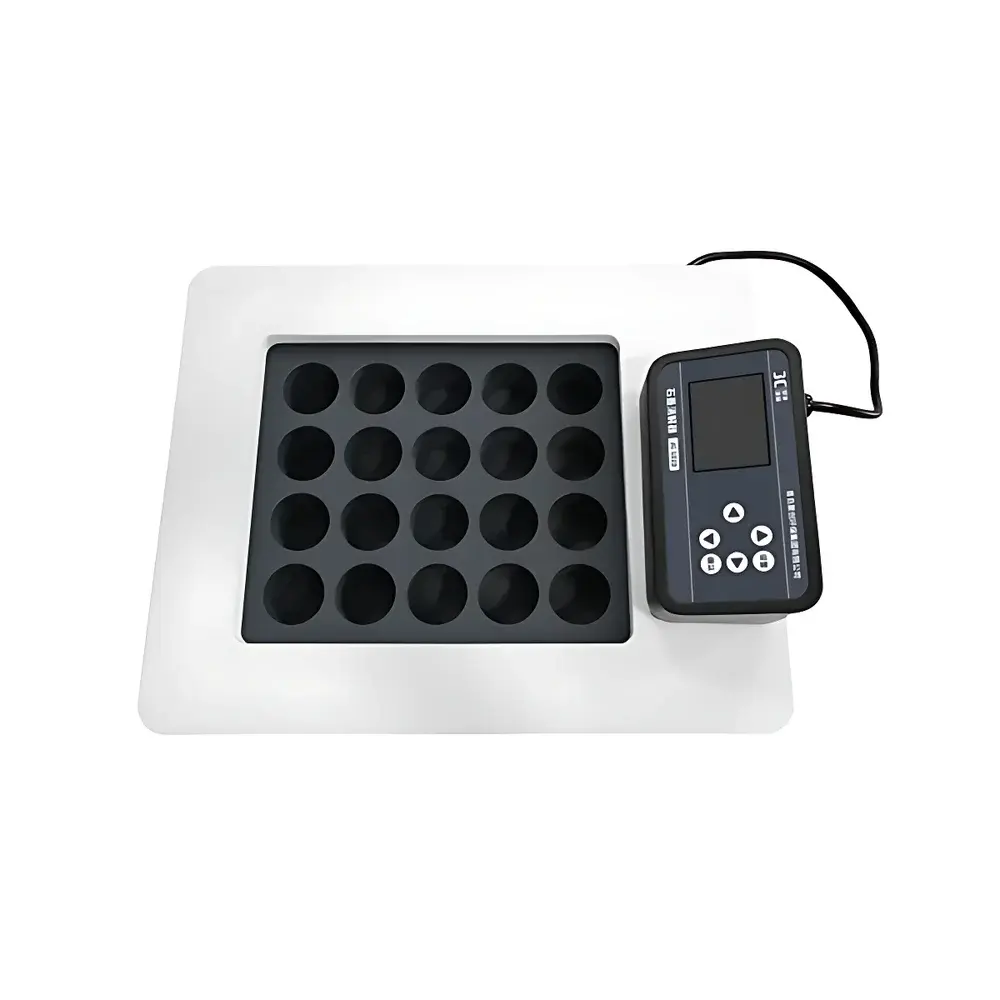
JU CHUANG JC-102D-36U Graphite Block Digestion System with Remote Control for Acid Digestion and Sample Preparation
| Brand | JU CHUANG ENVIRONMENTAL |
|---|---|
| Origin | Shandong, China |
| Manufacturer Type | Direct Manufacturer |
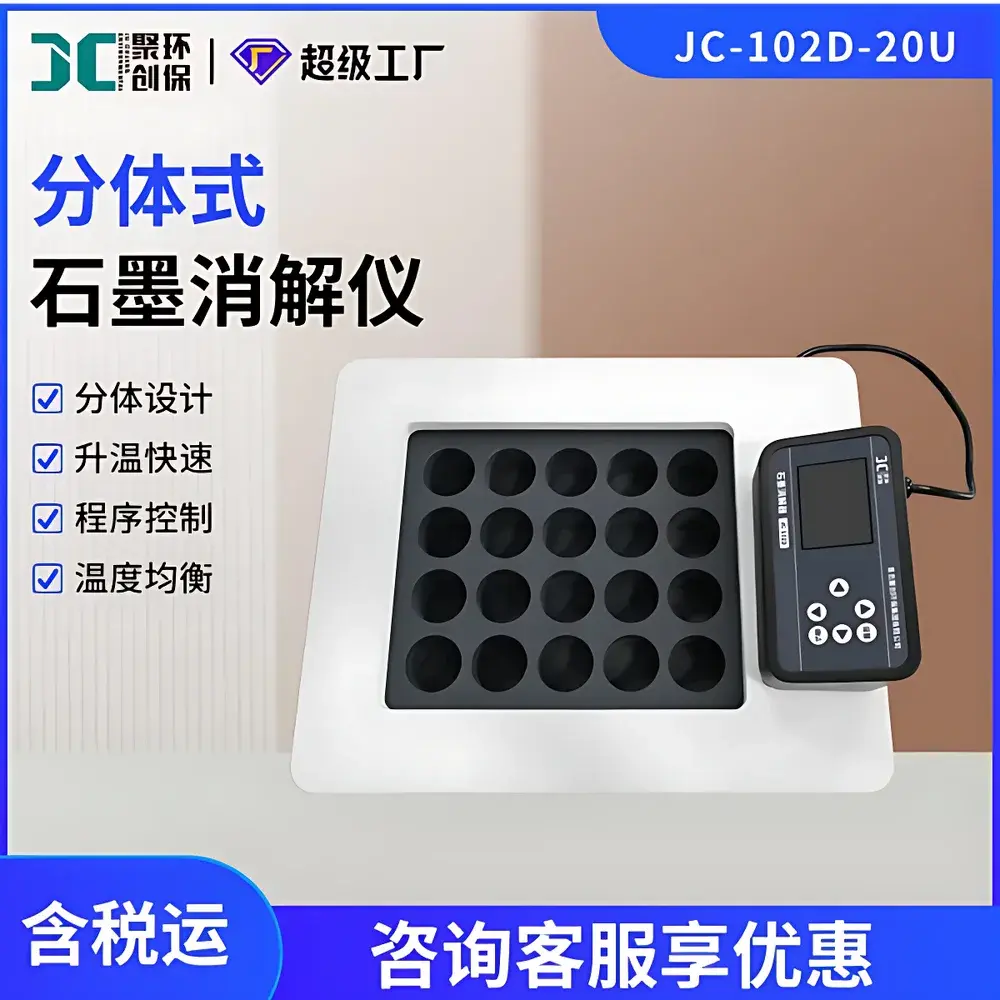
| Heating Module | Single Graphite Block |
| Batch Capacity | 36 Positions |
| Temperature Range | Ambient to 200 °C |
| Temperature Accuracy | ±1 °C |
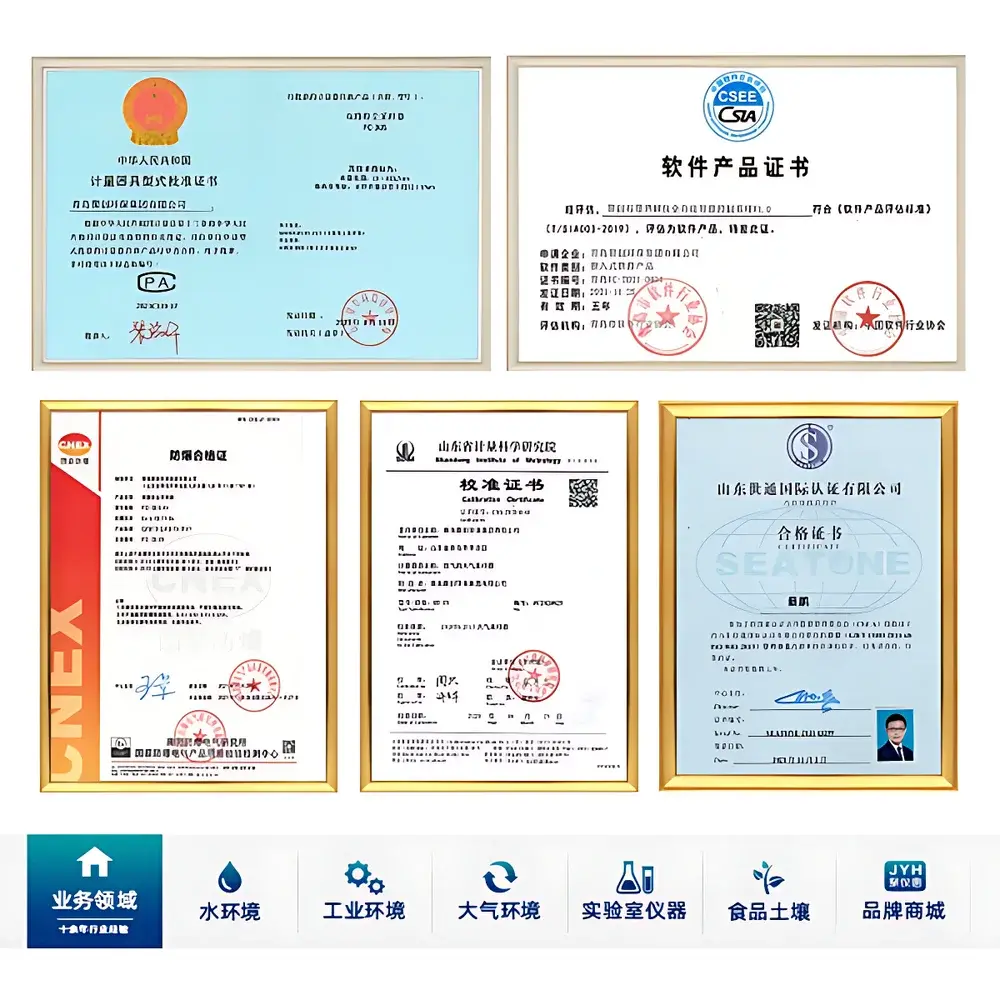
| Compliance | Designed for EPA 200.2/200.7/3050B, ISO 11466, GB/T 5009.11–2003, GB/T 22105.1–2008, and ASTM D3658 |
Overview
The JU CHUANG JC-102D-36U Graphite Block Digestion System is a precision-engineered, modular laboratory instrument designed for controlled thermal decomposition of solid and liquid samples in acidic media—commonly referred to as “acid digestion” or “acid evaporation (‘acid removal’ or ‘赶酸’)”. Unlike conventional hot plates or ceramic heating blocks, this system employs high-purity graphite as the primary heating medium, leveraging its exceptional thermal conductivity (>120 W/m·K), uniform heat distribution, and chemical inertness to strong mineral acids (e.g., HNO₃, HCl, HF, H₂SO₄, and aqua regia). The instrument operates on the principle of conductive heating: sample tubes (typically quartz, PTFE, or borosilicate glass) are inserted into precisely machined wells within the graphite block; the block is then heated via embedded resistance elements, enabling accurate, reproducible temperature ramping and isothermal hold profiles. Its design supports both open-vessel digestion and post-microwave acid evaporation workflows—making it an essential front-end preparation tool for trace metal analysis by ICP-OES, ICP-MS, AAS, and HG-AFS.
Key Features
- Modular architecture with physically separated control unit and digestion block—enabling full remote operation outside fume hoods to minimize operator exposure to corrosive acid vapors.
- Monolithic high-density graphite heating block with PTFE-coated surface—resistant to pitting, oxidation, and etching under prolonged exposure to concentrated acids at elevated temperatures.
- 36-position configuration with customizable well diameter (standard: 42 mm) and depth (standard: 45 mm)—compatible with common digestion vessels including 50 mL polypropylene tubes, 100 mL quartz vials, and EPA-compliant borosilicate digestion tubes.
- PID-based programmable temperature controller with real-time display of setpoint, actual temperature, elapsed time, and remaining hold duration—supporting multi-step ramps (e.g., 120 °C → 150 °C → 180 °C) with user-defined dwell times.
- Integrated over-temperature safety cutoff and dual-stage audible alarm system—first alert at target temperature attainment, second at end of programmed hold cycle—ensuring procedural integrity and operator awareness.
- PTFE-coated work surface with thermal insulation—providing mechanical stability, acid resistance, and operator protection against accidental contact burns.
Sample Compatibility & Compliance
The JC-102D-36U is validated for use with environmental matrices including wastewater, drinking water, soil, sediment, sludge, biological tissues (urine, blood, hair), food homogenates, and polymer extracts. It conforms to method requirements specified in U.S. EPA Methods 200.2 (ICP-AES), 200.7 (ICP-OES), 200.8 (ICP-MS), 245.1 (Hg by cold vapor AAS), and 365.1 (total recoverable metals); Chinese national standards GB/T 5009.11–2003 (As), GB/T 5009.17–1996 (Hg), GB/T 22105.1–2008 (soil As/Sb/Bi), and GB/T 17138–1997 (total Cu/Zn/Pb/Cd in soil); and ISO 11466 (heavy metals in soils and sediments). All digestion protocols follow GLP-aligned documentation practices, supporting audit-ready recordkeeping when paired with external data loggers or LIMS-integrated software.
Software & Data Management
While the JC-102D-36U operates via an embedded standalone controller, its analog output (0–5 V or 4–20 mA optional) enables integration with third-party data acquisition systems for time-stamped temperature logging. The interface supports manual parameter entry only—no onboard memory or USB export—but complies with foundational data integrity expectations for non-automated instruments under FDA 21 CFR Part 11 (when used in conjunction with validated external recording solutions). Users may replicate standardized digestion sequences across shifts using printed SOPs referencing exact ramp rates (e.g., 5 °C/min), hold durations (e.g., 90 min at 150 °C), and cooling protocols—ensuring inter-laboratory reproducibility.
Applications
This system is routinely deployed in environmental testing laboratories for total recoverable metal determination in municipal effluents (EPA 200.7), iodine quantification in urine (WHO-recommended HNO₃/H₂O₂ digestion), COD pre-digestion per ISO 6060, and leachate analysis from landfill monitoring wells. In public health labs, it serves as the primary digestion platform for CDC-recommended urinary iodine assays (using ammonium persulfate oxidation followed by Sandell-Kolthoff reaction). Academic and R&D facilities apply it to nanoparticle dissolution studies, catalyst residue analysis, and speciation sample prep prior to HPLC-ICP-MS coupling. Its robust construction and corrosion-resistant surfaces also support extended use in industrial QC labs handling electroplating baths, mining tailings, and semiconductor rinse waters.
FAQ
What types of digestion vessels are compatible with the JC-102D-36U?
Standard compatibility includes 50 mL polypropylene, 100 mL borosilicate glass, and quartz digestion tubes with outer diameters between 38–45 mm. Custom well dimensions can be ordered for specialized vessel formats.
Can the instrument be used for hydrofluoric acid (HF) digestion?
Yes—provided vessels are made of PTFE, PFA, or quartz; the graphite block’s PTFE coating and PTFE work surface resist HF attack up to 200 °C, though strict PPE and fume hood use remain mandatory.
Is temperature calibration traceable to NIST standards?
The unit ships with factory calibration verified using a Class A Pt100 probe referenced to NIST-traceable dry-block calibrators; users may perform field verification with external calibrated thermometers inserted into empty wells.
Does the system meet CE or UL safety certification requirements?
It complies with IEC 61010-1:2010 for laboratory electrical equipment safety; CE marking is available upon request for EU shipments, subject to local import conformity assessment.
How is maintenance performed on the graphite block?
No routine servicing is required; periodic cleaning with dilute NaOH followed by deionized water rinse suffices. Avoid abrasive tools or chlorine-based cleaners to preserve the PTFE coating integrity.







