
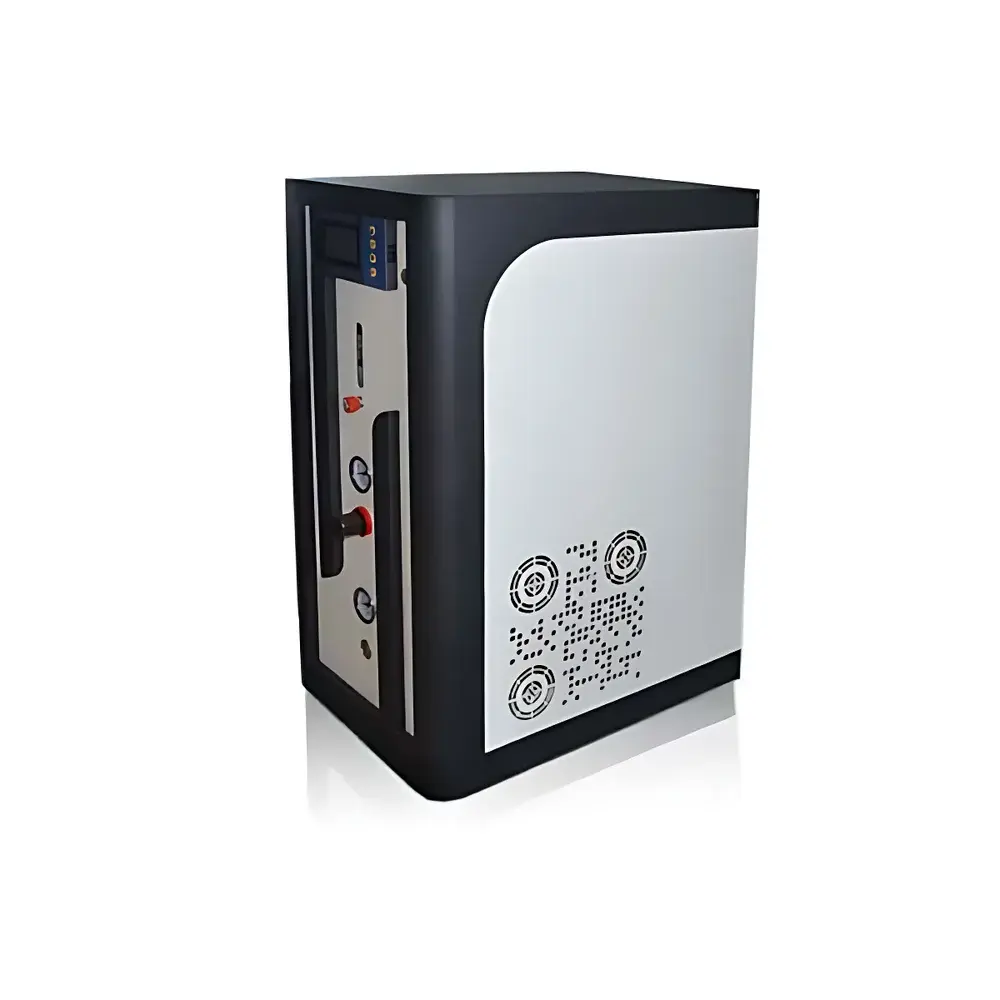
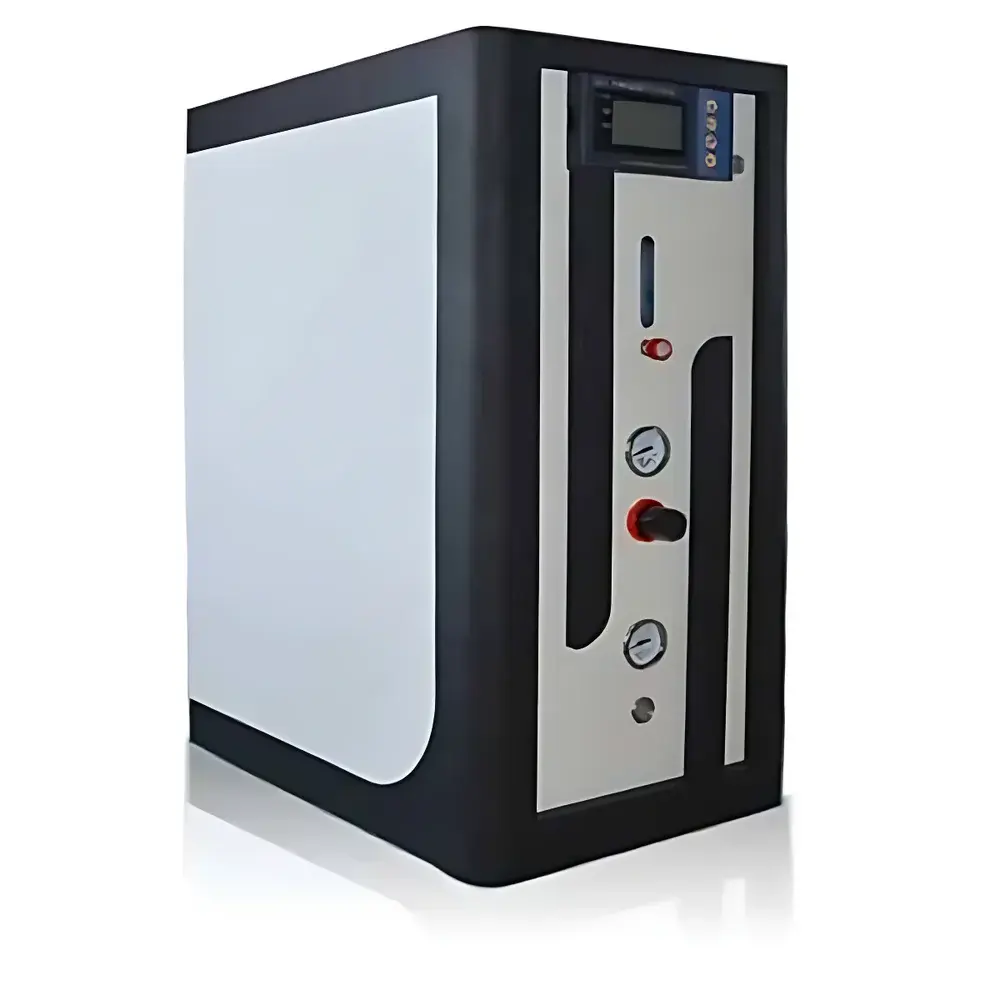
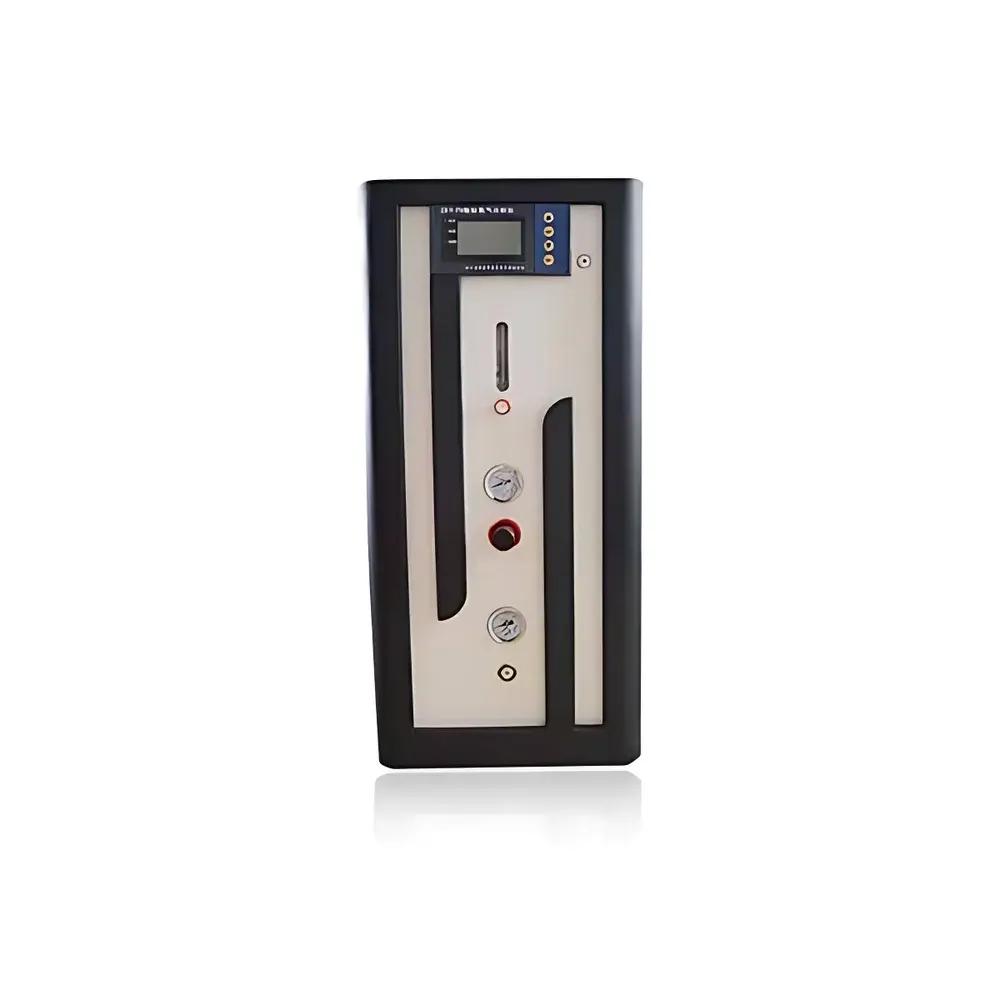
AYAN AYAN-20L Laboratory-Scale Membrane Nitrogen Generator
| Brand | AYAN |
|---|---|
| Origin | Zhejiang, China |
| Model | AYAN-20L |
| Nitrogen Generation Principle | Imported Hollow-Fiber Membrane Separation |
| Output Flow Rate | 20 L/min |
| Output Pressure | 0.6 MPa |
| Nitrogen Purity | 99.9% |
| Dew Point | -40 °C |
| Compliance | CE-marked design (intended for lab use under ISO 8573-1 Class 3/4 air quality input) |
Overview
The AYAN AYAN-20L Laboratory-Scale Membrane Nitrogen Generator is an engineered solution for on-demand, continuous nitrogen supply in analytical and preparative laboratory environments. It employs hollow-fiber membrane separation technology—based on selective permeation of compressed air components—to separate nitrogen from oxygen, water vapor, and trace gases. This principle relies on the differential solubility and diffusivity of gases through polymeric membranes: oxygen, CO₂, and moisture permeate faster, while nitrogen is retained in the low-permeability retentate stream. Designed specifically for integration with nitrogen-consuming instruments—including nitrogen blow-down evaporators (nitrogen concentrators), GC carrier gas systems, glove boxes, and sample preparation workstations—the AYAN-20L delivers stable, oil-free nitrogen at 20 L/min and 0.6 MPa (gauge), with consistent purity ≥99.9% (v/v) and a pressure dew point of -40 °C. Its compact footprint, plug-and-play operation, and absence of consumables (e.g., no PSA beds requiring regeneration cycles or replacement) make it suitable for routine use in QC labs, food safety testing facilities, and university research settings where reliability, low maintenance, and regulatory-aligned gas quality are critical.
Key Features
- Hollow-fiber membrane module sourced from internationally certified suppliers, optimized for long-term stability and minimal flux decay under continuous operation.
- Integrated multi-stage air pretreatment: particulate filtration (≤1 µm), coalescing filter (removes oil aerosols to ≤0.01 mg/m³), and desiccant dryer (achieving inlet dew point ≤-20 °C), ensuring membrane longevity and consistent output quality.
- Real-time pressure monitoring at inlet and outlet via calibrated analog gauges; adjustable back-pressure regulator for fine-tuning delivery pressure within 0.4–0.7 MPa range.
- Stainless steel (316L) gas pathways and brass fittings compliant with ASTM B117 corrosion resistance standards; all wetted materials compatible with ISO 8573-1:2010 Class 3 compressed air input.
- No electrical heating elements or moving parts beyond the feed air compressor—reducing failure modes and enabling silent, vibration-free operation in shared lab spaces.
Sample Compatibility & Compliance
The AYAN-20L is intended for use with clean, dry, oil-free compressed air meeting ISO 8573-1:2010 Class 3.1.3 specifications (solid particles ≤0.5 µm, oil content ≤0.01 mg/m³, dew point ≤-20 °C). It is not designed for direct connection to ambient air or unfiltered shop air. The generated nitrogen meets typical requirements for food packaging inerting (Codex Alimentarius GL 2008/1), residual solvent purge in HPLC/GC systems (USP ), and blank matrix stabilization in elemental analysis. While not certified to FDA 21 CFR Part 11 or ISO/IEC 17025 out-of-the-box, its operational logs (via optional analog signal output) support GLP-compliant recordkeeping when integrated into validated lab workflows.
Software & Data Management
The AYAN-20L operates as a standalone hardware unit without embedded firmware or digital interface. All controls are manual: inlet pressure adjustment via needle valve, output pressure regulation via precision back-pressure valve, and flow rate monitored using a calibrated rotameter (±2% FS accuracy). For laboratories requiring audit-ready documentation, optional 4–20 mA analog outputs (for pressure and flow) can be interfaced with third-party data acquisition systems (e.g., LabVIEW, DeltaV, or custom SCADA platforms) to generate timestamped logs compliant with ALCOA+ principles (Attributable, Legible, Contemporaneous, Original, Accurate, Complete, Consistent, Enduring, Available).
Applications
- Nitrogen blow-down concentration of pesticide residues, mycotoxins, and environmental contaminants in food, agricultural, and forensic samples.
- Carrier gas supply for gas chromatography (GC-FID, GC-ECD, GC-MS) where high-purity, low-moisture nitrogen improves baseline stability and column lifetime.
- Inert atmosphere generation for oxygen-sensitive sample storage (e.g., lipid oxidation studies, vitamin stability assays).
- Blank gas for TOC analyzers, dissolved oxygen meters, and headspace GC sampling systems.
- Support gas for laser ablation ICP-MS and plasma-based elemental analyzers requiring ultra-dry, particle-free nitrogen sheath gas.
FAQ
What compressed air quality is required for optimal performance?
The generator requires ISO 8573-1 Class 3.1.3 compressed air: ≤0.5 µm particulates, ≤0.01 mg/m³ oil aerosol, and dew point ≤-20 °C. Failure to meet these specs may accelerate membrane fouling and reduce purity over time.
Can output flow and pressure be adjusted during operation?
Yes—flow is regulated via the inlet needle valve; pressure is controlled independently using the downstream back-pressure regulator. Both adjustments are manual and require no tools.
Is this unit suitable for GMP-regulated pharmaceutical labs?
It may be deployed in GMP environments as a utility gas source, provided it undergoes IQ/OQ validation per your site’s SOPs and is maintained per manufacturer-recommended intervals (e.g., filter element replacement every 6–12 months based on usage).
Does the system include automatic shutdown or alarms?
No—this is a passive, non-intelligent generator. Critical parameters must be visually monitored. Optional analog outputs enable external alarm integration via PLC or DAQ systems.
How often do the pre-filters need replacement?
Under typical lab usage (8 h/day, 5 days/week), coalescing and desiccant filters should be replaced every 6 months; particulate filters every 3 months—subject to inlet air quality verification.



