
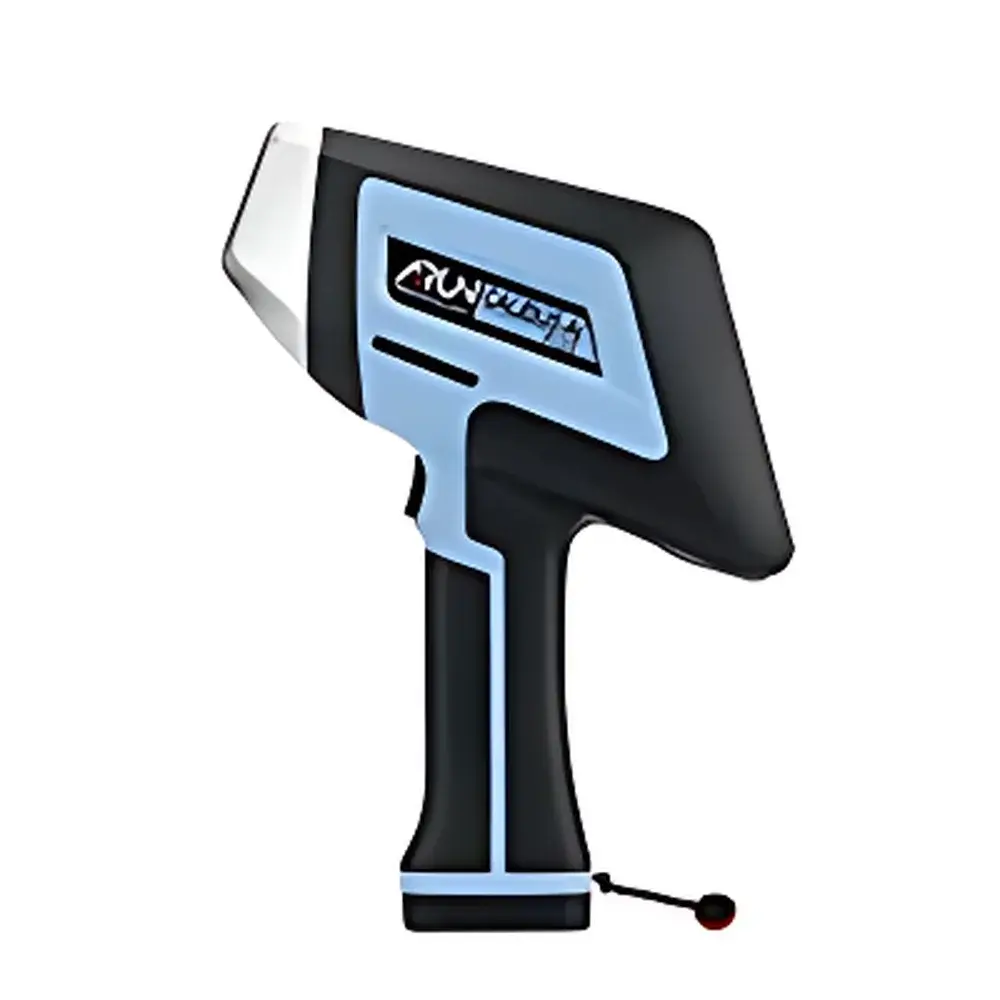
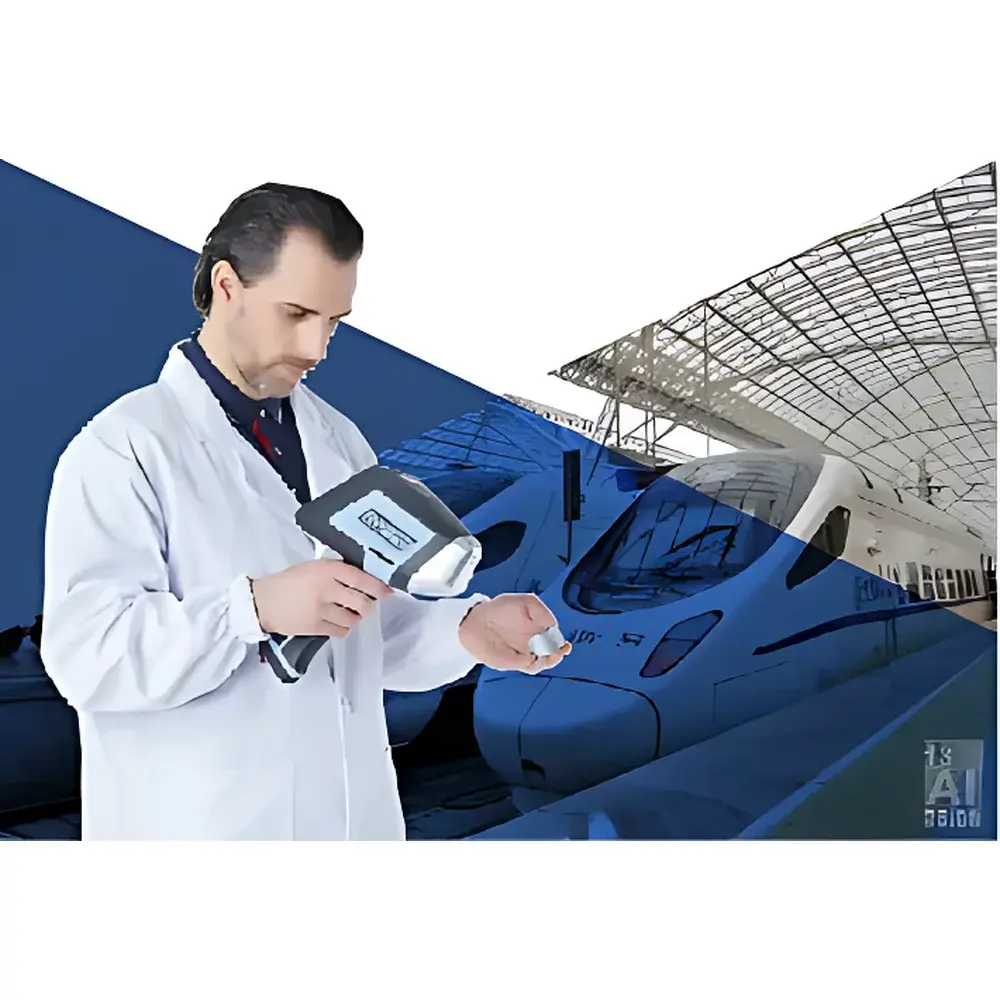
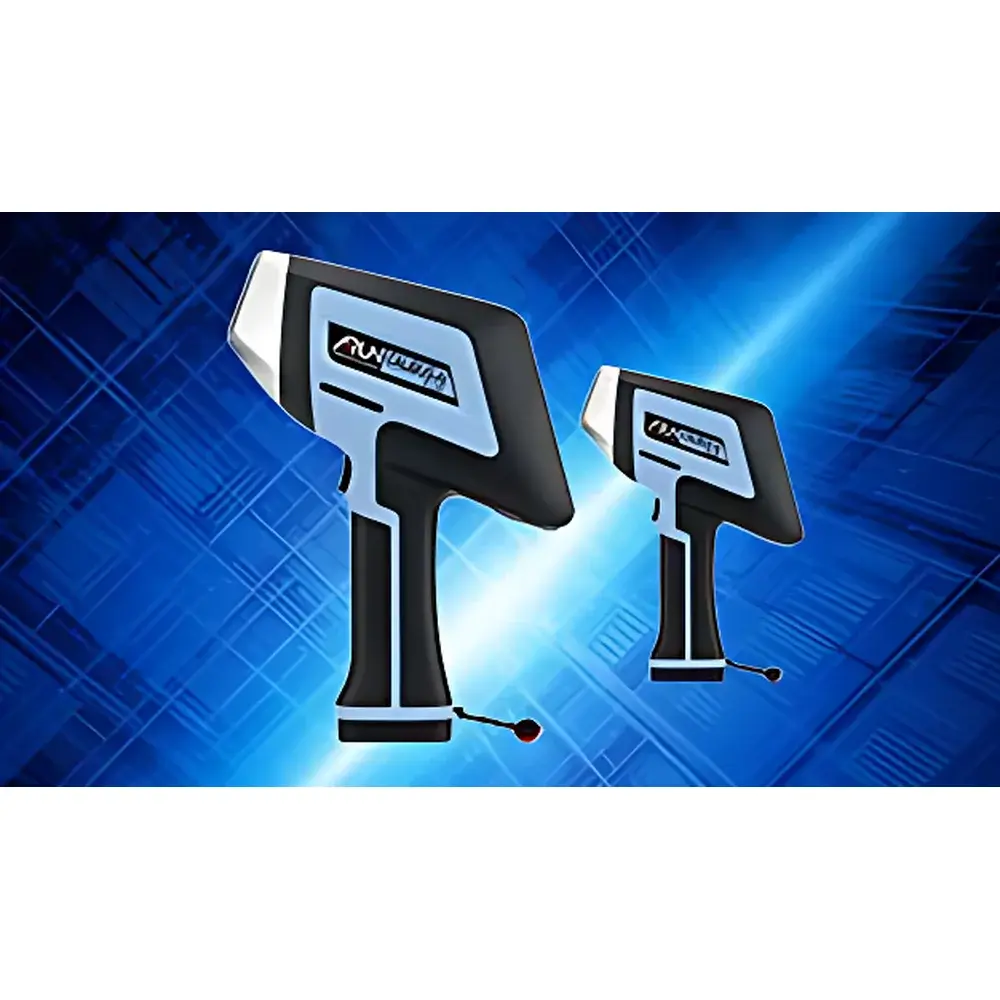
Arun Technology Calibus Al Handheld Laser-Induced Breakdown Spectroscopy (LIBS) Analyzer
| Brand | Arun Technology Ltd. |
|---|---|
| Origin | United Kingdom |
| Manufacturer Type | Authorized Distributor |
| Product Origin | Imported |
| Model | Calibus Al |
| Instrument Type | Handheld |
| Integration | Fully Integrated |
| Laser Energy | 1 mJ (typical, single-pulse) |
| Laser Pulse Width | Nanosecond-range |
| Wavelength Coverage | 190–700 nm |
| Detection Detector | CMOS-based spectrometer array |
| Operating Temperature Range | –10 °C to +40 °C |
| Argon Consumption | ~5 mL per shot |
Overview
The Arun Technology Calibus Al is a purpose-built handheld Laser-Induced Breakdown Spectroscopy (LIBS) analyzer engineered specifically for rapid, in-situ elemental analysis of aluminum alloys. It operates on the fundamental LIBS principle: a focused nanosecond laser pulse ablates a micro-volume of the sample surface, generating a transient high-temperature plasma (>10,000 K). As the plasma cools, excited atoms and ions emit characteristic atomic and ionic emission lines across the UV-Vis spectrum (190–700 nm), which are collected and resolved by a high-fidelity optical system. Unlike X-ray fluorescence (XRF), LIBS requires no radioactive sources or regulatory licensing—making it inherently safe for field deployment, factory floor use, and laboratory benchtop applications without radiation safety infrastructure. The Calibus Al is designed for real-time compositional verification in aluminum production, recycling, aerospace component inspection, and metallurgical R&D where speed, portability, and carbon-sensitive quantification are critical.
Key Features
- High-repetition-rate solid-state laser with active thermal stabilization (< ±0.1 °C), ensuring plasma signal reproducibility across ambient temperature fluctuations.
- Triple-chamber optical design delivering broad spectral coverage (190–700 nm) with enhanced resolution and minimal spectral overlap—critical for resolving complex alloy spectra (e.g., Mg I 285.2 nm, Si I 288.2 nm, Fe I 371.9 nm, Cu I 324.8 nm).
- CMOS linear array detector with low readout noise and high quantum efficiency, enabling sub-ppm detection limits for key alloying elements (e.g., Mg, Si, Cu, Mn, Cr, Zn) in aluminum matrices.
- Integrated argon purge system with closed-loop refilling capability: a proprietary miniaturized cylinder supports >200 consecutive analyses per charge, eliminating consumable gas bottles and minimizing operational downtime.
- Dedicated carbon background subtraction algorithm—optimized for C I 247.9 nm line quantification in low-carbon aluminum alloys (e.g., 1xxx, 3xxx, 6xxx series), where traditional LIBS suffers from CN molecular band interference.
- Onboard HD imaging module with 5 MP resolution and real-time overlay of laser spot location—enabling precise micro-area targeting (< 200 µm spot size), image-anchored data logging, and spatial mapping of heterogeneous samples.
Sample Compatibility & Compliance
The Calibus Al is validated for direct analysis of solid aluminum alloys in as-received condition—no sample preparation, polishing, or vacuum chamber required. It accommodates curved, rough, oxidized, or painted surfaces via adaptive focus compensation and real-time plasma monitoring. All calibration models are traceable to NIST SRM-certified aluminum reference materials (e.g., NIST 1250, 1251, 1252 series) and comply with ASTM E2926–22 (“Standard Test Method for Determination of Elemental Composition by Laser-Induced Breakdown Spectroscopy”). Firmware supports audit-ready data integrity features aligned with GLP and ISO/IEC 17025 requirements, including user authentication, electronic signatures, and immutable result logs with timestamped metadata (location, ambient T/P, laser energy, number of shots).
Software & Data Management
The embedded firmware runs Arun’s proprietary LIBS Analysis Suite v4.2, featuring pre-loaded quantitative calibration models for over 40 aluminum alloy grades (AA1050 to AA7075), built from >1,000 certified reference samples. Algorithms include spectral baseline correction, matrix-matched inter-element interference correction (e.g., Al II line overlap on Mg I), real-time spectral drift compensation using internal reference lines, and multi-shot averaging with outlier rejection. Data export supports CSV, XML, and PDF report generation compliant with FDA 21 CFR Part 11 (electronic records and signatures). Remote firmware updates and method synchronization are supported via secure HTTPS API.
Applications
- Scrap sorting and alloy grade identification in aluminum recycling facilities.
- In-line verification of melt composition during casting and extrusion processes.
- Quality assurance of aerospace fasteners, heat exchangers, and structural components.
- Research into trace element segregation, intermetallic phase distribution, and surface contamination (e.g., Fe, Si, Na).
- Field validation of anodizing bath chemistry and coating uniformity via depth-profiling mode (multi-pulse ablation).
FAQ
Does the Calibus Al require external power or compressed gas cylinders?
No—it operates on an integrated rechargeable Li-ion battery (8 h typical runtime) and uses a self-contained, refillable argon cartridge requiring no external regulators or high-pressure infrastructure.
Can it quantify carbon in aluminum alloys?
Yes—its optimized carbon-specific spectral processing, combined with argon purge and background subtraction, enables reliable C quantification down to 30 ppm in pure aluminum and low-alloy grades.
Is spectral calibration stable across seasonal temperature changes?
Yes—the optical bench employs PID-controlled thermostatic regulation (±0.05 °C stability), validated from –10 °C to +40 °C ambient without recalibration.
How is data integrity ensured for regulated environments?
All measurements are cryptographically signed, time-stamped, and stored with full audit trail—including operator ID, GPS coordinates (optional), instrument serial, and raw spectrum files—meeting ISO 17025 documentation requirements.
What maintenance does the laser subsystem require?
None—the diode-pumped solid-state laser has no consumable optics or flashlamps; mean time between failures exceeds 10⁶ shots under normal operation.
Related Products




