
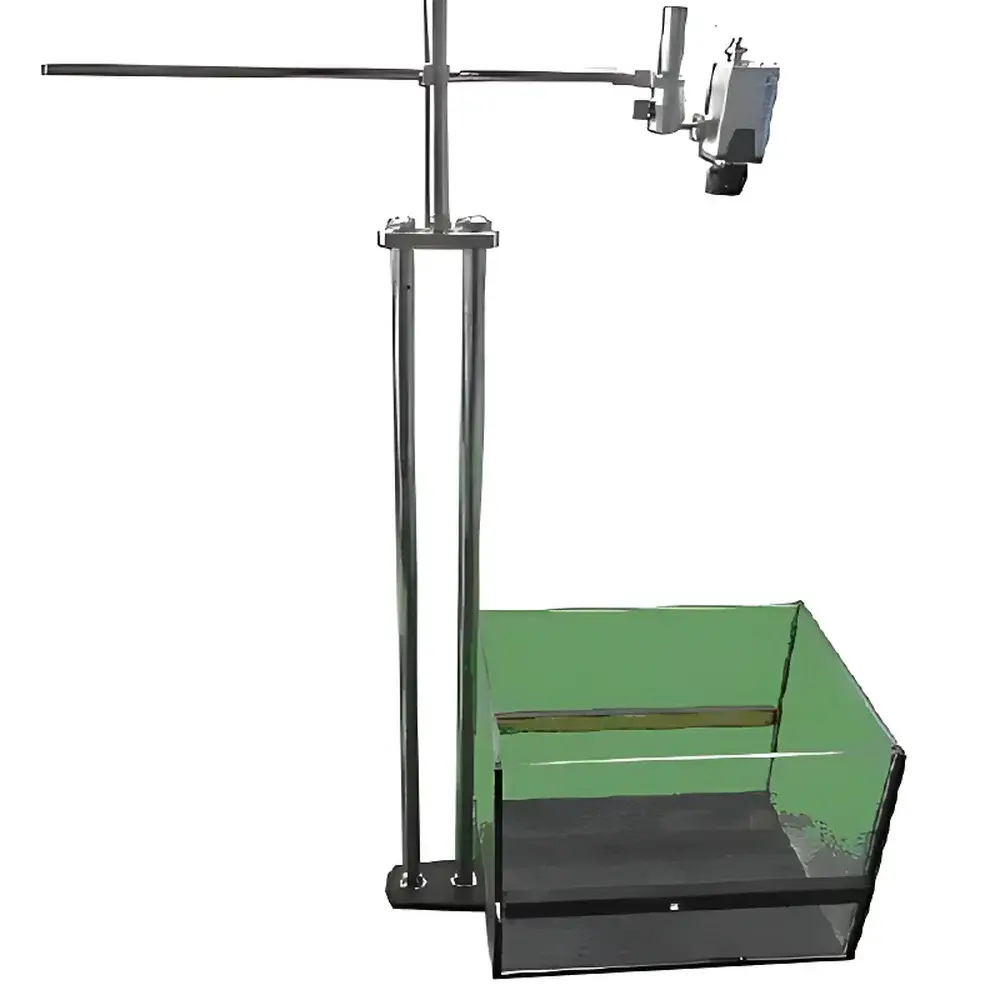
MGS-1/4 Mouse and Rat Open Field Video Tracking System
| Origin | Sichuan, China |
|---|---|
| Manufacturer Type | Distributor |
| Origin Category | Domestic (China) |
| Model | MGS-1/4 |
| Price | Upon Request |
Overview
The MGS-1/4 Mouse and Rat Open Field Video Tracking System is a validated, computer-assisted behavioral phenotyping platform engineered for quantitative assessment of spontaneous locomotor activity in rodent models. It operates on the principle of real-time digital video tracking combined with synchronized infrared beam interruption detection, enabling objective, non-invasive measurement of spatial movement patterns, exploratory behavior, and postural events—including rearing—under standardized open-field conditions. Designed in accordance with internationally recognized preclinical behavioral testing guidelines (e.g., OECD Test Guideline 425, FDA Guidance for Industry on Safety Pharmacology Studies), the system supports regulatory-compliant CNS safety pharmacology screening, neurobehavioral toxicology, circadian rhythm studies, and translational neuroscience research. Its dual-sensor architecture—integrating high-resolution monochrome video capture with a 25-point infrared array—ensures robust detection across variable lighting conditions and eliminates reliance on dye marking or physical tagging, thereby preserving natural behavior and experimental integrity.
Key Features
- Modular open-field arena with internal dimensions of 400 × 400 × 400 mm (customizable up to 1000 mm per side); top-mounted high-resolution camera with fixed focal length and auto-exposure control
- 25-channel infrared photobeam array mounted at two vertical levels (floor-level for ambulation, mid-height for rearing detection); optional configuration without rearing sensors available
- Interchangeable contrast底板 (black/white) and insert panels to optimize detection sensitivity for albino, pigmented, or transgenic strains—no manual threshold calibration required
- PCI-based frame grabber card with hardware-triggered synchronization between video stream and IR event logging; timestamp accuracy ±10 ms
- Real-time trajectory reconstruction using adaptive background subtraction and centroid-based object tracking with occlusion-resilient interpolation
- Aluminum extrusion chassis with ESD-safe anodized finish; modular assembly enables rapid cleaning, sterilization, and reconfiguration between studies
- Multi-arena support: up to four independent test chambers simultaneously monitored via single workstation; mixed configurations (with/without rearing detection) supported
Sample Compatibility & Compliance
The MGS-1/4 system is validated for use with C57BL/6, BALB/c, Sprague-Dawley, and Wistar rodents (mice: 18–35 g; rats: 150–300 g). It accommodates both singly housed and group-habituated animals under controlled environmental conditions (22 ± 2°C, 40–60% RH, 12:12 light-dark cycle, ambient noise <55 dB). All hardware components comply with IEC 61000-4 electromagnetic compatibility standards. Software architecture conforms to ALCOA+ principles for data integrity: audit trails record user actions, parameter changes, and analysis modifications; electronic signatures are enforced during report generation. The system supports 21 CFR Part 11 readiness when deployed with validated Windows OS environments (Windows 7–10 LTSB) and domain-authenticated network storage.
Software & Data Management
The proprietary tracking software employs a relational database (SQLite v3.30+) for structured storage of raw video (.avi), metadata (XML), and analytical outputs. Each session is assigned a unique UUID and linked to subject ID, protocol version, operator, and environmental log files. Analytical modules include zone-based time-in-region quantification (9-grid, concentric, custom polygon), path curvature analysis, velocity histogramming, and inter-bout interval statistics. Data export supports CSV, Excel (.xlsx), and MATLAB (.mat) formats; batch processing allows cross-session normalization against baseline controls. Built-in GLP-compliant reporting templates generate PDF summaries with embedded thumbnails, trajectory overlays, and statistical summaries (mean ± SEM, ANOVA-ready tables). Database backups are scheduled automatically and encrypted using AES-256.
Applications
- CNS safety pharmacology: assessment of sedation, stimulation, ataxia, or catalepsy following acute or subchronic dosing
- Neurodevelopmental disorder modeling: evaluation of hyperactivity, perseveration, or reduced habituation in genetic or environmental insult models
- Circadian biology: long-term monitoring of locomotor rhythms under constant darkness or altered photoperiods
- Toxicology endpoints: detection of subtle motor deficits preceding histopathological changes in neurotoxicity studies
- Behavioral phenotyping of transgenic lines: standardized comparison of activity profiles across cohorts and facilities
- Environmental enrichment studies: quantification of exploratory bias and thigmotaxis as indices of anxiety-like behavior
FAQ
What operating systems are officially supported?
Windows 7 SP1, Windows 10 (version 1809 or later), and Windows 11 (22H2) with .NET Framework 4.8 and DirectX 12 runtime.
Can the system be integrated with third-party electrophysiology or metabolic monitoring platforms?
Yes—via TTL pulse synchronization input/output ports and TCP/IP API documentation provided under NDA for custom middleware development.
Is validation documentation available for GxP-regulated laboratories?
IQ/OQ protocols, traceable calibration certificates for camera lens distortion and IR beam alignment, and software verification reports are supplied upon request.
How is animal identification managed across multiple sessions?
Subject IDs are manually entered or imported via CSV; optional RFID reader integration (ISO 11784/11785 compliant) supports automated subject recognition.
What is the minimum recommended lighting condition for reliable tracking?
Uniform diffuse illumination between 50–150 lux at arena floor level; no direct glare or shadow gradients permitted. Infrared illumination mode is available for scotopic testing.




