
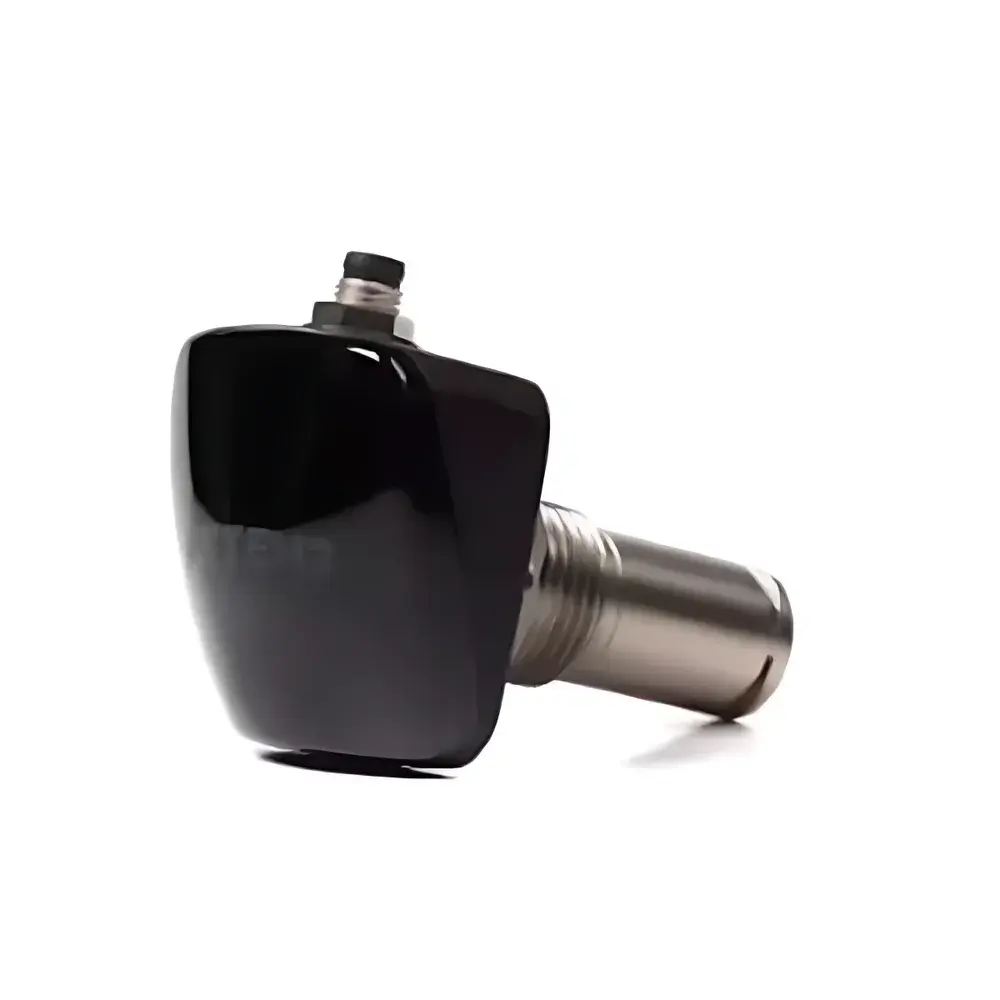
OilMoisture Online PPM-Level Water-in-Oil Sensor by Atten2
| Brand | Atten2 |
|---|---|
| Origin | Spain |
| Model | OilMoisture |
| Product Type | Online Instrument |
| Detection Parameter | Water Content |
| Compliance Standard | ASTM D6304 |
| Sensitivity | ppm-level |
| Power Supply | 24 V DC, <100 mA |
| Output Interface | Modbus RTU (RS-485) |
| Max Operating Pressure | 12 bar |
| Operating Temperature Range | 0–80 °C |
| Viscosity Compatibility | up to 680 cSt |
| Housing Material | Aluminum (stainless steel optional) |
| Optical Window | BK7 glass |
| Sealing Material | Fluoroelastomer (FKM) |
| Ingress Protection | IP65 |
| Certification | CE |
Overview
The OilMoisture Online PPM-Level Water-in-Oil Sensor is an industrial-grade optical sensor engineered for continuous, real-time monitoring of water contamination in lubricating oils and hydraulic fluids. Unlike traditional offline Karl Fischer titration or capacitance-based methods, this sensor employs near-infrared (NIR) absorption spectroscopy—optimized for the characteristic vibrational overtone bands of H₂O molecules—to quantify dissolved and free water at sub-ppm resolution. Its design targets early-stage moisture ingress detection in critical rotating equipment (e.g., turbines, gearboxes, compressors), where water concentrations exceeding 50–100 ppm can accelerate oxidation, promote hydrolytic degradation of additives, and induce bearing surface fatigue via hydrogen embrittlement or tribochemical wear. The sensor operates inline without flow diversion or sample conditioning, enabling direct integration into pressurized lubrication circuits or reservoirs while maintaining system integrity and operational continuity.
Key Features
- True online, non-invasive measurement: mounted directly in-line or dip-style in oil sumps—no bypass loops, pumps, or consumables required.
- ppm-level sensitivity with high repeatability: calibrated traceability to ASTM D6304 reference methodology ensures consistency with laboratory-grade Coulometric Karl Fischer validation protocols.
- Robust mechanical architecture: aluminum housing (stainless steel variant available for corrosive environments), BK7 optical window resistant to thermal shock and hydrocarbon immersion, and FKM seals rated for extended service life under dynamic pressure cycling.
- Industrial communication interface: native Modbus RTU over RS-485 supports seamless integration into SCADA, CMMS, and PLC-based predictive maintenance platforms—enabling automated alarm thresholds, trend logging, and remote diagnostics.
- Wide operational envelope: validated for continuous operation at pressures up to 12 bar and temperatures from 0 °C to 80 °C, compatible with mineral, synthetic, and bio-based lubricants up to 680 cSt kinematic viscosity.
- IP65-rated enclosure ensures protection against dust ingress and low-pressure water jets—suitable for installation in machinery rooms, offshore skids, and refinery auxiliary zones.
Sample Compatibility & Compliance
The OilMoisture sensor demonstrates stable performance across a broad spectrum of petroleum-based and ester-based lubricants, including turbine oils (ISO VG 32–68), gear oils (EP formulations), hydraulic fluids (HLP/HM), and compressor lubricants. It is insensitive to common additives (e.g., anti-wear phosphates, rust inhibitors, antioxidants) and unaffected by particulate loading below ISO 4406 code 22/20/17. All calibration and verification procedures adhere to ASTM D6304–22 (“Standard Test Method for Determination of Water in Petroleum Distillates by Coulometric Karl Fischer Titration”), making it suitable for quality control documentation in ISO 9001-certified facilities and condition-monitoring programs aligned with ISO 55001 asset management frameworks. CE marking confirms conformity with EU Machinery Directive 2006/42/EC and EMC Directive 2014/30/EU.
Software & Data Management
While the OilMoisture sensor itself operates as a stand-alone field device, its Modbus register map includes 16-bit holding registers for real-time water concentration (ppm), fluid temperature (°C), and diagnostic status flags (e.g., optical path contamination, signal saturation, communication timeout). When integrated with vendor-agnostic edge gateways or OEM-developed HMI software, users may configure configurable alarm levels (e.g., warning at 50 ppm, critical at 120 ppm), generate time-series trend plots, and export timestamped CSV logs compliant with 21 CFR Part 11 audit trail requirements when deployed in regulated manufacturing environments. No proprietary cloud platform is required; data sovereignty remains under end-user control.
Applications
- Preventive maintenance of steam and gas turbines in power generation plants.
- Condition-based monitoring of wind turbine gearbox lubricants exposed to ambient humidity cycling.
- Real-time water surveillance in marine diesel engine crankcase systems subject to seawater intrusion.
- Quality assurance during bulk oil storage and transfer operations at refineries and distribution terminals.
- Validation of dehydration efficiency in offline vacuum dehydrators and coalescer filter systems.
FAQ
Does the sensor require periodic recalibration?
No routine recalibration is necessary under stable operating conditions; however, annual verification against a certified reference standard (e.g., ASTM D6304 lab test) is recommended for metrological traceability.
Can it distinguish between dissolved and free water?
The sensor reports total water content (dissolved + emulsified + suspended); phase separation detection requires complementary techniques such as dielectric spectroscopy or optical microscopy.
Is it compatible with synthetic polyalkylene glycol (PAG) oils?
Yes—performance has been verified in PAG-based compressor oils up to 460 cSt; consult technical datasheet for viscosity-specific response curves.
What is the minimum detectable water concentration?
Detection limit is instrument- and installation-dependent; typical field resolution is ±5 ppm with a lower reporting limit of 10 ppm under optimal optical path clarity.
How does temperature compensation work?
An integrated Pt1000 RTD measures fluid temperature in real time and applies a physics-based correction algorithm to NIR absorbance signals, minimizing thermal drift across the full 0–80 °C range.




