
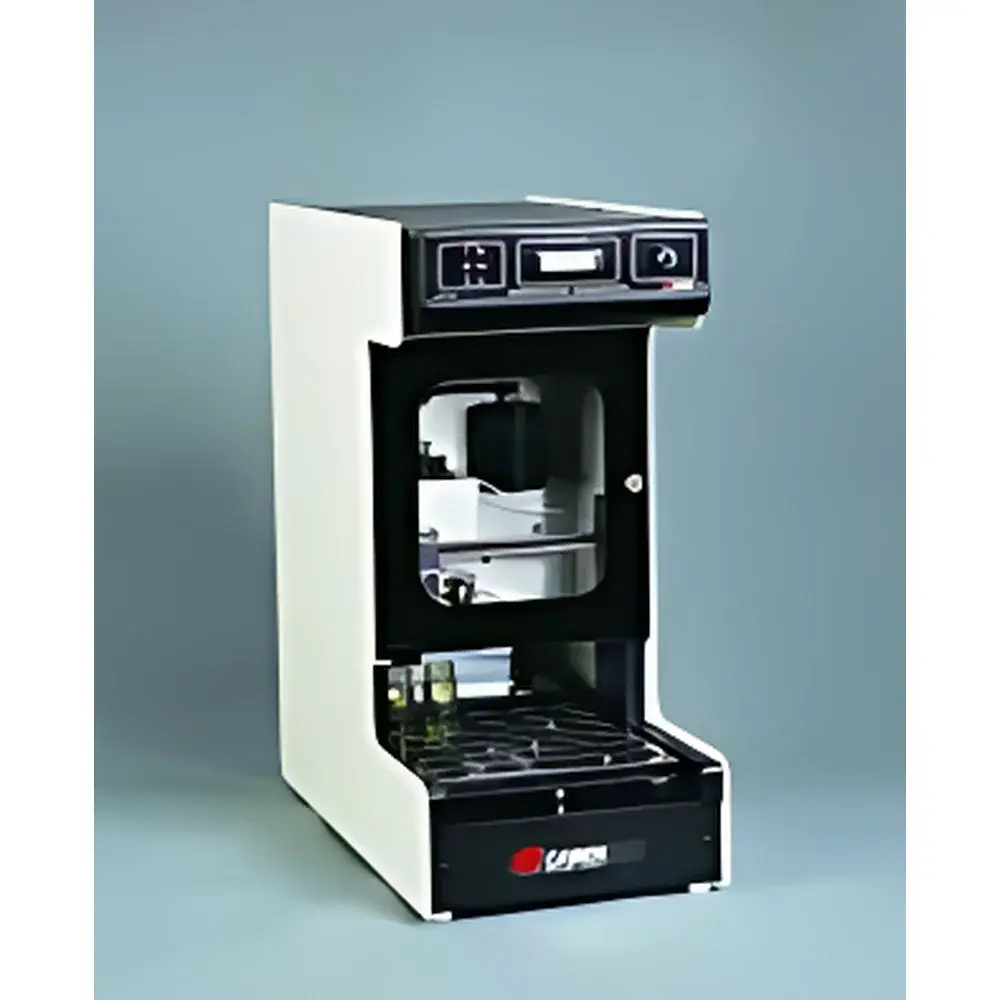
CANNON CCS-2100LT Low-Temperature Engine Oil Apparent Viscosity Tester
| Brand | CANNON |
|---|---|
| Origin | USA |
| Model | CCS-2100LT |
| Instrument Type | Rotational Viscometer (Fixed-Base, Cold-Bath Configuration) |
| Temperature Range | −5 °C to −40 °C |
| Temperature Resolution & Accuracy | ±0.05 °C |
| Apparent Viscosity Range | 1500 mPa·s to 21000 mPa·s |
| Cooling Method | Solid-State Thermoelectric (Peltier) |
| Compliance | ASTM D5293, SAE J300-99, GB/T 6538 |
| Sample Throughput | Up to 30 samples per automated sequence |
| Control & Data Handling | PC-based automation with self-calibration routines and integrated wash cycle with programmable heating profile |
Overview
The CANNON CCS-2100LT is a fully automated, fixed-base rotational viscometer engineered specifically for the determination of apparent viscosity of engine oils at low temperatures—critical for evaluating low-temperature pumpability and cranking performance in modern internal combustion engines. It operates on the principle of measuring torque required to rotate a calibrated bob within a stationary cup under controlled shear conditions at sub-ambient temperatures, as defined by the cold-cranking simulator (CCS) methodology. Unlike conventional capillary or falling-ball viscometers, the CCS-2100LT applies standardized shear rates and temperature ramping protocols to simulate real-world engine startup behavior below 0 °C. Its thermoelectric cooling architecture eliminates reliance on hazardous refrigerants or external cryogenic supply lines, ensuring operational safety, environmental compliance, and long-term system stability in regulated laboratory environments.
Key Features
- Thermoelectric (Peltier) cooling system delivering precise, stable temperature control from −5 °C to −40 °C with resolution and accuracy of ±0.05 °C—essential for reproducible CCS testing across SAE viscosity grade boundaries.
- Automated 30-position sample carousel enabling unattended batch processing; no manual intervention required during measurement or thermal equilibration phases.
- Integrated self-calibration routine that verifies rotational speed, torque transducer response, and thermal sensor drift prior to each test sequence—ensuring metrological traceability without external calibration standards.
- Programmable cleaning protocol featuring controlled heating of the viscosity bath to >60 °C post-test, eliminating residual oil film and preventing cross-contamination between samples.
- Rugged stainless-steel bath construction with double-walled insulation and forced-air thermal shielding to minimize ambient heat ingress and improve thermal uniformity across all sample positions.
Sample Compatibility & Compliance
The CCS-2100LT is validated for use with conventional and synthetic engine oils—including API SP, CK-4, FA-4, and ILSAC GF-6 formulations—as well as base stocks and additive packages intended for low-temperature service. It meets the mechanical, thermal, and data integrity requirements of ASTM D5293 (Standard Test Method for Apparent Viscosity of Engine Oils and Other Fluids Using a Cold-Cranking Simulator), SAE J300 (Engine Oil Viscosity Classification), and GB/T 6538 (Determination of Apparent Viscosity of Engine Oils at Low Temperature). The instrument’s firmware and data acquisition architecture support audit-ready operation under GLP and GMP frameworks, including electronic signatures, user access levels, and time-stamped raw data logs compliant with FDA 21 CFR Part 11 when deployed with validated software modules.
Software & Data Management
Control and analysis are performed via CANNON’s proprietary CCS Control Suite—a Windows-based application supporting method definition, sequence scheduling, real-time monitoring, and automated report generation in PDF and CSV formats. All raw torque, angular velocity, and temperature time-series data are stored with full metadata (operator ID, sample ID, calibration status, ambient conditions). The software implements built-in statistical validation per ASTM D5293 Annex A1, flagging outliers based on repeatability limits and automatically recalculating results when multiple determinations fall outside tolerance. Exported datasets include ISO/IEC 17025-compliant uncertainty estimates derived from instrument-specific calibration certificates and environmental monitoring records.
Applications
- Determination of SAE winter-grade viscosity classification (e.g., 0W-20, 5W-30) in R&D and quality control laboratories.
- Formulation screening of low-viscosity synthetic base oils and high-performance viscosity index improvers.
- Regulatory compliance testing for OEM specifications (e.g., GM dexos1™, Ford WSS-M2C945-A, Honda HTO-06).
- Stability assessment of engine oils after oxidative or thermal stress aging protocols (ASTM D2887, D7097).
- Interlaboratory round-robin studies requiring high inter-operator reproducibility (typical CV < 1.8% at −30 °C per ASTM D5293 precision statements).
FAQ
What standards does the CCS-2100LT directly support?
ASTM D5293, SAE J300-99 (and later revisions), and GB/T 6538—fully implemented in hardware timing, thermal ramp profiles, and data reduction algorithms.
Can the instrument be integrated into a LIMS environment?
Yes—via OPC UA or ASCII file export; optional API-enabled modules support direct ingestion into major LIMS platforms with configurable metadata mapping.
Is external refrigerant or liquid nitrogen required?
No—solid-state Peltier cooling eliminates dependency on cryogens, reducing facility infrastructure requirements and maintenance overhead.
How is measurement repeatability ensured across extended operational periods?
Through scheduled self-diagnostic cycles, temperature sensor redundancy, and real-time torque transducer zero-tracking during idle intervals.
What sample volume is required per test?
Each test consumes 10 mL of conditioned oil; the system includes volumetric dispensing verification and low-volume alerting to prevent invalid runs.



