
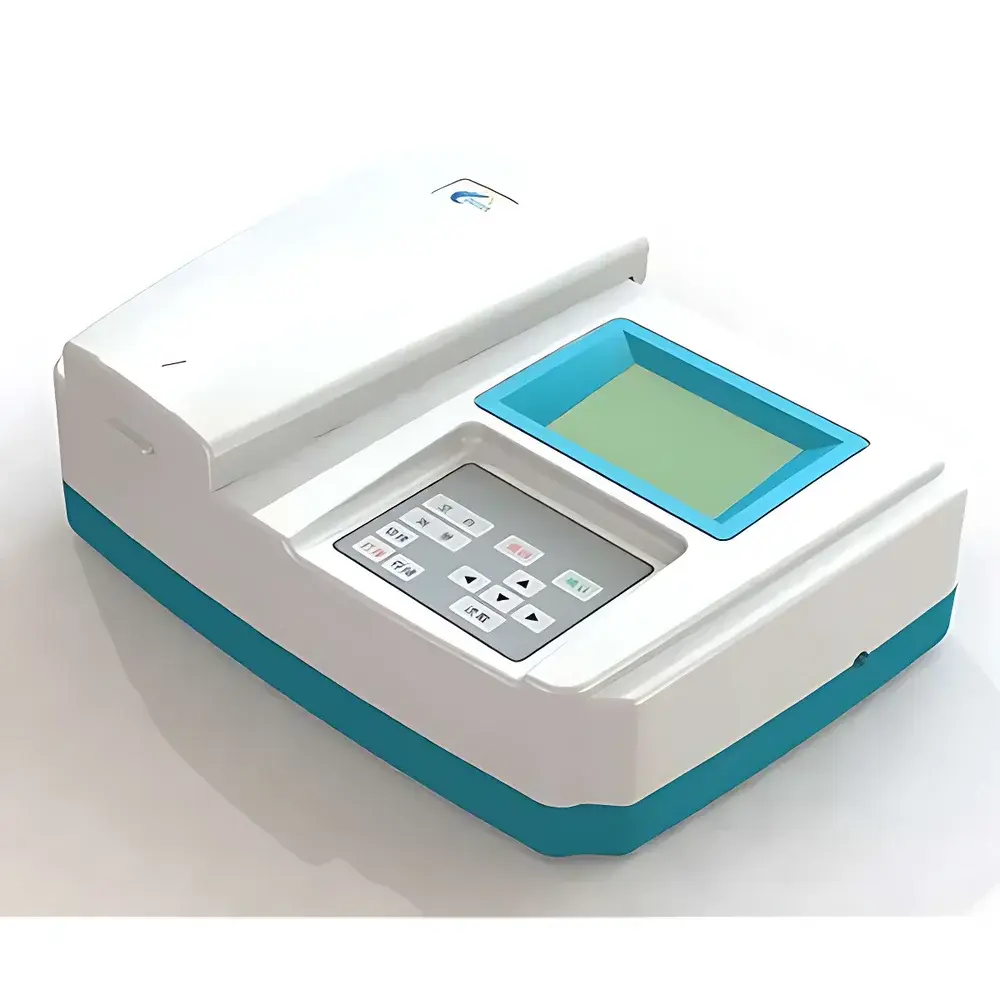
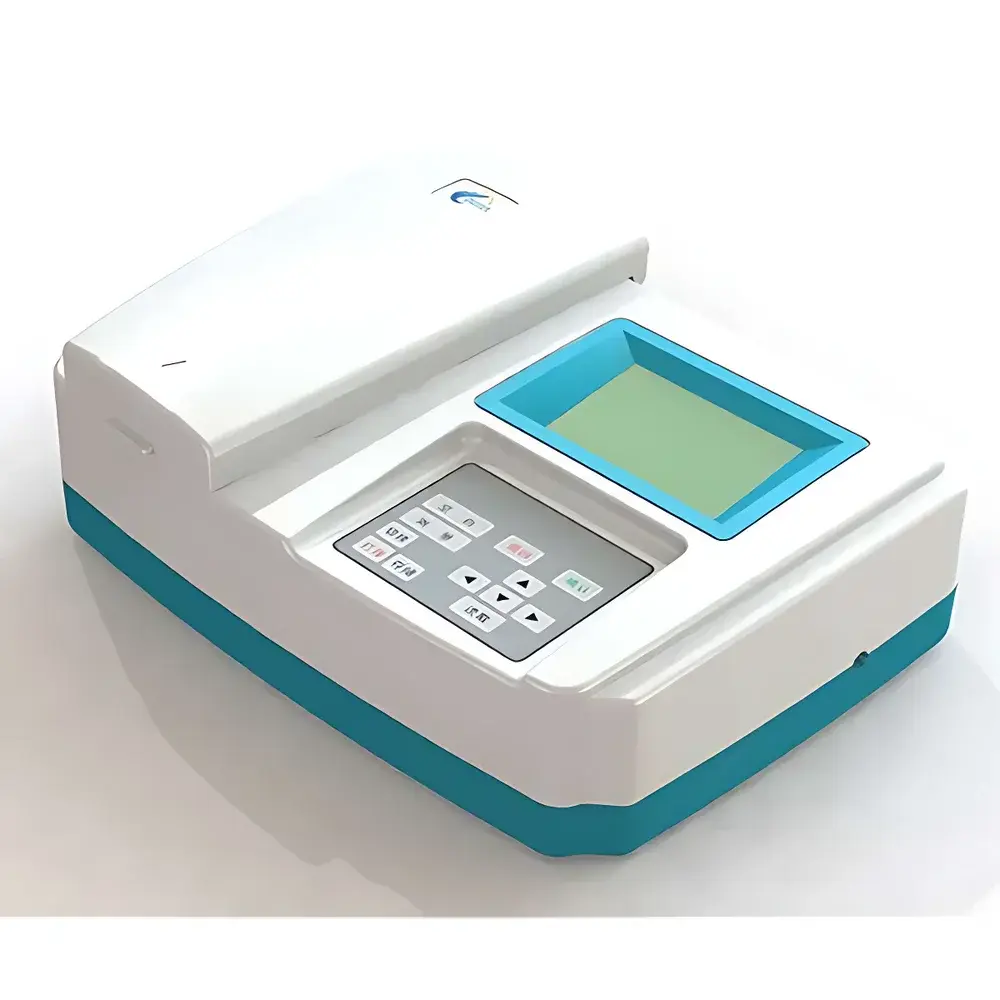
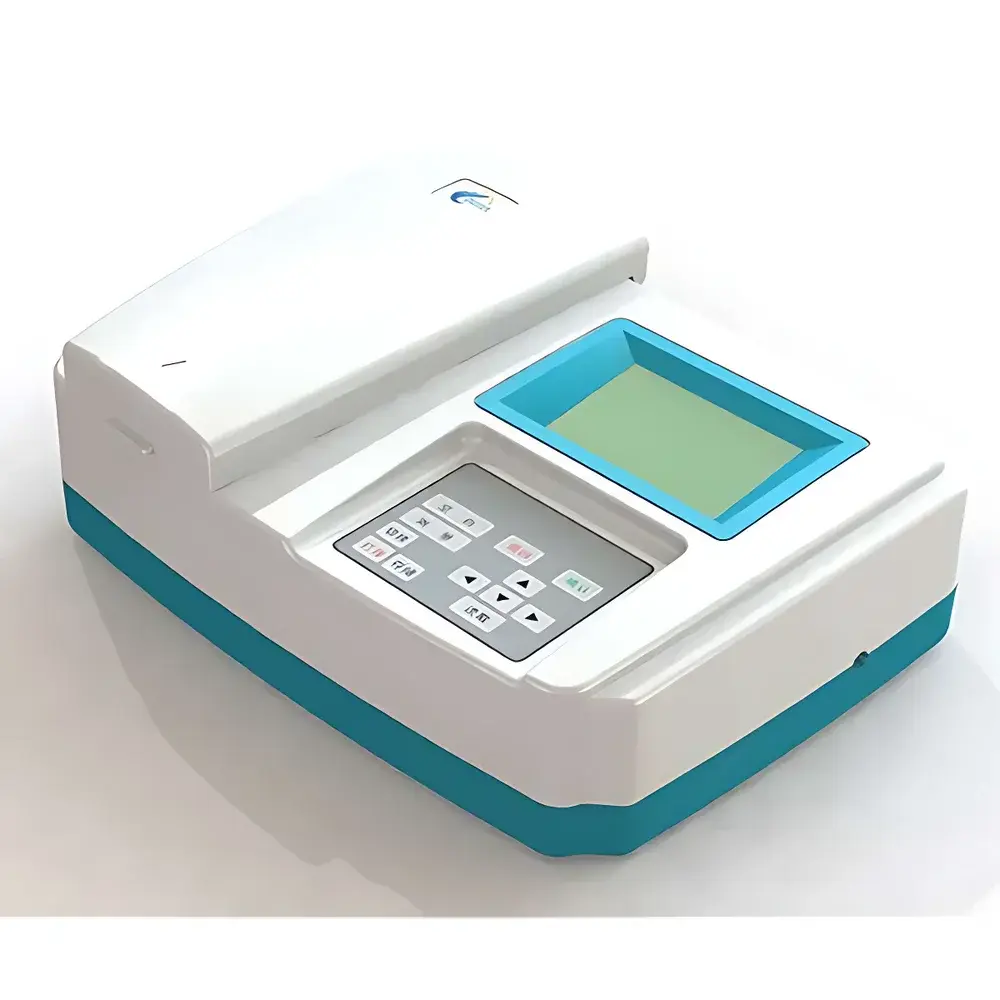
Zhiyunda TCO-L6 Rapid Edible Oil Adulteration Analyzer
| Brand | Zhiyunda |
|---|---|
| Origin | Beijing, China |
| Manufacturer Type | Authorized Distributor |
| Country of Origin | China |
| Model | TCO-L6 |
| Pricing | Available Upon Request |
Overview
The Zhiyunda TCO-L6 Rapid Edible Oil Adulteration Analyzer is a dedicated benchtop screening instrument engineered for the rapid, on-site detection of illicitly recycled cooking oils—commonly referred to as “gutter oil”—in edible oil matrices. It operates on the principle of quantitative colorimetric analysis, leveraging standardized chromogenic reaction systems aligned with China’s national standard GB/T 23498–2009 (Determination of polar compounds in used frying oils) and the Ministry of Health’s recommended field-deployable protocols (WS/T 415–2013). Unlike chromatographic or spectroscopic methods requiring extensive sample preparation and laboratory infrastructure, the TCO-L6 employs a reagent-based enzymatic–oxidative assay that targets elevated levels of polar degradation products—including free fatty acids, polymerized triglycerides, and oxidized aldehydes—that accumulate during repeated thermal abuse and uncontrolled recycling. Its design prioritizes operational robustness, minimal user training, and reproducible semi-quantitative output under non-laboratory conditions.
Key Features
- Six independent optical detection channels enable parallel processing of up to six samples per assay cycle, significantly increasing throughput for high-volume screening operations.
- No sample pre-treatment required: raw or filtered edible oil specimens (e.g., soybean, peanut, rapeseed, palm) are directly introduced into disposable reaction cuvettes.
- Integrated LED-based photometric system with fixed-wavelength detection (520 ± 5 nm) ensures consistent signal acquisition across batches and operators.
- Embedded microprocessor with calibrated response curves converts absorbance readings into pass/fail or semi-quantitative risk categories (Low/Medium/High adulteration likelihood) based on preloaded regulatory thresholds.
- Rugged, portable housing (280 × 220 × 120 mm; <2.5 kg) supports deployment in mobile inspection units, market-side kiosks, school canteen labs, and municipal food safety enforcement vehicles.
- Self-diagnostics and automatic zeroing reduce operator dependency and mitigate drift-related measurement error.
Sample Compatibility & Compliance
The TCO-L6 is validated for use with refined and semi-refined vegetable oils, including but not limited to soybean, corn, sunflower, peanut, rapeseed, and blended cooking oils. It is not intended for use with highly pigmented or emulsified matrices (e.g., sesame oil, chili-infused oils) without prior validation. The assay methodology conforms to the technical requirements outlined in China’s Food Safety National Standard GB 2716–2018 (Edible Vegetable Oils) and aligns functionally with AOAC Official Method 2009.01 for polar compound screening. While not certified to ISO/IEC 17025 for accredited testing, the instrument supports GLP-aligned documentation practices through timestamped result logging and user ID tagging—facilitating traceability during regulatory audits by SAMR (State Administration for Market Regulation) or provincial CDC laboratories.
Software & Data Management
Data capture and reporting are handled via an embedded LCD interface with on-device storage for ≥1,000 test records, each containing sample ID, operator code, date/time stamp, channel-specific absorbance values, and classification output. USB 2.0 connectivity enables export of CSV-formatted datasets to external PCs for integration into institutional LIMS platforms or regional food safety surveillance dashboards. Firmware updates are delivered via encrypted USB drive, maintaining version control and audit readiness. Although the device does not implement FDA 21 CFR Part 11-compliant electronic signatures or full audit trails, its deterministic algorithmic output and immutable result timestamps satisfy baseline data integrity requirements for routine monitoring programs under China’s Food Safety Law (Article 112).
Applications
- Routine surveillance at wholesale markets and wet markets to verify vendor compliance with edible oil sourcing regulations.
- On-site verification in school cafeterias, hospital kitchens, and corporate canteens as part of HACCP prerequisite programs.
- Frontline screening by municipal food and drug administration (FDA) inspectors during unannounced inspections of street-food vendors and small-scale catering establishments.
- Tier-1 triage in provincial CDC laboratories to prioritize samples for confirmatory GC-MS or FTIR analysis.
- Training and capacity-building modules for grassroots food safety officers in rural administrative regions.
FAQ
What types of adulterants does the TCO-L6 specifically detect?
It detects cumulative thermal degradation markers—primarily polar compounds and oxidative byproducts—associated with repeated frying, improper storage, and clandestine reprocessing of used cooking oil. It does not identify specific chemical contaminants (e.g., mineral oil, heavy metals) or biological toxins.
Is calibration required before each use?
No daily calibration is needed; the instrument performs automatic optical zeroing using a blank reference cuvette at startup. Annual verification against NIST-traceable absorbance standards is recommended for sustained metrological confidence.
Can results be exported in a format compatible with national food safety reporting systems?
Yes—CSV exports include mandatory fields required by China’s National Food Safety Risk Monitoring Information System (NFMRIS), enabling direct ingestion into provincial-level data aggregation portals.
Does the TCO-L6 meet international export certification requirements?
The device complies with CE marking directives for electromagnetic compatibility (2014/30/EU) and low-voltage safety (2014/35/EU); however, it is not IEC 61010-1 certified for clinical or pharmaceutical environments.
How often must consumables be replaced?
Each test requires one single-use reaction kit (containing stabilized reagents and cuvettes); shelf life is 18 months when stored at 2–8 °C. Kits are lot-numbered and include CoA documentation for batch traceability.



