
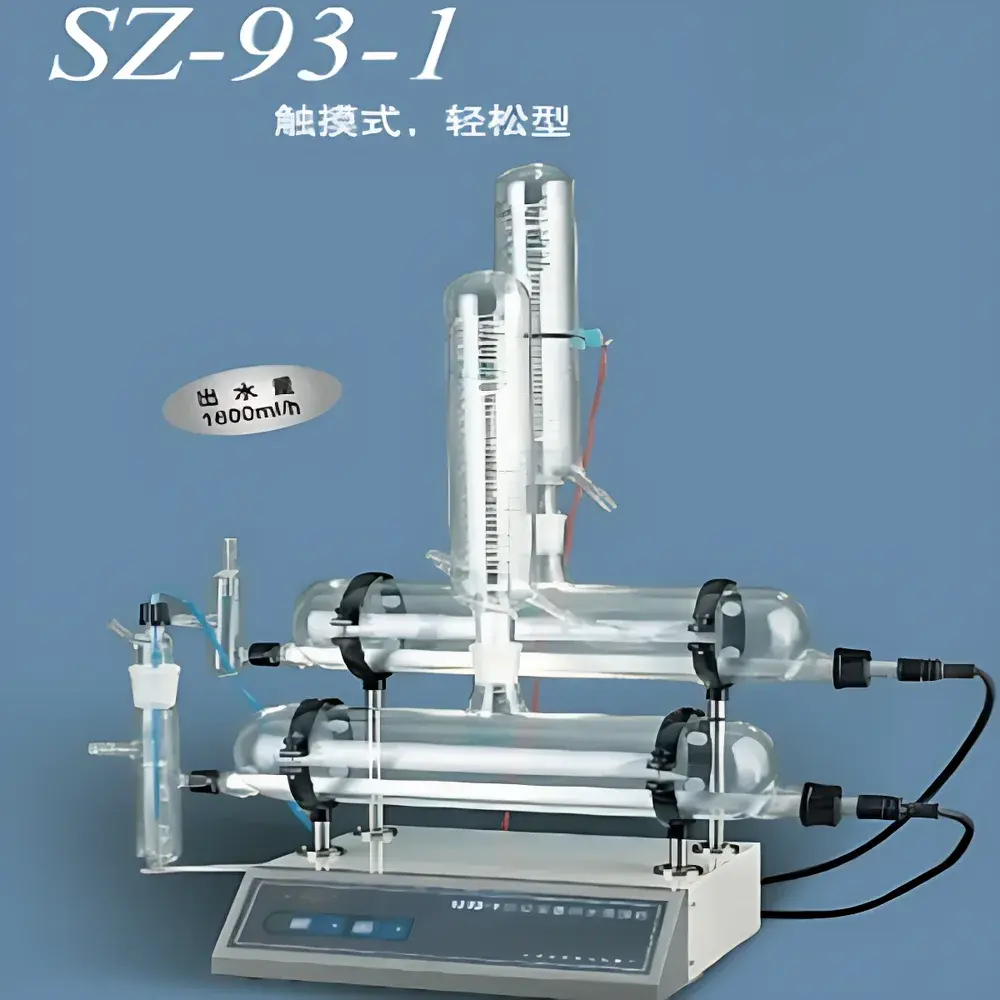
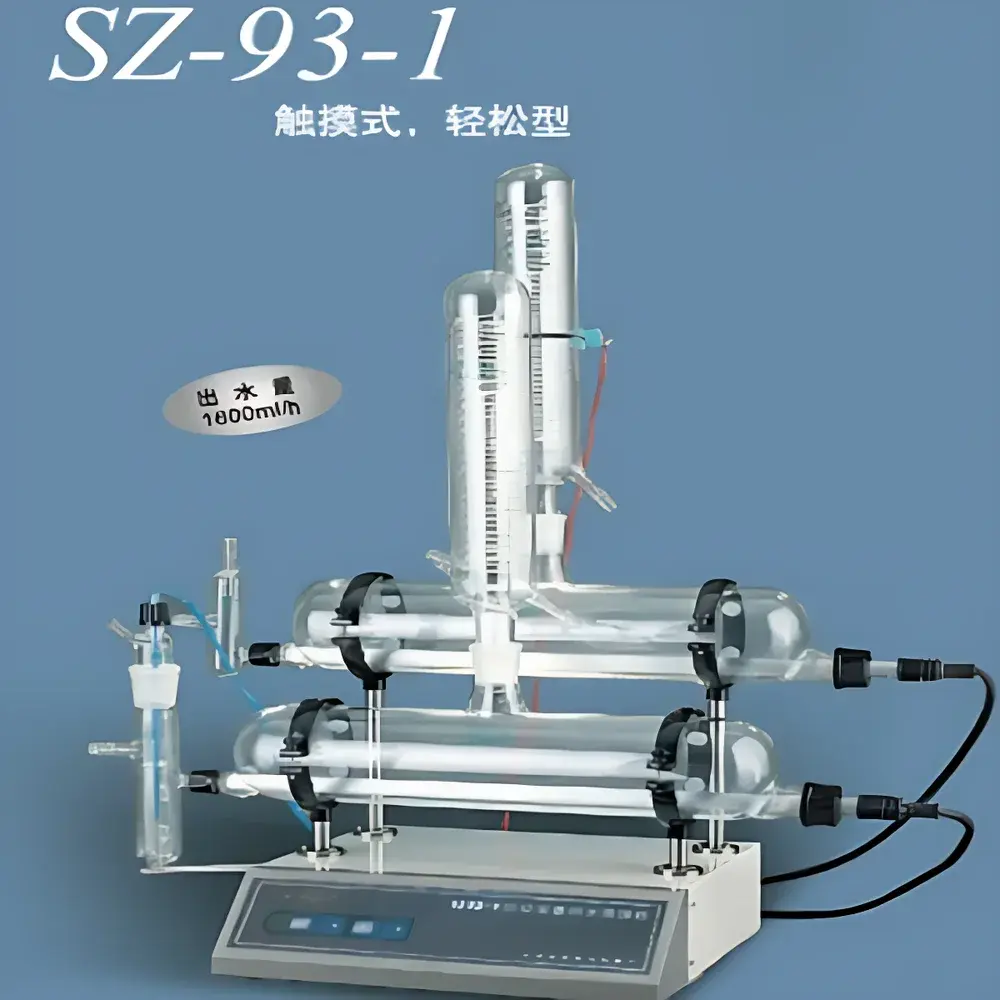
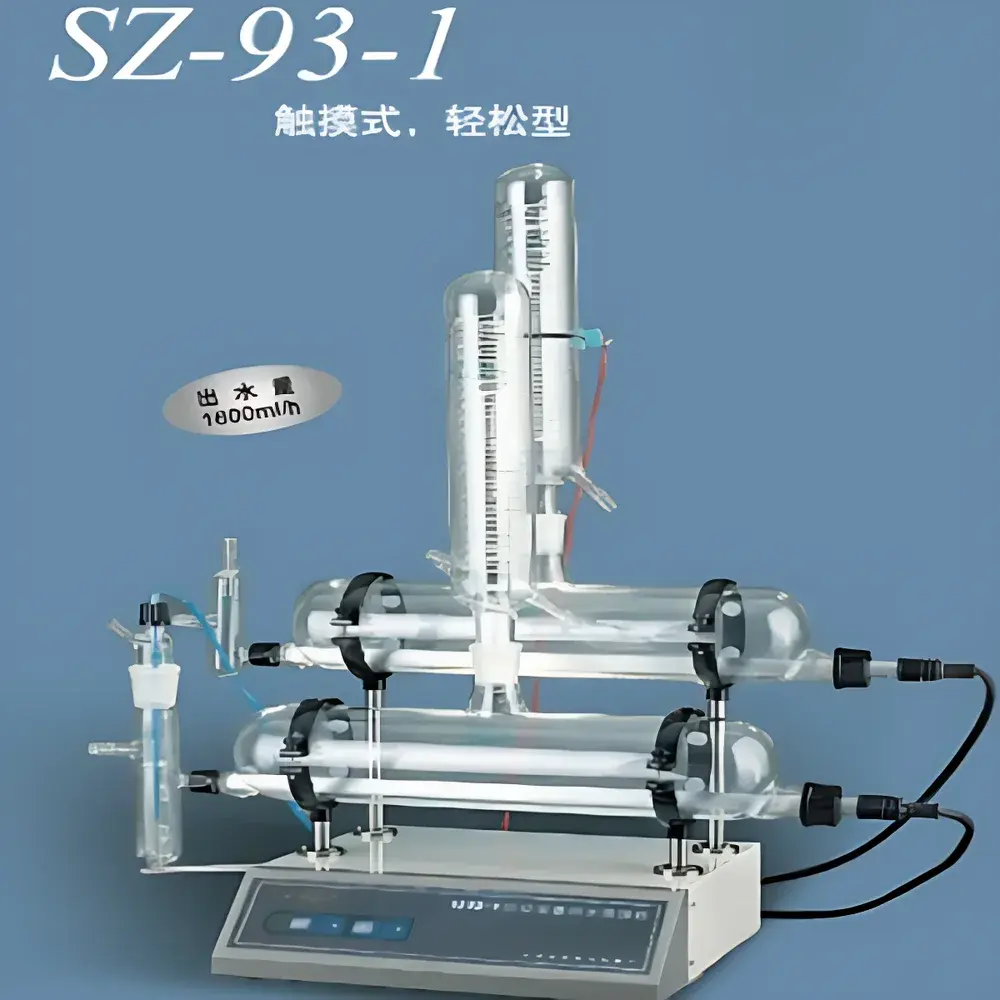
Yarong SZ-93-1 Automatic Dual-Purpose Quartz Glass Distillation Apparatus
| Brand | Yarong |
|---|---|
| Origin | Shanghai, China |
| Model | SZ-93-1 |
| Distillation Rate | 1600 mL/h |
| Heating Method | Quartz Tube Heater |
| Cooling Method | Recirculating Condensation System |
| Endpoint Control | Dual-sensor (Temperature Controller + Reed-Type Water Level Sensor) with Relay Protection |
| Power Input | 3 kW |
| Voltage/Frequency | 220 V / 50 Hz |
| Dimensions (L×W×H) | 70 × 34 × 80 cm |
| Weight | 10 kg |
| Construction | High-Purity Quartz Glass Body & Condenser |
| Instrument Type | Benchtop Automatic Dual-Distillation Unit for High-Purity Water Production |
Overview
The Yarong SZ-93-1 is a benchtop automatic dual-purpose quartz glass distillation apparatus engineered for the continuous production of high-purity water in research laboratories, pharmaceutical QC environments, and analytical chemistry facilities. Unlike conventional single-stage distillers, the SZ-93-1 employs a dual-distillation architecture—comprising two sequential quartz distillation stages—to achieve ultra-low levels of ionic, organic, and volatile contaminants. Its core operating principle relies on thermal phase separation: feed water is vaporized under controlled heating, then condensed in a high-efficiency recirculating condensation system. The use of fused quartz throughout the evaporation chamber, boiling flask, and condenser tube ensures exceptional chemical inertness, thermal stability up to 1100 °C, and negligible leaching—even during prolonged operation with aggressive feedstocks or low-conductivity demand. Designed for ISO/IEC 17025-compliant labs, the unit delivers Type I reagent water per ASTM D1193–20 and meets the purity prerequisites for trace metal analysis (e.g., ICP-MS sample preparation), HPLC mobile phase generation, and cell culture media formulation.
Key Features
- Quartz tube heating element with precise thermal regulation, minimizing localized overheating and scaling risk while ensuring uniform vapor generation.
- Integrated dual-sensor endpoint control: a calibrated temperature controller monitors vapor-phase temperature at the condenser neck, while a sealed reed-type water level sensor detects reservoir fill status—both signals feed into a fail-safe relay circuit that automatically interrupts power upon dry-boil or overflow conditions.
- Recirculating condensation system with external chiller interface support (optional), enabling stable condensate temperature control between 5–15 °C for optimal recovery yield and minimal back-diffusion of volatiles.
- Benchtop footprint (70 × 34 × 80 cm) optimized for space-constrained environments; all-load weight of 10 kg facilitates relocation without structural reinforcement.
- Full quartz wetted path eliminates borosilicate glass leachables (e.g., Na⁺, B³⁺, SiO₂ particulates), critical for low-background elemental analysis and semiconductor-grade rinse applications.
Sample Compatibility & Compliance
The SZ-93-1 accepts municipal tap water, deionized water, or pre-filtered feed sources (recommended 10,000 ppm TDS), or corrosive process streams. As a Class II laboratory distillation system, it complies with GB/T 6682–2008 (Chinese National Standard for Water for Analytical Laboratory Use) and aligns with the functional requirements of ISO 3696:1987 for Grade 1 water. When operated within validated parameters—including documented cleaning cycles, scheduled quartz inspection, and calibration of temperature and level sensors—the apparatus supports GLP documentation workflows and satisfies audit requirements for water system qualification per USP and EU GMP Annex 1.
Software & Data Management
The SZ-93-1 operates as a standalone hardware system with no embedded microprocessor or digital interface. All operational parameters are managed via analog controls: a front-panel temperature setpoint dial (0–120 °C range), manual water-level adjustment valve, and visual status indicators (power-on, heating active, relay trip). While it lacks native data logging or network connectivity, its relay-triggered power cutoff events can be integrated into facility-wide monitoring systems via dry-contact outputs (available upon request with optional relay module). For regulated environments requiring electronic records, users commonly pair the unit with external temperature/data loggers (e.g., Omega OM-DAQPRO-5300) and maintain manual logbooks compliant with FDA 21 CFR Part 11 when used in pharmaceutical manufacturing support roles.
Applications
- Production of ultrapure water for atomic absorption spectroscopy (AAS), inductively coupled plasma optical emission spectrometry (ICP-OES), and trace metal analysis where sub-ppt contamination limits apply.
- Preparation of blank matrices in environmental testing laboratories performing EPA Method 200.7 or 200.8 analyses.
- Supply of solvent-grade water for synthesis of reference standards and calibration stock solutions in metrology labs.
- Backup or primary distilled water source in university teaching labs conducting titration, pH calibration, and electrochemical experiments requiring consistent ionic background.
- Supporting cleanroom operations in biotech pilot plants where quartz-based purity assurance is mandated over stainless-steel or polymer alternatives.
FAQ
What feed water quality is recommended prior to distillation?
Tap water with ≤ 500 µS/cm conductivity and ≤ 200 ppm total hardness is acceptable; however, pretreatment via sediment filtration and activated carbon is strongly advised to extend quartz component service life and reduce maintenance frequency.
Can the SZ-93-1 be operated continuously for 24 hours?
Yes—its robust quartz construction and dual-sensor safety architecture permit unattended overnight operation, provided ambient room temperature remains between 15–30 °C and cooling water supply (if using auxiliary chiller) is uninterrupted.
Is quartz replacement covered under warranty?
Quartz components are classified as consumables; standard warranty covers electrical and mechanical defects for 12 months but excludes quartz degradation due to thermal cycling or improper feedwater conditioning.
How does the SZ-93-1 differ from the SZ-93 and SZ-93A models?
The SZ-93-1 incorporates upgraded relay logic firmware, enhanced reed sensor shielding against electromagnetic interference, and standardized mounting flanges compatible with third-party recirculating chillers—distinguishing it from earlier variants in reliability and serviceability.
Does this unit meet ASTM D1193 Type I specifications out-of-the-box?
When fed with appropriate pretreated water and operated under documented SOPs—including daily startup purging and weekly condenser inspection—it consistently achieves resistivity >18.0 MΩ·cm at 25 °C, meeting ASTM D1193 Type I performance thresholds. Final verification requires in-line resistivity monitoring per CLSI EP23-A guidelines.



