
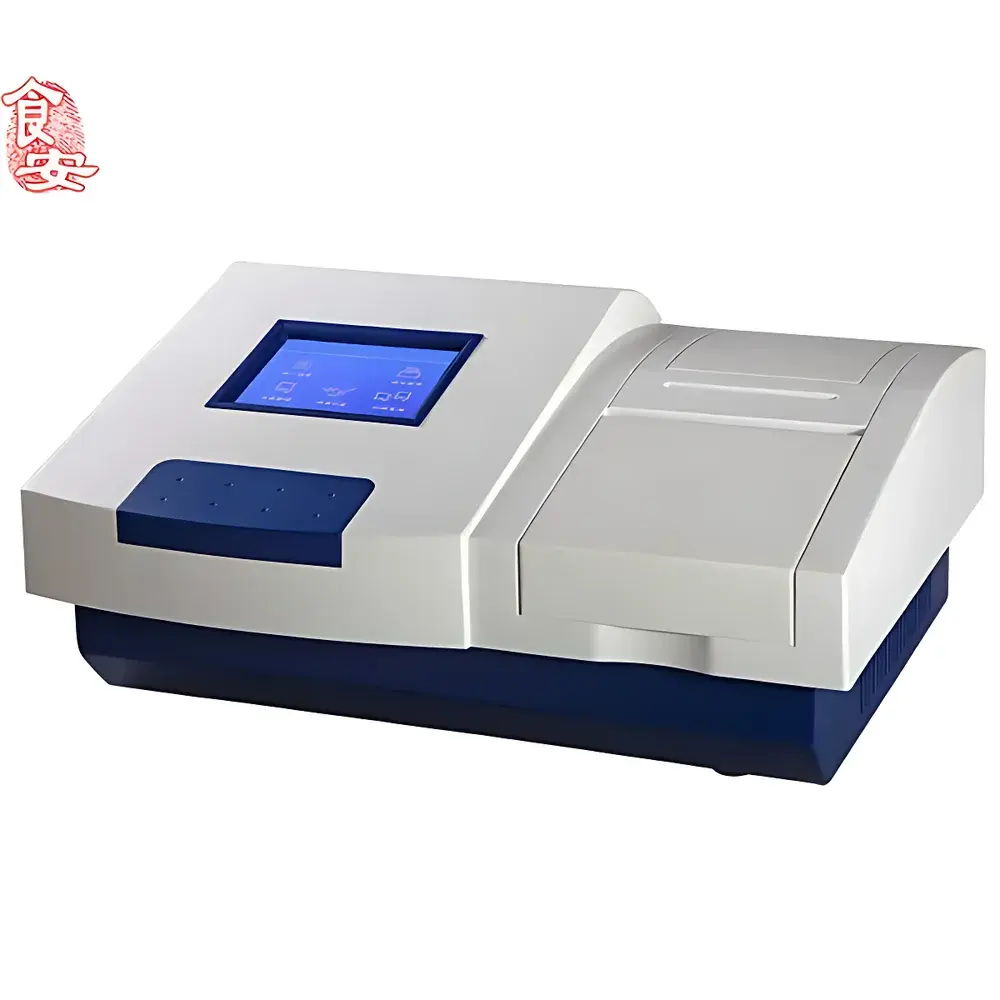
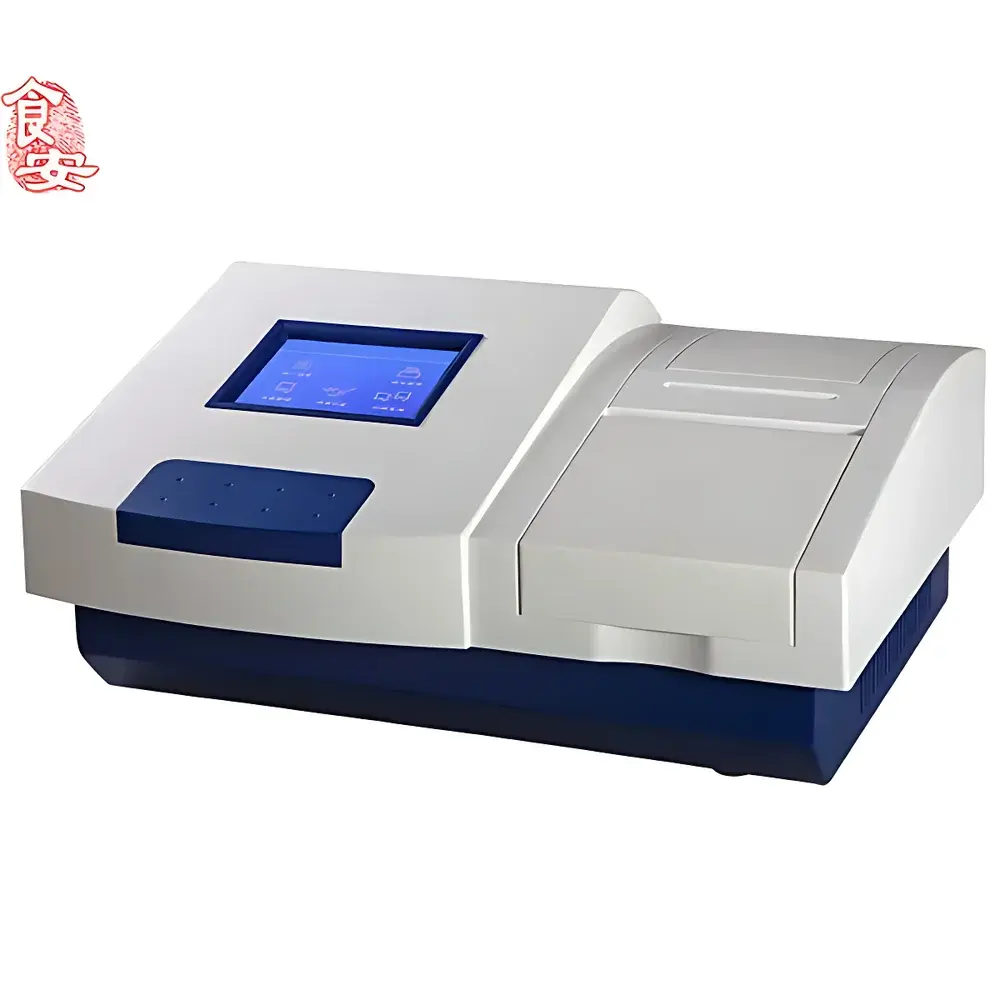
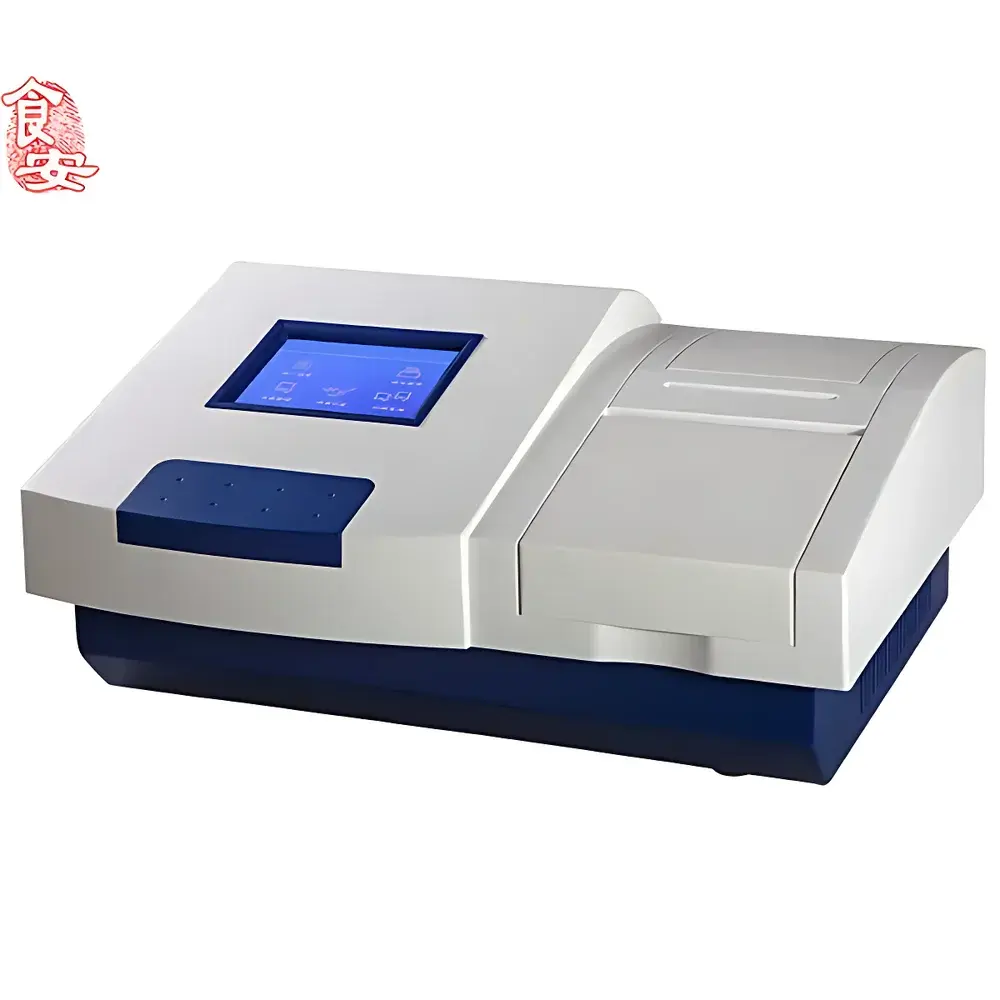
Zhiyunda ZYD-SC96(B) Veterinary Drug Residue Rapid Detection System
| Brand | Zhiyunda |
|---|---|
| Origin | Beijing, China |
| Manufacturer Type | Authorized Distributor |
| Country of Manufacture | China |
| Model | ZYD-SC96(B) |
| Pricing | Available Upon Request |
Overview
The Zhiyunda ZYD-SC96(B) Veterinary Drug Residue Rapid Detection System is a benchtop microplate-based immunoassay analyzer engineered for quantitative and qualitative screening of veterinary drug residues and mycotoxins in animal-derived food matrices. It operates on the principle of Enzyme-Linked Immunosorbent Assay (ELISA), leveraging highly specific antigen–antibody binding reactions followed by enzymatic colorimetric signal amplification. The system is optimized for regulatory laboratories conducting routine surveillance of antibiotics (e.g., amoxicillin, enrofloxacin, ciprofloxacin, erythromycin, chloramphenicol, oxytetracycline, tetracycline, sulfonamides), mycotoxins (aflatoxins B1, B2, G1, G2, M1, M2), illegal additives (melamine, malachite green, diethylstilbestrol, quinocetone), and pathogen-related antigens. Designed for high-throughput operation in resource-constrained environments, it delivers reliable semi-quantitative or quantitative results within 15–30 minutes per assay, supporting rapid decision-making in food safety inspection workflows.
Key Features
- Integrated 8-channel photometric detection system with precision optical path alignment and temperature-stabilized LED light sources for consistent absorbance measurement across 400–750 nm range.
- High-resolution 7-inch capacitive touchscreen interface with intuitive Chinese-language GUI; supports stylus and finger input for glove-compatible operation in laboratory settings.
- Programmable assay library accommodating ≥300 predefined or user-customized ELISA protocols, including multi-step incubation timing, washing cycles, and substrate addition sequences.
- Comprehensive data analysis engine featuring 10+ built-in curve-fitting algorithms: linear, quadratic, log-logit, four-parameter logistic (4PL), power regression, and dual-wavelength correction for matrix interference compensation.
- Flexible 96-well plate layout configuration — users can dynamically assign positions for blanks, standards, controls, samples, and duplicates via visual drag-and-drop interface with real-time validation feedback.
- Automated plate agitation function (vortex-type mixing) prior to reading ensures homogeneous reaction kinetics and minimizes edge effects during endpoint assays.
- Complete assay automation: integrated timing control for incubation, washing (up to 6 wash cycles), substrate addition, and stop solution dispensing when used with compatible external modules (optional).
Sample Compatibility & Compliance
The ZYD-SC96(B) is validated for use with homogenized tissue extracts (muscle, liver, kidney), milk, egg yolk, honey, and feed samples following standardized sample preparation procedures aligned with GB/T 22969–2008, NY/T 726–2003, and CNAS-CL01:2018 requirements. It supports method verification according to ISO/IEC 17025:2017 for calibration traceability and measurement uncertainty estimation. While not certified under FDA 21 CFR Part 11, the system supports audit-ready documentation through timestamped electronic records, operator ID logging, and immutable result export — enabling compliance with GLP-aligned internal quality systems and third-party accreditation audits.
Software & Data Management
The embedded firmware includes secure local storage for ≥10,000 test records with searchable metadata (date, operator, batch ID, sample ID, assay type). Data export is supported via USB 2.0 port in CSV, PDF, and XML formats compliant with LIMS integration protocols. Optional thermal printer module enables on-site generation of bilingual (Chinese–English) compliance reports containing raw OD values, calculated concentrations, pass/fail status against regulatory thresholds (e.g., EU MRLs, China’s GB 31650–2019), and QC flag indicators. Software updates are delivered via encrypted firmware packages with version-controlled release notes.
Applications
- Routine monitoring of antibiotic residues in poultry, swine, and bovine meat at slaughterhouses and processing facilities.
- Surveillance testing of dairy farms and milk collection centers for beta-lactams, tetracyclines, and sulfonamides.
- Verification of feed mill compliance with banned substance restrictions under national veterinary drug management regulations.
- Field-deployable screening for illegal dyes (malachite green) and growth promoters (diethylstilbestrol) in aquaculture products.
- Support for veterinary diagnostic labs performing serological tests for avian influenza, porcine reproductive and respiratory syndrome (PRRS), and foot-and-mouth disease antigens.
- Training platform for food safety technicians in municipal regulatory agencies and agricultural extension services.
FAQ
Does the ZYD-SC96(B) require external calibration with NIST-traceable standards?
No — the instrument performs internal photometric calibration using factory-characterized reference filters; however, users must validate assay performance with certified reference materials (CRMs) per ISO Guide 35 prior to each analytical batch.
Can the system store custom standard curves for in-house reference materials?
Yes — up to 50 user-defined calibration curves can be saved with metadata (lot number, expiration date, preparation date) and recalled per assay protocol.
Is remote data synchronization with central laboratory databases supported?
Not natively; however, exported CSV files are structured to align with common LIMS field mappings (e.g., Sample_ID, Analyte_Name, Result_Value, Unit, LOD, Status), facilitating manual or scripted ingestion.
What maintenance intervals are recommended for optical components?
LED source output stability is monitored automatically; optical path cleaning is advised every 6 months using lint-free swabs and isopropyl alcohol, per the manufacturer’s service manual.
Are reagent kits supplied by Zhiyunda required for full functionality?
While third-party ELISA kits may be used, only Zhiyunda-validated kits guarantee compatibility with preloaded assay parameters, curve-fitting models, and regulatory threshold logic embedded in the firmware.





