
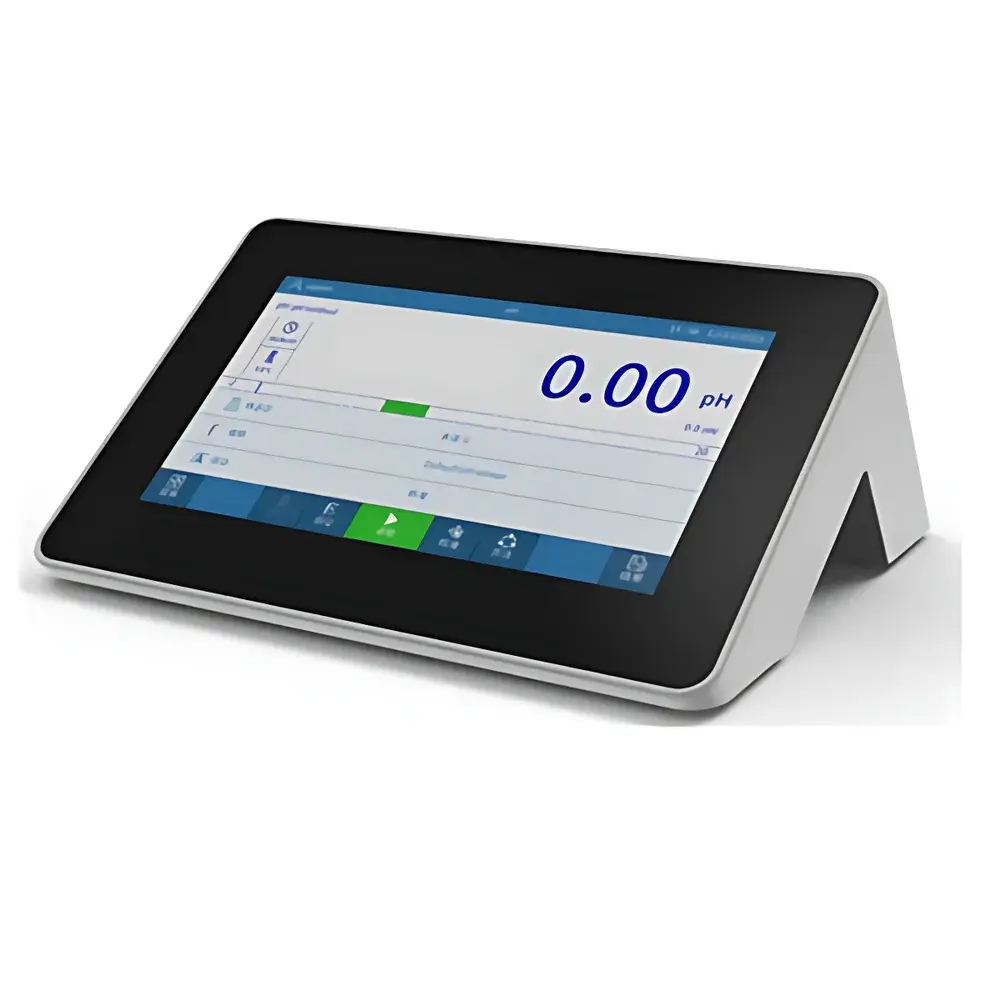
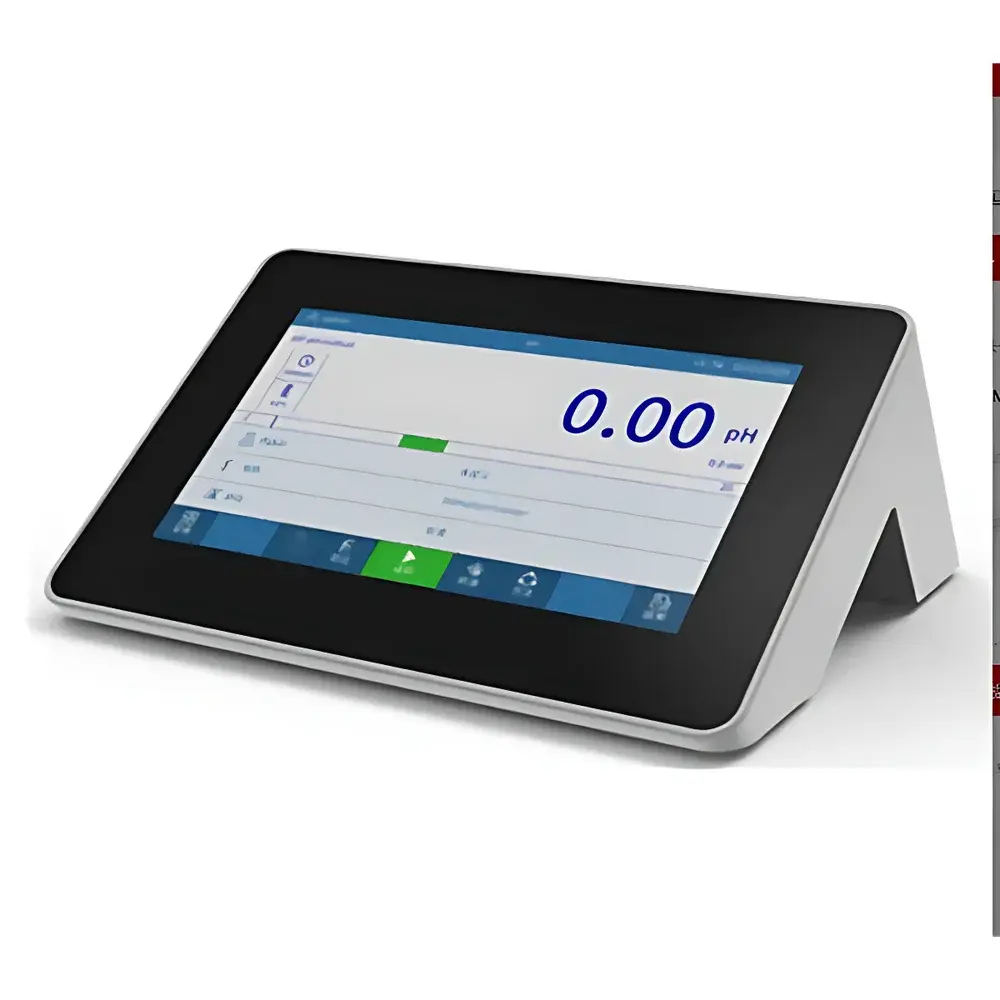
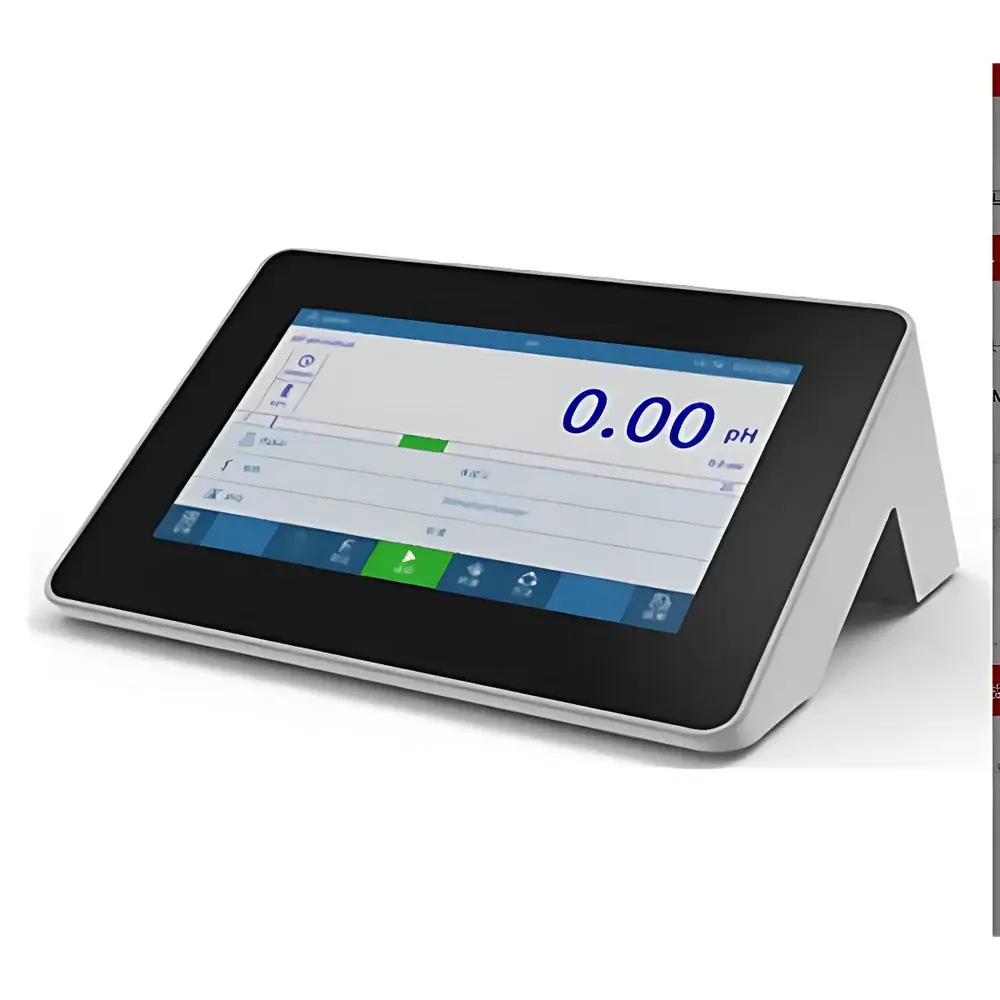
Yoke M901 High-Precision pH Meter with Integrated Dissolved Oxygen (Fluorescence-Based) Measurement Capability
| Brand | Yoke |
|---|---|
| Origin | Shanghai, China |
| Model | M901 |
| Instrument Type | Portable |
| Measurement Principle | Fluorescence Quenching (DO), Potentiometric (pH) |
| DO Range | 0–99.00 mg/L |
| pH Accuracy | ±0.002 |
| mV Accuracy | ±0.1 mV |
| pH Repeatability | ≤±0.001 |
| mV Repeatability | ≤±0.1 mV |
| pH Range | −2.00 to 20.00 |
| pH Resolution | 0.001 |
| mV Resolution | 0.1 mV |
| Display | 7-inch color capacitive touchscreen |
| IP Rating | IP54 |
| Temperature Compensation | Automatic/manual with integrated high-stability temperature electrode |
Overview
The Yoke M901 is a dual-parameter portable benchtop-grade analytical instrument engineered for high-precision, field-deployable water quality assessment. Unlike conventional single-function pH meters, the M901 integrates potentiometric pH measurement with fluorescence-based dissolved oxygen (DO) quantification—two critical parameters routinely monitored under EPA Method 4500-OG, ISO 5814, and ASTM D888. Its core architecture employs a solid-state pH sensing element with low-drift glass membrane technology and a phase-modulation fluorescence sensor that eliminates oxygen quenching interference from chloride ions, turbidity, or hydrogen sulfide—common limitations of electrochemical Clark-type DO probes. Designed for compliance-driven environments including municipal wastewater laboratories, environmental consulting firms, and regulatory monitoring programs, the M901 delivers traceable, auditable measurements aligned with GLP and ISO/IEC 17025 documentation requirements.
Key Features
- 7-inch full-color capacitive touchscreen interface with intuitive workflow navigation—guides users stepwise through calibration, verification, sample measurement, and report generation without requiring external software.
- Integrated high-stability NTC temperature electrode enabling automatic temperature compensation (ATC) for both pH and DO; supports manual temperature override and configurable endpoint stabilization criteria (e.g., drift threshold <0.001 pH/min).
- Onboard magnetic stirrer module ensures homogeneous sample mixing during measurement—critical for accurate DO equilibration and pH response in viscous or particulate-laden samples.
- Real-time electrode lifecycle management: automatically logs calibration history, tracks electrode usage hours, flags expired or degraded sensors via visual and audible alerts, and enforces mandatory recalibration before measurement initiation.
- Multi-level user authentication (administrator, technician, operator) with role-based access control—prevents unauthorized parameter modification and preserves data integrity per FDA 21 CFR Part 11 and EU Annex 11 principles.
- IP54-rated enclosure provides protection against dust ingress and incidental water splashes—validated for use in outdoor sampling stations, mobile labs, and industrial effluent points.
Sample Compatibility & Compliance
The M901 accommodates aqueous matrices across a broad conductivity range (10 µS/cm to 200 mS/cm) and temperature span (0–50 °C), supporting direct immersion or flow-cell configurations. It complies with key regulatory frameworks governing environmental analysis: calibration traceability to NIST-traceable buffer standards (pH 4.01, 7.00, 10.01), DO validation using Winkler titration reference methods (ISO 5813), and data retention protocols meeting GLP audit requirements—including electronic signatures, timestamped audit trails, and immutable calibration logs. All firmware and method templates are version-controlled and exportable in CSV or PDF formats compatible with LIMS integration.
Software & Data Management
Data handling conforms strictly to Good Laboratory Practice (GLP) standards. Each measurement record embeds metadata: operator ID, timestamp, electrode serial number, calibration status, ambient temperature, and environmental conditions. Up to 10,000 measurement entries are stored internally with optional export via USB drive, Bluetooth, or RS-232 to PCs running Windows-compatible desktop software. The system supports batch reporting with statistical summaries (mean, SD, RSD, confidence intervals), outlier detection algorithms, and customizable certificate-of-analysis templates. All exported files include digital signatures and cryptographic hash verification to ensure forensic data authenticity.
Applications
- Regulatory wastewater discharge monitoring per NPDES permits and EU Urban Wastewater Treatment Directive (91/271/EEC)
- In-situ profiling of surface water bodies (rivers, lakes, reservoirs) for ecological health assessment
- Process control in drinking water treatment plants—especially post-chlorination pH/DO correlation studies
- Validation of bioreactor performance in activated sludge systems and anaerobic digesters
- Educational laboratory instruction on electrochemical sensing fundamentals and environmental metrology
- Field-based rapid screening during emergency spill response or algal bloom events
FAQ
Does the M901 support multi-point pH calibration?
Yes—it accepts up to five-point calibration using standard buffers (e.g., pH 1.68, 4.01, 7.00, 10.01, 12.45) with automatic slope and offset calculation. Calibration coefficients are retained even after power cycling.
Can the instrument store custom test methods for recurring analyses?
Absolutely. Users may define, name, and save complete measurement protocols—including electrode selection, temperature compensation mode, endpoint criteria, and report formatting—and recall them instantly via the touchscreen interface.
Is the fluorescence-based DO sensor subject to fouling or drift over time?
The sensor’s hydrophobic polymer matrix resists biofouling and chemical adsorption. Routine cleaning with isopropyl alcohol and periodic verification against air-saturated water (100% saturation at known temperature) maintains long-term stability; typical sensor lifetime exceeds 24 months under normal field use.
How does the M901 ensure data security in shared-lab environments?
Through hardware-enforced encryption of internal memory, session timeouts, and mandatory password re-authentication for sensitive actions (e.g., deleting calibration records or exporting raw data). Audit logs cannot be edited or purged by non-administrator users.
What peripheral devices are natively supported?
USB-A host port for flash drives and certified thermal printers; Bluetooth 5.0 for wireless connection to tablets or PCs; optional RS-232 adapter kit for legacy SCADA integration. No proprietary drivers required—plug-and-play compatibility with Windows 10/11 and macOS 12+.
Related Products







