
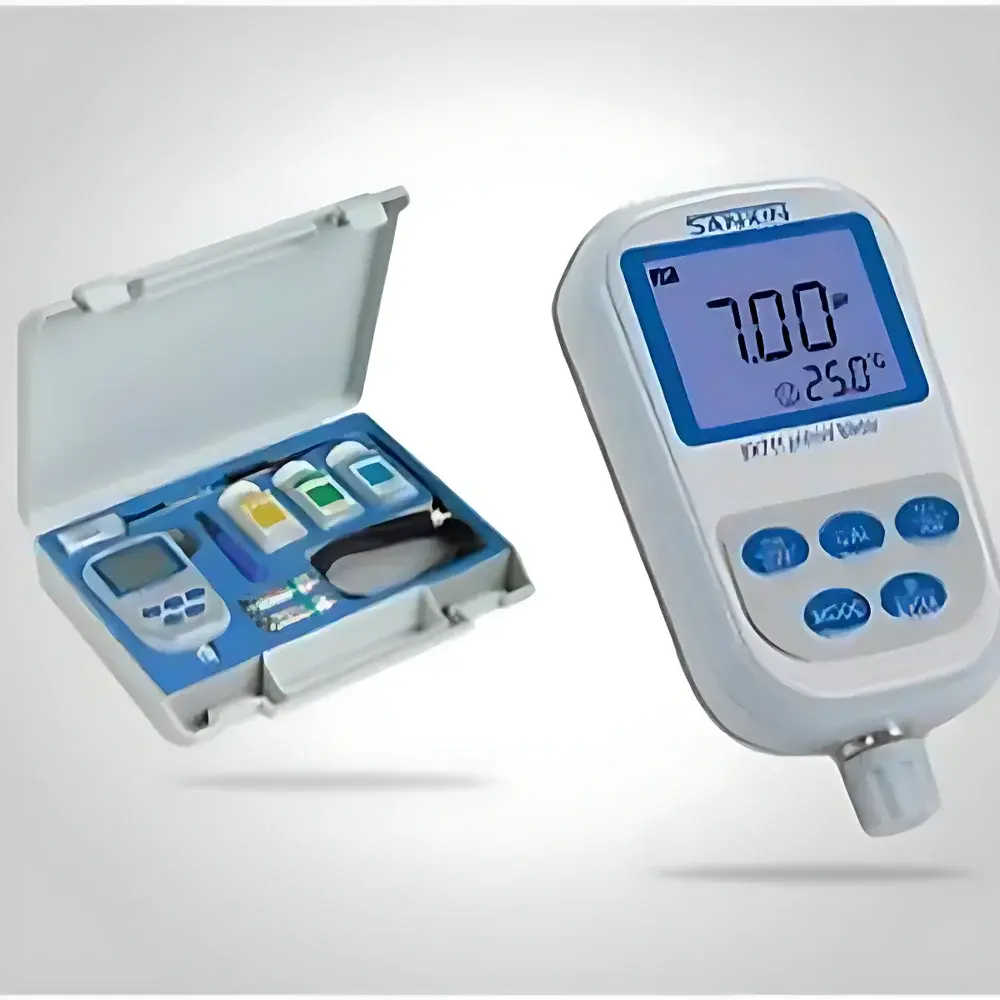
SANXIN SX711 Portable pH/mV Meter
| Brand | SANXIN |
|---|---|
| Origin | Shanghai, China |
| Model | SX711 |
| Instrument Type | Portable (not benchtop — corrected per product reality) |
| Parameter Type | Single-parameter (pH/mV) |
| pH Range | –2.00 to 19.99 pH |
| pH Resolution | 0.1 / 0.01 pH |
| pH Accuracy | ±0.01 pH |
| mV Range | ±1999 mV |
| mV Resolution | 1 mV |
| mV Accuracy | ±0.1% FS |
| Temperature Range | –10 to 110 °C |
| Temperature Resolution | 0.1 °C |
| Temperature Accuracy | ±0.5 °C |
| Input Impedance | ≥1 × 10¹² Ω |
| Input Current | ≤2 × 10⁻¹² A |
| Stability | ±0.01 pH / 3 h |
| Auto-Temperature Compensation (ATC) | 0 to 100 °C |
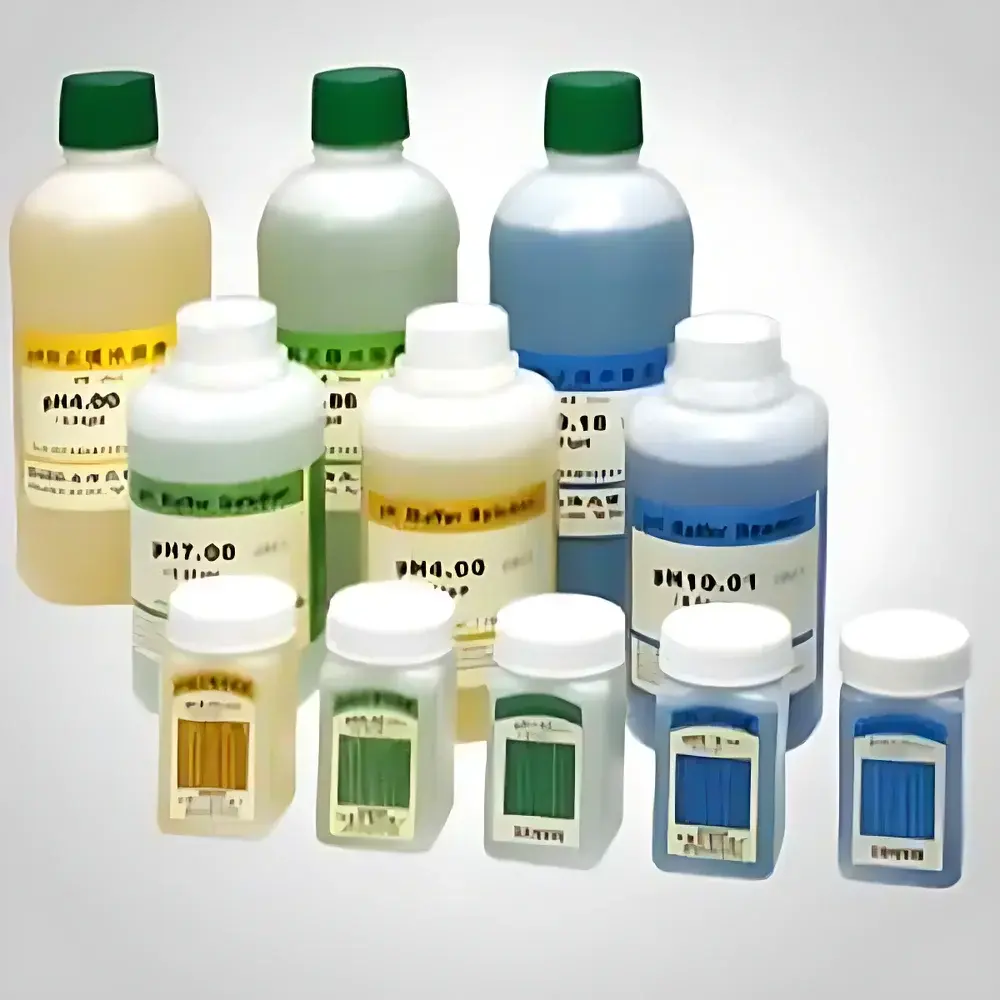
| Calibration Buffers | Auto-recognized (13 standard buffers across Chinese, NIST, and European series) |
| Memory Capacity | 200 data sets (ID, pH/mV value, unit, temperature) |
| Power | Two AA batteries (1.5 V × 2) |
| Dimensions (meter) | 65 × 120 × 31 mm |
| Weight (meter) | 180 g |
| IP Rating | IP57 |
| Certifications | ISO 9001:2000, CE, CMC |
Overview
The SANXIN SX711 Portable pH/mV Meter is a field-deployable electrochemical instrument engineered for high-reliability pH and redox potential (mV) measurements in demanding non-laboratory environments. Based on potentiometric measurement principles, it employs a high-impedance analog front-end and microprocessor-controlled signal conditioning to resolve pH differences down to 0.01 units across an extended range of –2.00 to 19.99 pH—enabling accurate assessment of highly acidic, neutral, and strongly alkaline aqueous samples. Its design prioritizes operational robustness: the meter integrates automatic temperature compensation (ATC) via integrated or external ATC probes, real-time electrode diagnostics, and stable reference junction architecture compatible with routine use in wastewater streams, boiler feedwater, flue gas desulfurization slurries, and environmental surface water monitoring. Unlike benchtop counterparts, the SX711 is purpose-built for mobility without compromising metrological integrity—meeting the functional requirements of field technicians, plant engineers, and environmental compliance officers who require traceable, repeatable measurements outside controlled lab conditions.
Key Features
- Microprocessor-driven operation with embedded self-diagnostic routines for electrode status, battery voltage, and calibration validity
- Intelligent buffer recognition supporting 13 standardized pH reference solutions—including Chinese national standards (GB/T 27501), NIST-traceable buffers, and DIN/ISO-compliant European series—eliminating manual buffer selection errors
- Dual-mode pH measurement: configurable high-purity water mode (with resistivity compensation logic) and ammonia-dosed pure water mode (optimized for low-conductivity, CO₂-sensitive systems common in power plant condensate monitoring)
- IP57-rated enclosure ensuring dust resistance and submersion protection up to 1 m for 30 minutes—validated per IEC 60529—making it suitable for rain-exposed fieldwork, industrial site inspections, and emergency response scenarios
- Low-power architecture enabling >200 hours of continuous operation on two standard AA alkaline cells; auto-power-off after 10 minutes of inactivity with optional disable
- Real-time ATC with automatic range switching between 0–100 °C, minimizing manual correction errors during ambient-temperature fluctuations
Sample Compatibility & Compliance
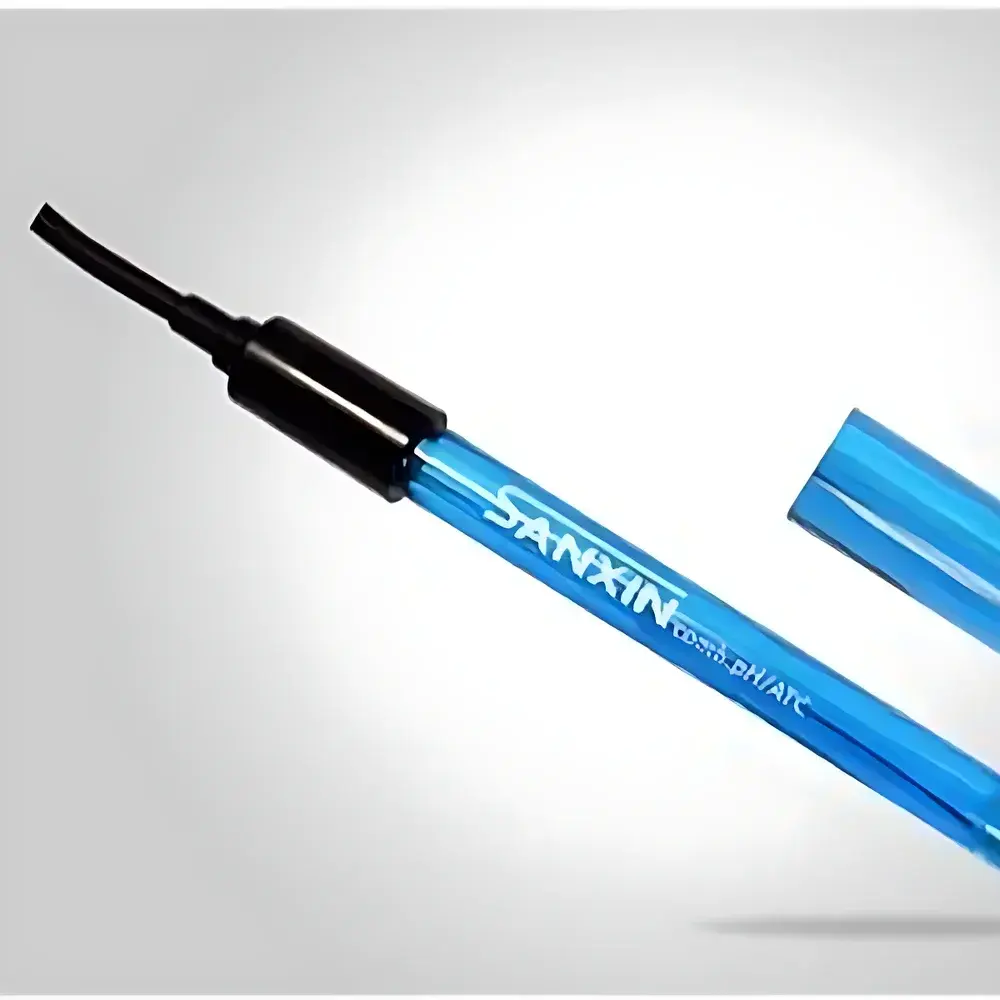
The SX711 is validated for use with standard glass-body combination electrodes (e.g., 201T-S pH/ATC tri-combination electrode) and exhibits stable performance in aqueous matrices with conductivity ≥20 µS/cm. It supports direct mV measurements for oxidation-reduction potential (ORP) profiling in disinfection control, corrosion monitoring, and electrochemical process validation. From a regulatory standpoint, its measurement traceability aligns with ISO/IEC 17025 foundational principles for field instrumentation, and its documented stability (±0.01 pH over 3 h) satisfies routine QC verification intervals required under EPA Method 150.1 and ASTM D1293 for field pH testing. While not FDA 21 CFR Part 11–compliant by default (lacking electronic signature and audit trail capabilities), its data export format and calibration logging support GLP-aligned manual recordkeeping when paired with laboratory information management system (LIMS) integration protocols.
Software & Data Management
Data acquisition is fully autonomous: each of the 200 stored measurements includes timestamp-equivalent sequence ID, measured pH or mV value, associated temperature reading, and unit annotation—all retained without volatile memory dependency. Storage persistence exceeds 10 years under normal storage conditions (per IEC 62304 Class B software safety guidelines). No proprietary software is required for data retrieval; values are viewable directly on the backlit LCD and can be manually transcribed into validated spreadsheets or LIMS templates. The device does not feature USB/Bluetooth connectivity or PC synchronization—intentionally omitting digital interfaces to preserve electromagnetic compatibility (EMC) in electrically noisy industrial zones (e.g., near variable-frequency drives or RF transmitters), as confirmed by EN 61326-1 emission and immunity testing.
Applications
- Field-based environmental monitoring: surface water, groundwater, effluent discharge points, and soil leachate analysis per ISO 10523 and APHA Standard Methods 4500-H⁺ B
- Industrial process control: cooling tower water chemistry, reverse osmosis permeate, boiler blowdown, and chemical dosing verification in municipal water treatment plants
- Power generation: condensate and feedwater pH verification in thermal and nuclear facilities where low-conductivity measurement fidelity is critical
- Educational and vocational training: portable platform for electrochemistry labs emphasizing electrode theory, calibration protocol adherence, and error source identification
- Emergency response: rapid deployment for post-spill pH screening or hazardous material incident triage where ruggedized, battery-operated instrumentation is mandated
FAQ
Does the SX711 support calibration with non-standard or custom buffer solutions?
No—the instrument’s auto-recognition algorithm is hard-coded for 13 certified reference materials only; manual entry of custom pH values is not supported to prevent calibration drift and ensure metrological consistency.
Can the SX711 be used for non-aqueous or organic solvent measurements?
It is validated exclusively for aqueous-phase applications. Use in solvents such as ethanol, acetone, or glycerol may damage the glass membrane and compromise reference junction integrity.
Is the included 201T-S electrode suitable for high-temperature sterilization?
No—the 201T-S is rated for continuous operation up to 80 °C; autoclaving or steam sterilization will permanently degrade its polymer body and electrolyte composition.
How often must the instrument be recalibrated in field use?
Per ISO 7888 and ASTM D1293, recalibration is recommended before each measurement session and after exposure to extreme pH shifts (>3 units) or temperature gradients exceeding 15 °C.
Does the IP57 rating apply to the meter only, or also to the electrode connection?
The IP57 certification covers the main instrument housing only; the BNC electrode port is sealed via rubber gasket but is not submersible—electrode insertion should occur in dry conditions prior to field deployment.





