
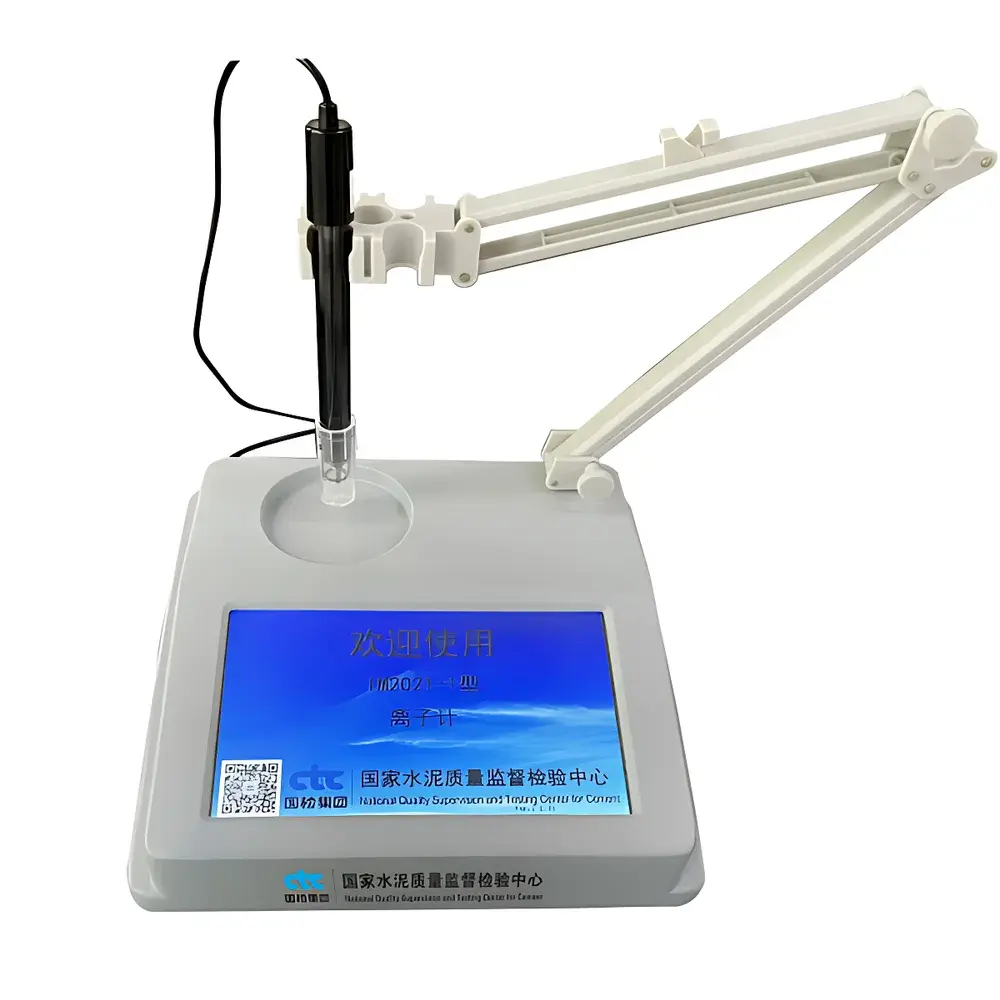
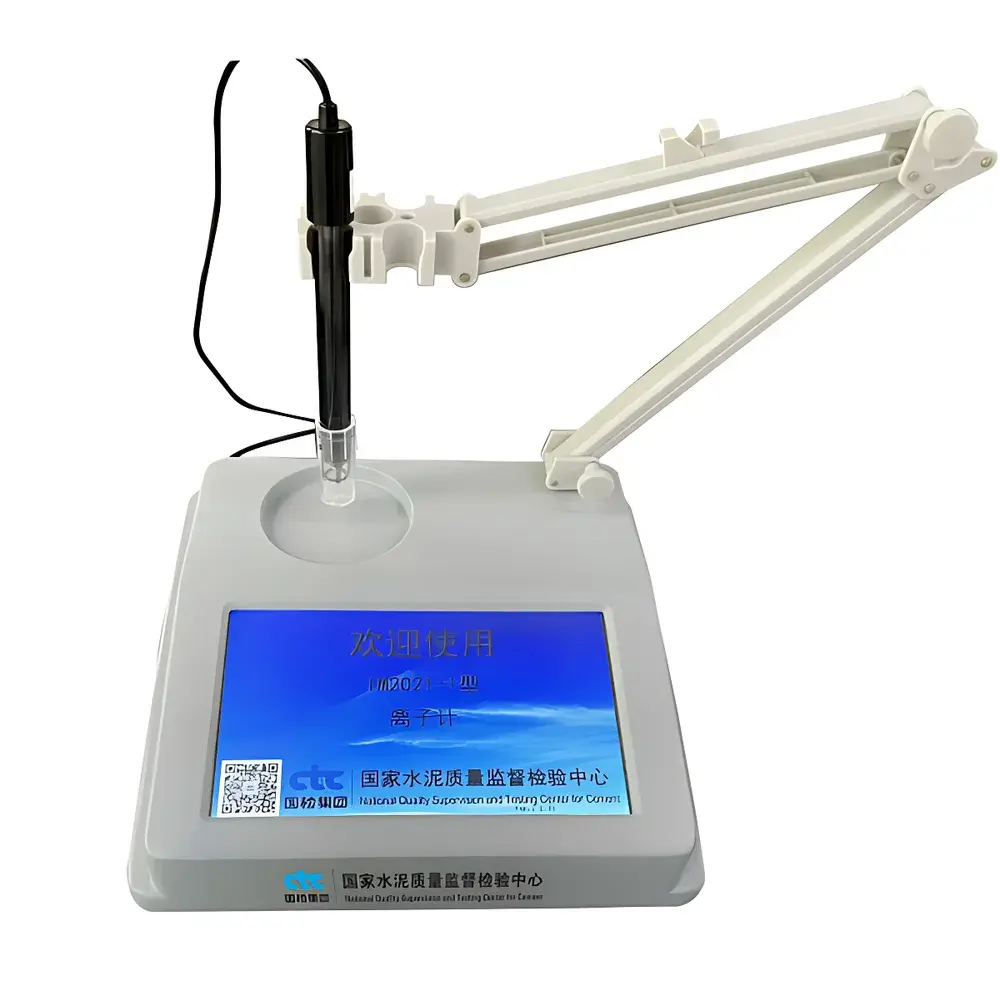
Starwood IM2021-1 Fluoride Ion Meter
| Brand | Starwood |
|---|---|
| Origin | Beijing, China |
| Manufacturer Type | Manufacturer |
| Model | IM2021-1 |
| Instrument Type | Benchtop |
| Ion Measured | Fluoride (F⁻) |
| pH Range | 0.00–14.00 |
| mV Range | −1999.9 to +1999.9 mV |
| Detection Limit | 0.01 ppm (as F⁻) |
| Response Time | ≤2 s |
| pH Resolution | 0.01 |
| Temperature Operating Range | 5–40 °C |
| Power Supply | AC 220 V, 100 W |
Overview
The Starwood IM2021-1 Fluoride Ion Meter is a benchtop electrochemical analyzer engineered for precise, trace-level quantification of fluoride ions (F⁻) in aqueous solutions using the potentiometric ion-selective electrode (ISE) method. Based on the Nernst equation, the instrument measures the potential difference between a fluoride-specific ion-selective electrode and a stable reference electrode, converting the resulting mV signal into concentration values (typically reported in mg/L or ppm F⁻) via calibration curves. Designed specifically for compliance with GB/T 176–2017 “Chemical Analysis of Cements”, this meter supports standardized determination of fluorine in cement raw materials, clinker, gypsum, and blended additives—where even sub-ppm fluoride levels significantly influence hydration kinetics and setting behavior. Its integrated pH measurement capability further enables real-time acidification control during sample pretreatment, ensuring optimal ionic strength and total ionic strength adjustment (TISA) conditions required for high reproducibility in ISE analysis.
Key Features
- Benchtop architecture with 7-inch capacitive touchscreen interface, supporting intuitive navigation and context-aware parameter configuration
- Dual-mode operation: dedicated fluoride ion quantification mode and calibrated pH measurement mode (0.00–14.00, resolution 0.01)
- Integrated magnetic stirrer with programmable speed (100–1200 rpm) and timer-controlled agitation (1–300 s), minimizing boundary layer effects and ensuring uniform activity coefficient distribution
- Automated calibration curve fitting: linear or logarithmic regression applied directly on-screen; up to 8-point standard series supported with residual error reporting
- Mass-based calculation engine: users input sample mass and dilution volume; instrument auto-computes final F⁻ content (mg/kg or %) per GB/T 176–2017 reporting conventions
- Data management suite: stores calibration equations, raw mV readings, temperature-compensated results, and metadata (operator ID, date/time stamp) in non-volatile memory
- Compliance-ready design: all measurements include timestamped audit trails; calibration history and electrode status logs are exportable via USB port
Sample Compatibility & Compliance
The IM2021-1 is validated for use with acid-digested cementitious matrices (HNO₃/HCl dissolution per GB/T 176–2017 Section 8.3), as well as drinking water, wastewater effluents, and industrial process liquors requiring fluoride monitoring under ISO 10304-1 (water quality — determination of dissolved anions by liquid chromatography) and EPA Method 300.0 (determination of inorganic anions by ion chromatography). Sample compatibility extends to TISAB-buffered solutions (total ionic strength adjustment buffer) containing NaCl, acetic acid, and citric acid to suppress hydroxide interference and maintain constant ionic activity. The instrument meets CE marking requirements for electromagnetic compatibility (EN 61326-1) and safety (EN 61010-1), and its firmware architecture supports GLP/GMP-aligned data integrity practices including operator authentication, electronic signature prompts, and immutable result archiving.
Software & Data Management
The embedded operating system provides full traceability through time-stamped measurement records, including electrode serial numbers, calibration dates, slope (%/decade), and asymmetry potentials. All calibration curves are saved with coefficients (y = mx + b), correlation coefficients (R² ≥ 0.999 typical), and uncertainty estimates derived from replicate standard measurements. Data export is supported in CSV format via USB-A port, compatible with LIMS integration and statistical process control (SPC) platforms. No proprietary software installation is required: exported files contain column headers compliant with ASTM E1447 and ISO/IEC 17025 documentation standards. Firmware updates are delivered via signed binary packages, ensuring cryptographic integrity verification prior to installation.
Applications
- Quality control of cement raw meal and clinker: quantifying fluorine content to predict and mitigate abnormal setting delays caused by CaF₂ formation during hydration
- Environmental compliance testing: monitoring fluoride discharge limits in industrial wastewater per local regulatory thresholds (e.g., China’s GB 8978–1996, EU Directive 2000/60/EC)
- Drinking water safety assessment: verifying adherence to WHO guideline value of 1.5 mg/L and national standards (e.g., GB 5749–2022)
- Pharmaceutical excipient screening: detecting residual fluoride in calcium carbonate or talc used in tablet formulations
- Research applications in geochemistry and metallurgy: analyzing leachates from fluorite-bearing ores or aluminum smelting residues
FAQ
What electrode types are required for fluoride measurement with the IM2021-1?
A lanthanum fluoride (LaF₃) crystal-based ion-selective electrode and a double-junction Ag/AgCl reference electrode are supplied; both must be conditioned per manufacturer instructions prior to first use.
Does the instrument support automatic temperature compensation (ATC)?
Yes—integrated Pt1000 sensor enables real-time mV-to-concentration correction across 5–40 °C; user may also enter manual temperature values if external probe is unavailable.
Can calibration curves be transferred between instruments?
Calibration parameters are stored internally and not exportable as reusable templates; each unit requires independent standardization to ensure metrological traceability.
Is the IM2021-1 compliant with FDA 21 CFR Part 11?
While it supports audit trails and electronic signatures, full Part 11 compliance requires deployment within a validated laboratory information management system (LIMS); standalone use satisfies ALCOA+ principles for data integrity.
How often should the fluoride electrode be recalibrated?
Daily calibration is recommended for routine QC; slope verification before each analytical batch is mandatory per ISO/IEC 17025 Clause 7.7.2.
Related Products







