
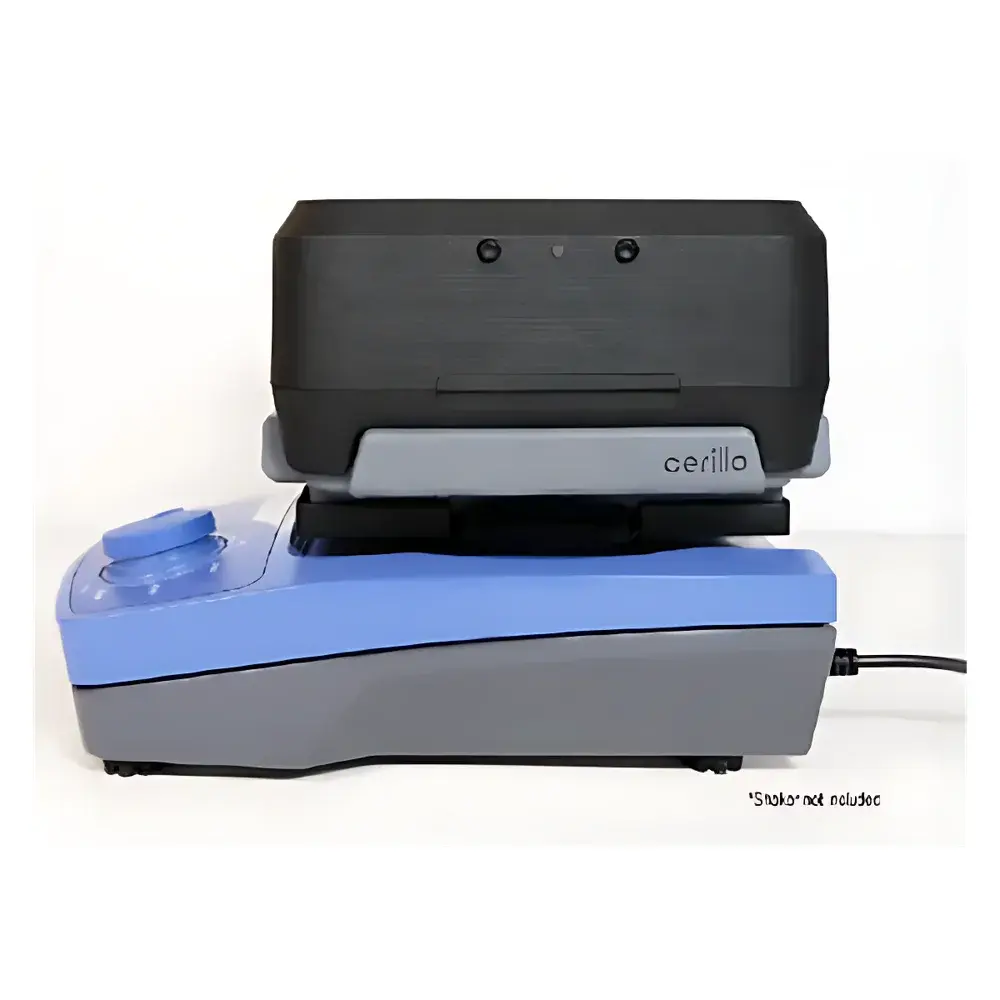
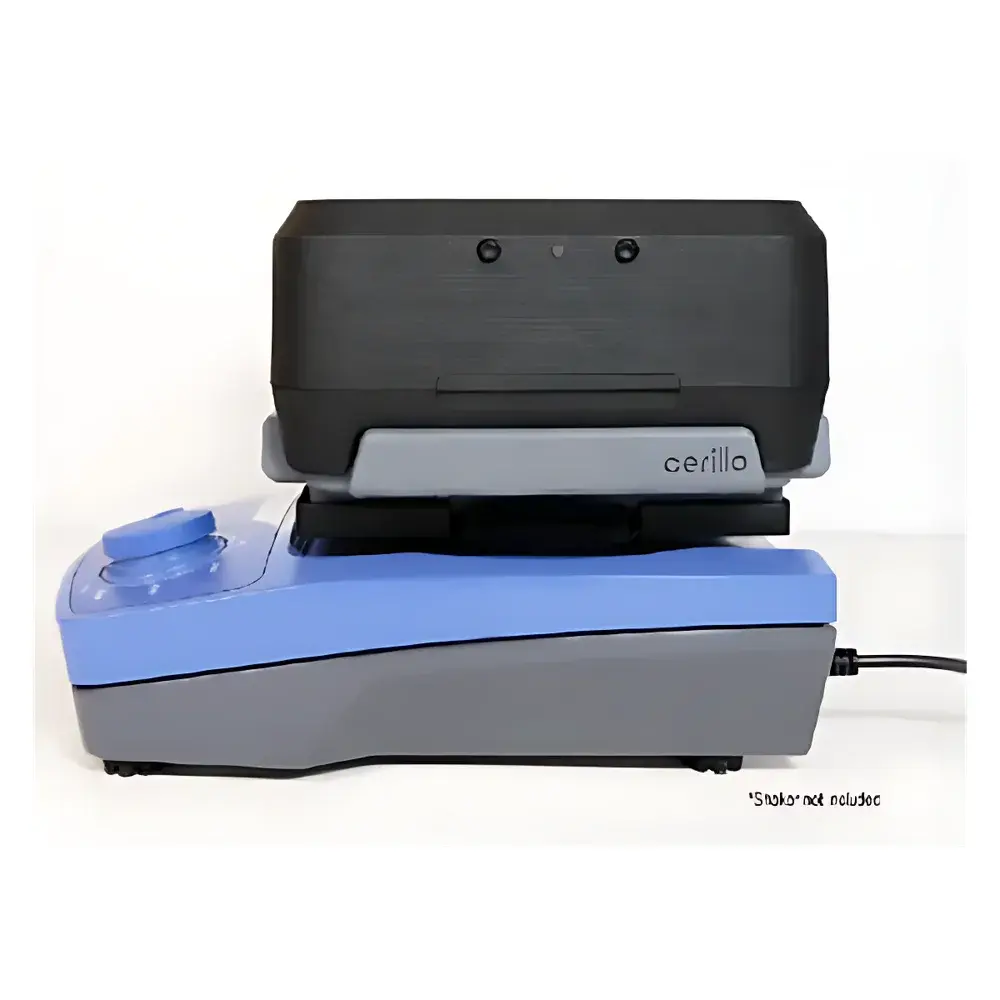
Cerillo Microbial Growth Curve Analyzer
| Brand | Other brands |
|---|---|
| Origin | Beijing, China |
| Manufacturer Type | General distributor |
| Product Origin | Domestic (China) |
| Model | Cerillo |
| Price | Upon request |
| Measurement Mode | Endpoint and kinetic absorbance |
| Plate Compatibility | 6-, 12-, and 96-well plates |
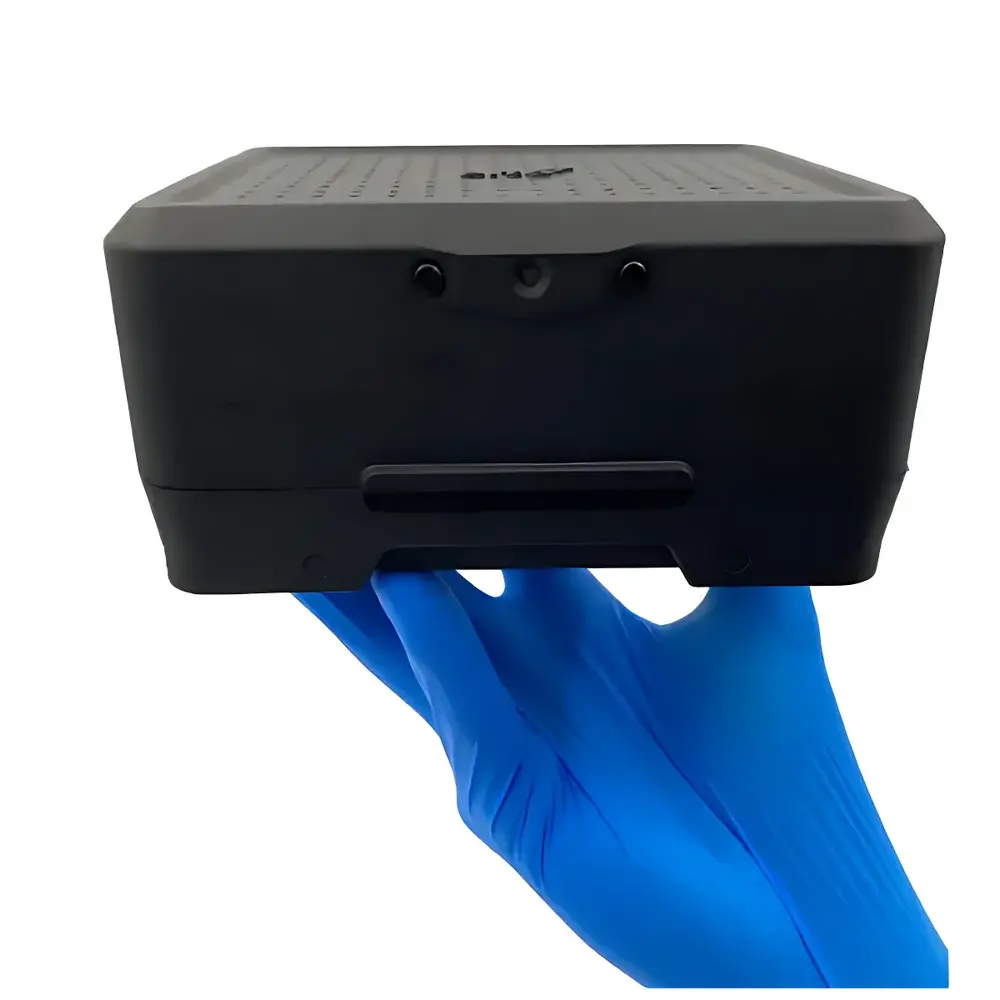
| Dimensions | 15.0 × 13.3 × 7.2 cm (W × D × H) |
| Weight | 800 g |
| Power Supply | 5 V, 500 mA via USB-C |
| Operating Temperature | 0–50 °C |
| Relative Humidity | 0–99% RH |
| Wavelengths | 450 nm and 600 nm (monochromatic LEDs) |
| Optical Density (OD) Resolution | 0.001 OD |
| OD Range | 0.000–4.000 OD |
| Linearity | < ±1% (0.000–2.500 OD) |
| Accuracy (Endpoint) | < ±1% and ±0.02 OD (0.000–2.500 OD) |
| Accuracy (Kinetic) | < ±0.25% and ±0.005 OD (0.000–2.500 OD) |
| Repeatability | < ±0.25% and ±0.005 OD (0.000–2.500 OD) |
| Membrane Material | Polycarbonate |
| Surface Treatment | PVP (polyvinylpyrrolidone) hydrophilic coating |
| Pore Size | 0.2 µm |
| Effective Membrane Area | 0.503 cm² |
| Membrane Diameter | 0.8 cm |
| Membrane Thickness | 25 µm |
| Data Storage | microSD card (up to 32 GB |
| OS Compatibility | macOS 11 (Big Sur) or later |
| Data Export Formats | .csv (on-device), .xlsx (via Labrador software) |
| Regulatory Compliance | RoHS, REACH, FCC, CE |
Overview
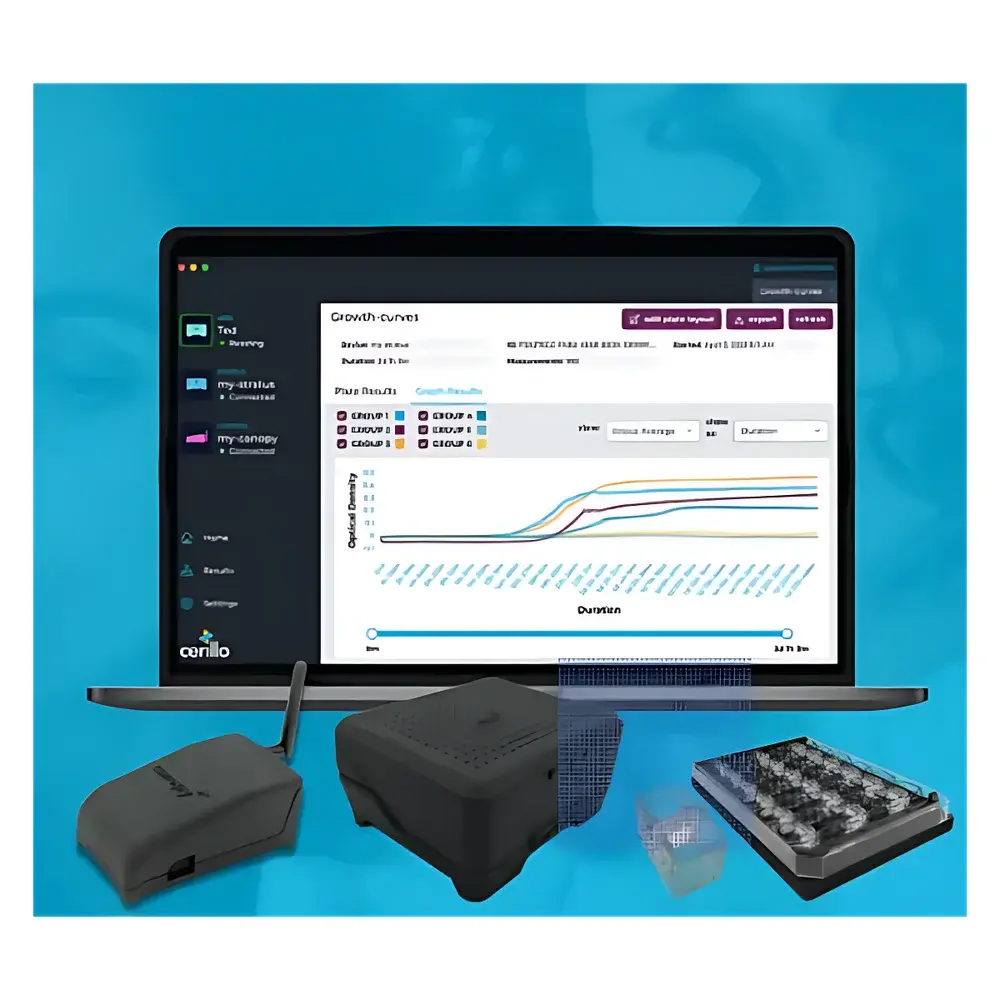
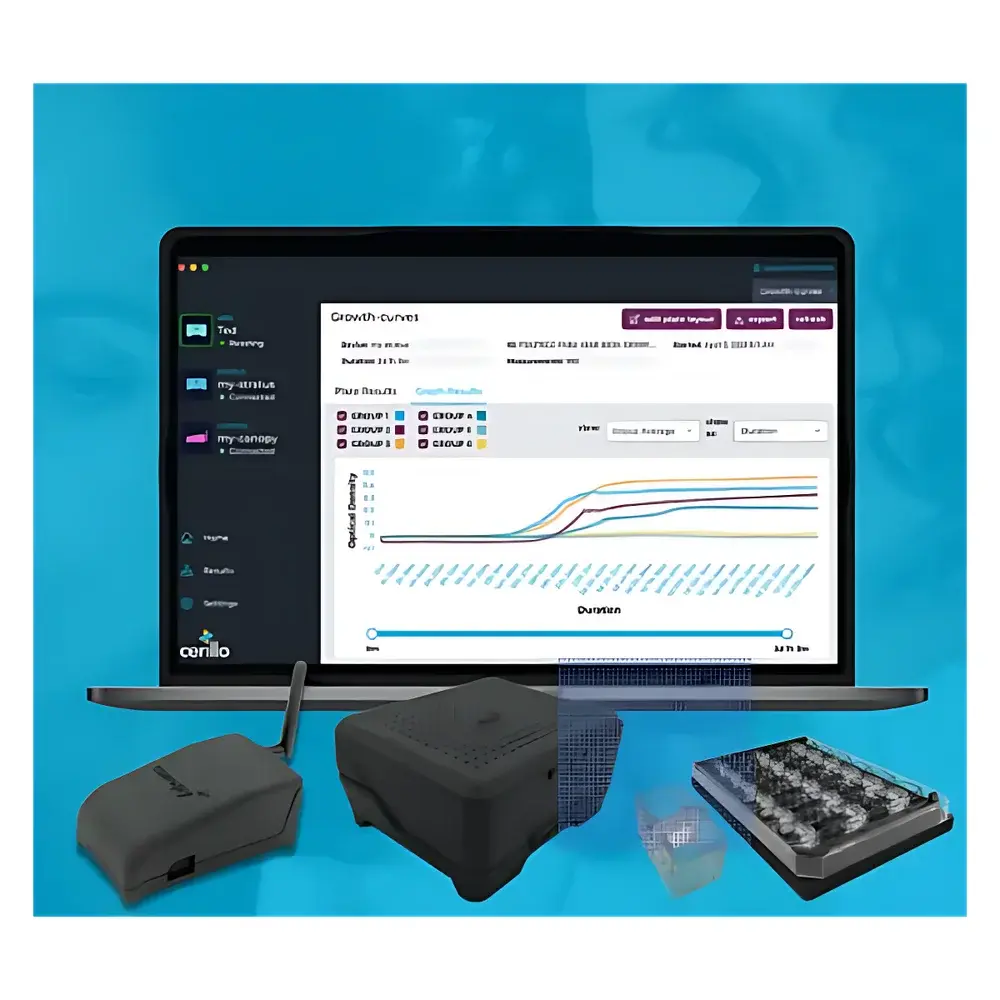
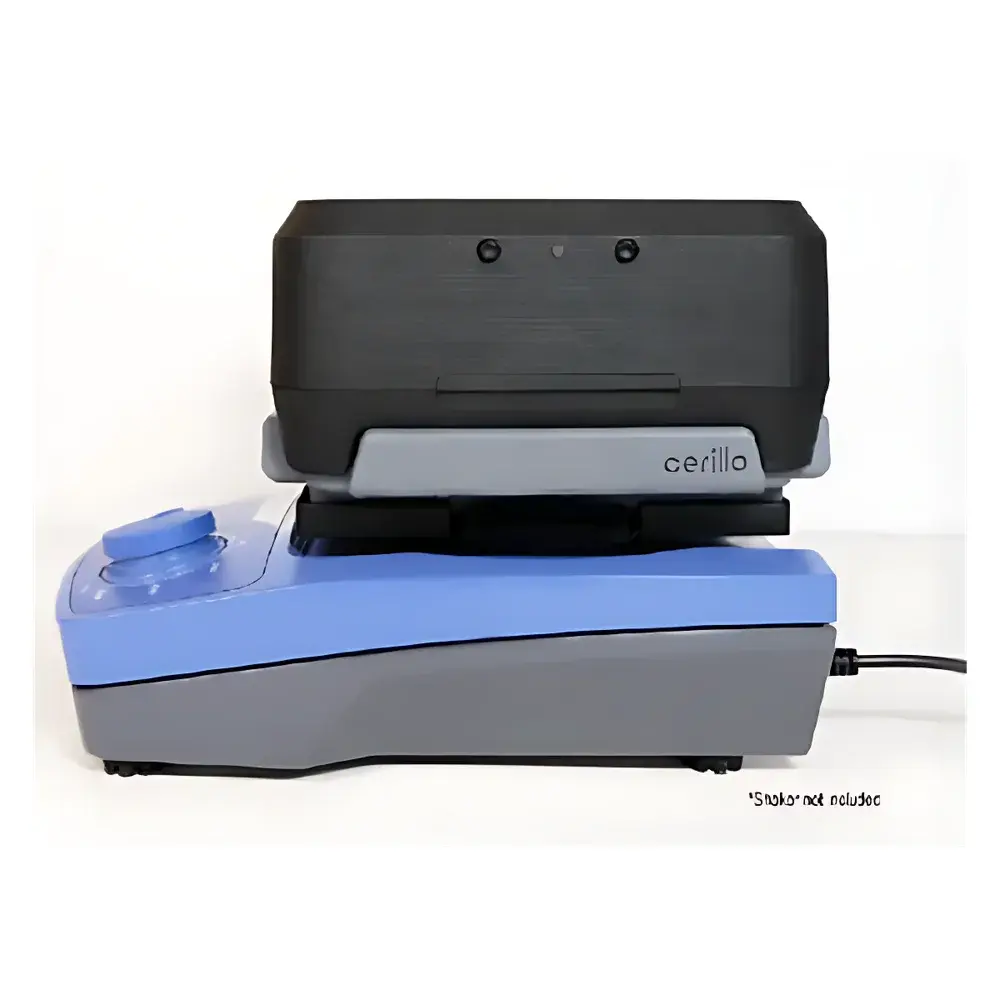
The Cerillo Microbial Growth Curve Analyzer is a compact, benchtop optical density (OD)-based instrument engineered for real-time, non-invasive monitoring of microbial proliferation kinetics. It operates on the principle of monochromatic light absorption—measuring transmitted intensity at 450 nm and 600 nm—to quantify turbidity changes in liquid cultures as a proxy for viable cell density. Unlike traditional plate readers requiring manual sampling or endpoint assays, the Cerillo enables continuous kinetic acquisition directly inside controlled environments—including CO₂ incubators, anaerobic chambers, orbital shakers, and humidity-regulated growth cabinets—without disrupting culture integrity. Its design eliminates the need for centrifugation, dilution, or staining, preserving physiological relevance across diverse microbiological workflows. The system supports both endpoint and time-resolved measurements, delivering high-temporal-resolution growth curves with sub-minute sampling intervals. Its thermal stability up to 50 °C ensures compatibility with thermophilic strains and elevated fermentation conditions, while its low-power USB-C architecture enables deployment in resource-constrained field labs or mobile biosafety units.
Key Features
- Compact footprint (15.0 × 13.3 × 7.2 cm) optimized for space-limited incubators, glove boxes, and biosafety cabinets
- Dual-wavelength detection (450 nm and 600 nm) with calibrated monochromatic LEDs for enhanced specificity in distinguishing metabolic activity from biomass accumulation
- High-precision photometric performance: OD resolution of 0.001, linearity < ±1% over 0.000–2.500 OD, and kinetic repeatability < ±0.005 OD
- Native support for standard microtiter formats (6-, 12-, and 96-well plates) plus the proprietary Cerillo Dual-Culture Co-culture Plate for parallel, compartmentalized interaction studies
- Stackable hardware architecture enabling synchronized operation of up to five units under single software control—ideal for high-throughput strain screening or condition matrix testing
- Wireless connectivity via Bluetooth or Wi-Fi (optional module) for remote monitoring and automated data streaming to networked storage or LIMS
- Integrated hydrophilic PVP-coated polycarbonate membrane (0.2 µm pore size, 0.503 cm² effective area) for gas-permeable, contamination-resistant co-culture applications
Sample Compatibility & Compliance
The Cerillo analyzer accommodates a broad spectrum of prokaryotic and eukaryotic microorganisms—including Gram-positive and Gram-negative bacteria, yeasts (e.g., Saccharomyces cerevisiae, Candida albicans), molds, and anaerobes—without modification to native growth media. Its sealed optical path and low-heat LED source prevent phototoxicity or thermal drift during prolonged acquisitions. All materials contacting samples comply with ISO 10993-5 (cytotoxicity) and USP <88> Class VI biocompatibility standards. The device meets RoHS, REACH, FCC Part 15, and CE marking requirements for electromagnetic compatibility and safety. While not certified for GMP manufacturing environments, its audit-ready data logging—featuring timestamped metadata, operator ID, and device serial tracking—supports GLP-compliant research documentation and aligns with FDA 21 CFR Part 11 principles when used with validated Labrador software configurations.
Software & Data Management
Data acquisition and analysis are managed through the cross-platform Labrador software suite (macOS 11+, Windows 10/11). On-device storage uses industrial-grade microSD cards (16 GB preinstalled; expandable to 32 GB), recording raw OD values, temperature logs, and user-defined experimental annotations. Labrador exports time-series datasets in CSV format natively and generates publication-ready .xlsx reports with automatic lag-phase, exponential-rate, and stationary-phase parameter extraction (e.g., µmax, doubling time, AUCgrowth). The software implements built-in baseline correction, outlier rejection using Grubbs’ test, and curve-fitting via modified Gompertz and logistic models. Audit trails record all parameter changes, export events, and user logins—enabling retrospective validation in regulated academic or contract research settings.
Applications
- Intestinal microbiota phenotyping: longitudinal profiling of commensal and pathogenic consortia under simulated gut conditions
- Antimicrobial susceptibility testing (AST): quantitative assessment of MIC/MBC endpoints and time-kill kinetics per CLSI M07-A11 guidelines
- Fermentation process development: real-time optimization of carbon/nitrogen ratios, pH shifts, and oxygen transfer rates in bioreactor seed train characterization
- Bioremediation strain evaluation: growth response quantification under pollutant gradients (e.g., heavy metals, hydrocarbons, pesticides)
- Microbial interaction mapping: dual-chamber co-culture assays to resolve competitive exclusion, syntrophy, or quorum-sensing modulation
- Food safety challenge testing: pathogen growth inhibition assays in complex matrices (e.g., dairy, meat, plant-based substrates)
FAQ
Can the Cerillo be used inside an anaerobic chamber without compromising performance?
Yes—the unit’s passive thermal design, sealed optics, and low-voltage USB-C power input enable stable operation within nitrogen- or hydrogen-based anaerobic environments without outgassing or condensation risks.
Does the system require calibration before each experiment?
No—factory-calibrated LED intensity and detector gain eliminate daily recalibration; however, users may perform optional blank normalization using sterile medium prior to assay initiation.
Is the Dual-Culture Plate compatible with standard 96-well plate handlers?
The Cerillo Dual-Culture Plate follows ANSI/SLAS footprint specifications and integrates seamlessly with robotic liquid handlers and stackers rated for SBS-compliant plates.
How is data integrity ensured during long-term experiments (>72 h)?
Internal watchdog timers, cyclic redundancy checks (CRC) on SD writes, and automatic file segmentation prevent corruption; Labrador software validates checksums upon import.
Can growth parameters be exported for statistical analysis in R or Python?
Yes—CSV exports include ISO 8601 timestamps, well identifiers, and OD columns; companion Python libraries (e.g., cerillo-py) provide pandas-ready DataFrames and curve-fitting wrappers.






