
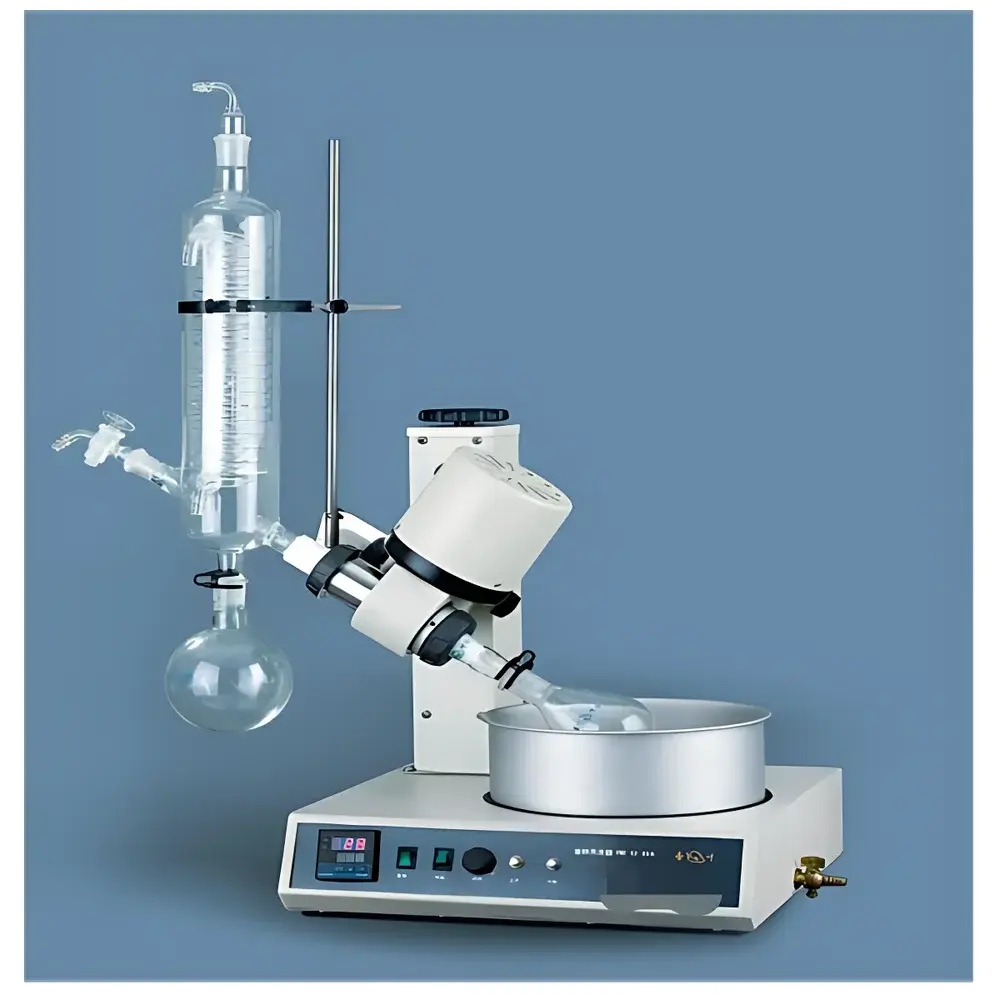
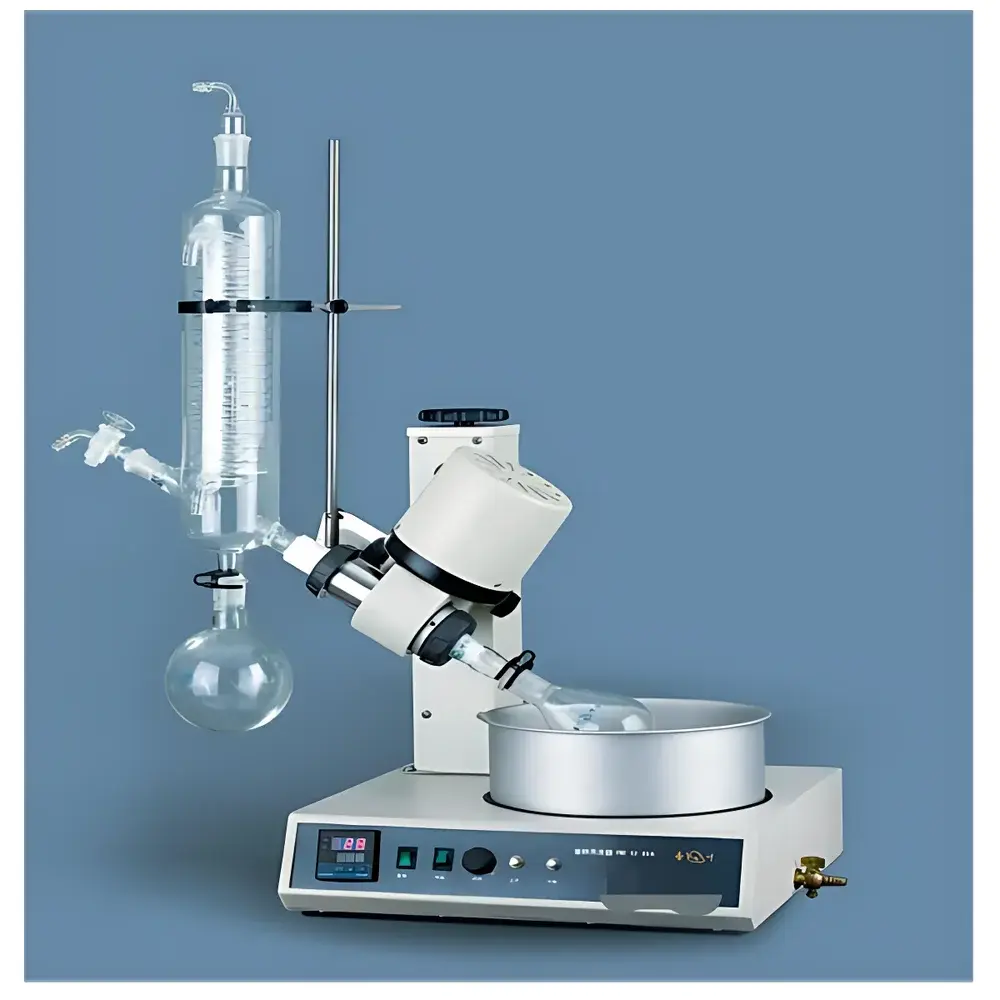
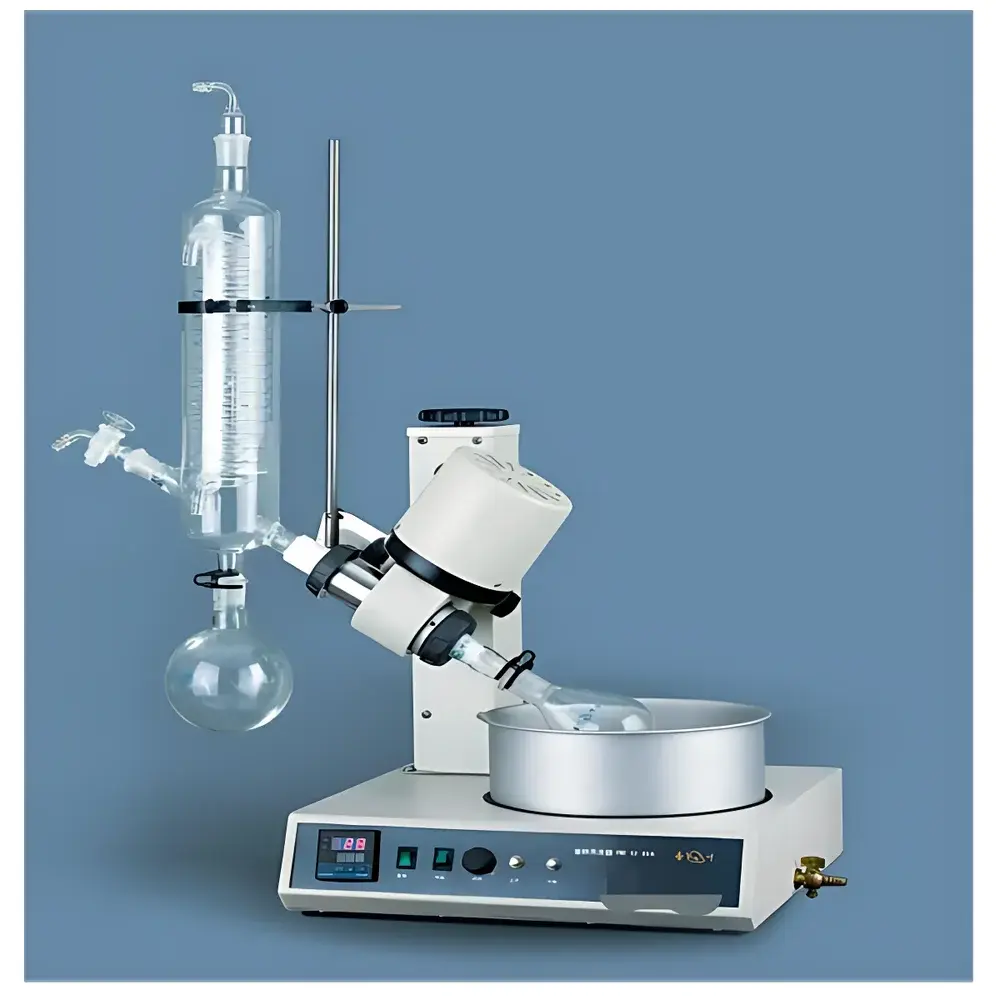
Shanghai Yarong RE-5286A Rotary Evaporator
| Brand | Shanghai Yarong / Yarong |
|---|---|
| Origin | Shanghai, China |
| Manufacturer Type | Authorized Distributor |
| Country of Origin | China |
| Model | RE-5286A |
| Price | Upon Request |
| Rotational Speed Range | 0–130 rpm (electronically stepless adjustable) |
| Temperature Control Range | Ambient to 99 °C (digital PID control with embedded Pt100 sensor) |
| Heating Bath Power | 1000 W |
| Voltage/Frequency | 220 V AC / 50 Hz |
| Condenser Type | Large-bore vertical condenser with high-efficiency reflux design |
| Feed System | Valve-controlled continuous feed tube |
| Construction Materials | Stainless steel 304 main structural components (bath housing, lift column, vapor duct, condenser support) |
Overview
The Shanghai Yarong RE-5286A Rotary Evaporator is an engineered laboratory system designed for efficient solvent removal, sample concentration, and gentle compound recovery under reduced pressure. Operating on the principle of rotary evaporation—where a rotating flask increases surface area while simultaneous vacuum application lowers boiling points—the RE-5286A enables controlled, reproducible evaporation of heat-sensitive organic solvents, reaction mixtures, and extract solutions. Its integrated digital temperature regulation, precision speed control, and robust stainless-steel architecture make it suitable for routine use in synthetic chemistry labs, pharmaceutical QC environments, natural product isolation workflows, and academic teaching laboratories requiring reliable, hands-on distillation capability.
Key Features
- Stepless electronic speed control (0–130 rpm) via micro-motor drive ensures smooth, vibration-minimized rotation across all flask sizes (up to 5 L), maintaining film uniformity and preventing bumping or splashing.
- Digital PID temperature controller with embedded Pt100 sensor delivers stable bath temperature regulation from ambient to 99 °C, with ±0.5 °C accuracy and real-time display—critical for reproducible distillation profiles.
- Motorized vertical lift mechanism enables precise, repeatable positioning of the evaporation flask relative to the heating bath and condenser, reducing operator fatigue and improving inter-user consistency.
- Large-bore vertical condenser with optimized internal geometry enhances condensation efficiency and minimizes vapor channeling—particularly advantageous when processing low-boiling solvents (e.g., diethyl ether, dichloromethane) or high-volatility fractions.
- Valve-equipped continuous feed tube allows metered introduction of fresh solution during operation, supporting extended batch processing without manual interruption or vacuum breakage.
- Main load-bearing and wetted components—including bath housing, lift column, vapor duct, and condenser frame—are fabricated from AISI 304 stainless steel, ensuring long-term resistance to corrosion from acidic, basic, or halogenated solvents.
Sample Compatibility & Compliance
The RE-5286A accommodates standard ground-glass jointed glassware (ISO 297/ISO 836), including 0.5 L, 1 L, 2 L, and 5 L round-bottom flasks. It supports common laboratory solvents such as acetone, ethanol, ethyl acetate, hexane, THF, and chloroform under vacuum levels achievable with standard two-stage vacuum pumps (typically 10–50 mbar). While not certified to specific ISO/IEC 17025 or GLP hardware standards, its digital control logs (when paired with optional data recording modules), consistent thermal and rotational performance, and traceable construction materials align with general Good Laboratory Practice (GLP) expectations for method-defined evaporation steps. The unit complies with IEC 61010-1:2010 for electrical safety in laboratory equipment.
Software & Data Management
The RE-5286A operates as a standalone analog-digital hybrid instrument with no built-in software interface. All operational parameters—rotational speed and bath temperature—are set and monitored locally via front-panel controls and LED displays. For laboratories requiring audit-ready records, integration with external data loggers (e.g., Omega OM-DAQPRO or Testo 176 T4) is supported via analog 0–10 V or 4–20 mA output signals (optional add-on module). This configuration satisfies basic FDA 21 CFR Part 11 requirements for electronic record retention when deployed within validated SOPs that define calibration frequency, maintenance logs, and user access protocols.
Applications
- Solvent removal following column chromatography or liquid–liquid extraction in natural product and medicinal chemistry labs.
- Concentration of aqueous or organic extracts prior to HPLC or GC analysis.
- Recovery of valuable reagents or catalysts from reaction supernatants.
- Drying of thermally labile compounds where lyophilization is impractical due to sample volume or viscosity.
- Teaching fundamental principles of vacuum distillation, phase equilibria, and heat/mass transfer in undergraduate organic chemistry laboratories.
FAQ
What vacuum level is recommended for optimal operation of the RE-5286A?
A stable vacuum between 10–30 mbar is typically sufficient for most low-to-medium boiling point solvents; lower pressures may be used for high-boiling or viscous samples, but require compatible vacuum pump oil and cold trap protection.
Is the RE-5286A compatible with glassware from other manufacturers?
Yes—provided standard ISO taper joints (e.g., 24/40, 29/32) are used and vacuum integrity is verified with appropriate grease or PTFE sleeves.
Can the unit be operated continuously for extended periods?
Yes, with proper cooling water flow (≥15 °C inlet, ≤25 °C outlet) and periodic inspection of seals and bath fluid level; continuous operation beyond 8 hours requires documented thermal stability verification per internal lab SOP.
Does the RE-5286A include a vacuum controller or pressure sensor?
No—vacuum regulation must be managed externally using a separate vacuum controller or needle valve; optional vacuum gauge kits are available for integration.
What maintenance intervals are recommended for long-term reliability?
Bath fluid replacement every 6 months (or per visible degradation), O-ring inspection quarterly, and motor/gear lubrication annually—aligned with ISO 5725-based reproducibility monitoring practices.



