
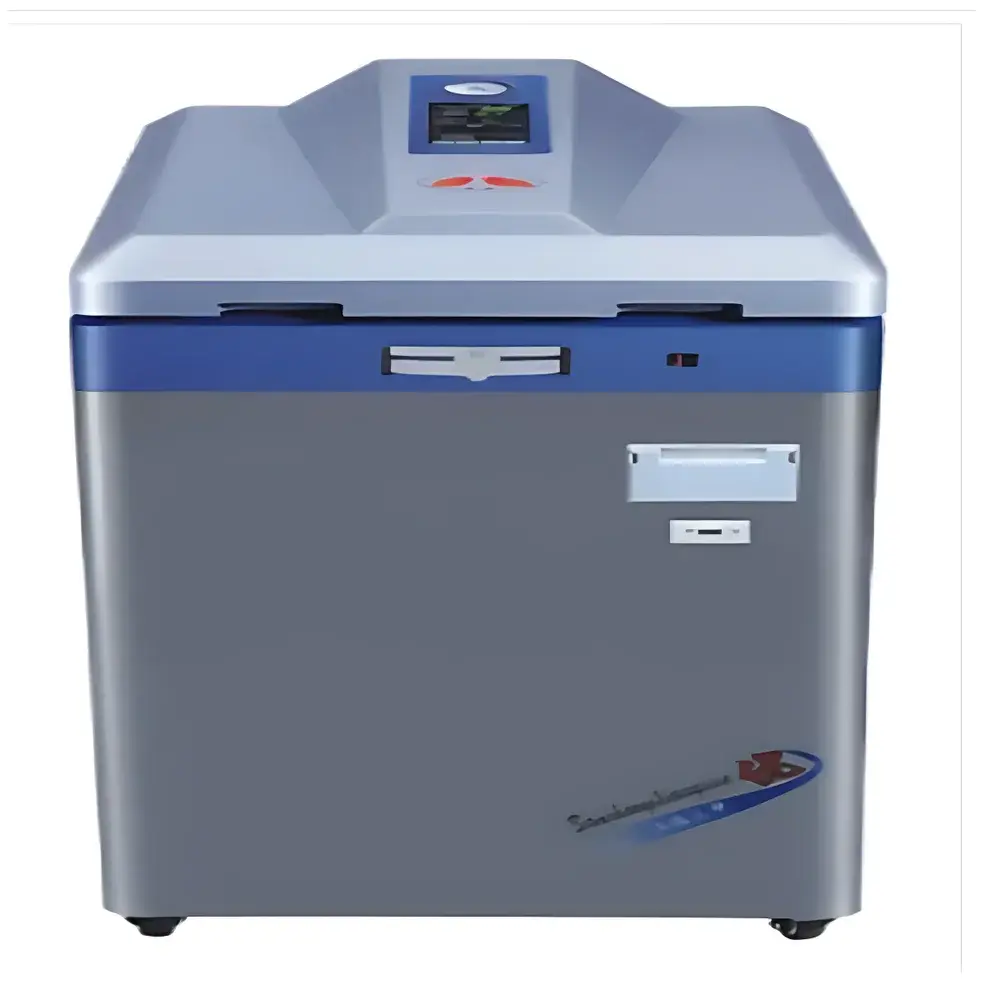
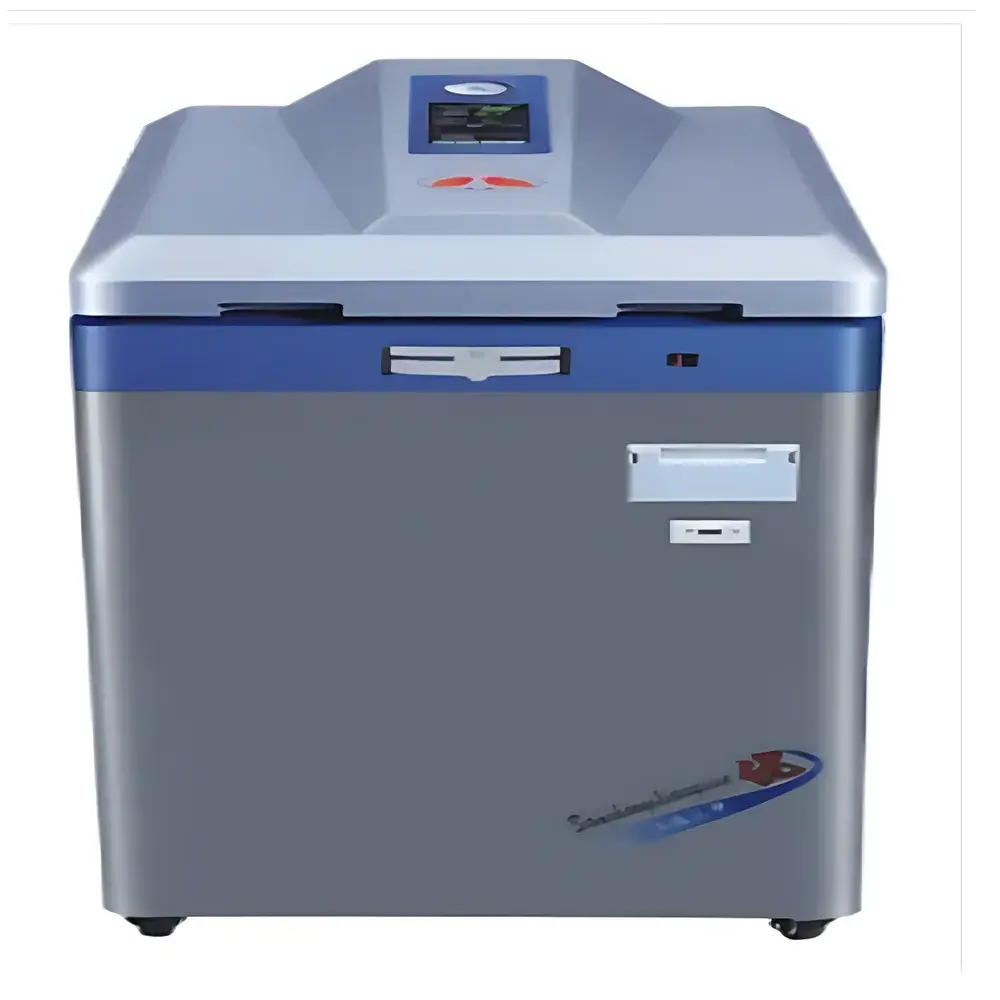
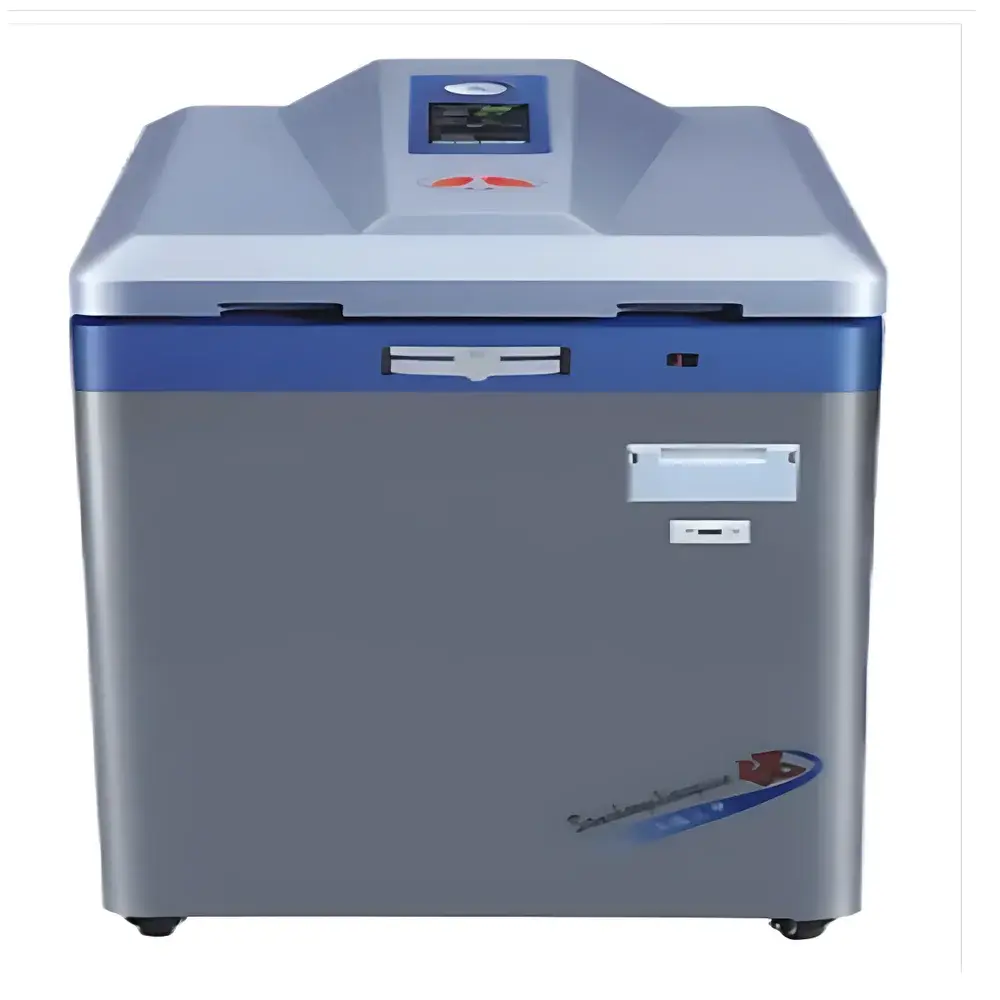
Shanghai Shen YMMD105L Vertical Pulsed Vacuum Steam Sterilizer
| Brand | Shanghai Shen |
|---|---|
| Origin | Shanghai, China |
| Manufacturer Type | Authorized Distributor |
| Product Category | Domestic |
| Model | YMMD105L |
| Instrument Type | Vertical Sterilizer |
| Max Temperature | ≤136 °C |
| Max Pressure | ≤0.23 MPa |
| Chamber Dimensions | 40 cm × 67 cm (D × H) |
| External Dimensions | 80 cm × 66 cm × 118 cm (W × D × H) |
| Chamber Volume | 105 L |
| Design Pressure | 0.38 MPa (at 150 °C) |
| Vacuum Level | < −0.09 MPa |
| Filtration Rating | 0.22 µm hydrophobic membrane |
| Temperature Sensor | Pt100 probe with TT/PT validation ports |
| Display | 7-inch full-color TFT touchscreen (English/Chinese switchable) |
| Safety | Dual safety valves (pop-off at >0.24 MPa), multi-level interlocks, automatic door lock/unlock logic, low-water cutoff, overtemperature/overpressure/short-circuit/ground-fault detection |
| Data Output | Real-time thermal printer (F₀, T, P, t), USB data export, audit-trail-capable event logging |
| Compliance | Designed per GB 8599–2008, EN 285, ISO 17665–1, and supports GLP/GMP documentation requirements |
Overview
The Shanghai Shen YMMD105L Vertical Pulsed Vacuum Steam Sterilizer is a fully automated, Class B vacuum-assisted sterilization system engineered for laboratories, research facilities, and small-scale healthcare settings requiring validated, reproducible steam sterilization of heat-stable and porous loads. It operates on the principle of saturated steam under controlled pressure and vacuum cycles—specifically employing pulsed air removal to achieve deep penetration into lumened devices, wrapped instruments, and absorbent materials. Unlike gravity-displacement sterilizers, the YMMD105L integrates a high-efficiency oil-free vacuum pump capable of achieving ≤−0.09 MPa, enabling reliable air removal prior to steam admission and post-sterilization drying. Its chamber is constructed from medical-grade SUS304 stainless steel with a certified wall thickness of 2.5 mm, conforming to ASME Section VIII Div. 1 design standards for pressure vessels. The unit supports sterilization temperatures from 105 °C to 136 °C, with programmable exposure times ranging from 0 to 65,000 minutes—covering standard cycles (e.g., 121 °C/15 min, 134 °C/3 min) as well as extended or custom protocols required for challenging bioburden reduction.
Key Features
- Vertical chamber layout (105 L volume) with radial self-expanding silicone gasket seal ensuring uniform compression and long-term leak integrity
- Single-motion 12-pin latch mechanism with vertical upward lid ejection—reducing operator strain and eliminating misalignment risk
- Triple-layer safety architecture: mechanical interlocks (door position, pressure, temperature), electronic redundancy (dual Pt100 sensors), and real-time fault diagnostics with audible/visual alerts and on-screen error codes
- 7-inch capacitive touchscreen interface with bilingual (English/Chinese) navigation, dynamic process curve visualization, and real-time parameter overlay (pressure, temperature, elapsed time, F₀)
- Integrated steam condensation and internal recirculation system—eliminating external exhaust piping and wastewater discharge; compliant with biosafety containment requirements
- Dual independent drying modes: heated membrane drying + vacuum-assisted pulse drying—optimized for instrument sets, textiles, and porous packaging
- Onboard validation-ready infrastructure: TT/PT test ports compatible with calibrated thermocouples and pressure transducers; built-in DB (Bowie-Dick) and vacuum leakage test programs per ISO 11140–4
- Three-tier access control: role-based password levels (operator, technician, administrator) plus optional fingerprint authentication for critical cycle execution
Sample Compatibility & Compliance
The YMMD105L accommodates a broad spectrum of load types—including wrapped surgical kits, hollow instruments, rubber tubing, culture media bottles (non-liquid cycles), and biohazardous waste bags—provided they are compatible with saturated steam sterilization. Its Class B classification per EN 13060 confirms capability for vacuum-assisted cycles meeting ISO 17665–1 requirements for microbial lethality validation. The integrated 0.22 µm hydrophobic filter protects vacuum lines from microbial ingress during pulsing. Chamber temperature uniformity is maintained via peripheral heating jacket with adaptive PID control and ambient pressure compensation algorithms—critical for altitude-adjusted operation (e.g., >1,500 m elevation). All safety-critical functions—including door unlocking logic, pressure decay monitoring, and water level cutoff—are independently verified and logged. The system supports traceability in regulated environments through time-stamped cycle records, printable hardcopy output (F₀, temperature profiles, pressure trends), and encrypted USB data export compliant with FDA 21 CFR Part 11 principles when paired with validated software.
Software & Data Management
Sterilization cycles are managed by an embedded microprocessor running deterministic real-time firmware. Six preconfigured programs (Instruments, Wrapped Goods, Liquids, Rubber, Waste, Media) and three auxiliary routines (Preheat, Hold, Melt) are editable via intuitive touchscreen menus. Custom program creation allows precise sequencing of vacuum pulses, steam injection ramps, dwell phases, exhaust modes (full/partial/manual), and dual-stage drying. All events—including startup, phase transitions, alarms, and manual interventions—are timestamped and stored in non-volatile memory with retention for ≥10,000 cycles. The thermal printer generates ISO-compliant cycle reports including cycle ID, start/end timestamps, maximum/minimum/mean chamber temperature, integrated F₀, and final vacuum level. USB export delivers CSV-formatted datasets suitable for statistical process analysis (e.g., Shewhart charts, Cpk evaluation) and integration into LIMS or QMS platforms. Audit trail functionality records user login/logout, parameter modifications, and emergency stops—enabling full accountability during GLP or GMP audits.
Applications
This sterilizer serves core applications across academic laboratories, pharmaceutical QC labs, veterinary clinics, dental practices, and biomedical startups. Typical use cases include terminal sterilization of reusable surgical tools prior to packaging; depyrogenation of glassware and stainless-steel components; inactivation of pathogenic cultures (BSL-2/3) in sealed containers; preparation of sterile agar plates and liquid media; and decontamination of contaminated PPE or lab waste. Its vacuum performance and chamber geometry make it especially suited for sterilizing endoscopes, pipette tips, and filtration assemblies where air entrapment compromises efficacy. The absence of external venting simplifies facility integration in retrofit spaces or mobile labs. Optional accessories—including biological indicator holders, load thermocouple adapters, and calibration verification kits—extend its utility in validation workflows aligned with ISO 13485 and ISO 9001 quality systems.
FAQ
What sterilization standards does the YMMD105L comply with?
It conforms to GB 8599–2008 (Chinese national standard), EN 285 (large sterilizers), EN 13060 (small steam sterilizers), and ISO 17665–1 (moist heat sterilization validation). Its vacuum performance meets ISO 11140–4 for Bowie-Dick testing.
Can the sterilizer be validated for regulatory submissions?
Yes—the system provides TT/PT ports, F₀ calculation, printable cycle logs, and electronic records compatible with IQ/OQ/PQ protocols. Full validation support documentation is available upon request.
Is remote monitoring or network connectivity supported?
The base configuration includes USB data export only. Ethernet or Wi-Fi modules are not factory-installed but may be added via authorized retrofit kits subject to local cybersecurity assessment.
How is chamber temperature uniformity ensured during sterilization?
Through a combination of peripheral heating jacket with adaptive PID control, real-time Pt100 feedback from multiple chamber zones, and ambient pressure/temperature compensation algorithms.
What maintenance intervals are recommended?
Daily: visual inspection of door seal and chamber interior; weekly: vacuum pump oil check (if applicable) and filter cleaning; annually: full calibration of pressure and temperature sensors by accredited service provider.



