
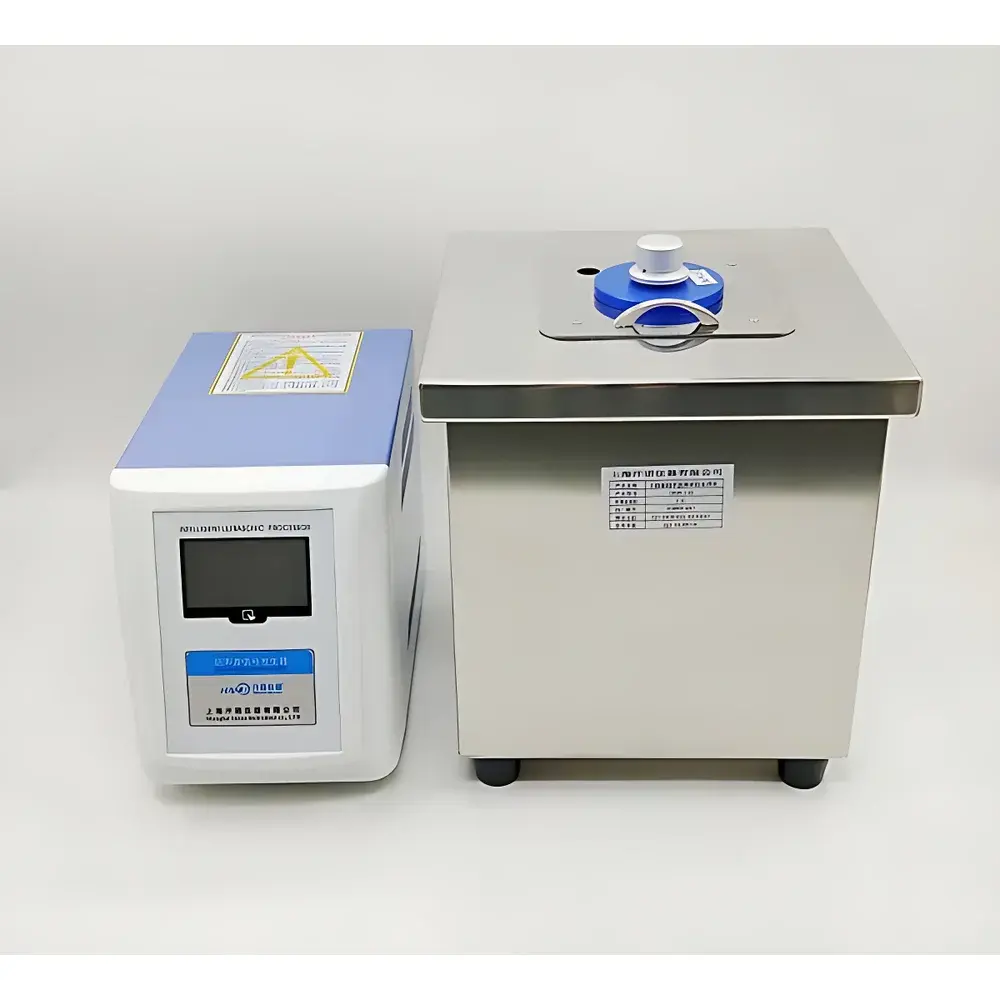
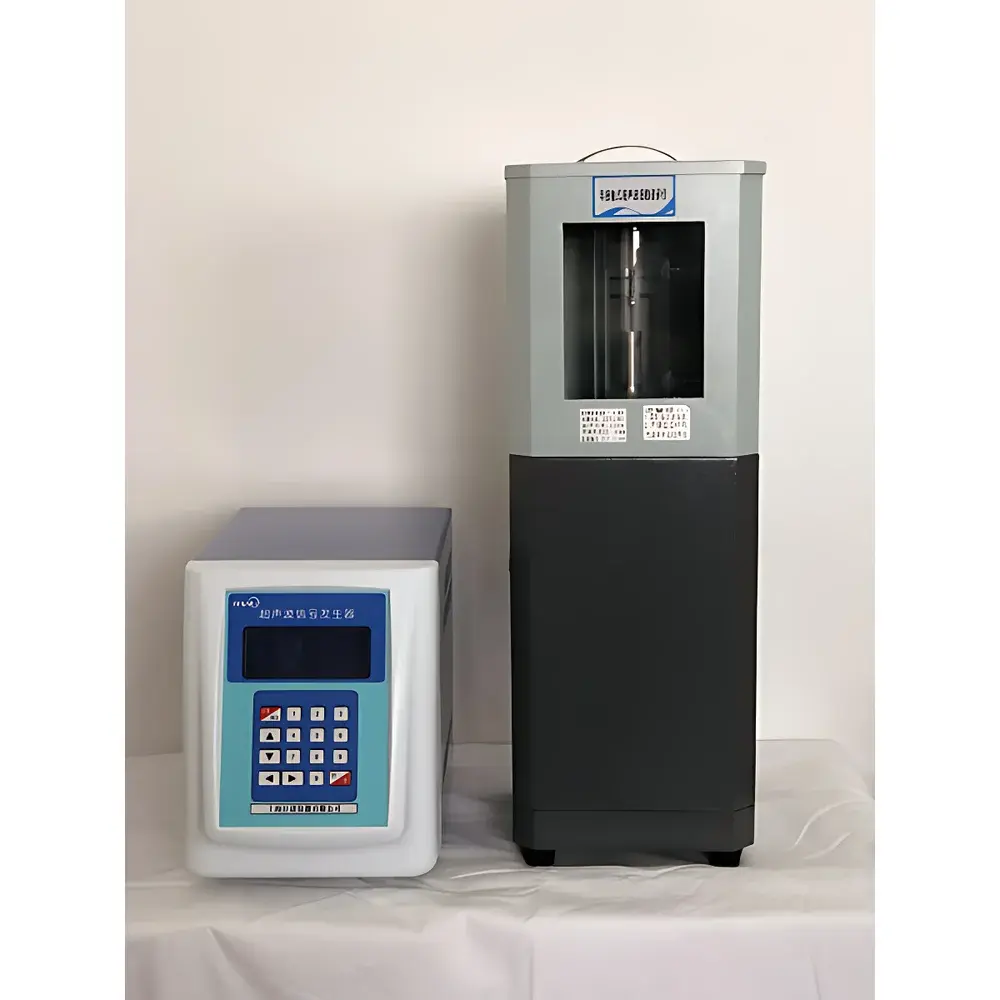
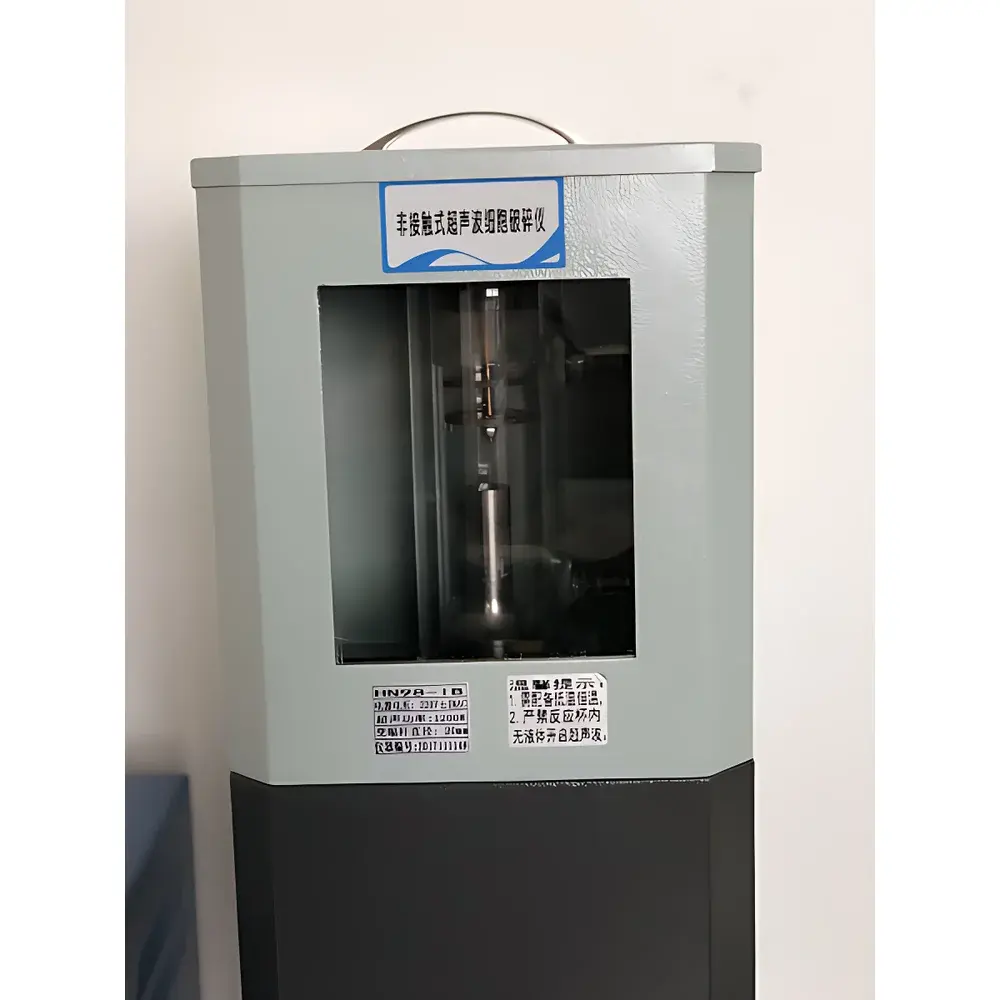
Hanuo HN98-IB Non-Contact Cup-Horn Ultrasonic Cell Disruptor
| Brand | Hanuo |
|---|---|
| Origin | Shanghai, China |
| Model | HN98-IB |
| Ultrasonic Power | 1200 W |
| Operating Frequency | 20 kHz |
| Temperature Range | −5 to 100 °C |
| Sample Volume per Tube | 0.2 / 0.5 / 1.5 / 2.0 mL |
| Sample Capacity | 4 or 6 tubes simultaneously |
| Duty Cycle | 1–99.9% |
| Input Voltage | 220 V / 110 V, 50 Hz / 60 Hz |
| Display | Large LCD (touchscreen optional) |
| Cooling Interface | Optional water-circulation port for external chiller |
| Communication | RS232/RS485 optional |
Overview
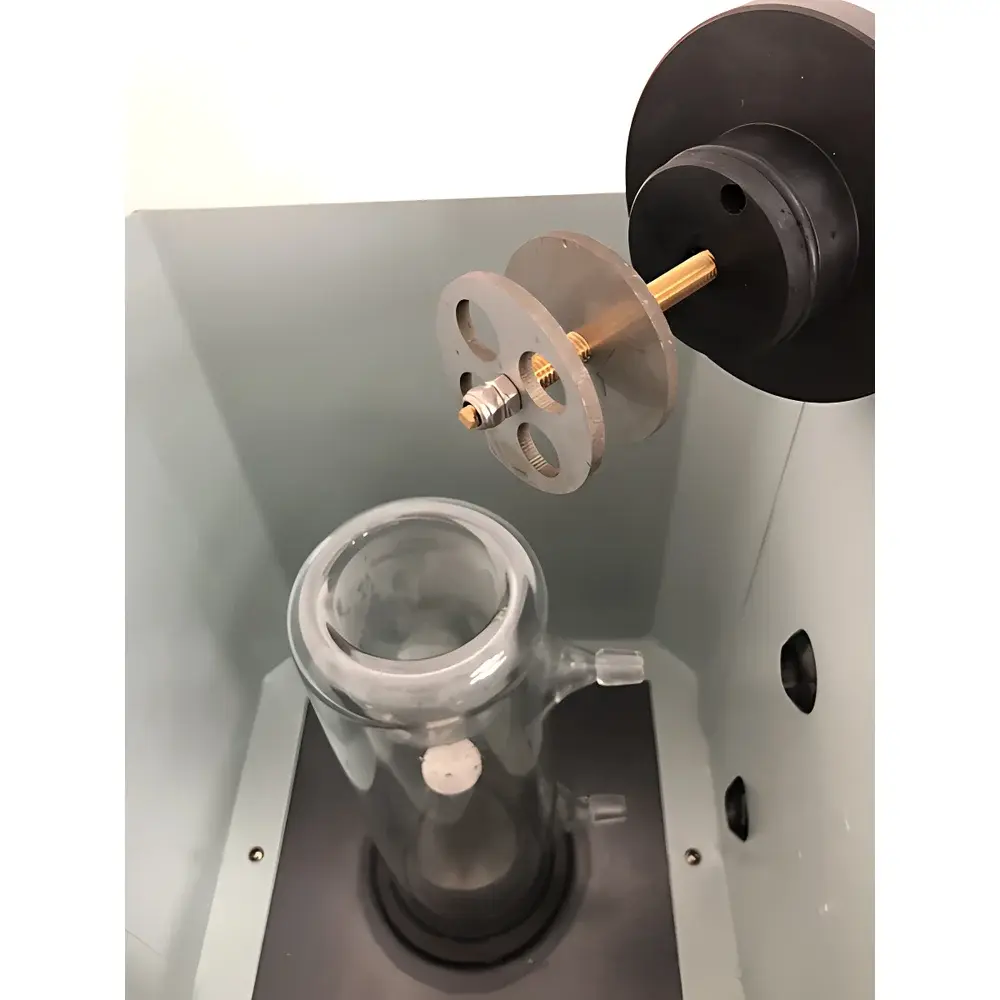
The Hanuo HN98-IB Non-Contact Cup-Horn Ultrasonic Cell Disruptor is an engineered solution for controlled, reproducible, and contamination-free nucleic acid shearing and cellular lysis in molecular biology and epigenetics laboratories. Unlike conventional probe-based sonicators that introduce mechanical shear stress, thermal gradients, and cross-contamination risks via direct probe immersion, this system employs a high-intensity ultrasonic transducer coupled to a temperature-controlled cup-horn assembly. Acoustic energy is transmitted through the cup wall into sealed microcentrifuge tubes—eliminating physical contact between the transducer and sample. This non-contact architecture enables precise, scalable chromatin fragmentation (e.g., for ChIP-seq), DNA/RNA shearing to defined size distributions (100–1000 bp), and gentle yet effective lysis of bacteria, mammalian cells, and viral particles—including adenovirus capsid disruption for terminal protein–DNA complex isolation. Its design complies with core principles of Good Laboratory Practice (GLP), supporting traceable, auditable, and standardized workflows required for regulatory submissions under FDA 21 CFR Part 11 when integrated with compliant software.
Key Features
- Non-contact ultrasonic energy delivery via titanium cup-horn transducer—ensures zero sample contamination and eliminates probe cleaning or calibration drift.
- Simultaneous processing of 4 or 6 individually sealed 0.2–2.0 mL tubes, enabling parallelization without compromising acoustic uniformity across positions.
- Adjustable duty cycle (1–99.9%) and programmable pulse duration allow fine-tuned control over energy input—critical for preserving epitope integrity in ChIP applications or minimizing RNA degradation.
- Integrated temperature monitoring with ±0.5 °C accuracy; optional external recirculating chiller interface maintains samples between −5 °C and 100 °C during extended runs.
- Large backlit LCD display with intuitive menu navigation; touchscreen version available for enhanced usability in glove-box or biosafety cabinet environments.
- Robust aluminum alloy chassis with acoustic damping enclosure reduces ambient noise to <65 dB(A) at 1 m—meeting ISO 7779 standards for laboratory equipment noise emission.
- RS232/RS485 serial interface supports integration with LIMS and automated lab platforms for audit-trail generation and remote parameter logging.
Sample Compatibility & Compliance
The HN98-IB accommodates standard polypropylene or PCR-grade microcentrifuge tubes (0.2, 0.5, 1.5, and 2.0 mL formats) without adapters. It is validated for use with viscous lysates, glycerol-containing buffers, and low-volume immunoprecipitated chromatin complexes. The closed-tube workflow conforms to ISO 15195:2018 (requirements for reference measurement laboratories) and supports compliance with CLIA, CAP, and GLP guidelines by eliminating aerosol generation and operator-dependent variability. For regulated environments, the system’s firmware supports time-stamped parameter recording, user-access-level controls, and exportable CSV logs—facilitating alignment with 21 CFR Part 11 electronic record requirements when paired with validated software.
Software & Data Management
While the base unit operates via standalone hardware controls, optional PC-based software provides method library management, real-time power monitoring, and post-run report generation (PDF/CSV). All protocols—including frequency, amplitude, duty cycle, total duration, and cooling setpoint—are stored with user ID, timestamp, and instrument serial number. Audit trails are immutable and exportable for internal QA review or regulatory inspection. Software validation packages (IQ/OQ documentation) are available upon request for GMP-compliant facilities.
Applications
- Chromatin immunoprecipitation (ChIP) and ChIP-seq sample preparation with consistent fragment size distribution (CV < 8%).
- Fragmentation of genomic DNA for next-generation sequencing library construction (Illumina, PacBio, Oxford Nanopore).
- Shearing of RNA for stranded RNA-seq and ribosome profiling.
- Disruption of adenoviral particles to isolate virus–DNA–terminal protein complexes.
- Lysis of Gram-negative and Gram-positive bacteria, yeast, and suspension-grown mammalian cells without enzymatic additives.
- Extraction of membrane proteins under native conditions with minimized aggregation.
- Homogenization of soil or fecal microbiome samples for metagenomic DNA isolation.
- Controlled emulsification and nanoparticle dispersion in biopolymer formulations.
FAQ
Is the HN98-IB compatible with cryogenic sample handling?
Yes—when connected to an external recirculating chiller (−10 °C to +40 °C range), the system maintains sub-zero temperatures throughout sonication, enabling cold lysis of thermosensitive complexes.
Can I process more than six samples per run?
The HN98-IB is configured for 4 or 6 positions; higher-throughput variants (HN98-IIB and HN98-IIIB) support up to 32 samples and are available as separate models.
Does the system require calibration certificates?
Traceable acoustic power calibration (per ASTM E2810-11) and temperature sensor verification reports are provided with each unit; annual recalibration services are offered through authorized service centers.
How is acoustic uniformity ensured across all tube positions?
The cup-horn geometry and transducer mounting are optimized using finite element analysis (FEA) to achieve ≤±5% spatial intensity variation across the active zone—verified by hydrophone mapping per IEC 61689.
Is the device suitable for BSL-2 or BSL-3 applications?
Yes—the fully enclosed operation and absence of aerosols make it appropriate for biosafety level 2 containment; integration with ventilated cabinets satisfies BSL-3 procedural requirements when combined with secondary containment measures.
Related Products





