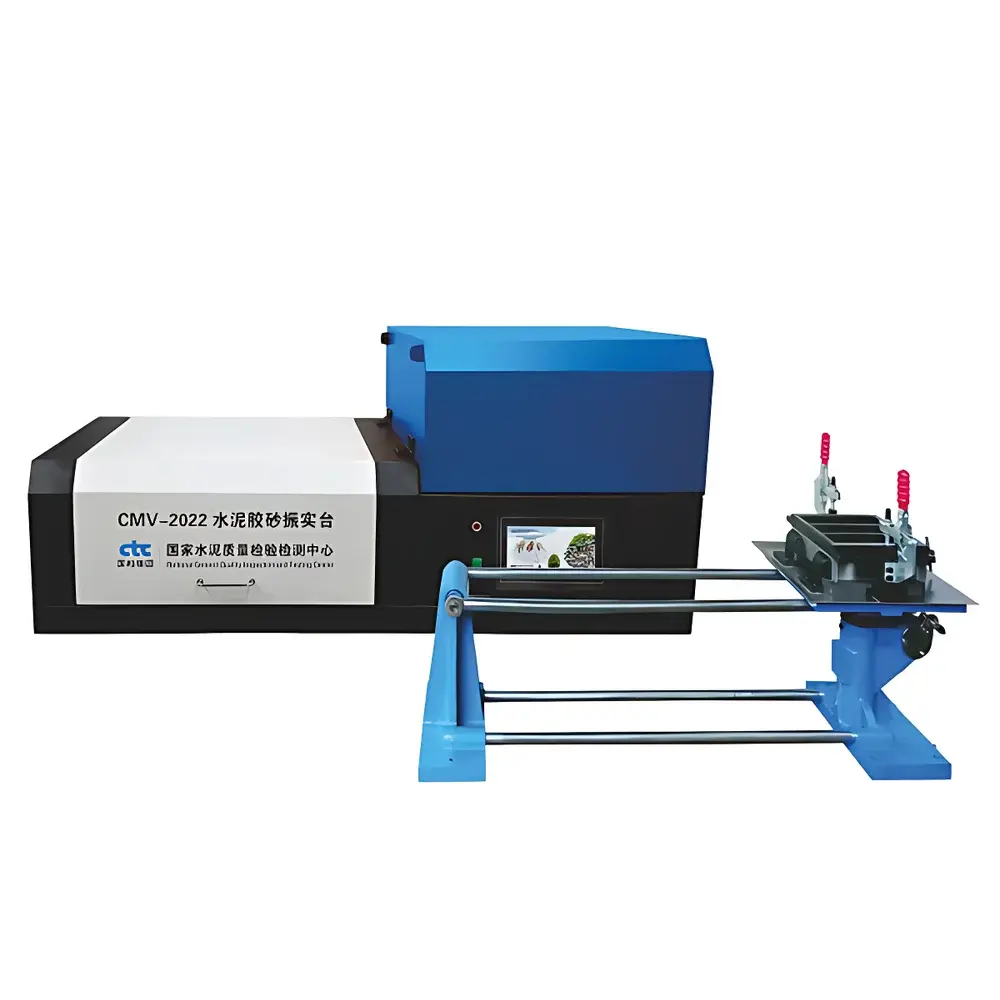
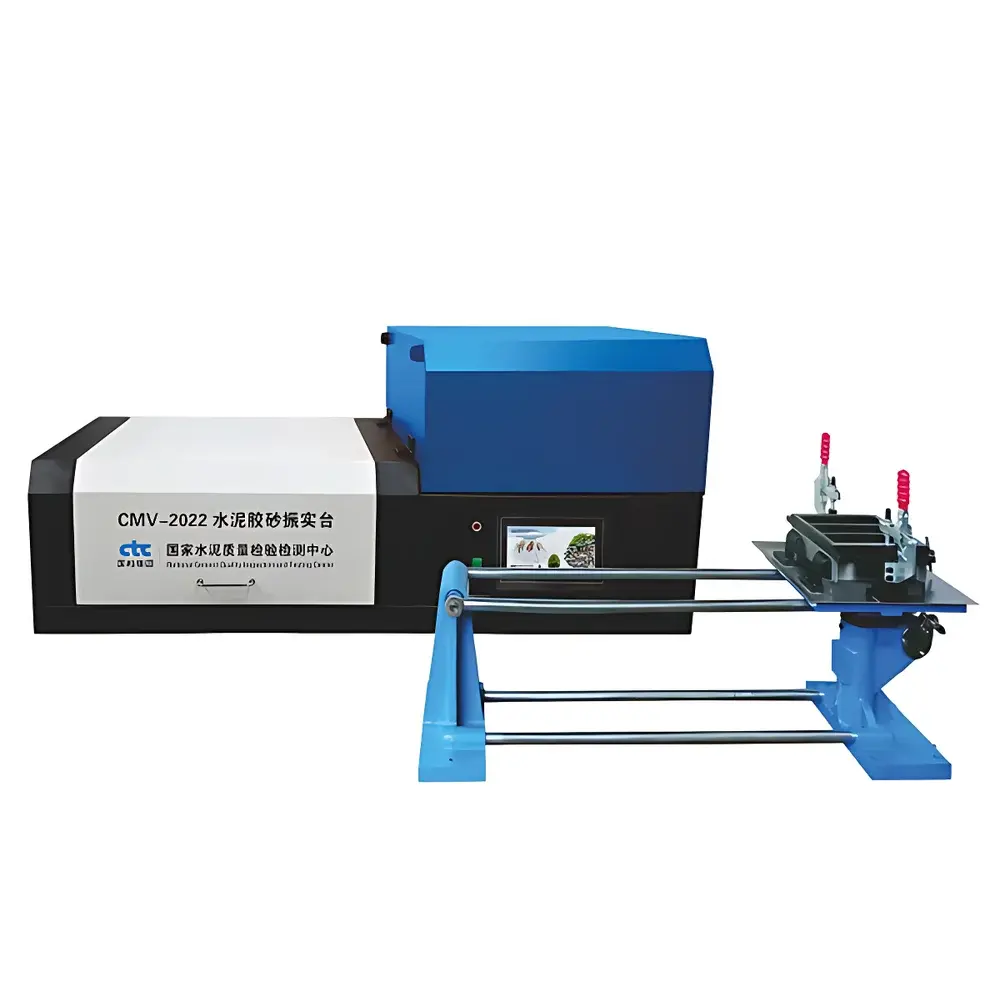
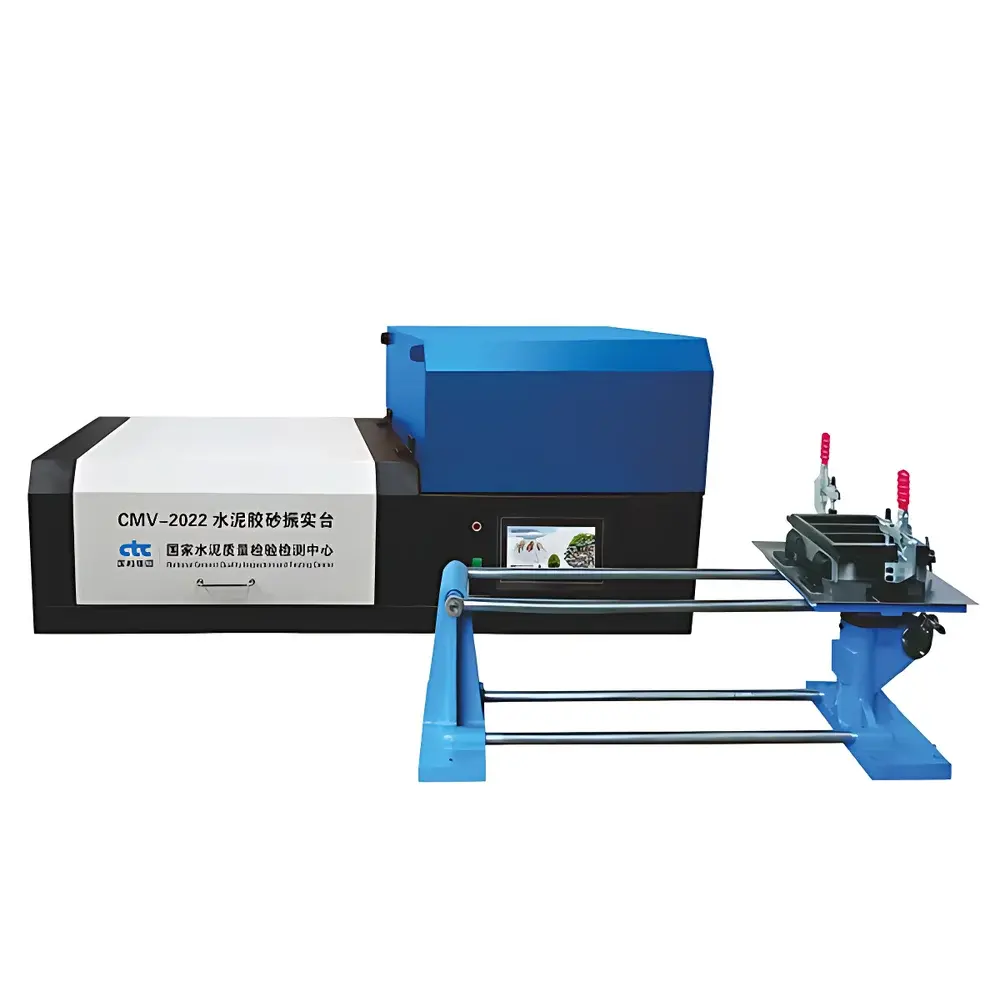
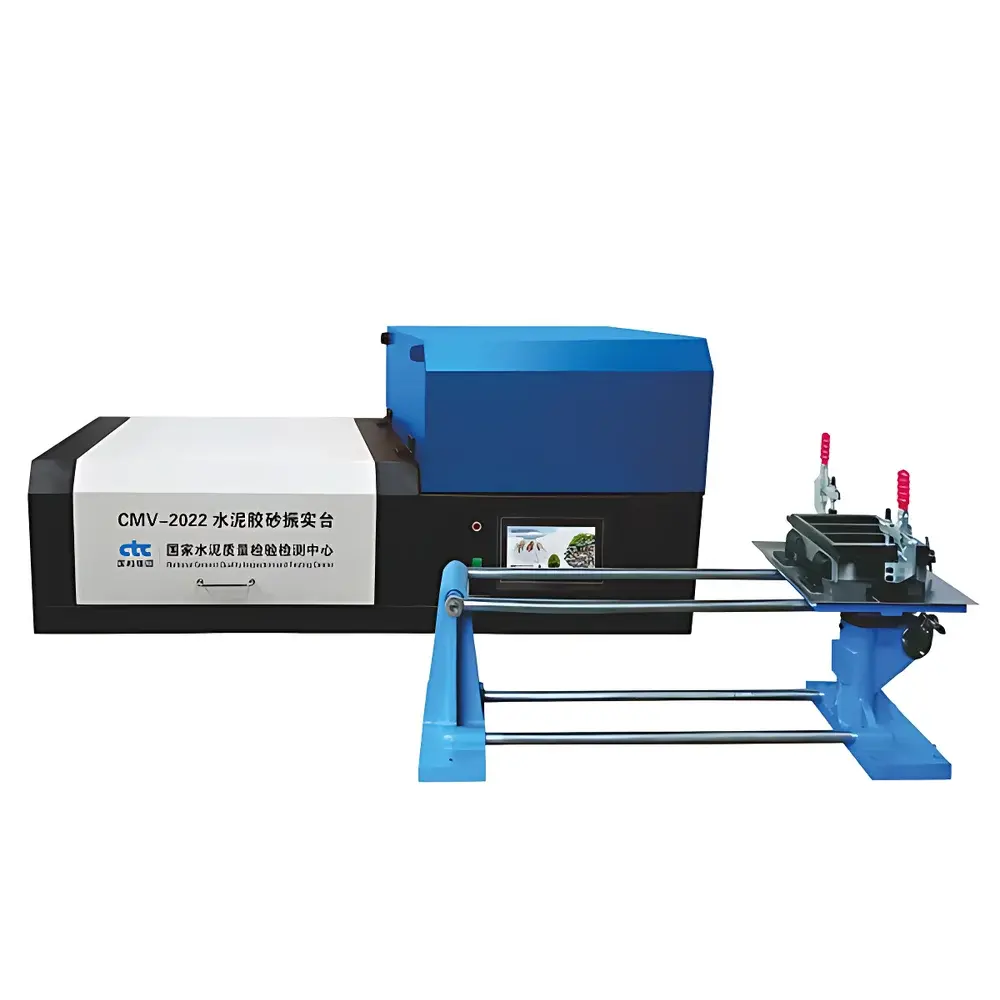
Starwood CMV-2022 Cement Mortar Vibro-Compaction Table
| Brand | Starwood |
|---|---|
| Origin | Beijing, China |
| Manufacturer Type | Direct Manufacturer |
| Model | CMV-2022 |
| Vibration Part Total Mass | 13.75 kg ±0.25 kg |
| Drop Height / Amplitude | 15 mm ±0.3 mm |
| Vibration Frequency | 60 cycles per 60 s ±2 s |
| Dual-Arm Assembly + Cross Rib Total Mass | 2.25 kg ±0.25 kg |
| Distance from Table Center to Arm Shaft Center | 800 mm ±1 mm |
| Lid Locking Mechanism | Mechanical Latch |
| Mold Positioning Method | Detent Ball Locator |
| Motor Model | 90TDY060-T |
| Motor Speed | 60 rpm |
| Motor Power | 70 W |
| Supply Voltage | 220 V AC |
| Gross Weight | 85 kg |
| Overall Dimensions (L×W×H) | 1130 × 400 × 450 mm |
Overview
The Starwood CMV-2022 Cement Mortar Vibro-Compaction Table is a precision-engineered laboratory apparatus designed exclusively for standardized preparation of cement mortar specimens in accordance with internationally recognized test protocols. It operates on the principle of controlled vertical impact compaction—utilizing a fixed-drop, gravity-driven motion to deliver reproducible mechanical energy to standard ISO molds containing fresh cement mortar. This method ensures uniform density distribution and eliminates air voids critical to achieving high inter-laboratory reproducibility in compressive and flexural strength testing. The device complies strictly with GB/T 17671–2021 (equivalent to ISO 679:2009) and JC/T 682–2005, serving as a mandatory instrument in accredited cement quality control laboratories, national inspection centers, and building materials R&D facilities across Asia and emerging markets requiring ISO-aligned certification pathways.
Key Features
- High-precision mechanical drop mechanism with ±0.3 mm amplitude tolerance, ensuring consistent impact energy transfer across all cycles.
- Stable 60-cycle-per-minute vibration frequency (±2 s timing accuracy), synchronized with motor rotational speed (60 rpm) via direct-coupled gear train—eliminating belt slippage or frequency drift.
- Calibrated vibration mass assembly (13.75 kg ±0.25 kg) and arm system (2.25 kg ±0.25 kg) engineered for minimal dynamic imbalance and long-term dimensional stability.
- Robust steel frame construction with vibration-dampening base feet, minimizing transmission of kinetic energy to supporting surfaces and improving measurement integrity.
- Acoustic isolation lid with positive-action mechanical latch, reducing ambient noise exposure during operation while maintaining safe access control per IEC 61000-6-4 EMC guidelines.
- Precision detent ball mold positioning system enabling rapid, repeatable alignment of ISO 40 mm × 40 mm × 160 mm prismatic molds without manual adjustment or torque tools.
Sample Compatibility & Compliance
The CMV-2022 is validated for use with standard cementitious systems including Portland cements (Types I–V), blended cements (e.g., slag, fly ash, limestone additions), and hydraulic binders tested under ISO 679, ASTM C109/C348, and EN 196-1 frameworks. Its mechanical design accommodates both single-layer and two-layer molding procedures per GB/T 17671–2021 Annex A. All structural components conform to GB/T 19001–2016 (ISO 9001:2015) manufacturing controls. Calibration traceability follows JJF 1001–2011 (General Metrological Terminology) and supports GLP-compliant recordkeeping for audit readiness.
Software & Data Management
The CMV-2022 is a standalone electromechanical instrument with no embedded microprocessor or digital interface. Operation requires no software installation, firmware updates, or network connectivity—ensuring immunity to cybersecurity vulnerabilities and eliminating validation overhead associated with computerized systems. All operational parameters are mechanically fixed and verified during factory calibration; users maintain compliance through periodic verification using certified gauge blocks, stopwatch calibration standards, and mass-certified weights (Class M2 per OIML R111). Documentation packages include full calibration certificates, conformity declarations per GB/T 17671–2021 Clause 6.2, and maintenance logs aligned with ISO/IEC 17025:2017 Clause 6.4.2 requirements for equipment management.
Applications
- Standardized preparation of cement mortar specimens for compressive strength determination (ISO 679, ASTM C109).
- Flexural strength testing of cementitious composites in civil engineering material qualification.
- Quality assurance in cement manufacturing plants and third-party certification laboratories.
- Research on admixture performance, hydration kinetics, and early-age mechanical development.
- Interlaboratory comparison studies requiring strict adherence to ISO-defined compaction methodology.
FAQ
Is the CMV-2022 compliant with ISO/IEC 17025 accreditation requirements for testing laboratories?
Yes—the mechanical design, calibration methodology, and documented verification procedures align with ISO/IEC 17025:2017 Clause 6.4 (Equipment) and Clause 7.7 (Ensuring validity of results) when used within defined operating conditions and maintained per manufacturer specifications.
Can this unit be operated continuously for extended production runs?
The 70 W induction motor is rated for intermittent duty per IEC 60034-1; continuous operation beyond 30 minutes per session is not recommended without 15-minute cooling intervals to preserve bearing life and thermal stability.
What metrological documentation accompanies each unit?
Each CMV-2022 ships with a factory calibration report (including drop height, frequency, and mass verification data), Declaration of Conformity to GB/T 17671–2021, and traceable calibration certificate for reference masses and timing devices used during final verification.
Does the device support alternative mold configurations beyond ISO 40×40×160 mm?
No—the detent ball locator and arm geometry are dimensionally optimized exclusively for ISO-standard molds; non-standard molds require mechanical adaptation not covered under warranty or compliance scope.
Is electrical safety certification provided for international deployment?
Units supplied for export include CE marking per Machinery Directive 2006/42/EC and Low Voltage Directive 2014/35/EU, with test reports issued by CNAS-accredited bodies verifying insulation resistance, earth continuity, and leakage current per IEC 60204-1.