
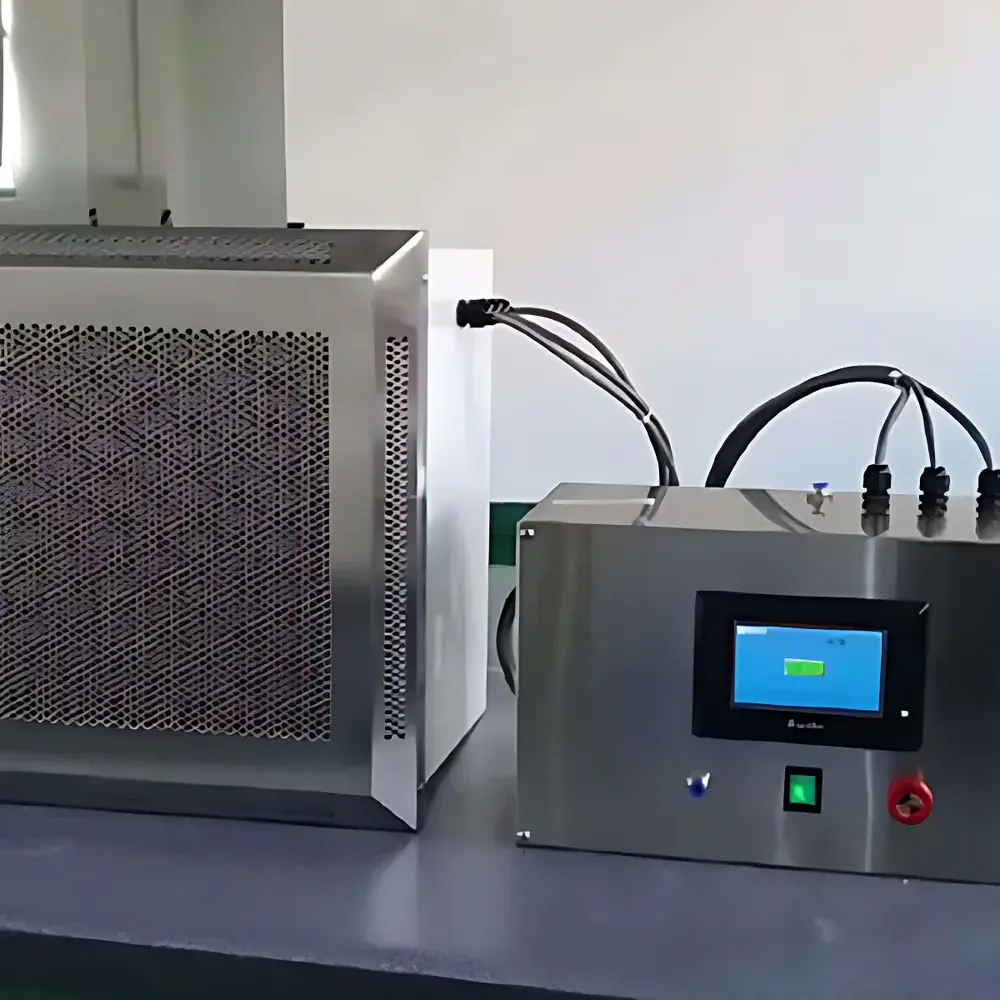
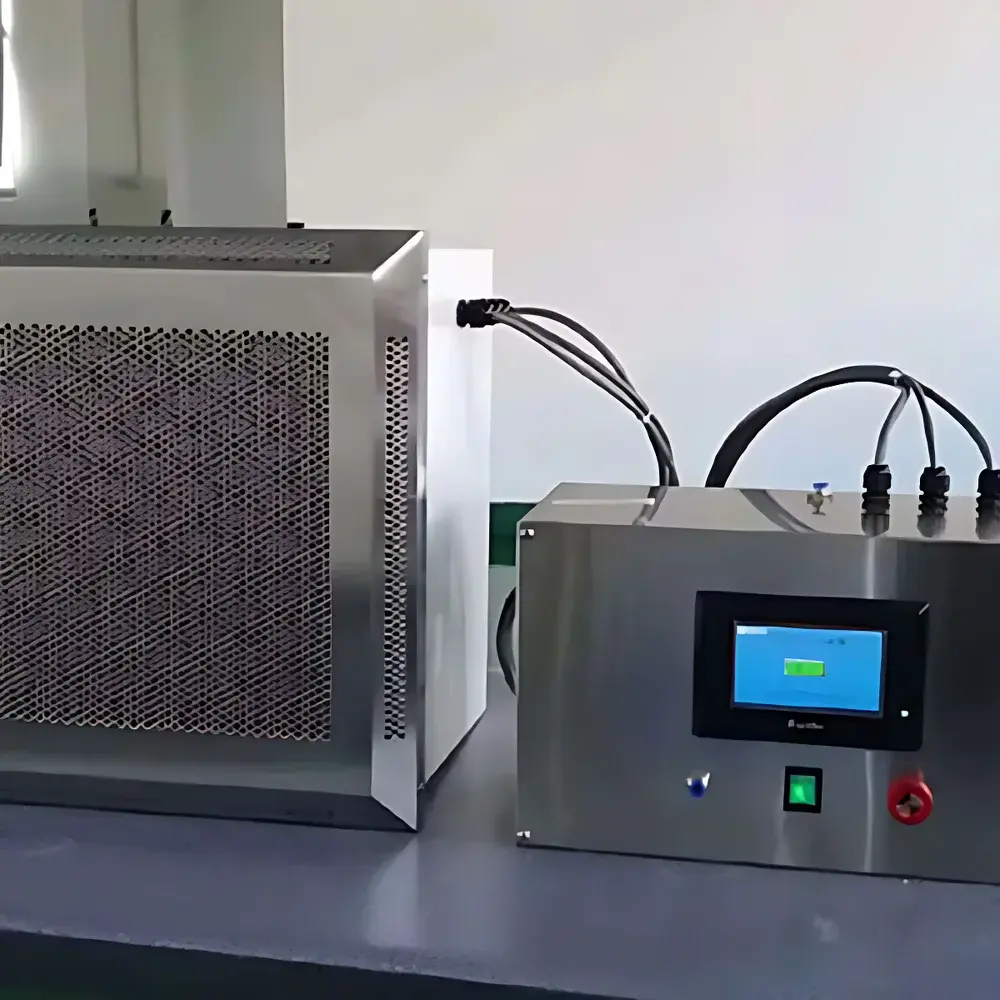
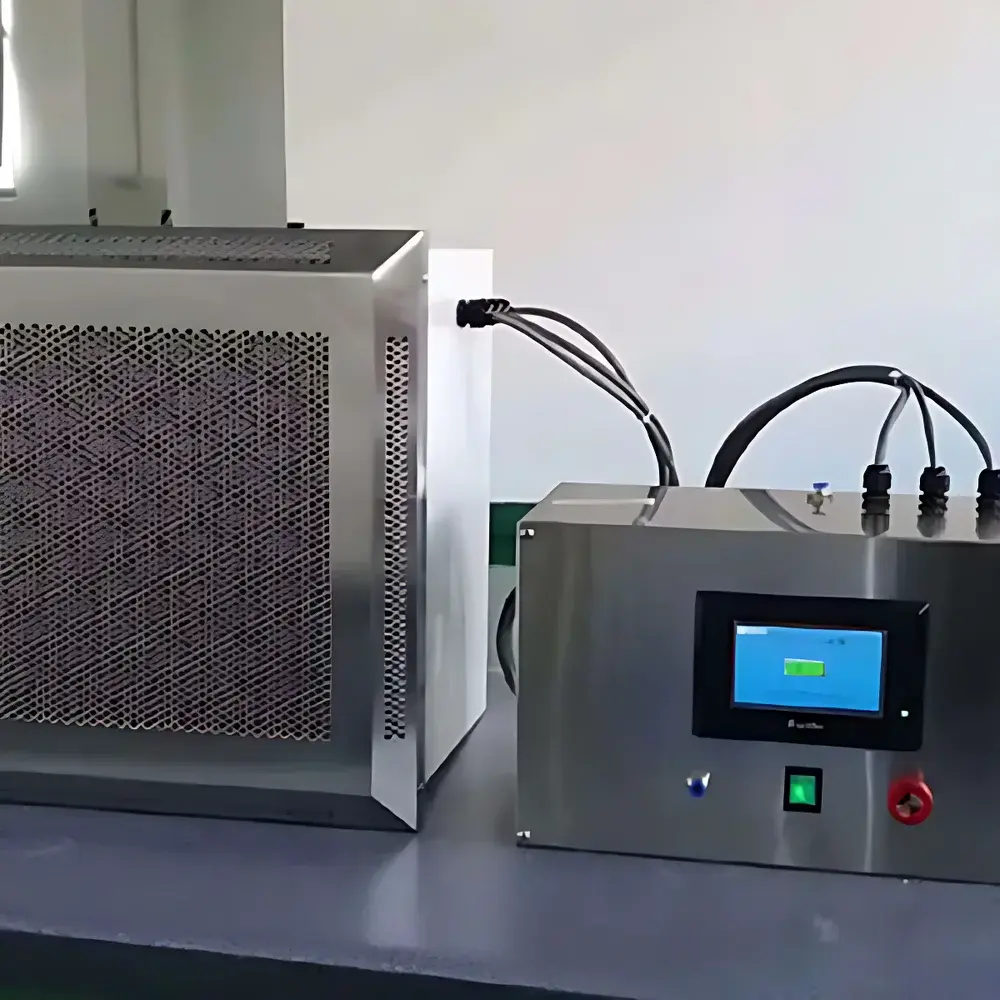
AIRTECH ANC-II Mobile Negative-Pressure Air Purification Unit
| Brand | AIRTECH |
|---|---|
| Origin | Jiangsu, China |
| Manufacturer Type | Authorized Distributor |
| Country of Origin | China |
| Model | ANC-II |
| Quotation | Upon Request |
| Dimensions (mm) | 455 × 340 × 430 |
| Filtration Efficiency | ≥99.99% @ 0.3 µm |
| Airflow Capacity | ≥250 m³/h |
| Power Supply | AC 220 V, 1Φ, 50 Hz |
| Rated Power | 500 W |
| Housing Material | High-Quality Steel with Electrostatic White Powder Coating |
Overview
The AIRTECH ANC-II Mobile Negative-Pressure Air Purification Unit is an engineered medical-grade air handling system designed exclusively for integration into emergency response vehicles—particularly negative-pressure ambulances. It operates on the principle of controlled unidirectional airflow and multi-stage particulate containment, ensuring that contaminated cabin air is continuously drawn through a validated filtration train, sterilized, and safely discharged to the external environment without compromising the integrity of the vehicle’s negative-pressure gradient. The unit maintains a stable differential pressure (typically –10 to –30 Pa relative to ambient) via closed-loop feedback control of its variable-speed centrifugal blower, thereby preventing pathogen-laden aerosols from escaping the patient compartment during transport or on-site triage. Its design complies with fundamental biosafety requirements for airborne infection isolation transport, as referenced in WHO Emergency Medical Services Guidance (2021), ISO 14644-1 Class 5 cleanroom air quality benchmarks for downstream exhaust, and national Chinese standards YY/T 1770–2021 for ambulance air purification systems.
Key Features
- Integrated HEPA H14 filtration (EN 1822-1:2019 compliant) with ≥99.99% particle removal efficiency at the most penetrating particle size (MPPS) of 0.3 µm — validated per IEST-RP-CC001.6 test protocol.
- Dual-pressure monitoring architecture: real-time differential pressure sensing between interior cabin and exterior ambient, plus upstream/downstream HEPA filter ΔP tracking — triggering visual and audible alarms when thresholds exceed ±15% of nominal setpoints.
- UV-C germicidal irradiation (254 nm wavelength, 15–20 mJ/cm² dose) mounted on the intake side of the HEPA module to mitigate microbial colonization on filter media surfaces during standby and low-flow operation.
- Intelligent PLC-based control system with 7-inch capacitive touch HMI interface, supporting data logging of operational hours, alarm history, filter life estimation, and pressure trend visualization over 30 days.
- Automatic airflow modulation: blower speed dynamically adjusts (via 0–10 V analog signal or Modbus RTU) to sustain user-defined negative pressure setpoints across varying environmental conditions and door-opening events.
- Robust enclosure fabricated from cold-rolled steel with electrostatic white powder coating (ISO 20471-compliant finish), rated IP54 for dust and splash resistance, and designed for vibration-dampened mounting in mobile medical platforms.
Sample Compatibility & Compliance
The ANC-II is intended for continuous-duty operation in Class II biological safety environments where aerosolized pathogens—including SARS-CoV-2, influenza A(H1N1), Mycobacterium tuberculosis, and other WHO Risk Group 3 agents—are suspected or confirmed. It does not process corrosive, flammable, or high-humidity (>80% RH) airstreams. All materials in contact with airflow meet USP Class VI biocompatibility requirements. The system supports audit-ready documentation packages aligned with GLP and GMP Annex 1 (EU) principles. While not FDA-cleared as a medical device under 21 CFR Part 807, it conforms to GB/T 14295–2019 (Chinese general standard for air filters) and incorporates design controls traceable to ISO 13485:2016 clauses related to risk management (ISO 14971:2019).
Software & Data Management
The embedded control firmware enables local configuration via touchscreen or remote access through optional RS-485/Modbus TCP gateway (sold separately). Logged parameters include cabin-to-ambient ΔP (Pa), HEPA inlet/outlet static pressure (kPa), cumulative runtime (h), UV lamp status, and thermal cutoff events. Data export is supported in CSV format via USB 2.0 port. Audit trail functionality records all parameter modifications, alarm acknowledgments, and filter replacement timestamps with user ID and timestamp — satisfying basic FDA 21 CFR Part 11 electronic record requirements when deployed with appropriate procedural controls.
Applications
- Continuous airborne pathogen mitigation during interfacility transfer of infectious patients in negative-pressure ambulances.
- Mobile field hospitals and disaster-response units requiring rapid deployment of ISO-classified exhaust treatment.
- Temporary isolation pods installed in repurposed vehicles (e.g., buses, vans) for mass casualty incident triage.
- Supporting biosafety Level 2 (BSL-2) transport compliance in national public health emergency response frameworks.
- Supplemental engineering control in non-HEPA-equipped EMS vehicles undergoing retrofitted containment upgrades.
FAQ
What is the recommended maintenance interval for the HEPA filter?
Under typical ambulance usage (4–6 patient transports per day), the HEPA filter should be replaced every 6 months or after 3,000 operational hours — whichever occurs first. Filter life is extended by UV pre-treatment and monitored via ΔP trending.
Can the ANC-II be integrated with existing ambulance telemetry systems?
Yes — via optional Modbus RTU or CAN bus interface modules, enabling integration with OEM vehicle telematics dashboards and central fleet health monitoring platforms.
Does the unit require external ductwork or installation modifications?
No — the ANC-II is self-contained and mounts directly to the ambulance roof or rear wall using supplied vibration-isolation brackets; only exhaust outlet and power connections are required.
Is calibration certification provided with shipment?
Each unit ships with a factory-verified pressure sensor calibration report (traceable to NIM, China) and HEPA filter integrity test certificate (DOP/PAO scan report). On-site verification services are available upon request.
How is UV lamp efficacy validated over time?
The control system monitors UV lamp current draw and runtime; degradation below 85% nominal irradiance triggers a service alert. Annual radiometric verification with NIST-traceable UV-C meter is recommended.



