
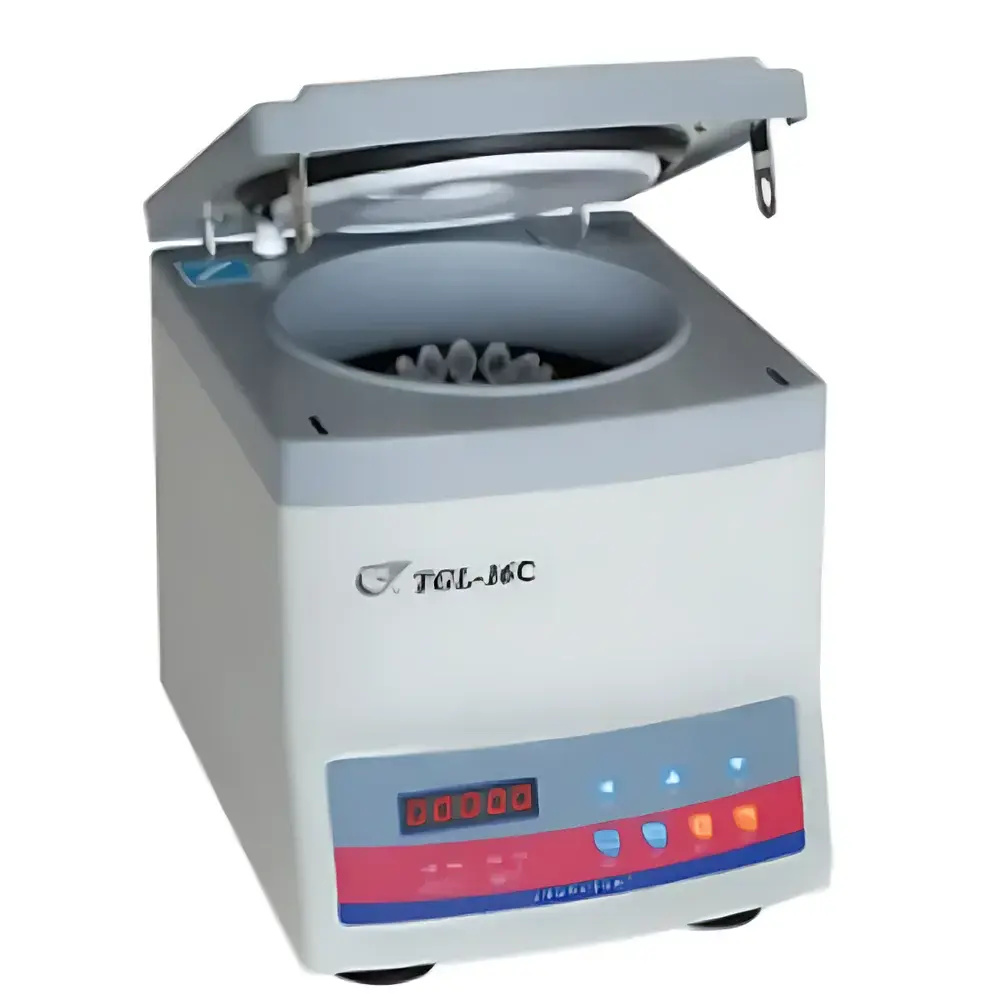
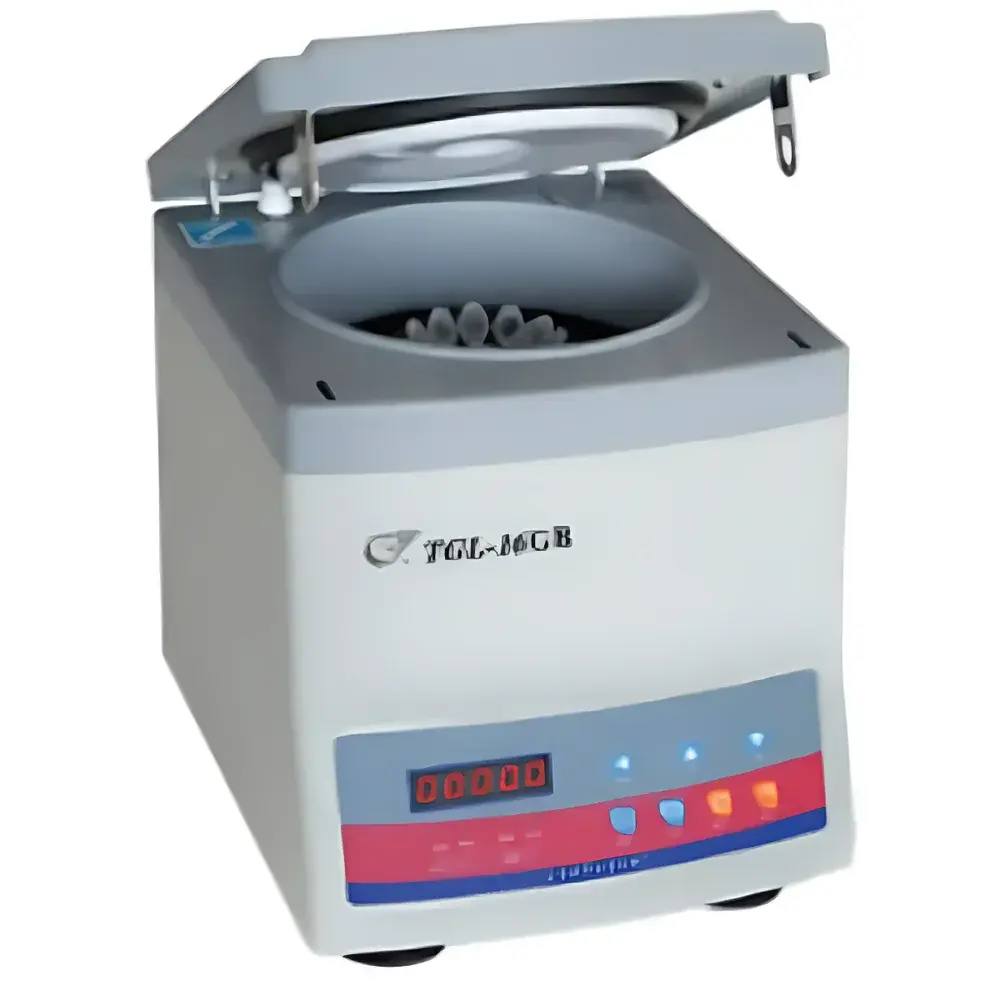
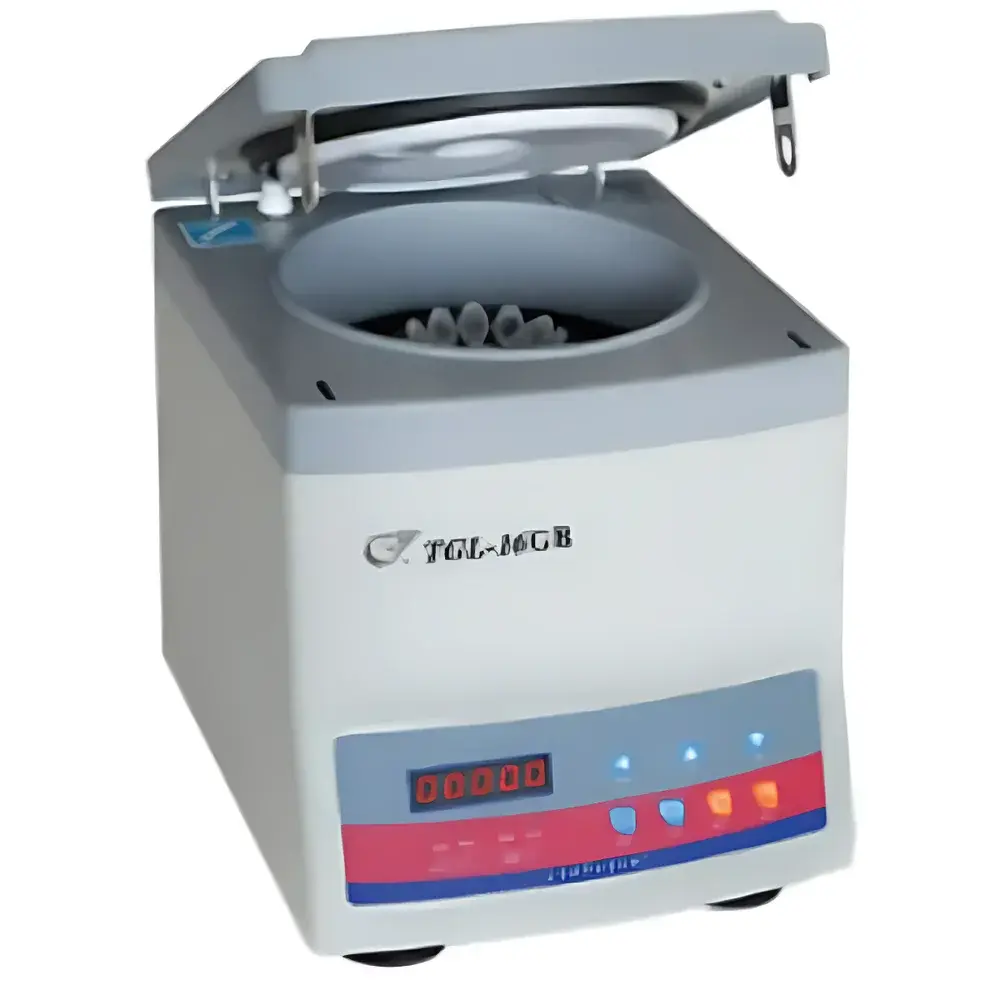
AnTing TGL-16C High-Speed Benchtop Centrifuge
| Brand | AnTing |
|---|---|
| Origin | Shanghai, China |
| Model | TGL-16C |
| Instrument Type | Benchtop Centrifuge |
| Speed Range | 0–16,500 rpm |
| Max RCF | 18,080 × g |
| Rotor Configuration | Fixed-angle rotor |
| Capacity | 1.5 mL × 12 (at 16,000 rpm) / 7 mL × 8 (at 12,000 rpm) |
| Timer Range | 0–60 min |
| Power Supply | 220 V, 50 Hz, 250 W |
| Dimensions (L×W×H) | 350 mm × 390 mm × 350 mm |
| Net Weight | 10 kg |
| Housing Material | Reinforced engineering plastic |
| Safety Features | Electronic door lock, imbalance detection, automatic rotor recognition (mechanical indexing) |
Overview
The AnTing TGL-16C High-Speed Benchtop Centrifuge is an engineered solution for routine and research-grade sample separation in life science, clinical diagnostics, and quality control laboratories. Designed around a brushless DC motor and precision-machined fixed-angle rotor assembly, the instrument operates on the principle of sedimentation under controlled centrifugal force—enabling rapid phase separation of suspended particles, cells, organelles, or precipitated macromolecules based on density, size, and shape. With a maximum rotational speed of 16,500 rpm and a peak relative centrifugal force (RCF) of 18,080 × g, the TGL-16C delivers reproducible performance across standard microcentrifuge tube formats without requiring floor-standing infrastructure. Its compact footprint and lightweight reinforced polymer housing facilitate placement on regulated lab benches, biosafety cabinets, or mobile workstations—while maintaining mechanical stability during high-speed operation.
Key Features
- Brushless DC motor with closed-loop speed control ensures long-term rotational accuracy and minimal thermal drift over extended run cycles.
- Fixed-angle rotor design optimized for rapid pelleting of small-volume samples in 1.5 mL and 7 mL tubes; rotor geometry validated for uniform RCF distribution and minimal shear stress on sensitive biological specimens.
- Electronic lid interlock system prevents operation unless the rotor chamber is fully sealed—compliant with IEC 61010-1 safety requirements for laboratory electrical equipment.
- Digital timer with 1-minute resolution supports unattended operation from 1 to 60 minutes; auto-stop function engages at timer expiration or upon power interruption.
- Integrated imbalance detection halts rotation if mass asymmetry exceeds ±5 g between opposing tube positions—reducing risk of mechanical resonance and bearing wear.
- Low-noise operation (<65 dB(A) at 16,500 rpm) achieved via balanced rotor dynamics and vibration-damping chassis mounting—suitable for shared laboratory environments.
Sample Compatibility & Compliance
The TGL-16C accommodates standard conical-bottom polypropylene microcentrifuge tubes (1.5 mL) and larger round-bottom tubes (7 mL), supporting common protocols including nucleic acid precipitation, cell harvesting, serum separation, and protein pellet recovery. Rotor angular geometry (typically 45°) minimizes run time for dense particulates while preserving pellet integrity. The instrument meets essential safety and electromagnetic compatibility standards per IEC 61010-1:2010 and EN 61326-1:2013. While not certified for GLP/GMP-regulated workflows out-of-the-box, its mechanical consistency and repeatable RCF delivery support method validation under ISO/IEC 17025-accredited quality systems. Documentation includes factory calibration records traceable to national metrology institutes.
Software & Data Management
The TGL-16C operates as a standalone instrument with no embedded software or network interface. All operational parameters—including speed (rpm), time (min), and acceleration/deceleration profiles—are set manually via front-panel membrane keys and displayed on a dual-segment LED screen. No data logging, audit trail, or electronic record functionality is provided. For laboratories requiring 21 CFR Part 11 compliance or electronic batch records, integration with external lab information management systems (LIMS) must be implemented via analog signal output (if available on custom variants) or manual entry of run metadata. Routine maintenance logs and calibration certificates are maintained offline per institutional SOPs.
Applications
- Routine preparation of cell lysates and subcellular fractions in molecular biology workflows.
- Clarification of bacterial cultures prior to plasmid isolation or protein expression analysis.
- Serum and plasma separation from whole blood in clinical screening labs operating under CLIA-waived conditions.
- Removal of insoluble aggregates from antibody or recombinant protein solutions during purification QC checks.
- Concentration of viral particles or exosomes from conditioned media in virology and extracellular vesicle research.
- Supporting ASTM D4052 (density determination) and USP <788> (particulate matter testing) sample conditioning steps where low-volume, high-g centrifugation is specified.
FAQ
What rotor types are compatible with the TGL-16C?
Only the original fixed-angle rotor (part number AT-TGL16C-R45) is certified for use. Swapping rotors requires mechanical re-balancing and voids factory calibration.
Is the TGL-16C suitable for continuous operation?
No. It is rated for intermittent duty cycles—maximum 30 minutes per run, followed by ≥10 minutes cooling interval to prevent motor thermal overload.
Does it support refrigerated operation?
No. The TGL-16C is a non-refrigerated model; ambient temperature must be maintained between 15–30°C during use.
Can I validate centrifugation methods using this instrument?
Yes—provided speed and time parameters are verified annually with a calibrated tachometer and timer, and rotor wear is inspected per manufacturer guidelines before each use.
What safety certifications does it hold?
It complies with IEC 61010-1:2010 (Safety Requirements for Electrical Equipment for Measurement, Control, and Laboratory Use) and CE marking for the European Economic Area.



