
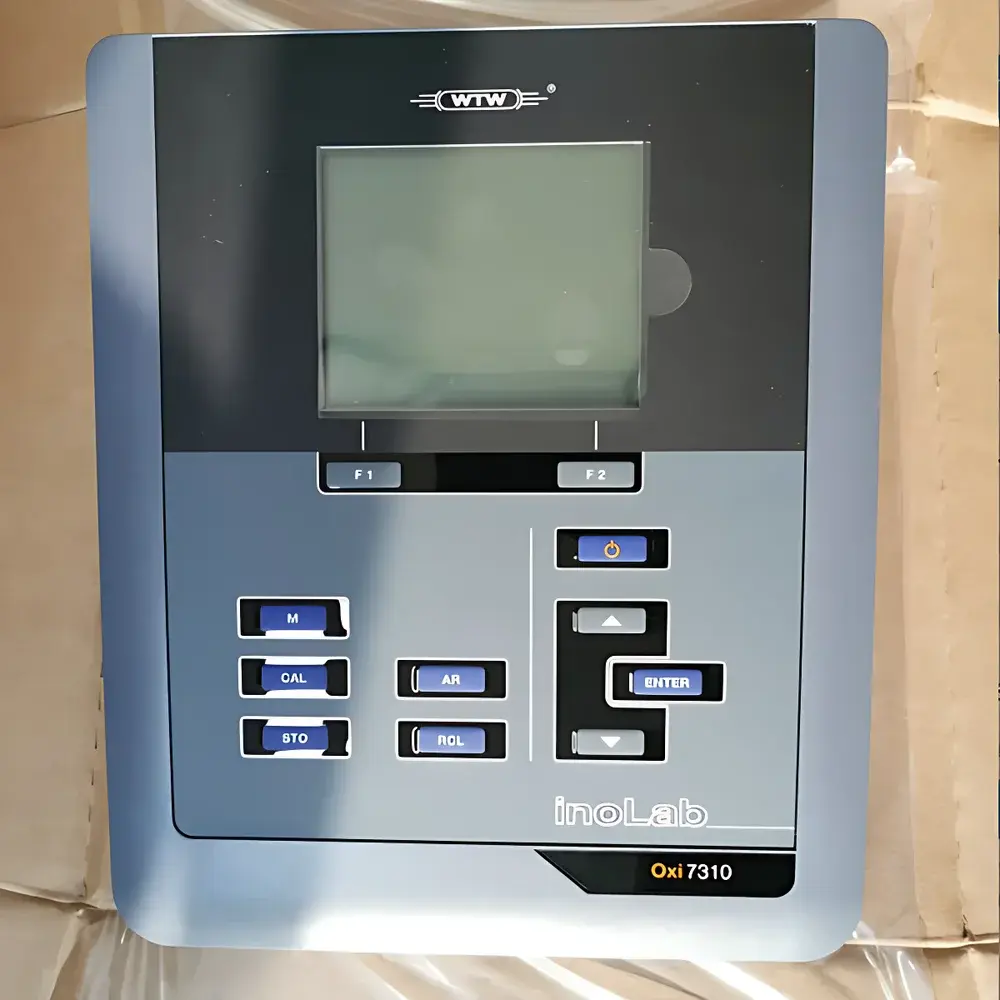
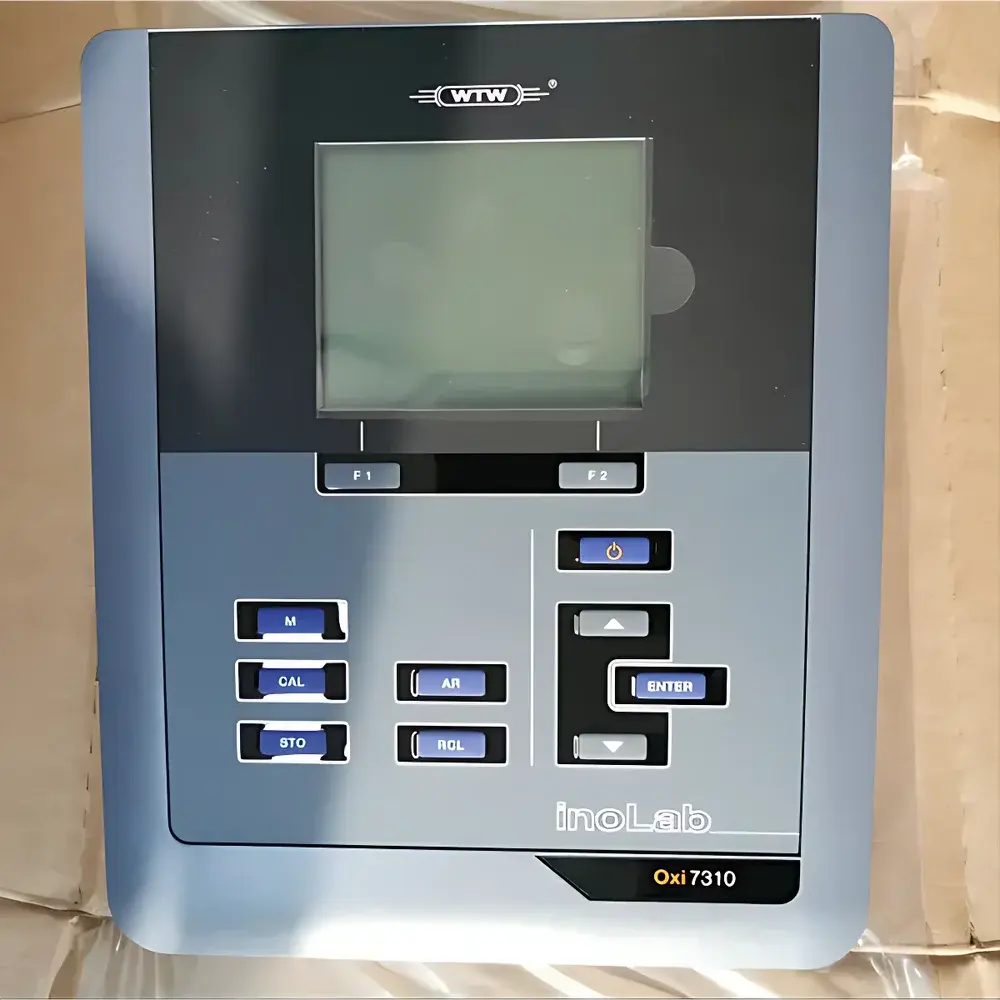
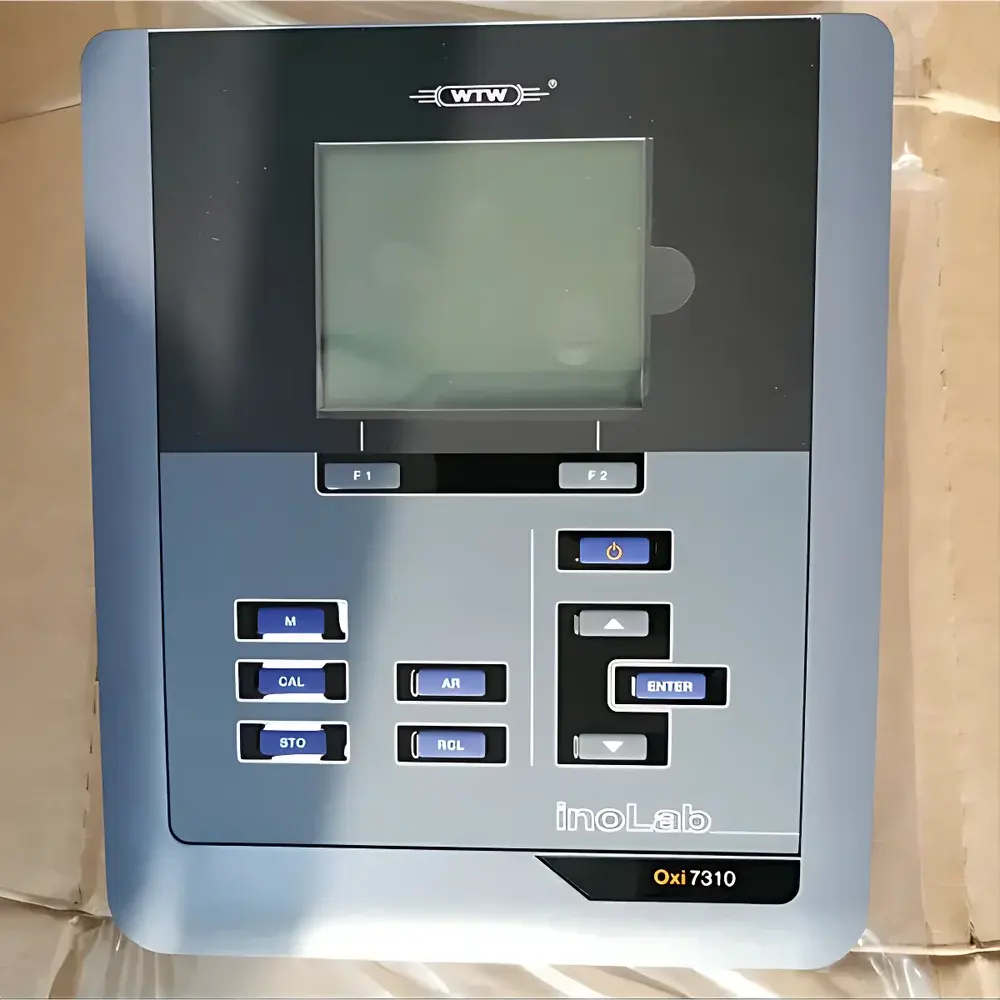
WTW pH/ION 7320 Laboratory Multi-Parameter Ion Concentration Meter
| Brand | WTW |
|---|---|
| Origin | Germany |
| Model | pH/ION 7320 |
| Display | Graphical monochrome LCD |
| Input Channels | Dual-channel (pH/ORP + ISE) |
| pH Range | −2.000 to 19.999 |
| pH Accuracy | ±0.005 |
| ORP Range | ±1200.0 mV, ±2500 mV |
| ORP Accuracy | ±0.3 mV, ±1 mV |
| Ion Concentration Units | mg/L, mol/L, mg/kg, ppm, % |
| ISE Calibration | 2–7 points, linear & non-linear methods |
| Temperature Range | −5.0 to +105.0 °C |
| Temp. Accuracy | ±0.1 °C |
| CMC (Continuous Measurement Control) | Yes |
| Memory | 200 manual / 5000 automatic readings |
| Interface | Micro-USB |
| Power | Alkaline batteries or universal AC adapter |
| Dimensions | 190 × 240 × 80 mm (H × L × W) |
| Weight | 0.8 kg (1.0 kg with optional printer) |
Overview
The WTW pH/ION 7320 is a high-precision, dual-channel laboratory meter engineered for simultaneous, traceable measurement of pH, redox potential (ORP), and ion activity via ion-selective electrodes (ISEs). Based on potentiometric principle—measuring the potential difference between a sensing electrode and a stable reference electrode—the instrument delivers metrologically sound results compliant with ISO 17025–aligned laboratory practices. Its architecture integrates CMC (Continuous Measurement Control), a real-time algorithm that continuously verifies electrode response stability and signal integrity against defined acceptance criteria, thereby enhancing data reliability without user intervention. Designed for routine QC labs, environmental testing facilities, and academic research groups, the pH/ION 7320 supports rigorous method validation workflows and meets foundational requirements for GLP-compliant documentation when paired with traceable calibration records and audit-ready data export.
Key Features
- Dual independent input channels enable concurrent pH/ORP and ISE measurements—eliminating sequential testing delays and reducing cross-contamination risk.
- CMC technology actively monitors electrode slope, asymmetry potential, and response time during each measurement cycle, flagging deviations before data recording.
- Graphical monochrome LCD displays real-time values, electrode status, temperature, calibration history, and contextual icons—optimized for readability under variable lab lighting.
- Flexible calibration protocols: 1–5 point pH calibration with NIST-traceable buffers; 2–7 point ISE calibration using standard addition or known concentration series, including support for non-linear (e.g., Gran plot, multi-point slope) algorithms.
- Comprehensive unit handling: automatic conversion across mg/L, mol/L, mg/kg, ppm, and %—configurable per ion type and aligned with ISO 8655 and ASTM D1293 conventions.
- Integrated micro-USB interface enables direct data transfer to PCs running WTW LabX™ Lite or third-party spreadsheet software—no proprietary drivers required.
- Optional built-in thermal printer (adds 0.2 kg) provides immediate hardcopy output with timestamp, sample ID, operator ID, and calibration verification stamps—supporting 21 CFR Part 11–compatible record retention when used with controlled access procedures.
Sample Compatibility & Compliance
The pH/ION 7320 interfaces with WTW’s full portfolio of ISEs—including the 800-series solid-contact and liquid-membrane electrodes (e.g., Br⁻, Ca²⁺, Cl⁻, F⁻, K⁺, NO₃⁻, Ag⁺, S²⁻) and the 500-series modular electrodes (e.g., NH₄⁺, Na⁺). Electrode compatibility extends to TISAB-based matrices, ionic strength adjustment, and low-ionic-strength aqueous samples down to µM-level detection limits when paired with appropriate conditioning and calibration strategies. The instrument conforms to IEC 61000-4 electromagnetic immunity standards and operates within IP20-rated enclosures suitable for controlled indoor laboratory environments. While not intrinsically safe, it satisfies EN 61010-1 safety requirements for electrical equipment used in measurement, control, and laboratory applications.
Software & Data Management
Data acquisition and reporting are governed by deterministic firmware logic—not cloud-dependent modules—ensuring reproducibility across instrument generations. Up to 5000 automated readings (with timestamp, temperature, electrode ID, and raw mV) are stored in non-volatile memory. Manual entries (200 slots) accept custom sample IDs and notes. USB exports generate CSV files containing all metadata required for external statistical analysis (e.g., ANOVA, trend analysis per ISO 5725). When integrated into validated IT infrastructures, the device supports ALCOA+ principles (Attributable, Legible, Contemporaneous, Original, Accurate) through consistent file naming, uneditable timestamps, and immutable read-only export paths—facilitating FDA inspection readiness where electronic records are retained as primary data.
Applications
- Environmental monitoring: quantification of nitrate in groundwater (per EPA Method 300.0), fluoride in drinking water (ASTM D4191), and chloride in wastewater effluents.
- Pharmaceutical QC: dissolution testing of ionizable APIs, buffer capacity verification, and excipient purity screening via halide or alkali metal assays.
- Food & beverage: sodium monitoring in processed foods (ISO 18592), potassium in fruit juices, and ammonium in fermentation broths.
- Academic research: kinetic studies of ion exchange resins, membrane transport modeling, and speciation analysis in synthetic electrolyte systems.
- Industrial process control: real-time tracking of acid/base titrant consumption in neutralization loops and rinse bath conductivity correlation.
FAQ
Does the pH/ION 7320 support automatic temperature compensation (ATC) for ISE measurements?
Yes—integrated Pt1000 or NTC temperature probes enable ATC across the full −5.0 to +105.0 °C range, applying the Nernst equation correction factor dynamically during ISE readings.
Can I use third-party ISEs with this meter?
The instrument accepts any BNC-compatible ISE with standard 0–±2000 mV output; however, WTW-certified electrodes guarantee full CMC functionality and preloaded calibration templates.
Is GLP-compliant audit trail available?
While the standalone unit does not generate electronic audit trails, its CSV export structure—including operator ID fields, calibration logs, and immutable timestamps—enables reconstruction of analytical sequences per GLP Annex 11 when managed within a validated LIMS environment.
What is the minimum detectable concentration for fluoride using the SF 800 electrode?
Detection limit depends on matrix and TISAB formulation; under optimized conditions per ISO 10304-1, sub-0.02 mg/L is achievable with proper electrode conditioning and drift stabilization.
How often must the reference junction be cleaned or refilled?
For WTW 800-series electrodes with double-junction design and polymer gel electrolyte, maintenance intervals exceed 3 months under typical lab usage—verified by daily slope checks and CMC status indicators.



