
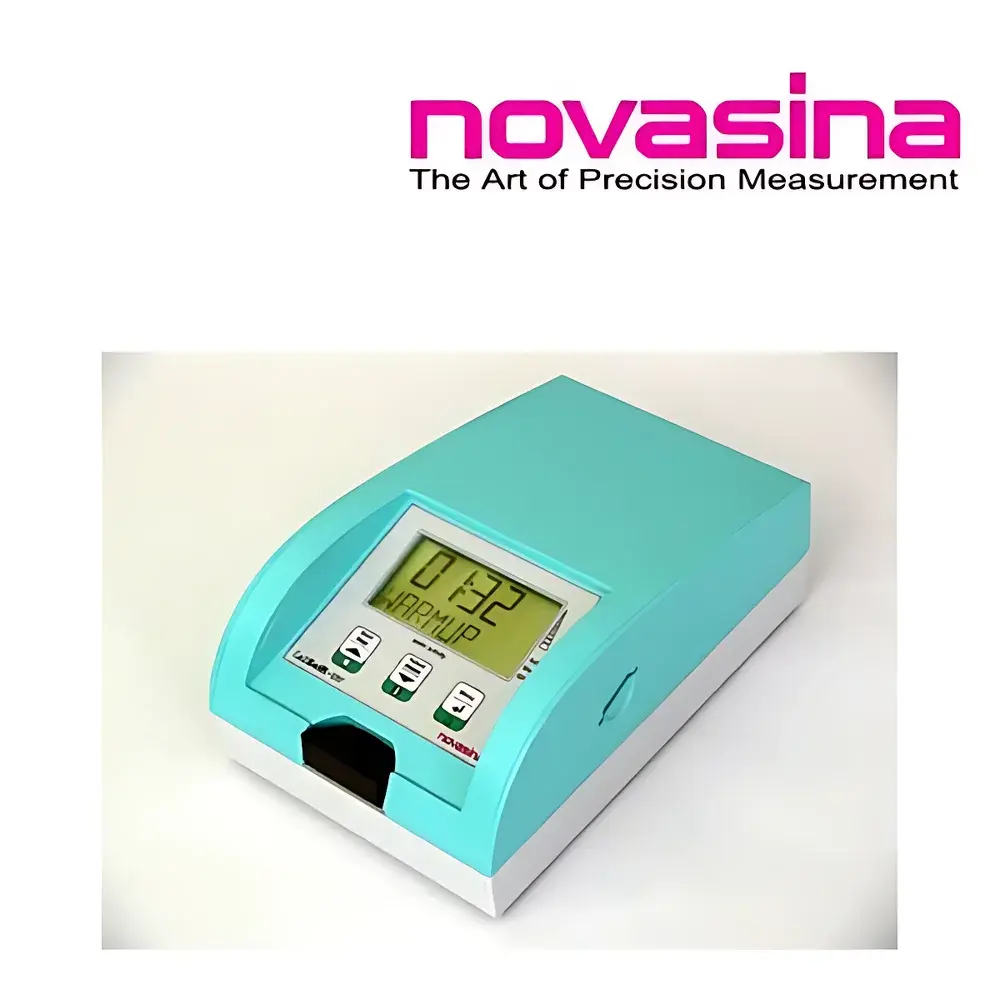
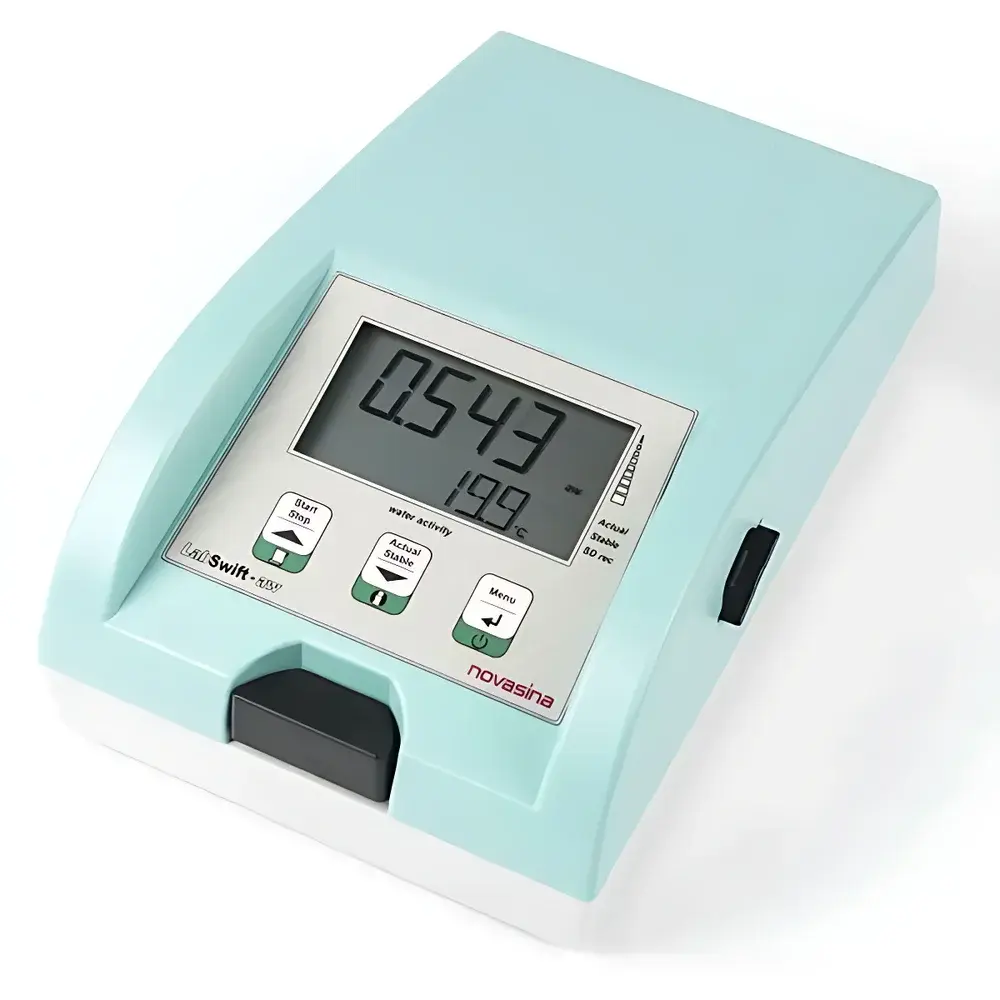
Novasina LabSwift-aw Portable Water Activity Analyzer
| Brand | Novasina |
|---|---|
| Origin | Switzerland |
| Model | LabSwift-aw |
| Measurement Range | 0.03–1.000 aw |
| Resolution | 0.01 aw |
| Accuracy | ±0.01 aw |
| Temperature Range | 5–45 °C |
| Temperature Accuracy | ±0.15 K |
| Weight | 1.2 kg |
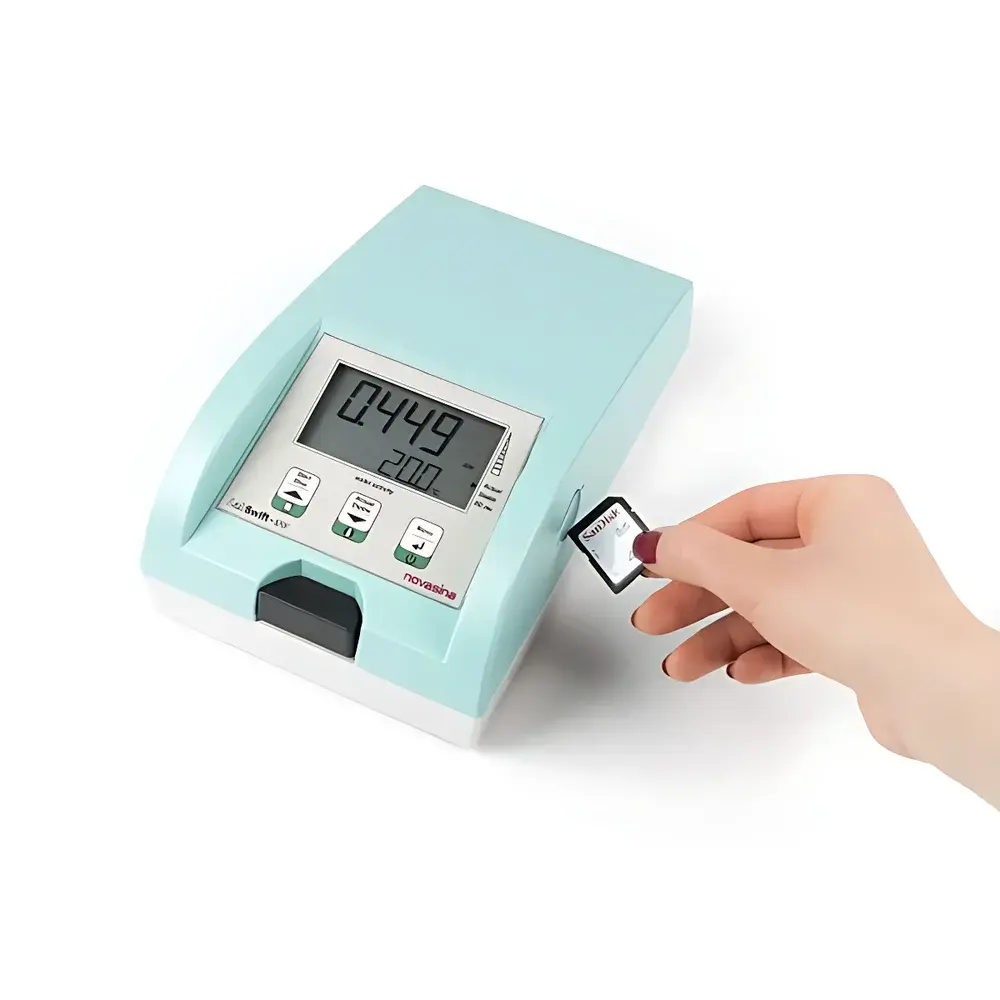
| Data Storage | SD card |
| Calibration | Factory 6-point certified calibration |
| Sensor Type | CM-2 dual-electrolyte resistive sensor |
| Compliance | NIST-traceable, FDA-recommended, ISO 21807 compliant |
Overview
The Novasina LabSwift-aw is a portable, high-integrity water activity (aw) analyzer engineered for rapid, traceable, and thermodynamically grounded measurement of equilibrium relative humidity (ERH) in solid and semi-solid matrices. It operates on Novasina’s proprietary dual-electrolyte resistive sensing principle—patented as the “Resistive Electrolyte Method”—which directly quantifies the vapor pressure of unbound (free) water above a sample at thermodynamic equilibrium. Unlike indirect methods such as Karl Fischer titration or loss-on-drying, the LabSwift-aw measures aw as a dimensionless ratio (p/p0), where p is the partial vapor pressure of water above the sample and p0 is the saturation vapor pressure at the same temperature. This fundamental thermodynamic parameter governs microbial viability, enzymatic activity, chemical degradation kinetics, and physical stability across food, pharmaceutical, and agricultural products. The instrument is validated for use in environments requiring compliance with ISO 21807:2022 (Microbiology of food and animal feeding stuffs — Determination of water activity), and its methodology is explicitly referenced by the U.S. FDA, European Reference Laboratories (EURLs), and Japan’s Ministry of Health, Labour and Welfare (MHLW) for official aw verification in regulatory submissions.
Key Features
- Portable architecture with integrated battery-ready design and ergonomic handheld form factor (1.2 kg, 85 × 140 × 225 mm)
- Dual-electrolyte resistive CM-2 sensor—engineered for long-term drift stability and immunity to volatile organic compounds (VOCs) and salt aerosols
- Factory-certified 6-point calibration traceable to NIST-standard saturated salt solutions (e.g., LiCl, MgCl₂, NaCl, KCl, KNO₃, K₂SO₄)
- Real-time equilibrium monitoring with adaptive algorithm that confirms thermodynamic stabilization before final aw reporting
- High-resolution LCD display with intuitive menu navigation and on-device pass/fail threshold evaluation
- Onboard SD card storage supporting timestamped measurement logs, method parameters, and operator ID tagging
- Operational temperature range of 5–45 °C with internal temperature compensation accurate to ±0.15 K
Sample Compatibility & Compliance
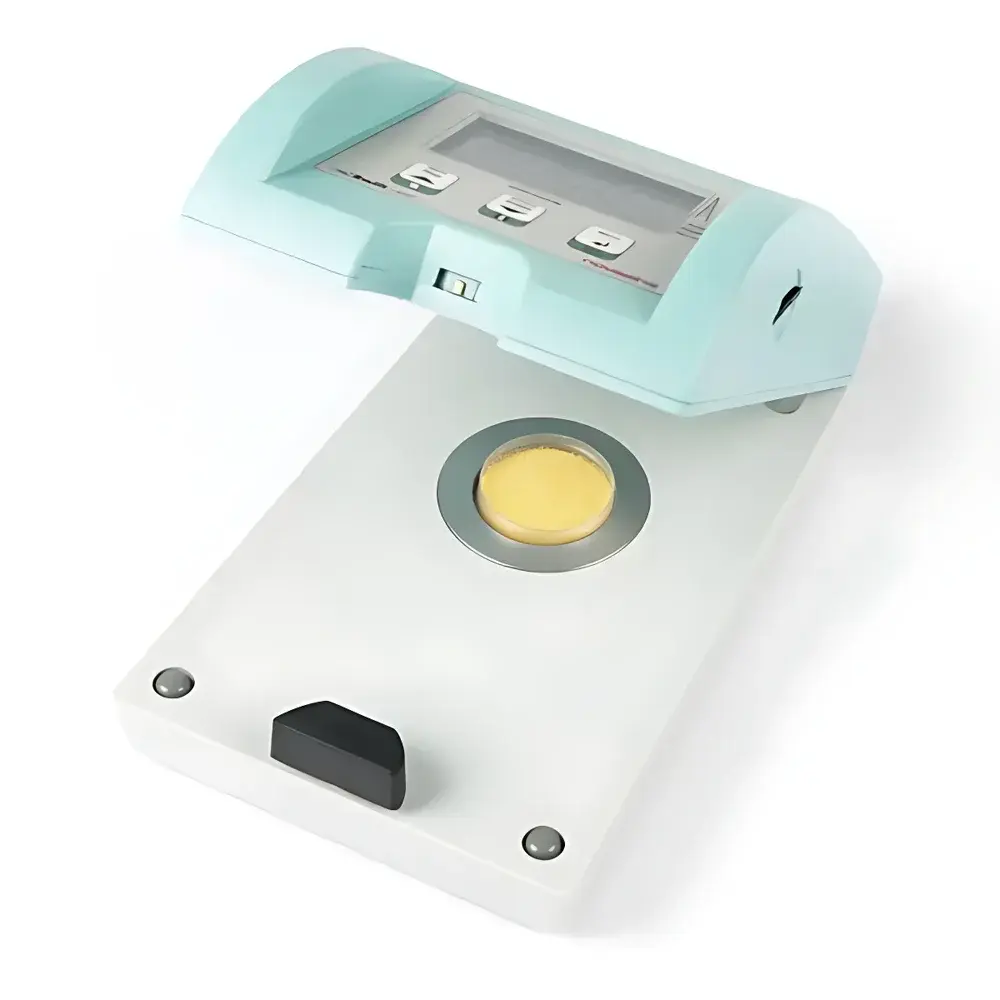
The LabSwift-aw accommodates a broad spectrum of low-to-medium moisture matrices without sample preparation: powders (dairy, spices, coffee), gels (jellies, hydrocolloids), pastes (meat emulsions, nut butters), baked goods, dried fruits, and lyophilized pharmaceuticals. Its sealed sample chamber (25 mL capacity) ensures rapid equilibration (<10 min for most food matrices) while preventing ambient interference. All measurements conform to ISO 21807 Annex A (resistive electrolyte method) and support GLP/GMP documentation requirements—including audit trails, electronic signatures, and data integrity per ALCOA+ principles. While the device itself does not provide 21 CFR Part 11 compliance out-of-the-box, raw SD card data files (CSV/ASCII format) are fully exportable for integration into validated LIMS or ELN platforms.
Software & Data Management
Data acquisition and reporting are managed via the built-in SD card interface; no proprietary software installation is required. Each measurement record includes: aw value, sample temperature, chamber humidity, stabilization time, calibration status flag, and user-defined batch ID. Files adhere to ISO/IEC 17025-compliant metadata structure, enabling direct import into statistical process control (SPC) tools or enterprise quality management systems (QMS). Optional Novasina DataBridge utility (Windows-compatible) allows batch export, trend charting, and deviation analysis against pre-set specification limits (e.g., aw ≤ 0.60 for shelf-stable intermediate moisture foods).
Applications
- Food R&D: Formulation optimization for microbial safety (e.g., validating aw < 0.85 to inhibit Staphylococcus aureus growth per USDA-FSIS guidelines)
- Quality assurance: In-line release testing of snacks, confectionery, pet food, and dietary supplements
- Pharmaceutical stability: Monitoring hygroscopicity of excipients and finished dosage forms under ICH Q1A(R2) accelerated conditions
- Agricultural science: Assessing grain storage risk (aw > 0.70 correlates with Aspergillus flavus aflatoxin potential)
- Tobacco processing: Controlling leaf conditioning to prevent mold and preserve aroma compound integrity
- Research laboratories: Supporting studies on glass transition (Tg), Maillard reaction kinetics, and lipid oxidation induction periods
FAQ
How does the resistive electrolyte method differ from dew point or capacitance-based aw sensors?
The CM-2 sensor uses two parallel electrolyte-coated electrodes whose resistance changes predictably with ERH—eliminating hysteresis and drift common in polymer capacitive sensors, and avoiding condensation-related maintenance issues inherent to chilled-mirror dew point systems.
Is field calibration possible without sending the unit to a service center?
Yes—users may perform verification checks using certified saturated salt standards (supplied with instrument); full recalibration requires factory service due to sensor-specific slope/offset mapping.
Can the LabSwift-aw measure samples below 5 °C or above 45 °C?
No—the specified operating range is strictly enforced by internal thermal regulation; measurements outside this band violate ISO 21807 validity criteria and invalidate traceability.
Does the instrument require routine sensor replacement or cleaning?
The CM-2 sensor is sealed and maintenance-free for ≥2 years under normal use; no user-serviceable parts exist—only periodic verification with reference salts is recommended.
What is the minimum sample mass required for reliable measurement?
As little as 1 g is sufficient for homogeneous materials; heterogeneous samples (e.g., chopped meats) benefit from ≥3 g to ensure representative surface area exposure within the chamber.




