
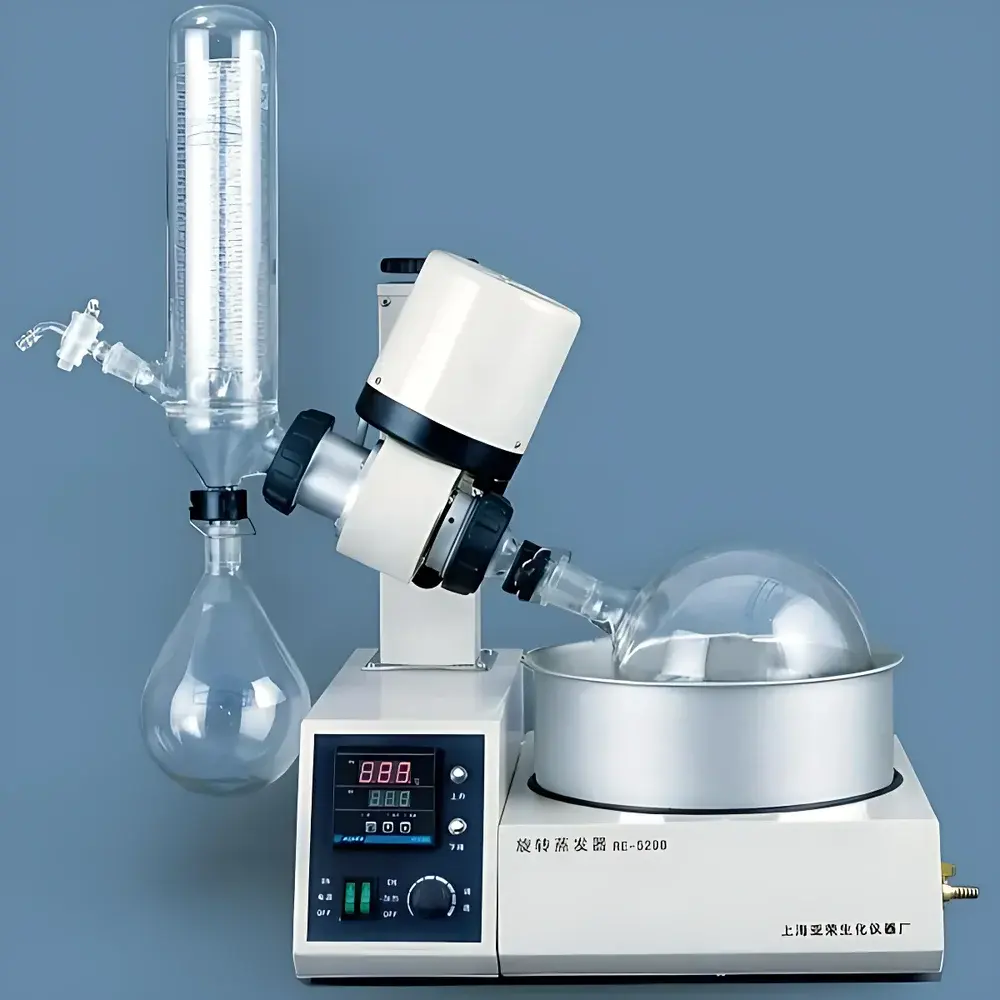
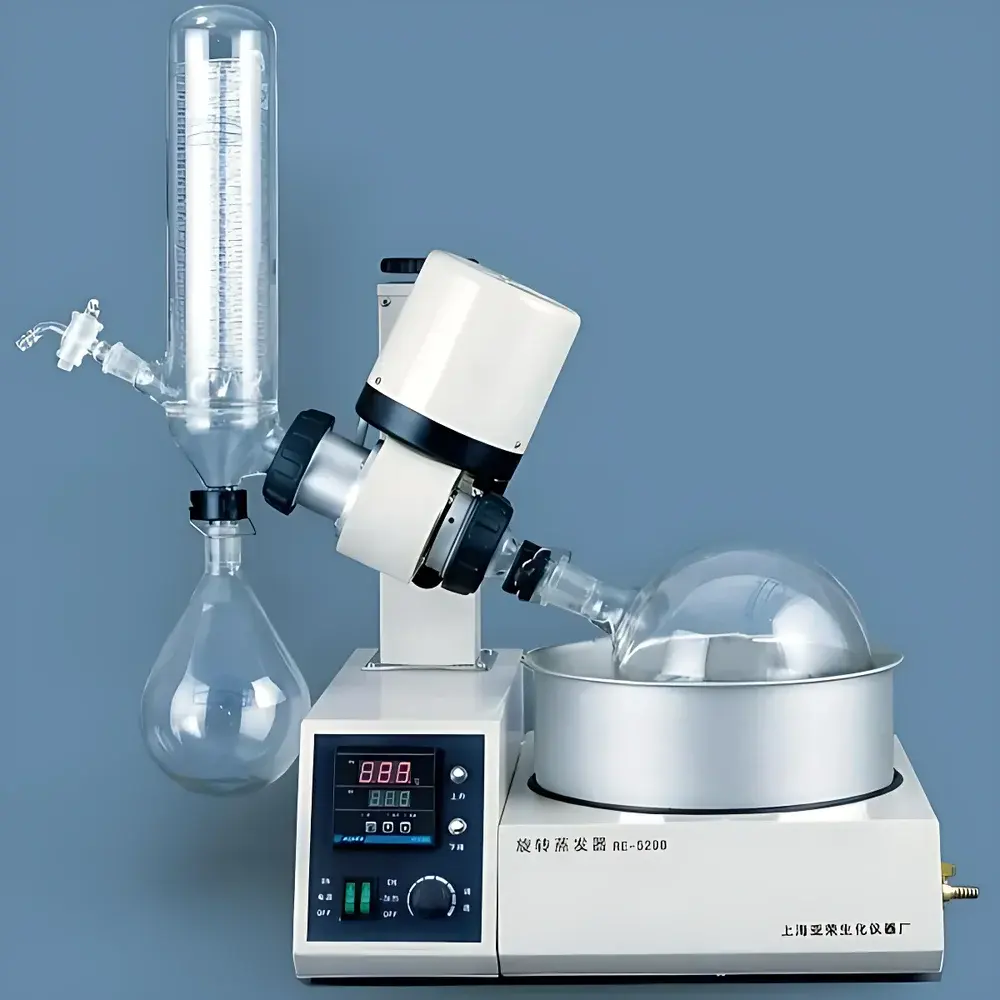
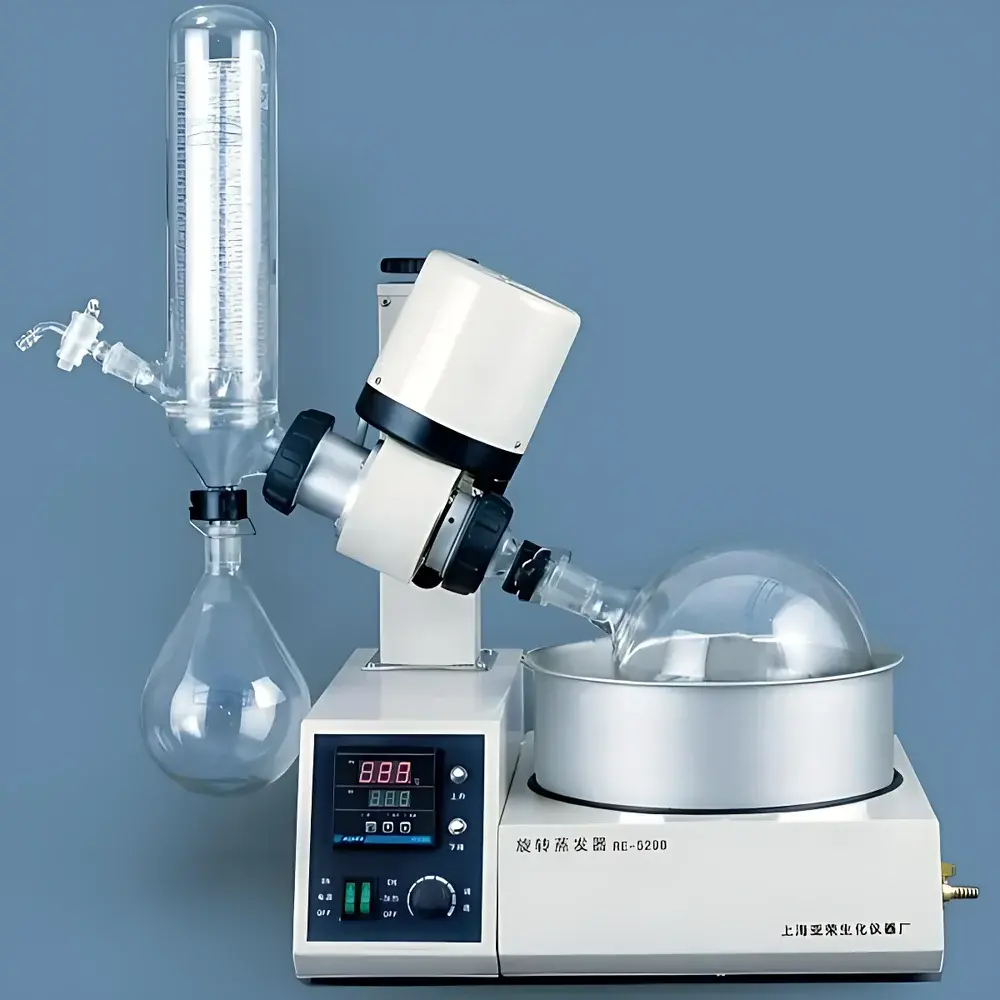
Shanghai Yarong RE-5298 Rotary Evaporator
| Brand | Shanghai Yarong / Yarong |
|---|---|
| Origin | Shanghai, China |
| Manufacturer Type | Authorized Distributor |
| Country of Origin | China |
| Model | RE-5298 |
| Price | Upon Request |
| Rotational Speed Range | 0–150 rpm (electronic stepless control) |
| Vertical Travel | 0–150 mm (motorized升降) |
| Condenser | Dual-path reflux condenser with valve-equipped feed tube, standard taper joints (24/29 or 29/32) |
| Heating Bath | Stainless steel bath with PTFE coating, digital temperature display, range: ambient to 99 °C ±1 °C |
| Power Rating | 1 kW |
| Voltage/Frequency | 220 V AC / 50 Hz |
| Construction | Corrosion-resistant stainless steel frame and structural components |
Overview
The Shanghai Yarong RE-5298 Rotary Evaporator is an engineered laboratory system designed for efficient solvent removal, sample concentration, and gentle thermal processing under reduced pressure. It operates on the principle of rotary evaporation—where a rotating flask increases the evaporative surface area while simultaneous application of vacuum lowers the boiling point of solvents, and controlled heating from a thermostatically regulated water bath supplies precise thermal energy. This combination enables rapid, reproducible, and scalable evaporation without thermal degradation of heat-sensitive compounds. The RE-5298 is widely deployed in synthetic organic chemistry labs, pharmaceutical R&D facilities, natural product isolation workflows, and quality control laboratories where consistent recovery of volatile solvents (e.g., ethanol, acetone, dichloromethane, ethyl acetate) is critical. Its modular architecture supports integration into multi-step purification protocols and complies with foundational requirements for GLP-aligned documentation when paired with validated operational procedures.
Key Features
- Electronic stepless speed control (0–150 rpm) ensures smooth, vibration-minimized rotation across diverse flask sizes (50 mL to 5 L), maintaining film stability and maximizing heat transfer efficiency.
- Motorized vertical lift mechanism (0–150 mm travel) provides precise, repeatable positioning of the evaporation flask relative to the heating bath—critical for method transfer and operator safety during solvent collection.
- Dual-path reflux condenser with integrated valve-controlled feed tube allows for continuous or batchwise addition of reagents under vacuum, supporting reaction workup and fractional distillation sequences.
- PTFE-coated stainless steel heating bath delivers uniform thermal distribution, corrosion resistance, and long-term stability; digital PID controller maintains setpoint accuracy within ±1 °C over the full 20–99 °C operating range.
- All primary structural components—including support frame, lifting column, and condenser mounting assembly—are fabricated from high-grade austenitic stainless steel (AISI 304), ensuring mechanical robustness and compatibility with acidic, basic, and halogenated solvent environments.
Sample Compatibility & Compliance
The RE-5298 accommodates standard ground-glass joint systems (typically 24/29 or 29/32 taper) and is compatible with borosilicate glassware conforming to ISO 3585 and DIN 12331 specifications. It supports evaporation of aqueous, polar aprotic, and moderately aggressive organic solvents under vacuum levels achievable with standard diaphragm or rotary vane vacuum pumps (typically 10–100 mbar). While not certified to IEC 61010-1 for standalone CE marking, the unit meets fundamental electrical safety and mechanical integrity criteria required for use in ISO/IEC 17025-accredited testing laboratories when operated per manufacturer guidelines and integrated into documented SOPs. Its design facilitates audit readiness for GMP-relevant processes involving solvent recovery in API synthesis or extractive purification.
Software & Data Management
The RE-5298 operates as a stand-alone analog-digital hybrid instrument with no embedded microprocessor or network interface. Temperature and rotation speed are monitored via front-panel LED displays; no data logging, remote control, or electronic audit trail functionality is included. Users requiring traceable parameter recording must integrate external calibrated sensors (e.g., Class A Pt100 probe) and compliant data acquisition systems adhering to FDA 21 CFR Part 11 requirements—such configurations are routinely implemented in regulated pharmaceutical QC labs. The absence of proprietary firmware simplifies validation, reduces cybersecurity exposure, and supports long-term maintenance predictability.
Applications
- Concentration of crude reaction mixtures prior to chromatographic separation
- Removal of low-boiling solvents after Grignard, Suzuki, or Wittig reactions
- Lyophilization pre-concentration steps in biopolymer and small-molecule formulation development
- Solvent recycling in pilot-scale natural product extraction (e.g., essential oils, alkaloid isolation)
- Preparative dehydration of thermolabile intermediates in medicinal chemistry campaigns
- Standardized evaporation protocols for USP dissolution media preparation and residual solvent analysis (ICH Q3C)
FAQ
What vacuum level is recommended for optimal performance with the RE-5298?
For most common solvents (e.g., acetone, methanol, ethyl acetate), a stable vacuum between 20–50 mbar is empirically optimal—balancing evaporation rate, bumping suppression, and condenser loading. Final vacuum should be established *before* initiating rotation and heating.
Can the RE-5298 be used with corrosive solvents such as concentrated HCl or bromine-containing compounds?
Direct exposure to highly corrosive vapors or liquids is not advised. Use only with appropriate secondary containment, chemically resistant cold traps (e.g., dry ice/acetone), and PTFE-sealed vacuum lines. Consult material compatibility charts for glass joint lubricants and gasketing.
Is the heating bath temperature calibration traceable to NIST standards?
The built-in digital thermometer is factory-calibrated but not supplied with a NIST-traceable certificate. Users in regulated environments must perform periodic verification using a calibrated reference thermometer (e.g., ASTM E74-compliant) and document results per internal QA protocols.
Does the RE-5298 support automatic distillate collection switching?
No. Fraction collection requires manual intervention or integration with third-party fraction collectors equipped with vacuum-compatible valves and position sensing.
What maintenance intervals are recommended for long-term reliability?
Inspect PTFE coatings for wear quarterly; replace vacuum seals annually or after 500 operational hours; verify motor brush condition every 2,000 hours; clean condenser pathways after each use with appropriate solvent rinses to prevent residue buildup.



