
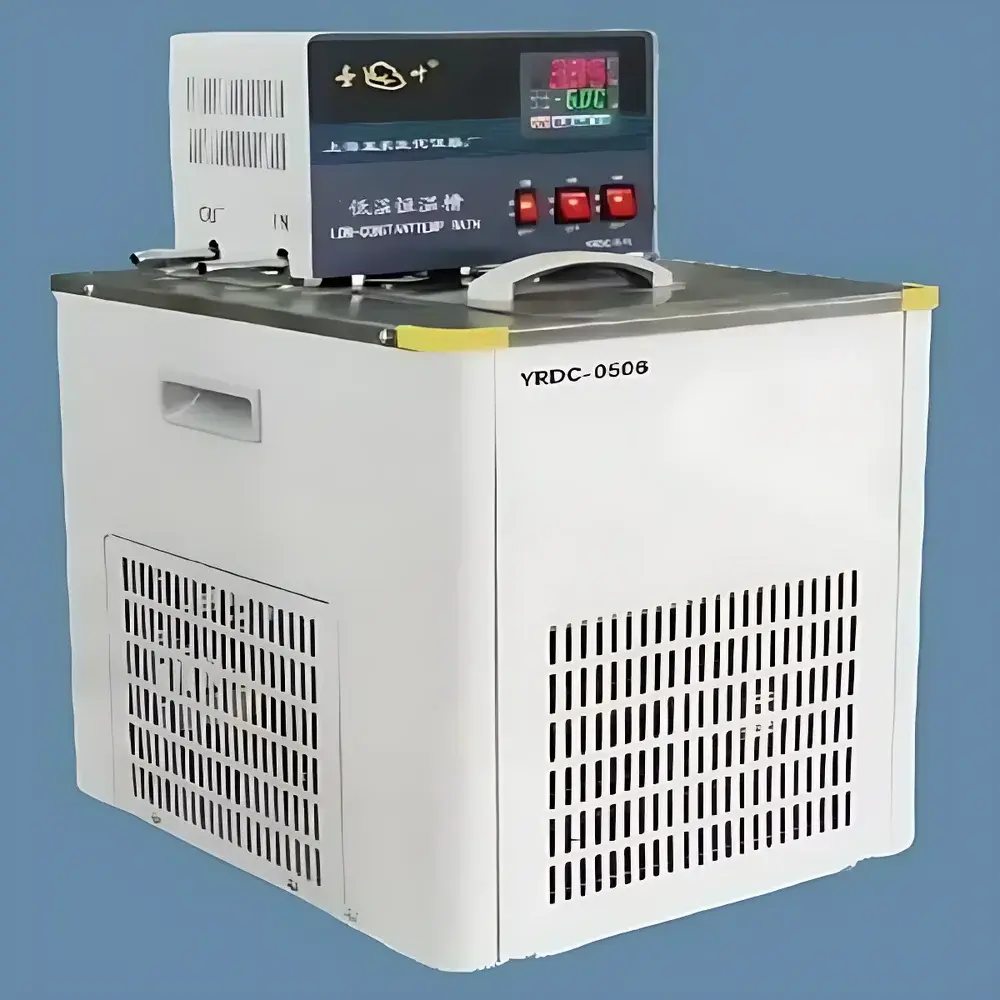
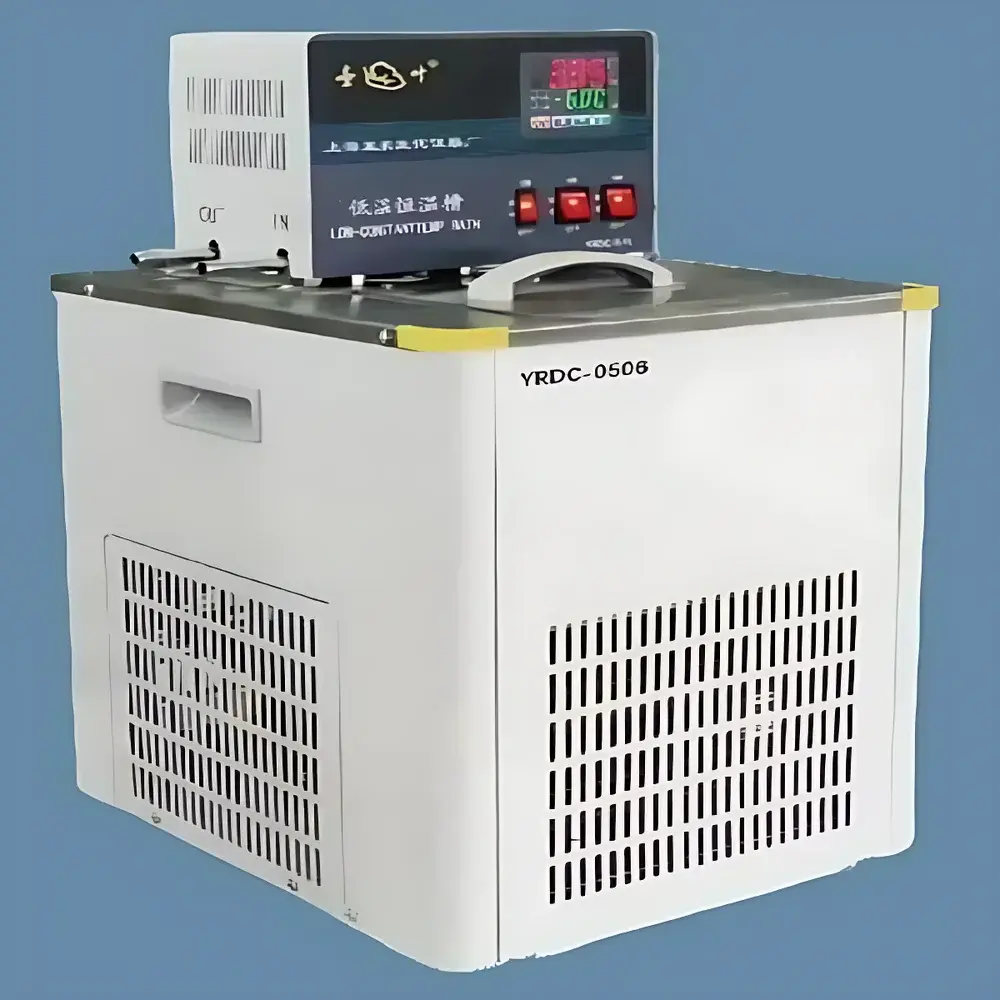
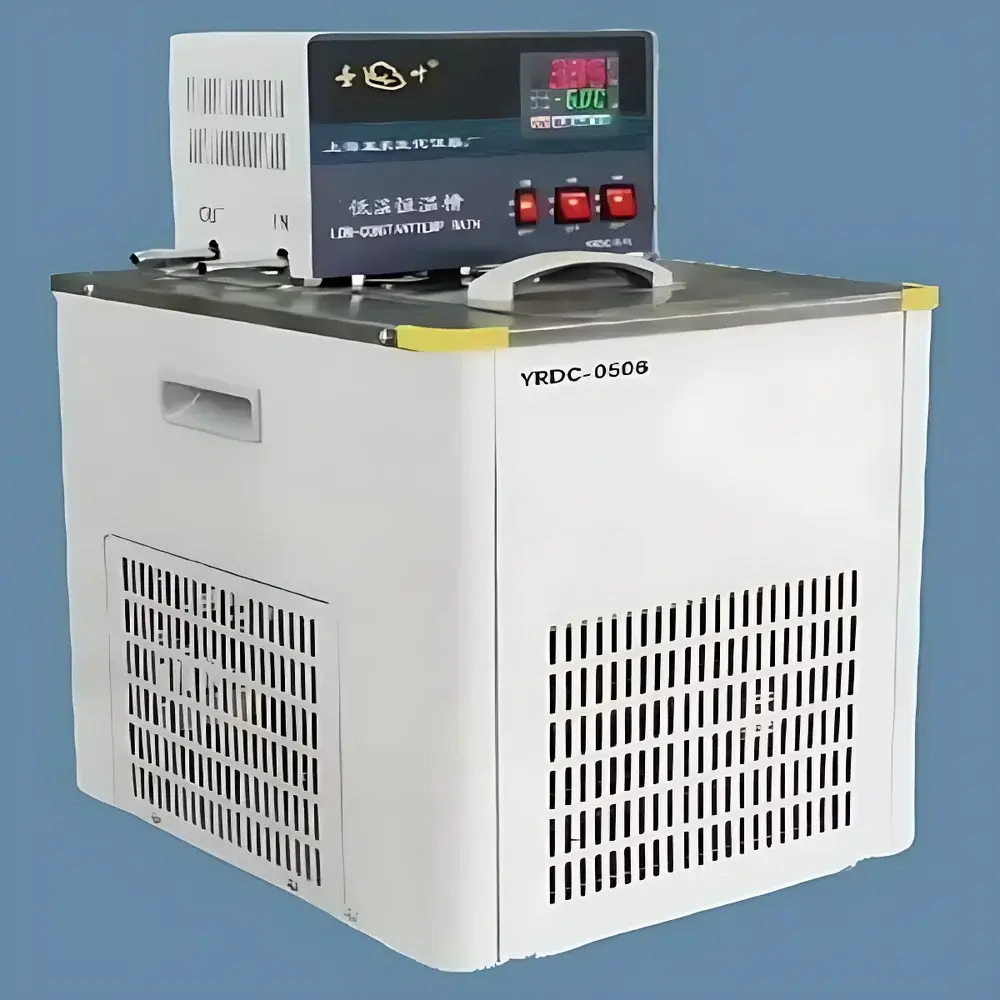
Yarong YRDC-2006 Precision Cryogenic Circulating Thermostat
| Brand | Yarong |
|---|---|
| Origin | Shanghai, China |
| Instrument Type | Vertical |
| Temperature Range | −20 to 100 °C |
| Temperature Stability | ±0.02 °C (at 25 °C with water or pure ethanol) |
| Setpoint Resolution | 0.1 °C |
| Bath Volume | 6 L |
| Bath Opening Dimensions | 150 × 150 × 150 mm |
| Heating Power | 1100 W |
| Circulation Flow Rate | 8 L/min |
| Refrigeration Method | Hermetically Sealed Compressor |
| External/Internal Circulation | Dual-mode |
| Pump Material | 304 Stainless Steel |
| Bath & Platform Material | 304 Stainless Steel |
| Power Supply | AC 220 V / 50 Hz |
| Overall Dimensions (W×D×H) | 340 × 340 × 670 mm |
| Net Weight | 33 kg |
| Compatible Heat Transfer Media | Deionized Water or Anhydrous Ethanol |
Overview
The Yarong YRDC-2006 Precision Cryogenic Circulating Thermostat is an engineered laboratory temperature control system designed for high-stability thermal regulation across a broad operational range (−20 °C to +100 °C). It operates on the principle of active dual-mode thermal management—integrating a high-efficiency hermetically sealed compressor for rapid cooling and a 1100 W resistive heating element for precise ramping and maintenance. Temperature control is implemented via a microprocessor-based PID algorithm with auto-tuning capability, ensuring minimal overshoot and fast settling times during setpoint transitions. The unit maintains ±0.02 °C stability at 25 °C when operated with either deionized water or anhydrous ethanol—validated under ISO/IEC 17025-aligned calibration practices. Its vertical architecture optimizes benchtop footprint while accommodating immersion applications, external bath coupling, and integration into larger analytical workflows such as viscometry, spectroscopy, and material testing.
Key Features
- Microprocessor-controlled PID temperature regulation with self-tuning functionality for adaptive response to load changes and ambient fluctuations
- Dual digital display: independent LED windows for setpoint (0.1 °C resolution) and real-time bath temperature measurement
- Robust 304 stainless steel construction throughout the bath chamber, lid, internal impeller, and circulation pump housing—resistant to corrosion from aqueous and alcoholic media
- Dual circulation mode: selectable internal recirculation for bath homogeneity or external output (up to 8 L/min) to supply secondary temperature-controlled zones (e.g., jacketed reactors, optical cells, or sensor calibration fixtures)
- Integrated safety logic including open-sensor detection, over-temperature cutoff, and compressor thermal protection
- Ergonomic design with foldable side handles and vibration-dampened compressor mounting for stable operation in shared lab environments
Sample Compatibility & Compliance
The YRDC-2006 supports temperature-sensitive sample conditioning for both static immersion and dynamic flow-through configurations. Its 6 L bath volume and 150 × 150 × 150 mm opening accommodate standard laboratory vessels up to 500 mL capacity, including jacketed cuvettes, reaction flasks, and probe housings. Compatibility extends to common heat-transfer fluids: deionized water (for ≥0 °C operation), anhydrous ethanol (for sub-zero use down to −20 °C), and other low-viscosity, non-reactive organic solvents—subject to user validation per ASTM D1250 or ISO 8503-2 guidelines. While not certified to IEC 61010-1 or UL 61010B out-of-the-box, the unit meets essential electrical safety requirements for Class I laboratory equipment and may be incorporated into GLP/GMP-compliant workflows when paired with documented calibration procedures, traceable NIST-standard thermistors, and audit-ready log files generated via optional RS232/USB interface.
Software & Data Management
The YRDC-2006 operates autonomously via its onboard controller but supports external data logging through a standard RS232 serial port (optional USB-to-serial adapter available). When connected to PC-based acquisition software (e.g., LabVIEW-compatible drivers or vendor-supplied terminal utilities), users can record time-stamped temperature profiles, export CSV-formatted datasets, and generate compliance reports aligned with FDA 21 CFR Part 11 requirements—provided appropriate electronic signature protocols and audit trail configuration are implemented at the host system level. No proprietary cloud platform or firmware-based analytics are embedded; all data handling remains under direct user control to support institutional IT security policies and data sovereignty mandates.
Applications
- Calibration of temperature-sensitive sensors (RTDs, thermistors, IR detectors) across extended thermal ranges
- Thermal conditioning of optical components during spectrophotometric or interferometric measurements
- Stabilization of enzymatic or protein-based assays requiring strict thermal consistency (e.g., kinetic studies per ISO 15197)
- Controlled cooling/heating cycles in polymer rheology, phase transition analysis, and crystallization kinetics
- External temperature control of HPLC column ovens, GC injectors, or electrochemical cells via auxiliary circulation loops
- Support of ASTM D2857 (FTIR), ASTM E144 (calorimetry), and USP environmental simulation protocols
FAQ
What heat transfer fluids are validated for use with the YRDC-2006?
Deionized water is recommended for operation between 0 °C and 100 °C. Anhydrous ethanol is validated for sub-zero performance down to −20 °C. Other fluids require viscosity, flash point, and chemical compatibility verification prior to use.
Does the unit support external temperature feedback control?
No—the YRDC-2006 uses internal Pt100 sensor feedback only. External probe input is not supported; however, the external circulation outlet enables integration with third-party controllers via inline temperature transmitters.
Is the circulation pump speed adjustable?
No—the pump operates at fixed flow rate (8 L/min nominal). Flow modulation must be achieved externally using calibrated needle valves or bypass manifolds.
Can the YRDC-2006 be used in a cleanroom environment?
Yes—its sealed compressor, stainless steel wetted parts, and absence of volatile lubricants or outgassing plastics make it suitable for ISO Class 7–8 environments, provided airflow and condensate management are addressed per facility HVAC specifications.
What is the typical warm-up and cool-down time from ambient to extreme setpoints?
From 25 °C to −20 °C: ~45 minutes (with ethanol); from 25 °C to 100 °C: ~22 minutes. Times vary with fluid volume, ambient conditions, and thermal load.



