
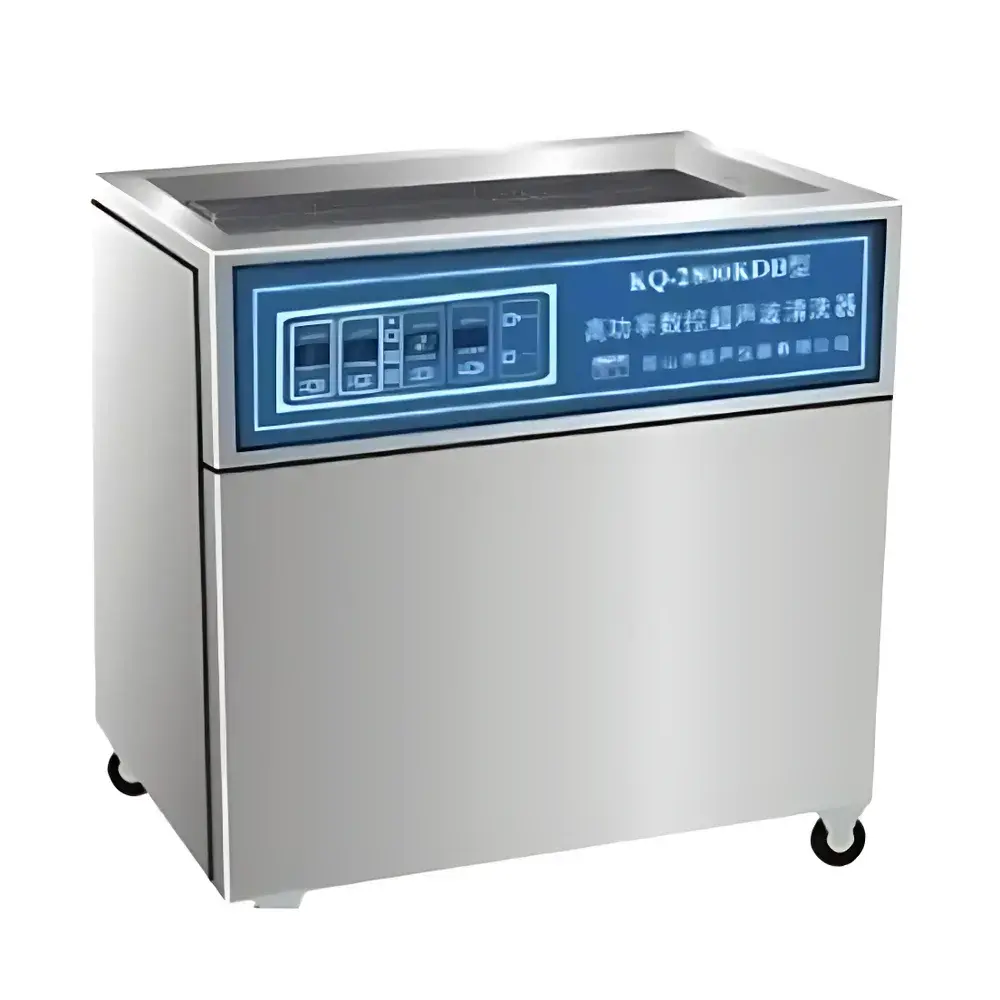
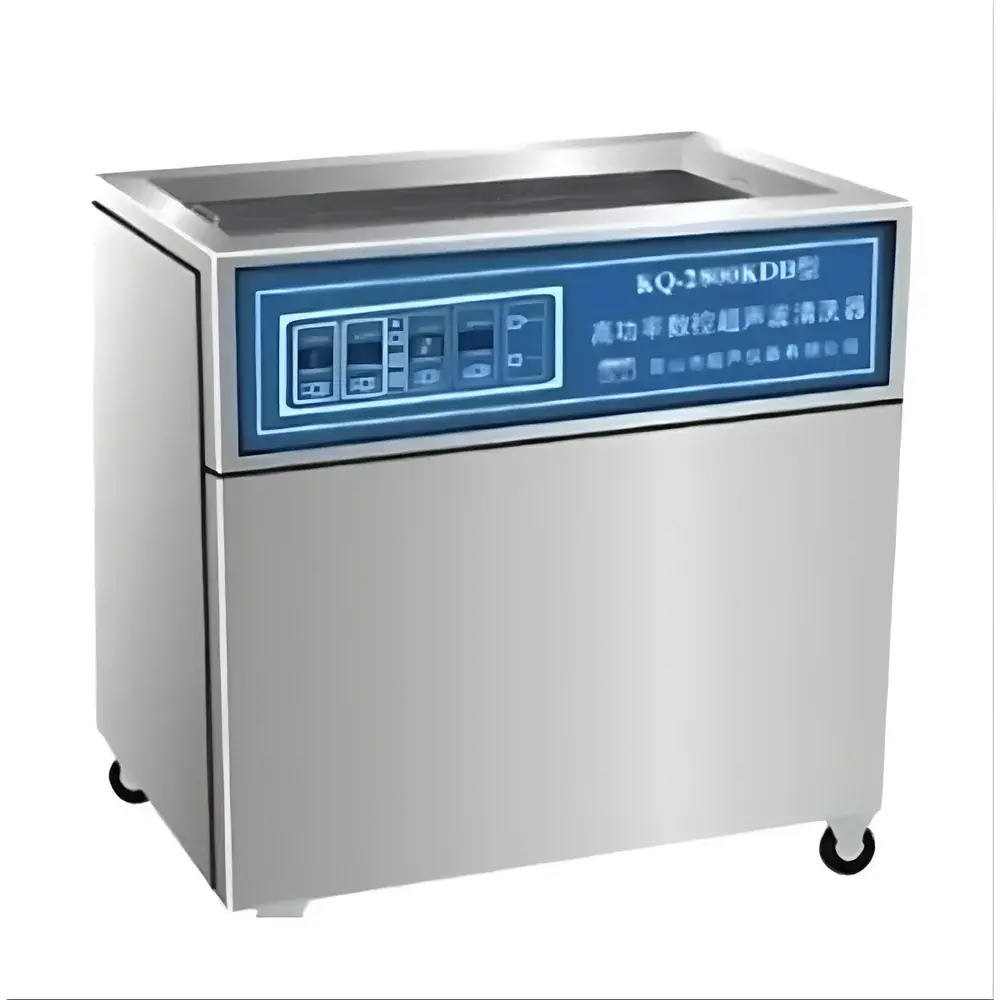
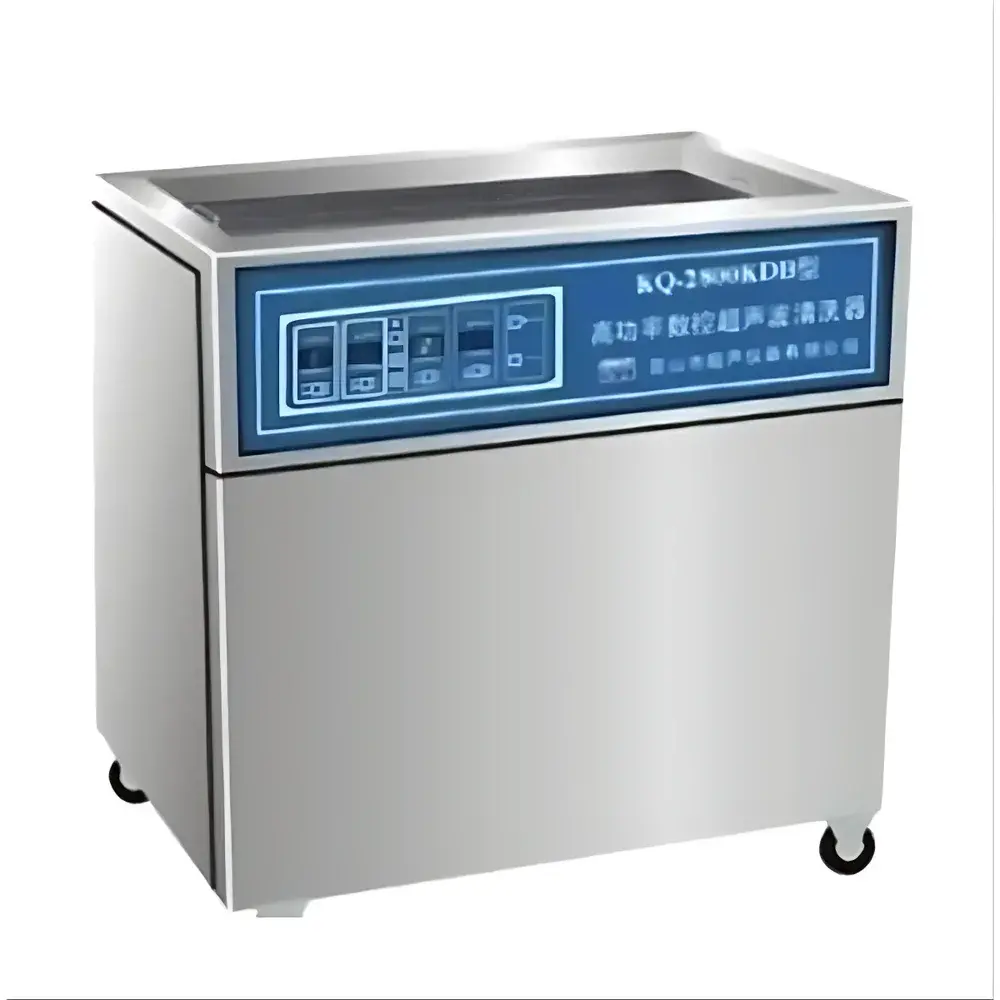
Supmile KQ-AS1000TDE Floor-Standing Digital Ultrasonic Cleaner
| Brand | Supmile |
|---|---|
| Origin | Jiangsu, China |
| Model | KQ-AS1000TDE |
| Tank Capacity | 60 L |
| Ultrasonic Frequency | 40 kHz |
| Ultrasonic Power Output | 1000 W |
| Power Adjustment Range | 40–100% (400–1000 W) |
| Heating Temperature Range | 10–80 °C |
| Timer Range | 1–480 min |
| Lid Type | Motorized electro-controlled sound-dampening lid |
| Drain/Inlet | Electro-controlled automatic fill & drain system |
| Construction | 304 stainless steel tank, chamber, basket, and chassis |
| Optional Solvent Filtration System | Yes (AS-series) |
Overview
The Supmile KQ-AS1000TDE is a floor-standing, digitally controlled ultrasonic cleaner engineered for high-reliability laboratory and industrial cleaning applications requiring consistent cavitation intensity, thermal stability, and process repeatability. Operating at a fundamental frequency of 40 kHz, the unit leverages piezoelectric transducer arrays bonded to the tank bottom to generate acoustic pressure waves in the cleaning medium—typically aqueous or solvent-based solutions. These waves induce transient cavitation: the rapid formation and collapse of microbubbles that release localized energy (up to ~5000 K and 2000 atm), enabling mechanical removal of particulate contaminants, organic residues, oxides, and biofilms from complex geometries without mechanical abrasion. Unlike higher-frequency systems (e.g., 80–130 kHz), the 40 kHz configuration delivers higher energy per cavitation event—ideal for removing tenacious soils from robust substrates such as metal components, glassware, and ceramic fixtures—while maintaining compatibility with delicate instrumentation when operated at reduced power levels (40–60%). The AS-series designation indicates integrated solvent filtration capability and electro-controlled liquid-level management (1–300 mm range), supporting extended use with volatile or hazardous solvents under controlled vapor exposure conditions.
Key Features
- Floor-standing architecture with reinforced structural frame for vibration isolation and long-term operational stability
- Digital microprocessor control panel with real-time display of time remaining, set temperature, actual bath temperature, and power level
- Electro-controlled motorized sound-dampening lid with safety interlock—reduces ambient noise to ≤65 dB(A) and minimizes solvent evaporation
- Precise power regulation (40–100% in 1% increments) via pulse-width modulation, enabling optimization of cavitation density versus sample fragility
- Programmable heating system (3000 W) with PID temperature control (±1 °C accuracy) across 10–80 °C range; independent over-temperature cutoff at 90 °C
- Electro-controlled inlet and drain valves with level-sensing feedback—enables automated batch filling, overflow prevention, and timed drainage cycles
- Stainless steel 304 construction throughout: tank, inner chamber, wire mesh basket, and external housing—resistant to corrosion from alkaline, acidic, and organic media
- AS-series-specific solvent filtration module (optional): recirculating activated carbon filter with replaceable cartridges rated for chlorinated, hydrocarbon, and alcohol-based solvents
Sample Compatibility & Compliance
The KQ-AS1000TDE accommodates a broad spectrum of sample types—including surgical instruments, optical lenses, semiconductor wafers, printed circuit boards, dental prostheses, and precision machined parts—provided appropriate cleaning chemistry and parameters are selected. Its 60 L capacity and 600 × 300 × 400 mm tank dimensions support immersion of large or multiple items simultaneously. The system complies with IEC 61000-6-3 (EMC emissions) and IEC 61000-6-2 (immunity) standards. While not certified to ISO 13485 or FDA 21 CFR Part 11 out-of-the-box, its digital logging capabilities (time-stamped cycle records stored in non-volatile memory) support GLP/GMP-aligned documentation when paired with validated SOPs. For regulated environments, optional RS-232/USB data export enables integration with LIMS or electronic batch record systems. All electrical components meet IP22 ingress protection rating for lab-grade moisture resistance.
Software & Data Management
The embedded controller supports up to 10 user-defined cleaning protocols, each storing temperature setpoint, duration, power level, and lid position status. Cycle logs—including start time, end time, average temperature, and fault codes—are retained for ≥10,000 cycles in internal flash memory. Data export is available via USB port (CSV format) for traceability and audit preparation. No proprietary software installation is required; exported files are compatible with standard spreadsheet and statistical analysis tools. Optional firmware updates—distributed via secure download portal—include enhanced alarm diagnostics, improved heater ramp profiling, and expanded solvent compatibility tables aligned with ASTM D4387 and ISO 14644-1 cleanliness classification guidance.
Applications
- Pre-analytical sample preparation: removal of cutting oils, polishing compounds, and metal fines from analytical standards and reference materials
- Pharmaceutical manufacturing: cleaning of stainless-steel contact parts (e.g., tablet punches, mixer blades) in accordance with USP and EU GMP Annex 15
- Electronics manufacturing: defluxing of PCB assemblies prior to AOI and conformal coating
- Research laboratories: extraction of plant metabolites, cell lysis for protein isolation, and nanoparticle dispersion stabilization
- Metrology labs: contaminant-free cleaning of gauge blocks, interferometer optics, and calibration artifacts per ISO 5725 repeatability requirements
- Medical device reprocessing: adjunctive cleaning of reusable laparoscopic instruments before steam sterilization (per AAMI ST91)
FAQ
What is the difference between the TDE and AS-TDE models?
The AS-TDE series includes an integrated solvent filtration recirculation system and electro-controlled liquid-level adjustment (1–300 mm), whereas the standard TDE model features manual lid operation and fixed-fill functionality.
Can this unit be used with flammable solvents?
Yes—when equipped with the AS-series filtration module and operated inside a certified fume hood or explosion-proof enclosure, in compliance with NFPA 30 and OSHA 1910.106 guidelines.
Is temperature calibration traceable to NIST standards?
The built-in PT100 sensor is factory-calibrated; users may perform field verification using a NIST-traceable reference thermometer—calibration certificates are available upon request.
What maintenance is required for long-term reliability?
Biannual inspection of transducer bonding integrity, quarterly replacement of filtration cartridges (if installed), and routine descaling of the heating element using 5% citric acid solution every 200 operating hours.
Does the system support remote monitoring or network integration?
Not natively—but optional RS-232-to-Ethernet gateways enable Modbus TCP communication for centralized facility monitoring systems.
Related Products



