
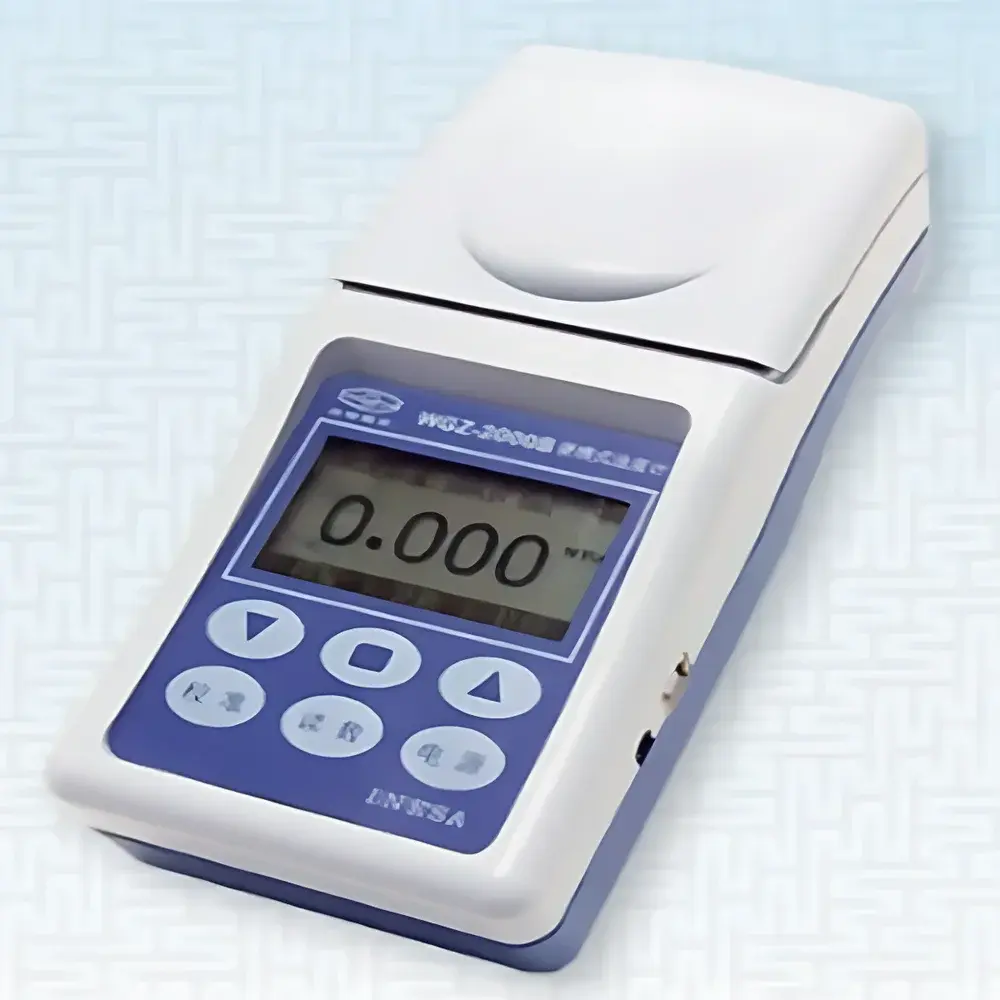
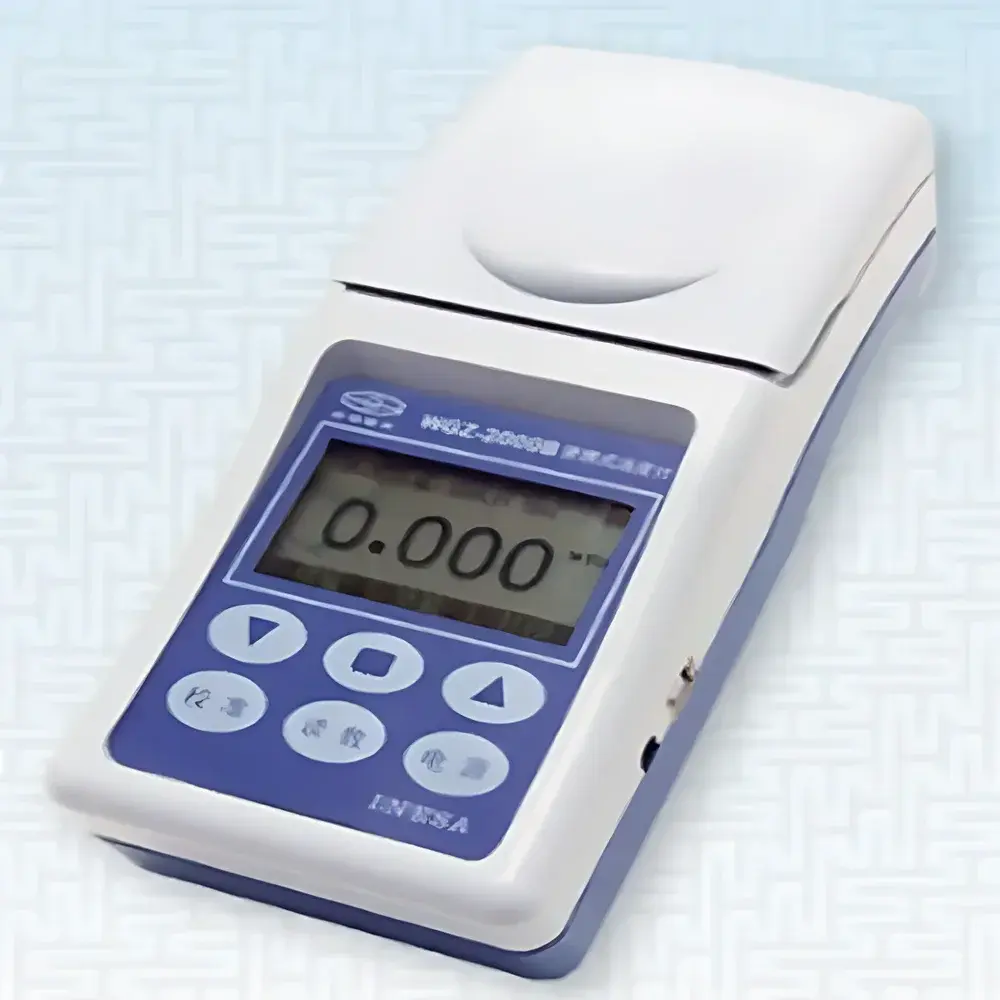
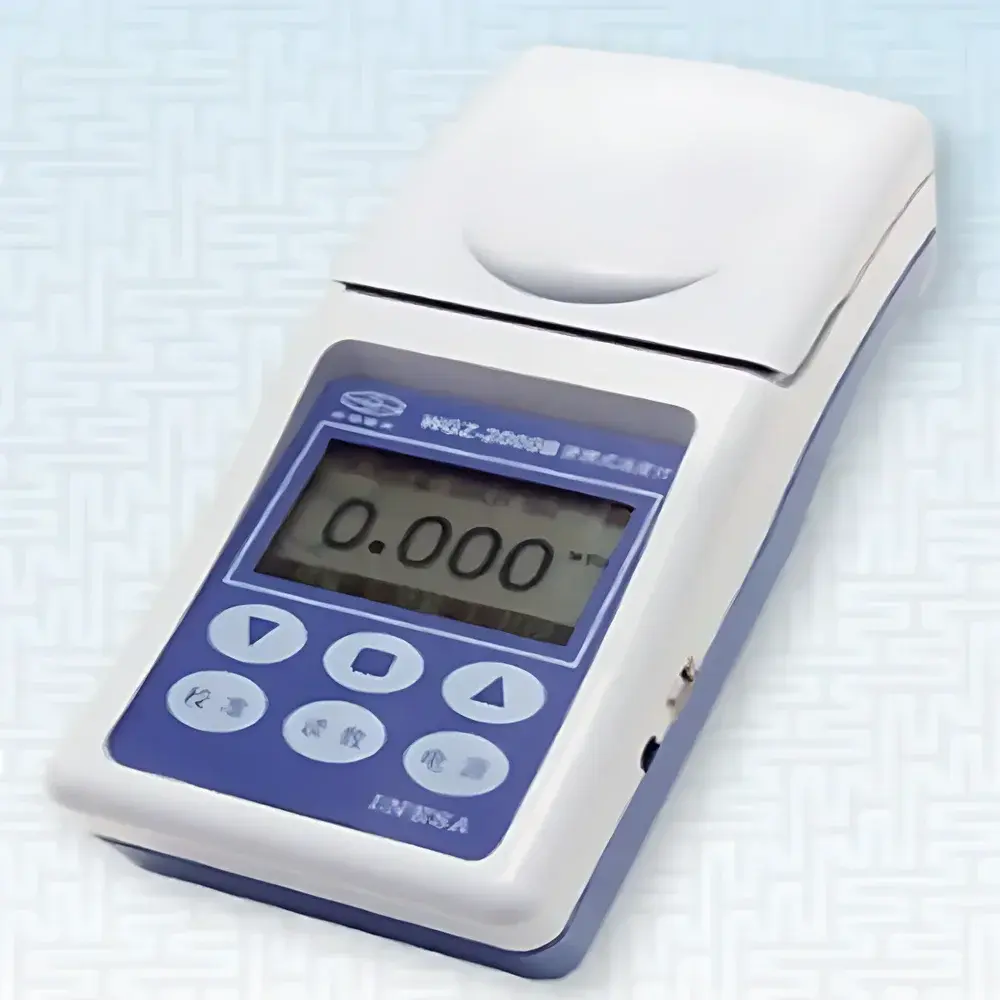
YDWG WGZ-1000B Portable Turbidimeter
| Brand | YDWG |
|---|---|
| Origin | Shanghai, China |
| Model | WGZ-1000B |
| Type | Portable |
| Measurement Range | 0.000–20.00 NTU |
| Resolution | 0.001 NTU |
| Operating Temperature | 5–40 °C |
| Accuracy | ≤ ±2% |
| Light Source | LED infrared |
| Detection Principle | Ratio-based scattered-transmitted light measurement |
| Compliance | ISO 7027, HJ 1075–2019, GLP |
| Data Storage | 2000 records |
| Power Supply | 4 × AA alkaline batteries or 5 V USB |
| Display | Backlit LCD |
Overview
The YDWG WGZ-1000B Portable Turbidimeter is a precision optical instrument engineered for reliable in-field and laboratory measurement of turbidity in water and transparent liquid samples. It operates on the ratio-based scattered-transmitted light detection principle—compliant with ISO 7027 and China’s environmental standard HJ 1075–2019—ensuring accurate quantification of suspended particulate matter by simultaneously measuring both forward-scattered and transmitted light intensities. This dual-signal approach minimizes interference from sample color, absorbance, or minor variations in path length, enabling robust turbidity assessment even in lightly colored or low-absorbance solutions. Designed for operational flexibility, the instrument features automatic range switching across its full 0.000–20.00 NTU measurement span, eliminating manual gain adjustments and reducing operator-induced error. Its compact, rugged housing and low-power electronics support extended deployment in mobile QA/QC workflows—from municipal water distribution points and effluent discharge monitoring to pharmaceutical process water verification.
Key Features
- Ratio-mode optical detection system with infrared LED source (850 nm), optimized for stability and immunity to ambient light fluctuations
- High-resolution measurement capability: 0.001 NTU resolution across the entire 0.000–20.00 NTU range
- Automatic multi-point calibration support (up to 5 standards), with user-configurable calibration curves stored in non-volatile memory
- Integrated averaging function: configurable 3–9 measurement cycles per reading to improve statistical reproducibility
- Backlit LCD display with intuitive icon-driven interface; supports English-language menu navigation
- Battery-powered operation (4 × AA alkaline) with auto-power-off after 10 minutes of inactivity; also compatible with regulated 5 V USB power supply for continuous benchtop use
- GLP-compliant data management: each stored record includes timestamp, date, operator ID, sample ID, calibration status, and measurement mode
Sample Compatibility & Compliance
The WGZ-1000B is validated for use with clear to moderately turbid aqueous matrices—including drinking water, wastewater effluents, boiler feedwater, pharmaceutical purified water (PW), and process rinse solutions. Its optical design accommodates samples with mild chromaticity without requiring de-colorization pretreatment, per HJ 1075–2019 Annex B guidance. Instrument performance adheres to ISO 7027:2016 requirements for formazin-based calibration traceability and angular response specification (90° ±2.5° scattered light detection). All firmware and data handling routines are structured to support audit-ready GLP documentation, including immutable timestamps, user authentication fields, and tamper-evident storage architecture. While not FDA 21 CFR Part 11–certified out-of-the-box, the device’s logging structure and USB export functionality enable integration into validated laboratory information management systems (LIMS) under site-specific SOPs.
Software & Data Management
Data acquisition and reporting are managed via embedded firmware with no external software dependency. The instrument stores up to 2000 measurement records internally, each tagged with date/time (RTC-backed), user-defined sample name, operator ID, and calibration reference ID. Export is performed via standard USB 2.0 interface using CDC ACM protocol—no proprietary drivers required. Raw CSV-formatted files are generated upon connection to a Windows/macOS/Linux host, containing columns for NTU value, measurement duration, signal intensity ratios, temperature (if external probe connected), and metadata flags. Exported datasets retain full GLP traceability and are compatible with Excel, LabChart, or custom Python/R analysis pipelines. Firmware updates are delivered via signed .bin files through the same USB channel, with checksum validation prior to installation.
Applications
- Drinking water quality verification at treatment plant outlets and distribution network sampling points
- Monitoring of membrane filtration integrity and backwash efficiency in municipal and industrial water reuse facilities
- Pharmaceutical water system qualification (PW, WFI) per USP and EU GMP Annex 1 expectations
- Process control in food & beverage production—e.g., juice clarification, beer filtration, dairy whey processing
- Environmental compliance testing for surface water, stormwater runoff, and sediment-laden effluents
- Educational laboratories requiring ISO-aligned turbidity instruction with field-deployable instrumentation
FAQ
Does the WGZ-1000B require annual recalibration by an accredited lab?
No—routine user calibration using NIST-traceable formazin or AMCO AEPA standards is sufficient per ISO 7027. Third-party certification is optional and typically performed only during initial validation or after physical impact.
Can the instrument measure turbidity in seawater or high-salinity samples?
Yes, provided samples are filtered to remove macro-particulates and temperature-equilibrated; salinity itself does not interfere, but refractive index shifts may necessitate matrix-matched calibration.
Is the USB interface compatible with modern macOS and Windows 11 systems?
Yes—operates as a standard CDC ACM serial device; no driver installation required on macOS 12+, Windows 10/11, or Ubuntu 22.04 LTS.
What is the expected battery life under typical field use?
Approximately 120 hours of intermittent operation (10 measurements/hour) with fresh alkaline cells; lithium AA cells extend this to >200 hours.
How is measurement repeatability verified during routine operation?
Via built-in zero-check function using air or certified blank solution, plus periodic verification with mid-range turbidity standard (e.g., 5.00 NTU); CV ≤1.5% is typical across 10 repeated measurements.





