
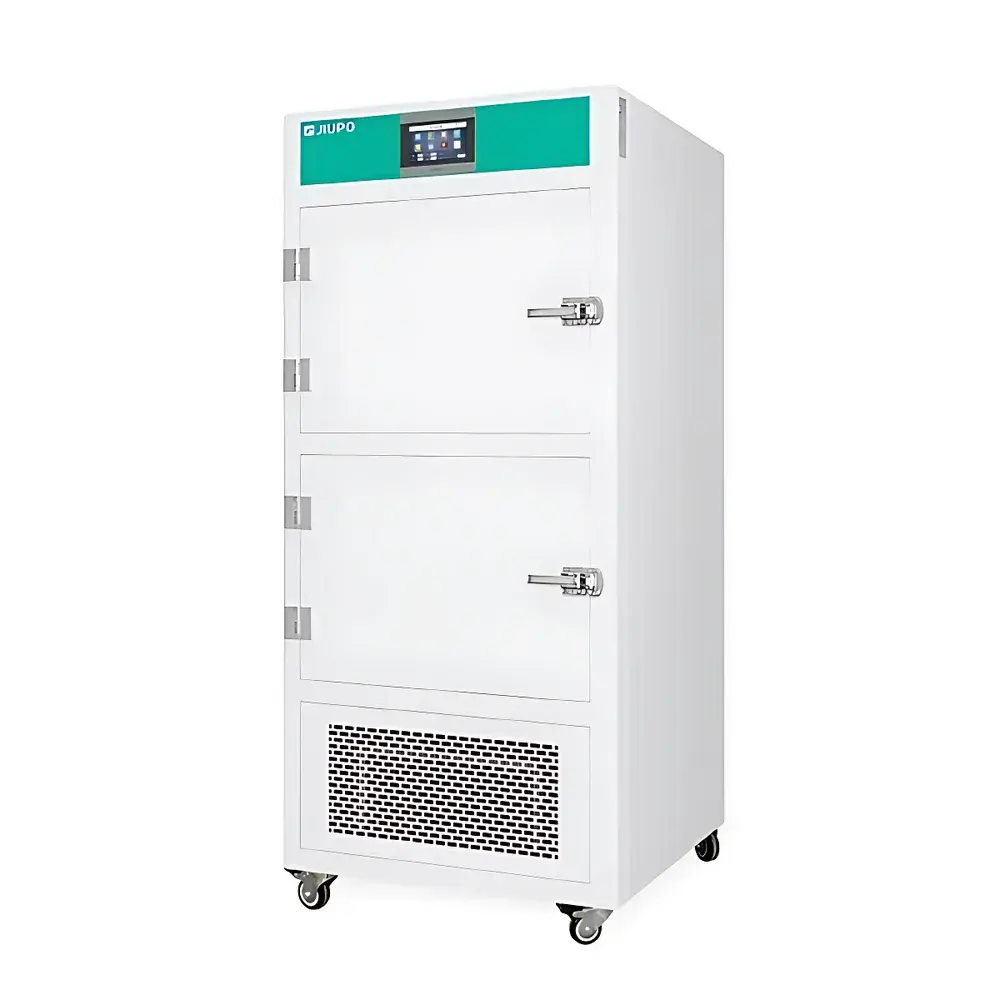
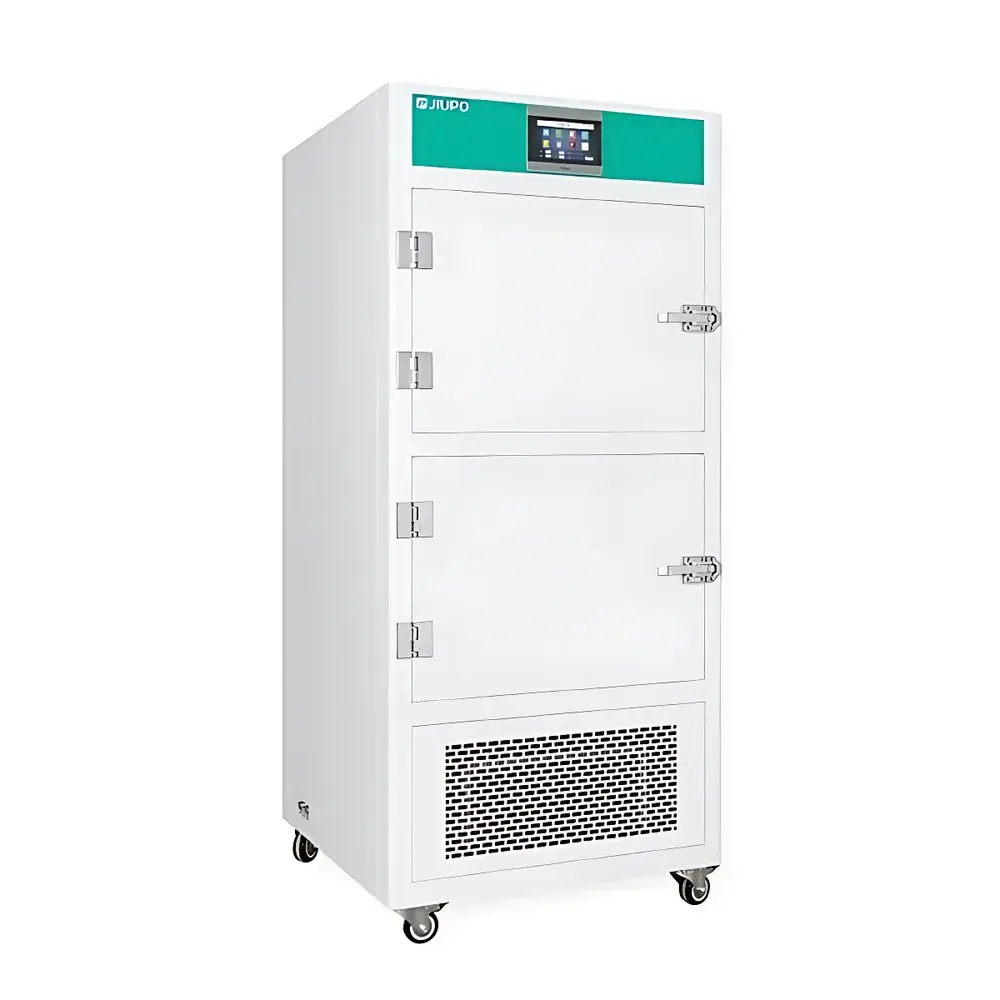
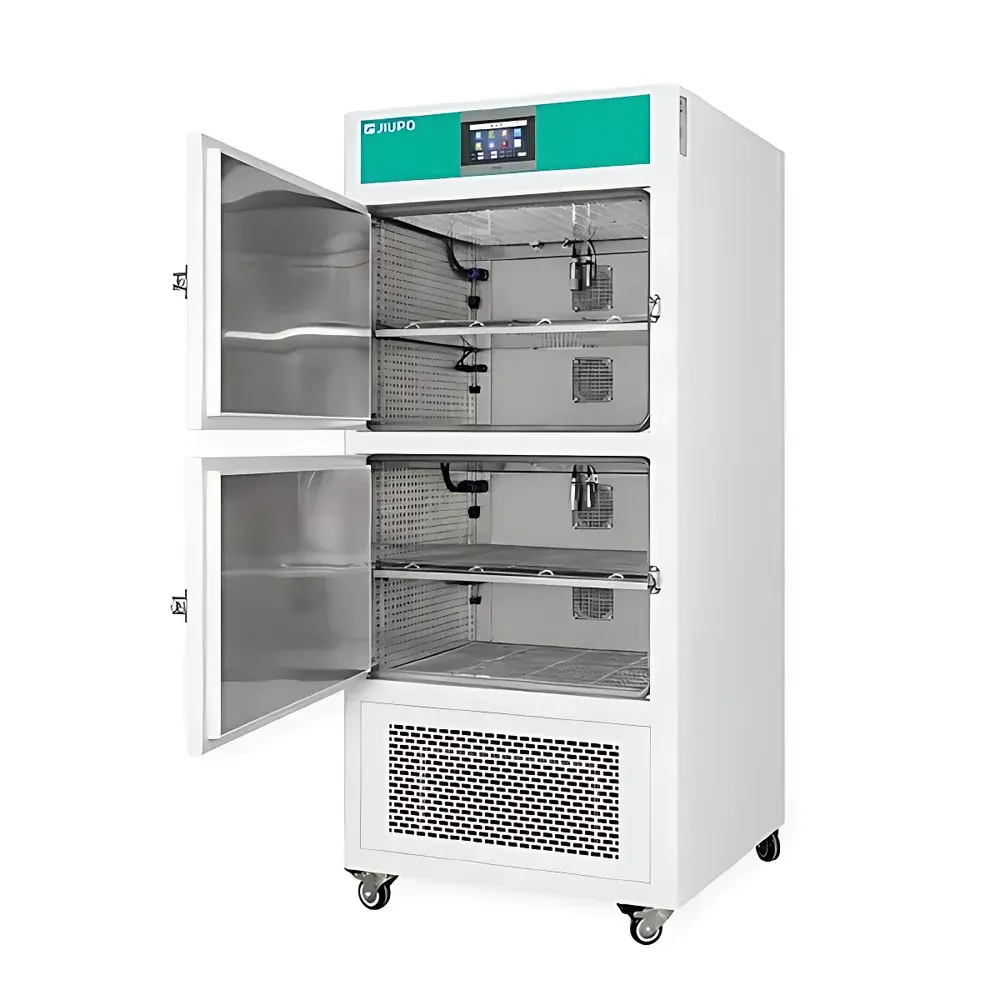
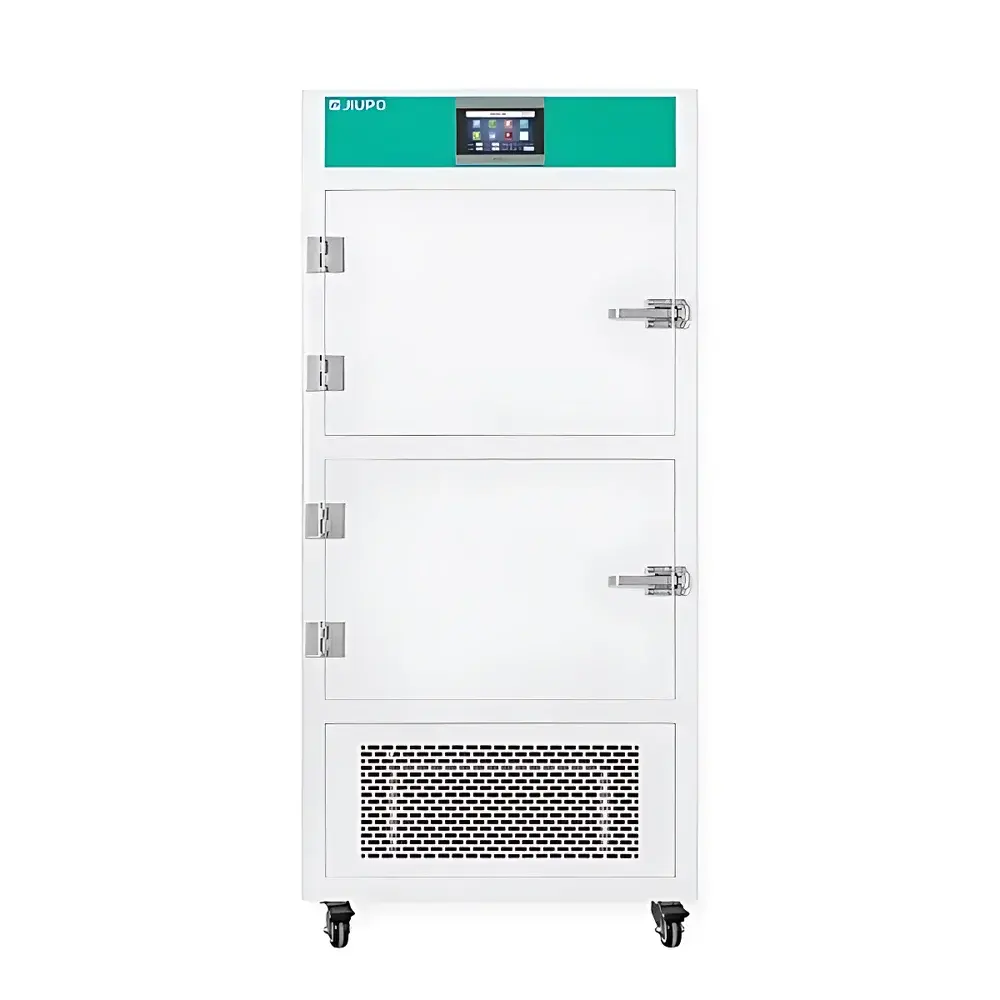
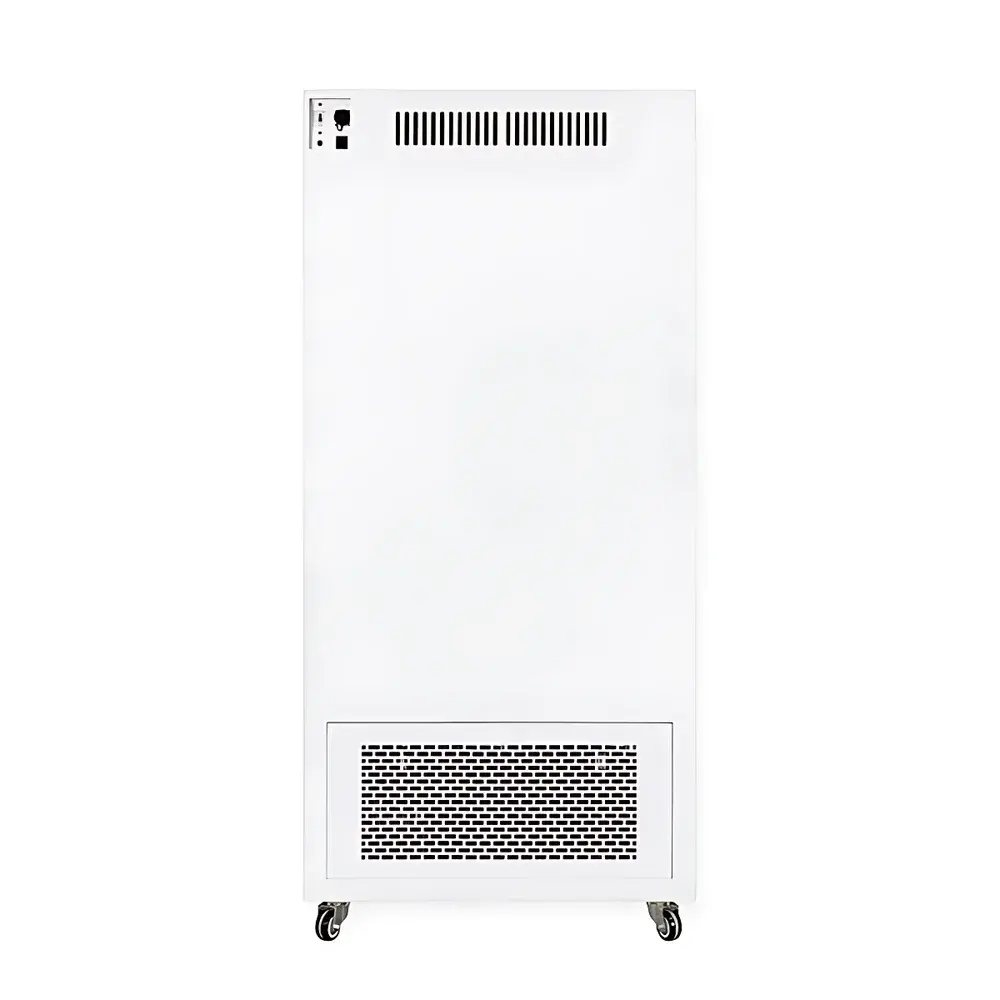
JIUPO TCC500D Plant Tissue Culture Incubator
| Brand | JIUPO |
|---|---|
| Origin | Fujian, China |
| Manufacturer Type | Direct Manufacturer |
| Product Category | Domestic |
| Model | TCC500D |
| Temperature Range | 3–45 °C (optional low-temp: −10–45 °C) |
| Internal Volume | 483 L |
| External Dimensions | 900 × 800 × 1940 mm |
| Temperature Accuracy | ±0.1 °C |
| Temperature Uniformity | ±2 °C |
| Temperature Stability (Fluctuation) | ≤0.5 °C |
| Standard Lighting | Full-spectrum LED (380–780 nm), 300 μmol/m²·s @ 10 cm |
| Optional Light Sources | Monochromatic LEDs (450 nm ±5 nm, 660 nm ±5 nm, 735 nm ±5 nm), RBIR, RBIRW, 18-band, UVA/UVB/UVC |
| Power Consumption | 3.3 kW (220 VAC / 50 Hz) |
| Operating Ambient Temperature | 5–35 °C |
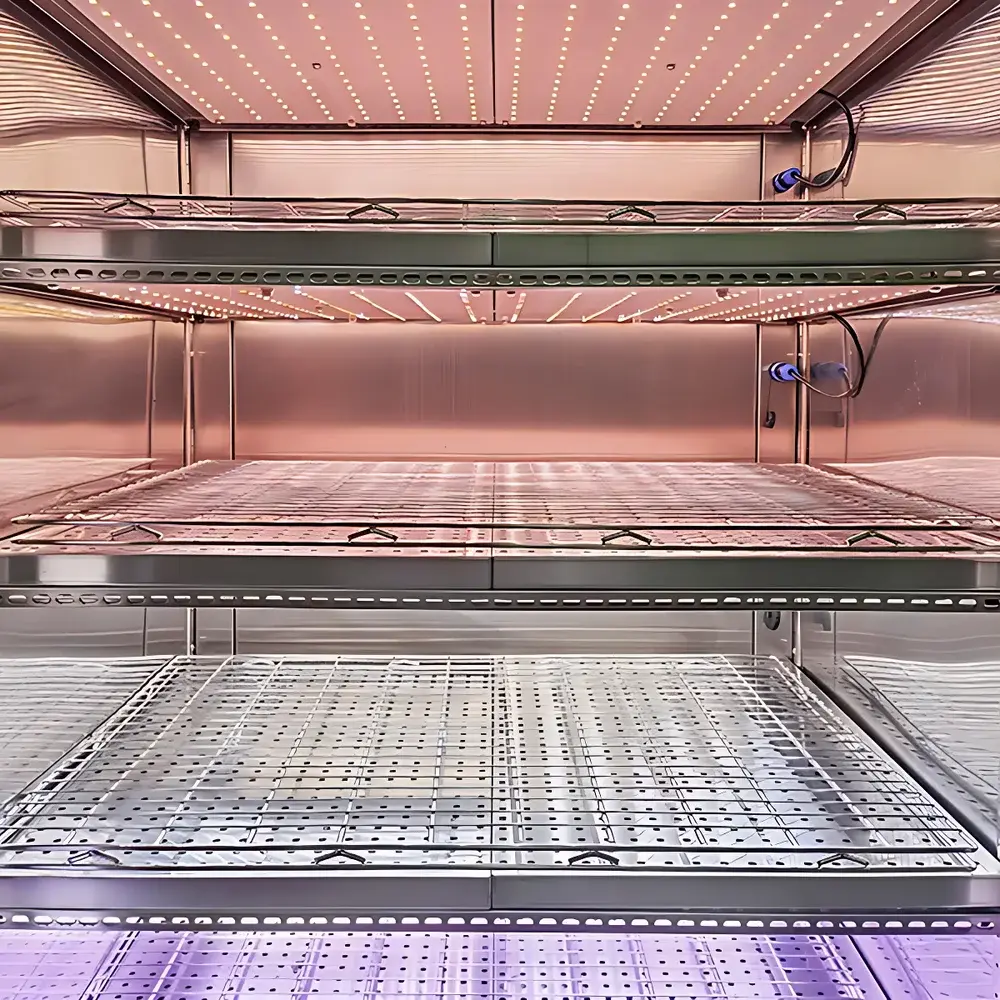
| Standard Illumination Layers | 2 × 2 (26 cm spacing) |
| Total Cultivation Area | 1.6 m² |
| Insulation | Polyurethane foam-in-place, stainless steel interior, piano-finish exterior |
Overview
The JIUPO TCC500D Plant Tissue Culture Incubator is a purpose-engineered environmental control system designed specifically for sterile in vitro propagation, micropropagation, callus induction, and photomorphogenic studies in plant biotechnology laboratories. It operates on a dual-axis environmental regulation principle—combining precision thermoregulation with spectrally tunable, intensity-modulated photosynthetic photon flux density (PPFD) delivery. Unlike general-purpose incubators, the TCC500D integrates a vertically oriented air circulation architecture (bottom-outlet, top-return) to eliminate thermal stratification across its dual-tier cultivation zones, ensuring uniform temperature distribution within ±2 °C throughout the 483 L internal chamber. Its core control logic employs a multi-loop PID algorithm with real-time feedback from redundant platinum resistance thermometers (PT100), enabling stable setpoint attainment within ±0.1 °C accuracy and ≤0.5 °C short-term fluctuation—meeting ISO 14644-1 Class 5 cleanroom-compatible stability requirements for sensitive explant cultures.
Key Features
- Patented vertical airflow design ensures homogeneous temperature distribution across all cultivation layers without dead zones or localized condensation.
- Dual-tier LED lighting platform (2 × 2 configuration, 26 cm inter-layer spacing) supports scalable photobiological experimentation with up to 1.6 m² total illuminated surface area.
- Full-spectrum continuous LED source (380–780 nm) delivering 300 μmol/m²·s PPFD at 10 cm, calibrated per CIE S 025/E:2015 photometric standards.
- Modular spectral options include monochromatic (450 nm, 660 nm, 735 nm), multi-band (RBIR, RBIRW), 18-channel programmable spectra, and UV-A/B/C modules—enabling wavelength-specific physiological response studies.
- Intelligent light dimming: 0–100% linear intensity control with time-based ramping profiles (e.g., sunrise/sunset simulation) to replicate diurnal photoperiod dynamics.
- Integrated thermal energy recovery system reduces HVAC load by >50% compared to conventional tissue culture incubators, validated per ISO 50001 energy management benchmarks.
- Stainless steel interior (AISI 304), polyurethane foam-in-place insulation (≥80 mm thickness), and seamless welded construction ensure long-term corrosion resistance and thermal integrity.
- Embedded web-enabled controller with local touchscreen interface and remote access via secure iOS/Android application supporting real-time monitoring, alarm logging, and firmware OTA updates.
Sample Compatibility & Compliance
The TCC500D accommodates standard tissue culture vessels—including Magenta boxes, Petri dishes (90–150 mm), conical flasks (100–500 mL), and multiwell plates—across both tiers without mechanical interference. Its sealed chamber design maintains ISO Class 5 particulate cleanliness when operated with optional HEPA-filtered recirculation mode. The system complies with ICH Q5D guidelines for cell line maintenance environments and supports GLP-compliant documentation through configurable audit trails (user actions, parameter changes, alarm events). All electrical components meet CE EN 61000-6-3 (EMC) and EN 61000-6-2 (immunity) standards; lighting modules conform to IEC 62471 Photobiological Safety classification (Risk Group 1). Optional low-temperature configuration (−10 °C to 45 °C) extends utility to cryopreservation pre-conditioning and cold-acclimation assays.
Software & Data Management
The embedded control system runs JIUPO’s proprietary TissueControl™ v3.2 firmware, featuring password-protected user roles (Operator, Supervisor, Administrator), event-driven scheduling (up to 99 programmable cycles), and automatic data logging at user-defined intervals (1 s–24 h resolution). All operational parameters—including temperature setpoints, light intensity curves, fan speed, and door-open duration—are timestamped and stored locally on industrial-grade SD card (16 GB encrypted). Remote data export supports CSV/Excel formats compatible with LIMS integration. Audit trail functionality satisfies FDA 21 CFR Part 11 requirements for electronic records and signatures, including immutable logs of user logins, parameter modifications, and alarm acknowledgments. Firmware updates are digitally signed and verified prior to installation.
Applications
- In vitro micropropagation of ornamental, medicinal, and crop species (e.g., Phalaenopsis, Artemisia annua, Solanum tuberosum) under reproducible photothermal regimes.
- Photomorphogenesis research: quantifying wavelength-specific effects on hypocotyl elongation, anthocyanin accumulation, and photoreceptor-mediated gene expression (e.g., phyA, cry1).
- Callus induction and somatic embryogenesis optimization using dynamic light spectrum switching between proliferation and differentiation phases.
- Abiotic stress modeling: controlled temperature ramping combined with adjustable UV-B exposure to study ROS signaling and antioxidant enzyme kinetics.
- Germplasm conservation workflows requiring long-term, low-metabolism storage conditions (e.g., slow-growth preservation at 5–10 °C).
- Teaching laboratory use: modular light configurations enable hands-on experiments in plant physiology, photobiology, and environmental sensing.
FAQ
What is the maximum number of independent light programs that can be scheduled simultaneously?
Up to 99 time-stamped light intensity and spectrum profiles can be programmed per day, with overlapping or sequential activation across different tiers.
Does the TCC500D support third-party LIMS integration?
Yes—via Modbus TCP or RESTful API (available under enterprise license), enabling bidirectional data exchange with major LIMS platforms including LabWare, STARLIMS, and Thermo Fisher SampleManager.
Can the incubator operate continuously for extended periods without maintenance?
Designed for 7×24 operation with MTBF ≥50,000 hours; recommended preventive maintenance includes quarterly HEPA filter inspection and annual calibration verification per ISO/IEC 17025 guidelines.
Is validation documentation provided for GxP environments?
IQ/OQ protocols and completed reports are included as standard; PQ support is available upon request with qualified vendor-supervised execution.
How does the thermal recovery system reduce energy consumption?
By capturing and reusing sensible heat from exhaust air via a counterflow heat exchanger, minimizing compressor cycling and reducing net cooling load—verified against ASHRAE Standard 90.1-2022 baseline models.



