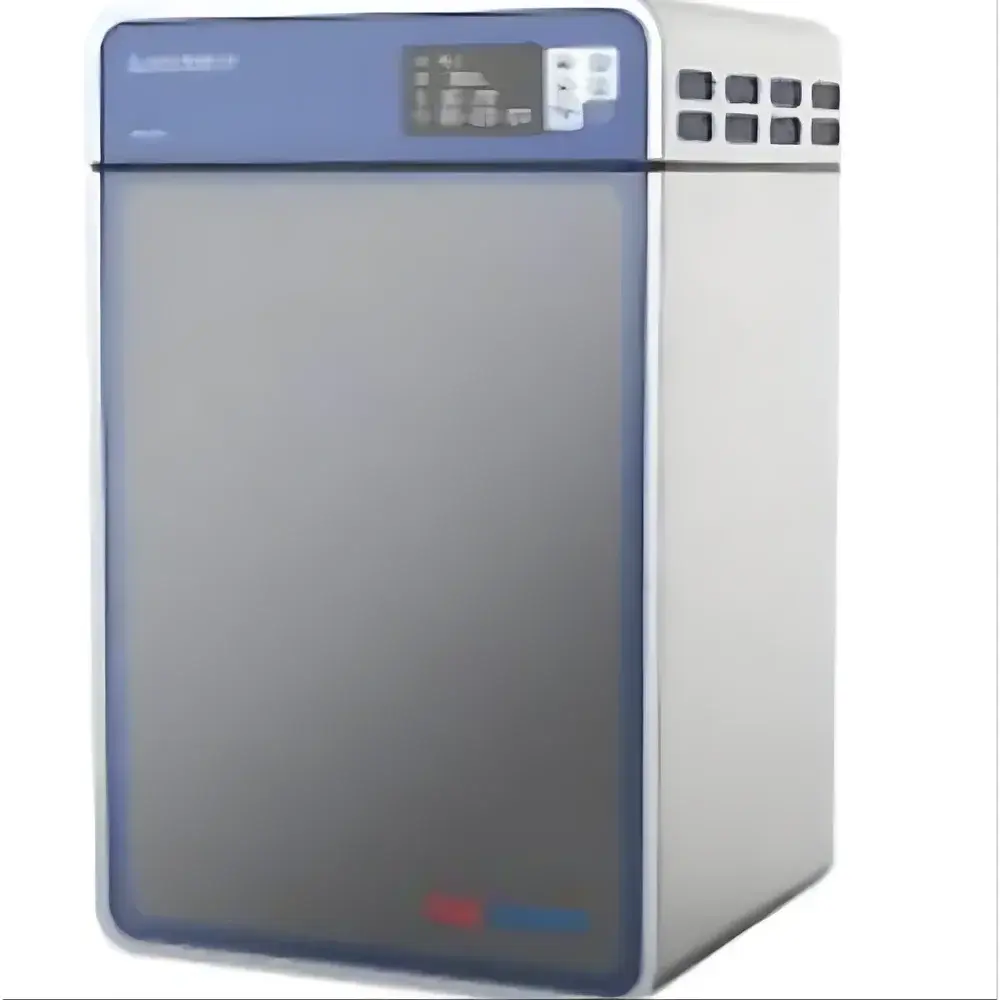
Supmile KBS-650 Digital Ultrasonic Cell Disruptor
| Brand | Supmile |
|---|---|
| Origin | Jiangsu, China |
| Manufacturer Type | Authorized Distributor |
| Country of Origin | China |
| Model | KBS-650 |
| Instrument Type | Ultrasonic Cell Disruptor |
| Operating Frequency | 20 kHz |
| Maximum Ultrasonic Power Output | 650 W |
| Adjustable Power Range | 0–100% |
| Sample Volume Capacity | 0.5–500 mL |
| Processing Volume per Cycle | Up to 600 mL |
| Probe Diameter Options | Φ2, Φ3, Φ8 (standard), Φ10, Φ12, Φ15 mm |
| Duty Cycle Adjustment | 1–999 s |
| Timer Range | 0–24 h |
| Transducer Material | TC4 Titanium Alloy |
| Safety Features | Overload Protection, Audible/Visual Alarm, LED Illuminated Touch Interface, Motorized Vertical Probe Positioning with Wireless Remote Control |
| Structural Design | Modular Stackable Assembly (Optional Integrated or Separated Generator–Transducer Configuration) |
Overview
The Supmile KBS-650 Digital Ultrasonic Cell Disruptor is an engineered solution for controlled mechanical lysis of biological cells in research and development laboratories. It operates on the principle of high-intensity ultrasonication—generating acoustic cavitation in liquid media through a piezoelectric transducer coupled to a titanium alloy probe (sonotrode). At its nominal operating frequency of 20 kHz, the device produces localized microbubble formation, rapid collapse, and resultant hydrodynamic shear forces, microstreaming, and shockwaves. These physical phenomena induce membrane rupture, organelle release, and intracellular content dispersion without significant thermal denaturation when operated under optimized duty cycles and cooling conditions. Designed for reproducible sample preparation in molecular biology, protein extraction, nucleic acid isolation, and nanoparticle dispersion workflows, the KBS-650 delivers consistent energy delivery across variable sample volumes—from microliter-scale microtubes to 500 mL jacketed beakers—making it suitable for both benchtop discovery and pre-analytical processing in regulated environments.
Key Features
- Digital touch interface with real-time display of power output (%), elapsed time, and remaining cycle duration—enabling precise protocol replication.
- Motorized vertical positioning system with wireless remote control and integrated LED illumination for ergonomic operation and visual confirmation of probe immersion depth.
- TC4 titanium alloy transducer assembly offering superior electroacoustic conversion efficiency (>92%), corrosion resistance, and extended service life under continuous high-power operation.
- Modular stackable architecture supporting either integrated (compact footprint) or decoupled (transducer + generator) configurations—facilitating maintenance, calibration, and lab-space optimization.
- Comprehensive safety suite including automatic overload cutoff, temperature-sensitive shutdown (optional external probe sensor), audible alarm, and visual fault indicators compliant with IEC 61010-1 electrical safety standards.
- Adjustable pulse mode (1–999 s duty cycle) and continuous operation modes—critical for heat-sensitive samples such as enzymes, antibodies, or viral vectors.
Sample Compatibility & Compliance
The KBS-650 accommodates a broad range of biological matrices: suspension cultures (E. coli, yeast, mammalian cells), tissue homogenates, plant extracts, and synthetic colloids. Its standard Φ8 mm probe ensures optimal energy transfer for volumes between 10–200 mL; optional probes (Φ2–Φ15 mm) extend applicability to low-volume microcentrifuge tubes or large-volume bioreactor samples. All wetted parts are constructed from medical-grade stainless steel and titanium—non-leaching, autoclavable, and compatible with common solvents (ethanol, isopropanol, aqueous buffers). While not certified to ISO 13485 or FDA 21 CFR Part 11 out-of-the-box, the instrument’s deterministic parameter logging (via optional RS232/USB data export) supports GLP/GMP-aligned documentation when integrated into validated SOPs. It meets CE marking requirements for laboratory equipment (EMC Directive 2014/30/EU and Low Voltage Directive 2014/35/EU).
Software & Data Management
The embedded firmware supports full parameter recall and storage of up to 20 user-defined protocols—including power setpoint, duration, pulsing sequence, and probe type. Time-stamped operational logs (start/stop timestamps, power deviation alerts, fault codes) can be exported via USB to CSV format for audit trail generation. Though no proprietary PC software is bundled, the device responds to standard SCPI-like serial commands, enabling integration with LabVIEW, Python-controlled automation frameworks, or LIMS systems via TTL-level UART interface. For regulated labs, third-party validation packages (IQ/OQ documentation templates) are available upon request to support installation and operational qualification.
Applications
- Preparation of whole-cell lysates for SDS-PAGE and Western blotting.
- Chromatin shearing in ChIP-seq workflows (when combined with optimized buffer systems and ice-jacketed vessels).
- Disruption of Gram-negative and Gram-positive bacteria for plasmid DNA purification.
- Homogenization of frozen plant tissues prior to RNA extraction.
- Nanoparticle deagglomeration and liposome size reduction in formulation development.
- Accelerated solvent extraction of secondary metabolites from botanical materials.
FAQ
What is the recommended maximum continuous operating time per cycle?
The device supports up to 24 hours of scheduled operation, but for thermal management and probe longevity, uninterrupted sonication beyond 5 minutes is discouraged without active cooling (e.g., ice-water bath or recirculating chiller).
Can the KBS-650 be used for in vivo or clinical applications?
No. This instrument is strictly intended for in vitro research use only and is not designed, tested, or approved for diagnostic, therapeutic, or human-use applications.
Is calibration traceable to national standards?
Power output calibration is performed at the factory using NIST-traceable acoustic power meters (IAA-2000 series). Certificate of Conformance is provided; full metrological calibration services are available through authorized service centers.
How does probe selection affect energy density and sample heating?
Smaller-diameter probes concentrate acoustic energy into smaller volumes—increasing intensity (W/cm²) but reducing penetration depth. Larger probes distribute energy more broadly, requiring longer exposure times but minimizing localized overheating in viscous or dense suspensions.