
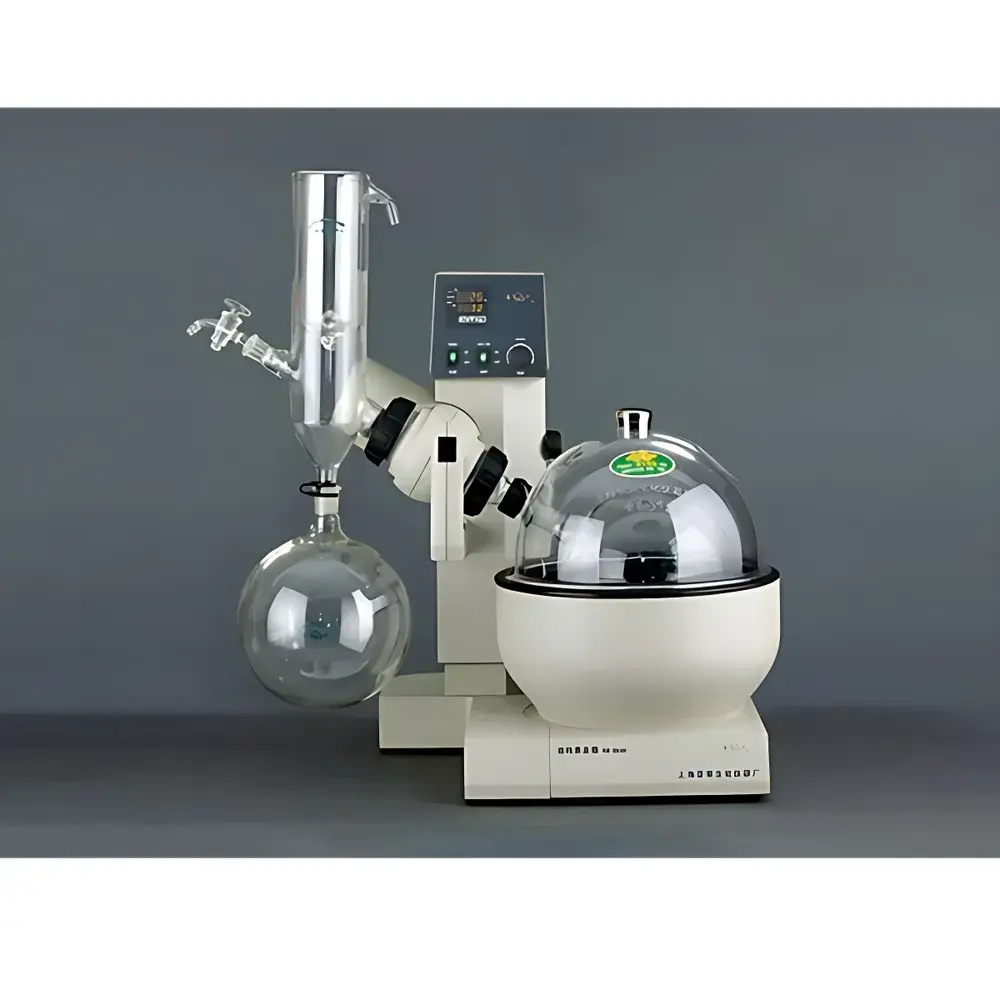
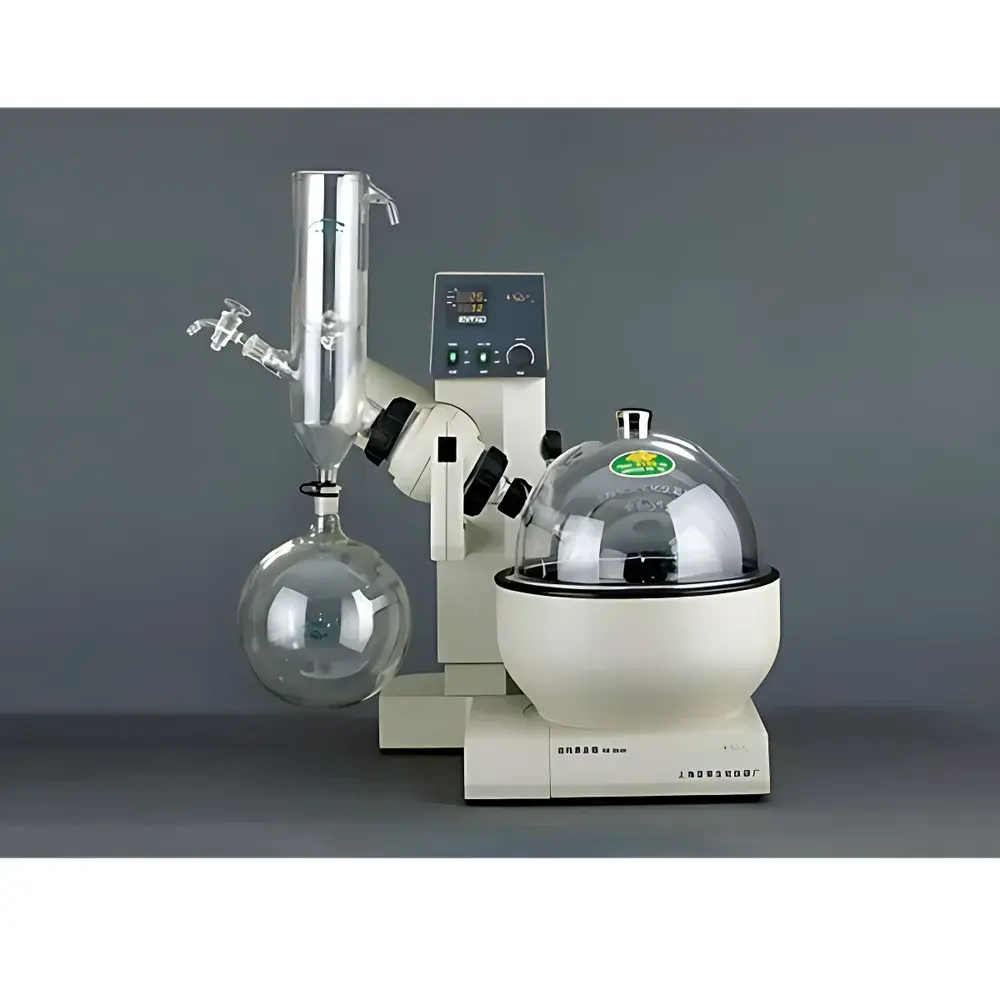
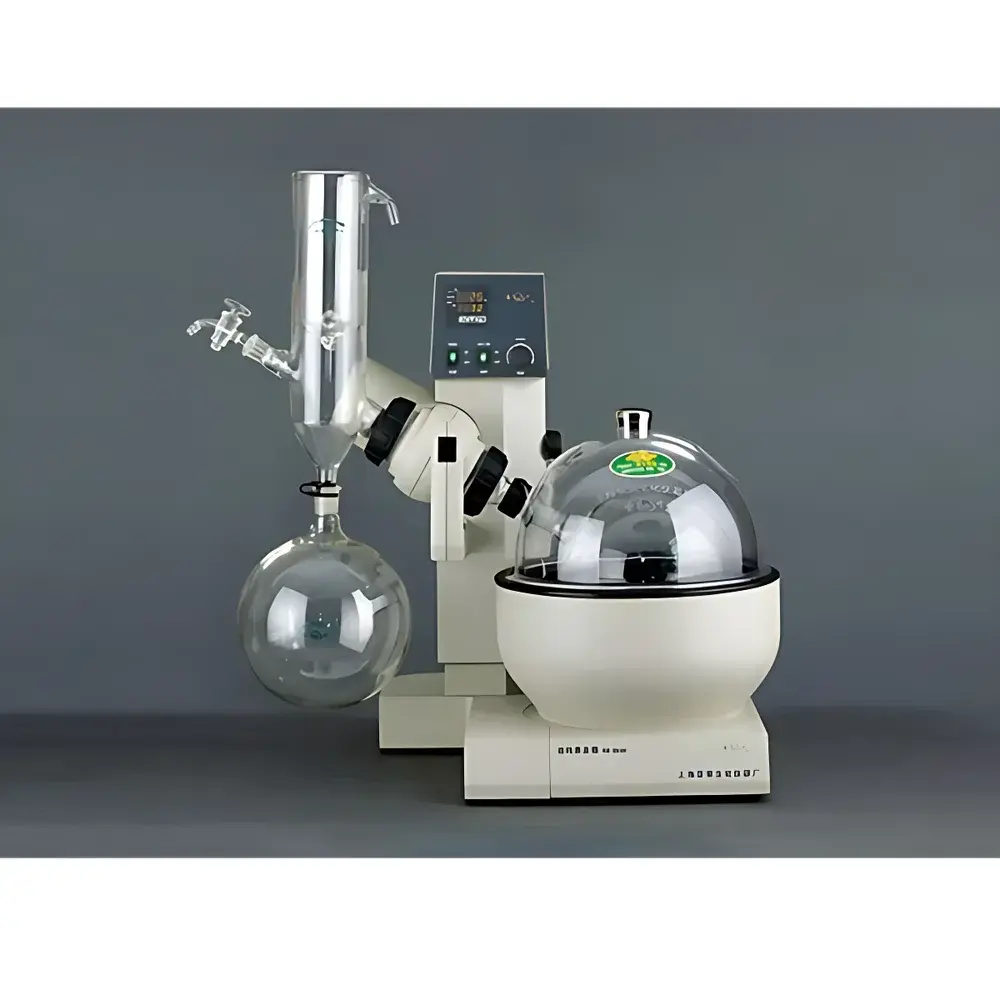
Yarong RE-3000D Rotary Evaporator
| Brand | Yarong |
|---|---|
| Origin | Shanghai, China |
| Manufacturer Type | Authorized Distributor |
| Region of Manufacture | Domestic (China) |
| Model | RE-3000D |
| Pricing | Upon Request |
| Drive Mechanism | Electronically Controlled Stepless Speed Regulation |
| Speed Range | 0–200 rpm |
| Heating Bath Capacity | 8 L |
| Bath Material | PTFE-Coated Stainless Steel |
| Heating Power | 1.2 kW |
| Bath Temperature Control | Digital PID, 0–99 ±1 °C |
| Motor Power | 40 W |
| Vertical Lift Range | 0–150 mm (Motorized Auto-Adjustment) |
| Condenser Type | Cold-Finger Dry Ice Condenser with Spiral Coiled Design |
| Cooling Medium | Dry Ice / Ethanol or Liquid Nitrogen |
| Evaporation Flask Compatibility | 50–3000 mL (Standard Taper Ground Glass Joints) |
| Collection Flask | Detachable, Standard Taper Joint |
| Feed Tube | Valve-Controlled PTFE Tubing with Flow Regulator |
| Sealing System | Fluoroelastomer (FKM) Vacuum Gaskets |
| Safety Enclosure | Full-Height Transparent Acrylic Shield |
| Dimensions (W×D×H) | 450 × 420 × 850 mm |
| Power Supply | 220 V AC, 50 Hz |
Overview
The Yarong RE-3000D Rotary Evaporator is an engineered laboratory system designed for efficient solvent removal, concentration, and recovery under controlled reduced-pressure conditions. It operates on the principle of rotary evaporation—rotating a sample-containing flask in a heated water bath while applying vacuum to lower the boiling point of solvents. This configuration maximizes surface area exposure and promotes uniform heat transfer, significantly accelerating evaporation kinetics without thermal degradation of thermolabile compounds. The RE-3000D is widely deployed in synthetic organic chemistry, pharmaceutical process development, natural product isolation, and quality control laboratories where reproducible, scalable, and operator-safe solvent handling is essential. Its modular architecture supports integration into GLP-compliant workflows and routine QC/QA protocols across academic, industrial, and regulatory environments.
Key Features
- PTFE-coated stainless steel heating bath (8 L capacity) with digital PID temperature control (0–99 ±1 °C), ensuring thermal stability and corrosion resistance.
- Stepless electronic speed regulation (0–200 rpm) via front-panel rotary knob, enabling precise optimization of film formation and evaporation rate for diverse viscosities.
- Motorized vertical lift mechanism (0–150 mm travel) with tactile rocker-switch operation—press upper segment to raise, lower segment to descend—reducing manual strain and improving repeatability.
- Cold-finger condenser with spiral internal coil geometry, fabricated from borosilicate glass (ISO 3585 compliant), optimized for high-efficiency vapor capture using dry ice/ethanol or liquid nitrogen coolant.
- Full-height transparent acrylic safety shield, providing splash, aerosol, and thermal protection while permitting real-time visual monitoring of evaporation dynamics.
- Fluoroelastomer (FKM) vacuum sealing gaskets and PTFE-lined feed tubing ensure long-term chemical compatibility with aggressive solvents including chlorinated hydrocarbons, esters, and strong acids.
- Ergonomic design elements include quick-coupling rotating flask retention collar (clockwise lock / counterclockwise release) and adjustable tilt-angle locking mechanism for optimal bath immersion alignment.
Sample Compatibility & Compliance
The RE-3000D accommodates standard-taper ground-glass jointed flasks (ISO 2796, DIN 12252) ranging from 50 mL to 3000 mL, supporting both batch and semi-continuous operation. Its vacuum integrity (< 10 mbar typical operating range) and inert wetted materials meet requirements for handling Class II and III solvents per NFPA 30 and OSHA 1910.1200. While not certified to IEC 61010-1 as a standalone unit, its electrical subsystems comply with CE-marked safety principles applicable to laboratory equipment in the EU. The system supports documentation practices aligned with FDA 21 CFR Part 11 when paired with validated external data logging software and audit-trail-enabled controllers.
Software & Data Management
The RE-3000D operates as a stand-alone analog-digital hybrid instrument with no embedded microprocessor or network interface. All operational parameters—including bath temperature, rotation speed, and lift position—are manually set and visually monitored via LED displays and mechanical indicators. For traceable operation in regulated environments, users may integrate third-party USB or RS-485 data loggers (e.g., Omega OM-DAQPRO series) to record time-stamped temperature and speed profiles. Calibration records for temperature sensors and speed encoders should be maintained per ISO/IEC 17025 guidelines for testing laboratories.
Applications
- Solvent removal during workup of Grignard, Suzuki, and Heck reaction mixtures.
- Concentration of ethanolic plant extracts prior to HPLC fractionation.
- Recovery of ethyl acetate, dichloromethane, and toluene from API synthesis streams.
- Drying of moisture-sensitive organometallic intermediates under inert gas–purged vacuum.
- Preparative-scale removal of low-boiling solvents (e.g., pentane, diethyl ether) in compliance with ASTM D86 distillation methodology.
- Teaching laboratory demonstrations of colligative properties and phase-equilibrium behavior under sub-atmospheric pressure.
FAQ
What vacuum level is recommended for optimal performance with the RE-3000D?
A stable base pressure between 5–20 mbar is typically sufficient for most low-to-medium boiling solvents; deeper vacuum (< 5 mbar) may be required for high-boiling-point or heat-sensitive compounds.
Can the RE-3000D be used with corrosive solvents such as concentrated HCl or bromine solutions?
Only with appropriate secondary containment and verified FKM gasket compatibility; direct contact with uncoated metal components or non-PTFE surfaces is not advised.
Is the heating bath temperature calibration traceable to NIST standards?
Calibration must be performed externally using a NIST-traceable thermometer; the built-in sensor is factory-calibrated but requires periodic verification per laboratory SOP.
Does the RE-3000D support inert gas backfilling during evaporation?
Yes—via optional inlet valve assembly (not included); compatible with nitrogen or argon purge lines for oxygen-sensitive applications.
What maintenance intervals are recommended for long-term reliability?
Fluoroelastomer seals should be inspected quarterly; PTFE bath coating integrity assessed annually; vacuum pump oil changed per manufacturer specifications (typically every 200 operating hours).
Related Products



