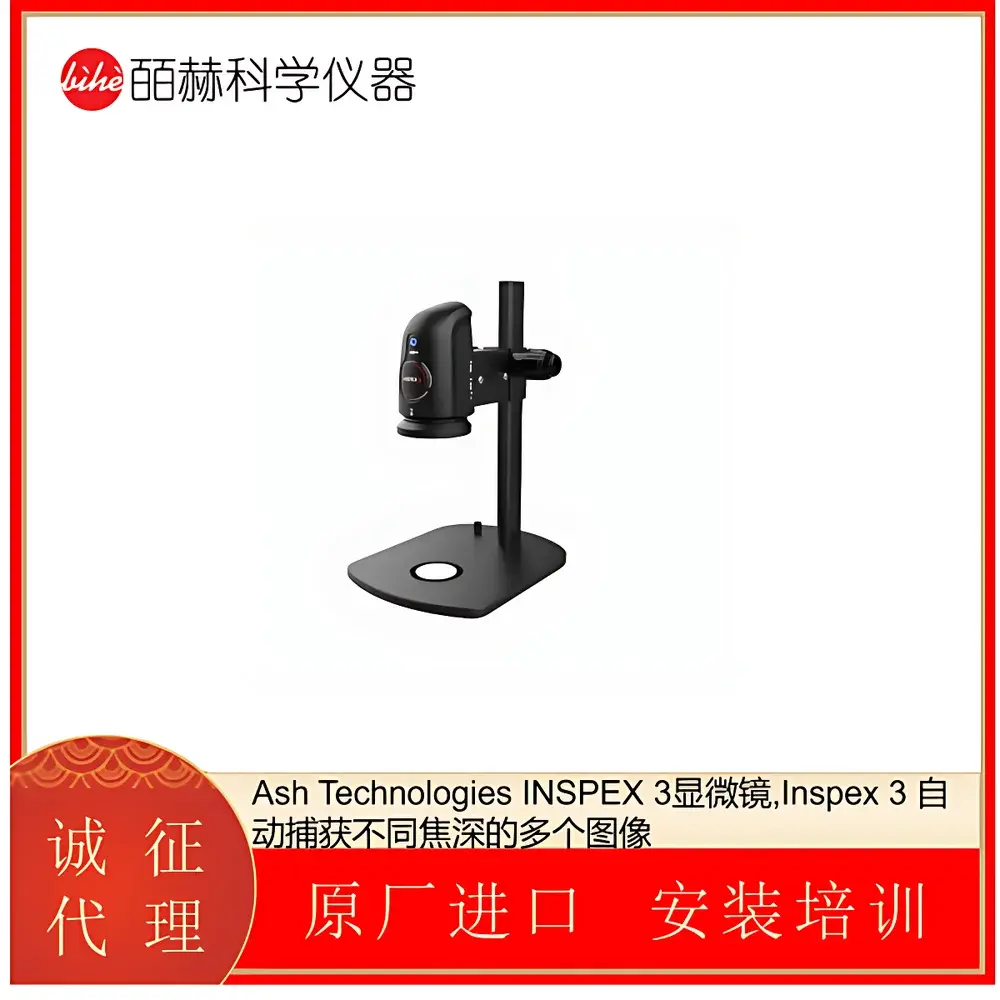
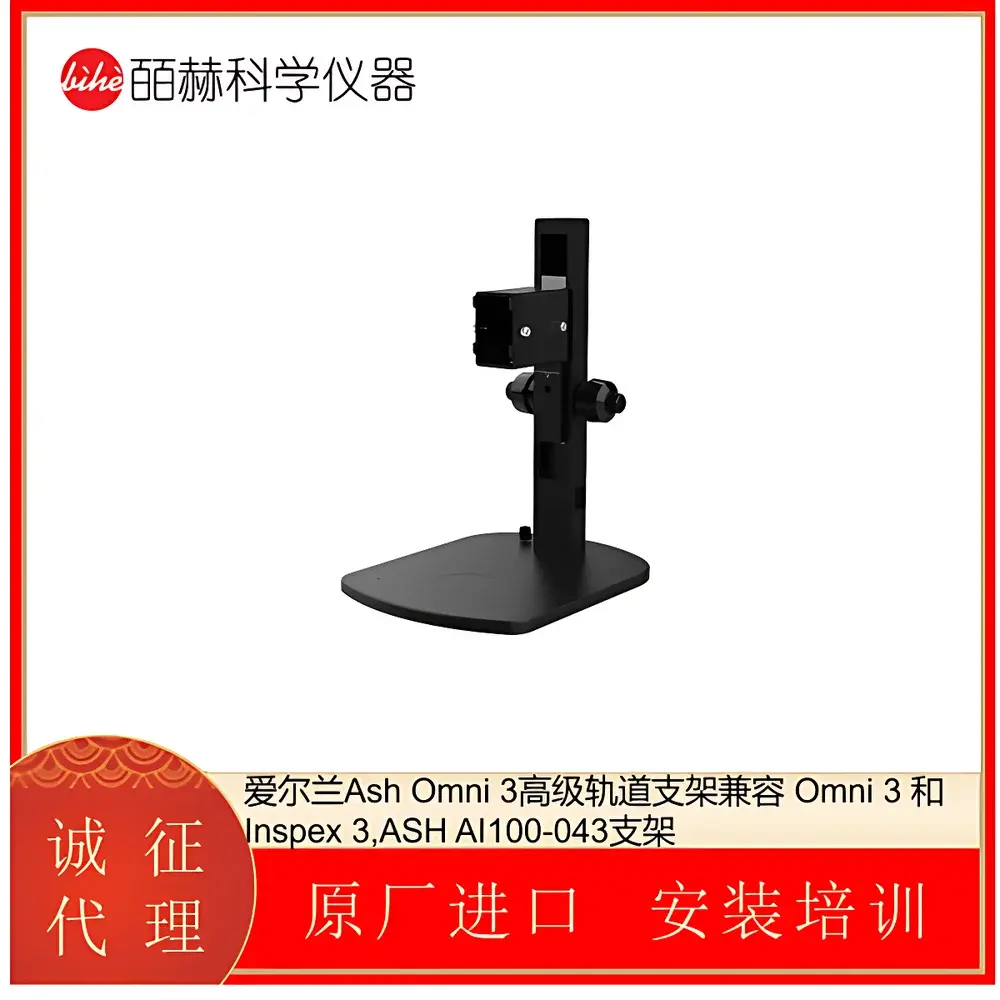
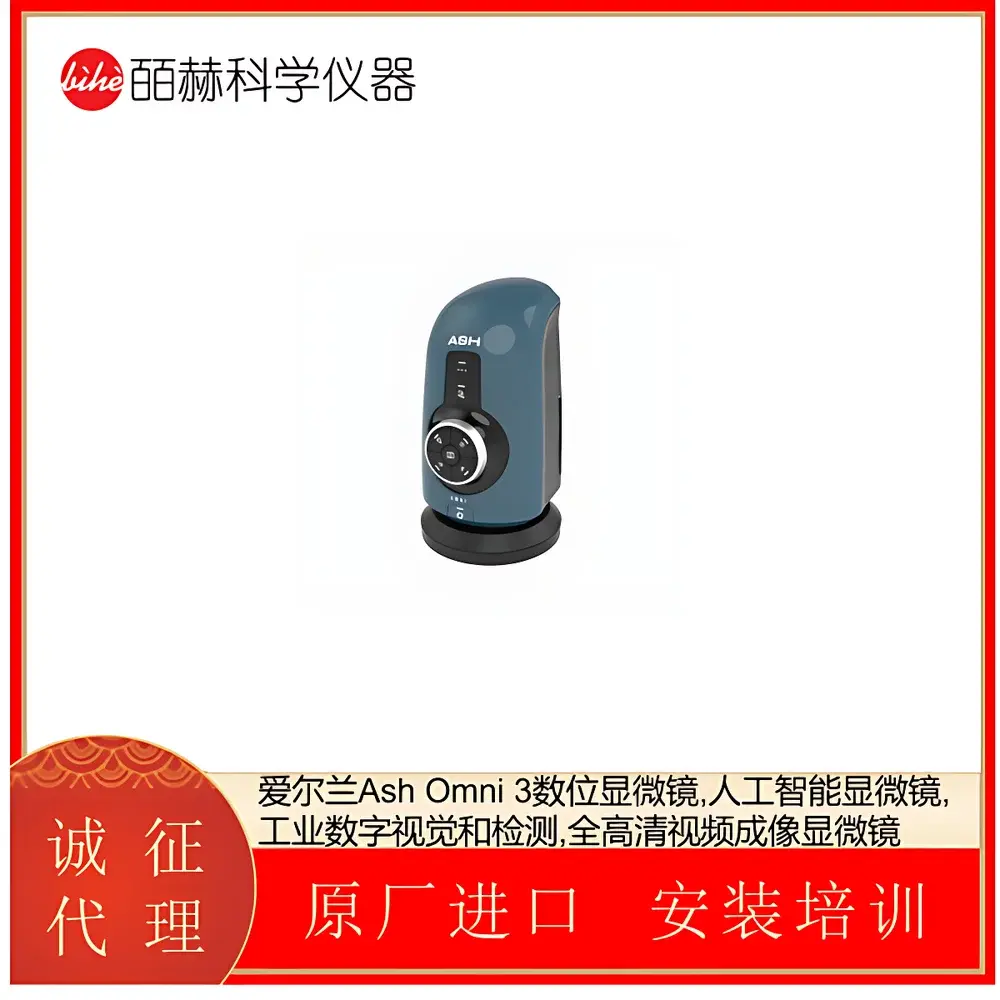
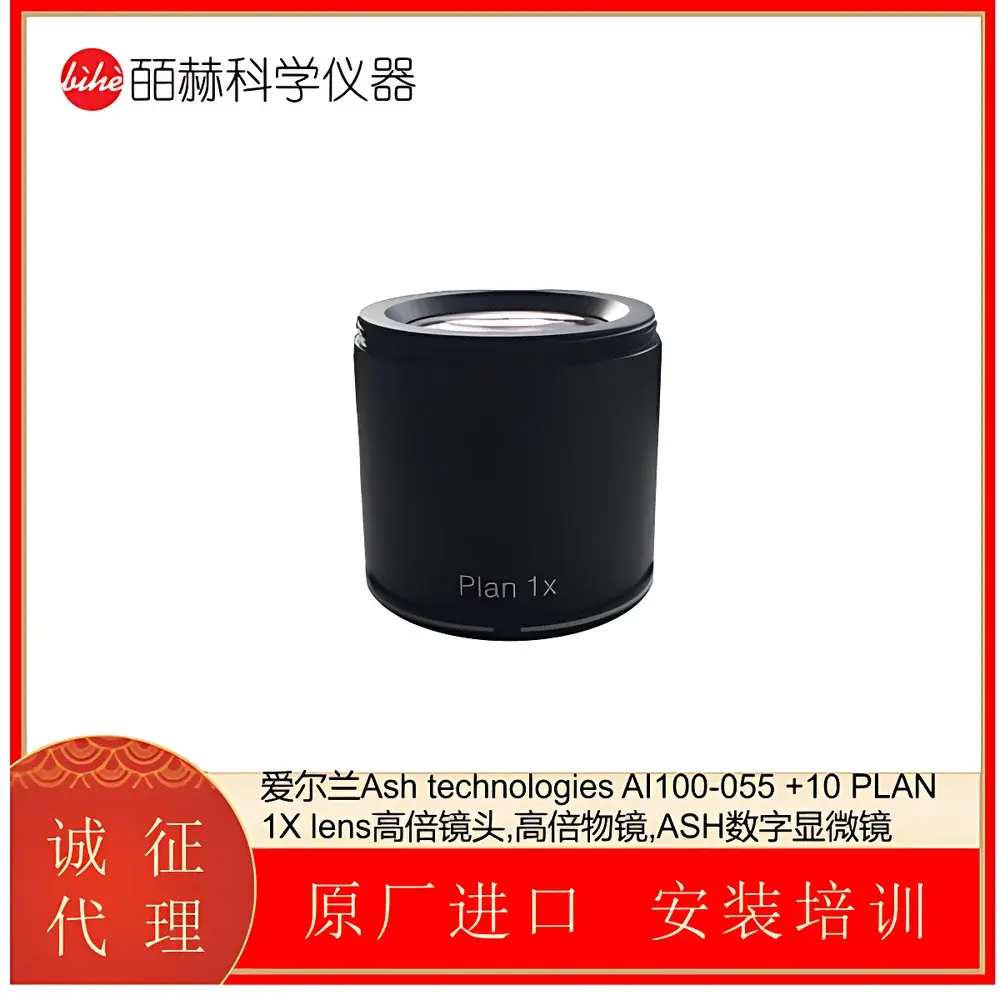
ASH Technologies INSPEX 3 Digital Microscope
| Brand | ASH Technologies |
|---|---|
| Origin | Ireland |
| Model | INSPEX 3 |
| Camera Resolution | 1920 × 1080 px |
| Optical Magnification Range | 2.1× – 65.6× (with optional +5 lens up to 131.6×) |
| Digital Magnification Range | 65.6× – 1256.1× |
| Working Distance | 195 mm – 34 mm |
| Depth of Field | 80 mm – 4 µm |
| Video Latency | 17–20 ms |
| Interface | HDMI, DVI, USB 2.0 (×4), Mini-USB, General-purpose I/O (×3) |
| Internal Storage | 16 GB |
| Power Supply | 24 V DC |
| Dimensions | 216 × 165 × 170 mm |
| Weight | 1.5 kg |
| Operating Temperature | 5°C – 40°C |
| Storage Temperature | 10°C – 60°C |
Overview
The ASH Technologies INSPEX 3 is a high-resolution, industrial-grade digital microscope engineered for precision visual inspection in regulated and high-accuracy manufacturing environments. Unlike conventional optical microscopes reliant on eyepieces and manual focus, the INSPEX 3 employs a fixed-optics, high-sensitivity CMOS imaging system coupled with real-time computational image processing. Its core architecture is built around multi-plane image acquisition and depth-aware fusion—enabling extended-depth-of-field (EDF) imaging without mechanical Z-axis translation. This eliminates parallax error, reduces operator fatigue, and ensures consistent focal plane registration across repeated inspections—a critical requirement in medical device verification, pharmaceutical component validation, and fine-pitch electronics assembly. Designed and assembled in Ireland, the system complies with CE marking directives and meets essential requirements for electromagnetic compatibility (EMC) and low-voltage safety (LVD). Its modular hardware platform supports integration into automated inspection workflows via standardized I/O triggers and programmable GPIO signals.
Key Features
- Extended Depth of Field (EDF) Image Stacking: The INSPEX 3 automatically captures a sequence of images at discrete focal planes and fuses them into a single, fully focused composite using proprietary pixel-level depth mapping algorithms—eliminating manual refocusing and height adjustment.
- Ultra-Fast Auto-Focus™: Delivers sub-50 ms focus convergence across the full working distance range (34–195 mm), enabling rapid part-to-part transition in high-throughput production lines.
- SpotFocus™ Technology: Allows dynamic region-of-interest (ROI) focusing via mouse cursor positioning—ideal for inspecting heterogeneous surfaces with variable topography or multi-level assemblies.
- AshCal™ Calibration Suite: Provides traceable 2D measurement capability (distance, angle, area, radius) with user-defined calibration standards; supports NIST-traceable reference targets and GLP-compliant audit trails.
- Real-Time Graticule Overlay & Annotation: Enables on-screen measurement annotation, pass/fail threshold overlays, and customizable reporting templates directly within the native software interface.
- Low-Latency Imaging Pipeline: Sustains ≤20 ms end-to-end video latency at 60 Hz frame rate—critical for live-guided manual inspection and synchronized motion control applications.
Sample Compatibility & Compliance
The INSPEX 3 accommodates samples ranging from large PCB substrates (up to 240 mm × 135 mm field of view at lowest magnification) to sub-millimeter biomedical components (e.g., stent struts, microfluidic channels, or wire-bond joints). Its long working distance configuration supports non-contact inspection of heat-sensitive, fragile, or vacuum-integrated specimens. The system meets ISO 10993 biocompatibility guidance for equipment used in cleanroom-adjacent settings and aligns with ASTM E2912–21 for digital microscopy validation in quality assurance. For regulated industries, firmware supports timestamped image metadata embedding (EXIF v2.31), secure user authentication, and configurable audit logging compliant with FDA 21 CFR Part 11 requirements when deployed with validated IT infrastructure.
Software & Data Management
INSPEX Control Center v4.x provides a deterministic, deterministic Windows-based application with dual-mode operation: standalone embedded mode (using onboard 16 GB eMMC storage) and networked client-server deployment. All captured images and videos are stored with embedded calibration parameters, operator ID, timestamp, and instrument configuration hash—ensuring data integrity and reproducibility. Export formats include TIFF (uncompressed), JPEG2000 (lossless compression), and AVI (uncompressed RGB). Batch reporting supports CSV/Excel export of measurement datasets with statistical process control (SPC) fields (mean, std dev, Cp/Cpk). Optional API access enables integration with MES platforms (e.g., Siemens Opcenter, Rockwell FactoryTalk) via RESTful endpoints and OPC UA protocol adapters.
Applications
- Medical device manufacturing: Verification of laser-cut stent edge quality, suture needle tip geometry, and catheter lumen uniformity.
- Pharmaceutical packaging: Inspection of blister seal integrity, tablet surface defects, and printed lot/batch codes under controlled lighting conditions.
- Precision engineering: Measurement of gear tooth profile deviation, bearing raceway roughness indicators, and weld seam penetration depth.
- Electronics assembly: Solder joint void analysis, BGA ball coplanarity assessment, and flex circuit trace continuity verification.
- Academic and failure analysis labs: Correlative documentation of cross-sectioned samples prior to SEM or X-ray CT analysis.
FAQ
Does the INSPEX 3 support calibration traceability to national standards?
Yes—AshCal™ allows import of certified reference artifacts (e.g., NIST SRM 2051, PTB micrometer standards); calibration records include uncertainty budgets per ISO/IEC 17025 guidelines.
Can the system be integrated into an existing factory automation network?
Yes—via Ethernet-connected control PC or direct GPIO triggering; supported protocols include Modbus TCP, MQTT, and custom DLL-based SDK for C++/C# development.
Is FDA 21 CFR Part 11 compliance available out-of-the-box?
The base firmware includes electronic signature prompts, audit trail logging, and role-based access control; full Part 11 validation requires site-specific IQ/OQ/PQ documentation and IT environment assessment.
What is the maximum supported monitor resolution for live display?
Native HDMI/DVI output supports up to 1920 × 1080 @ 60 Hz; higher-resolution displays operate in downscale mode with preserved aspect ratio and pixel-perfect scaling.
Are replacement lenses or optical accessories available?
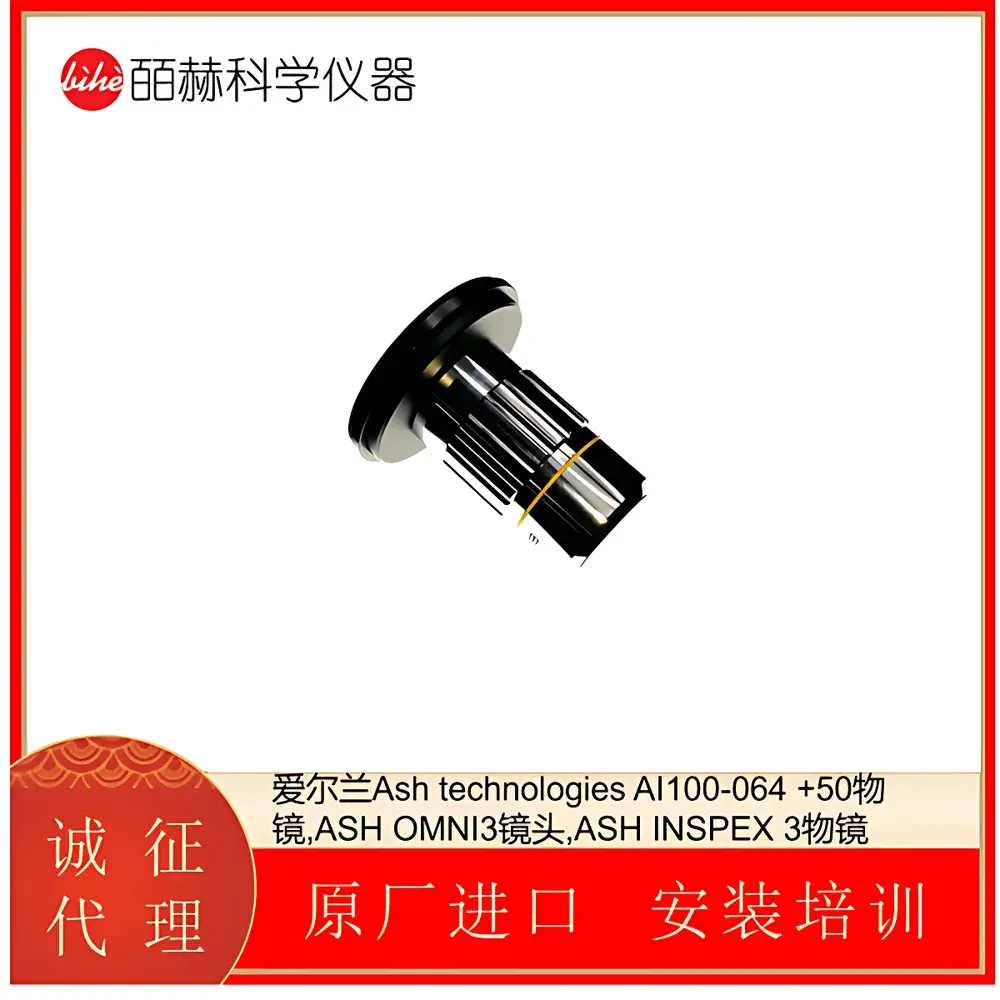
Yes—ASH offers interchangeable objective modules (0.5×, 1×, 2×, 5×), coaxial illumination adapters, and polarized light kits—all mechanically registered and optically calibrated to maintain measurement fidelity.