
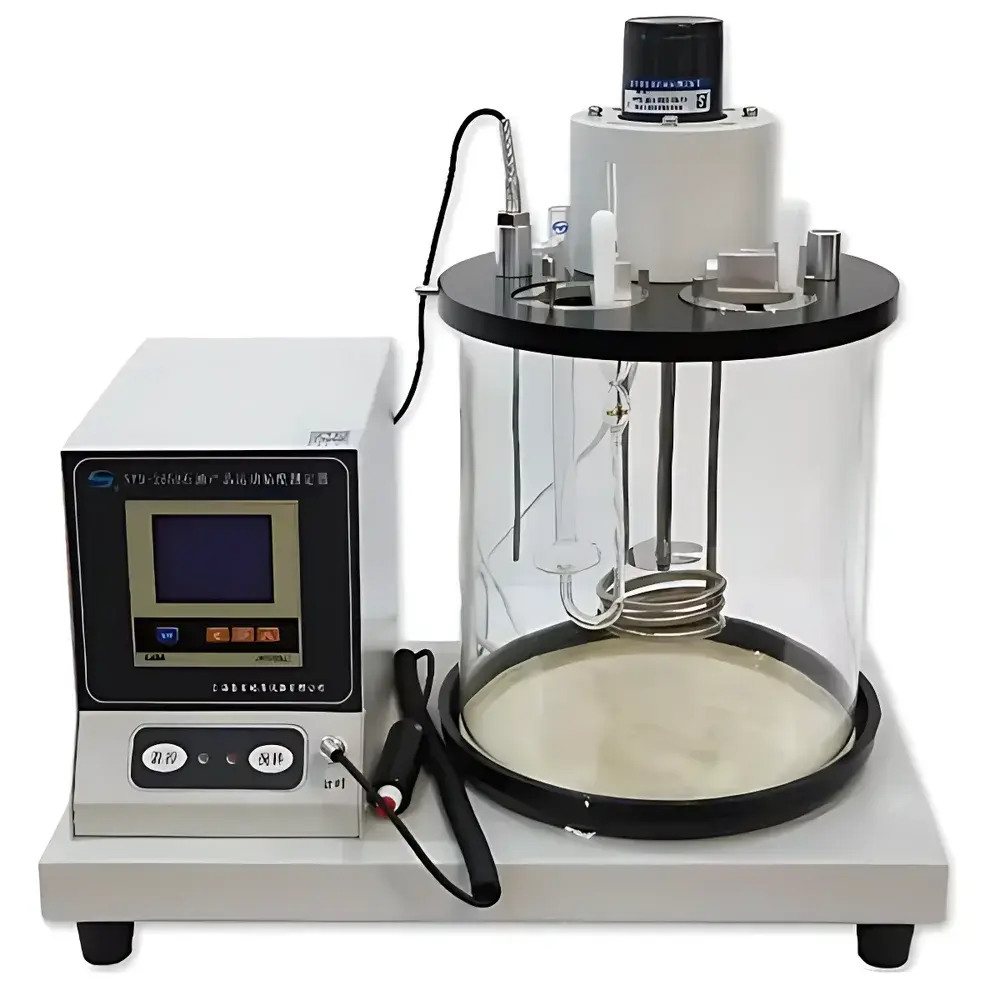
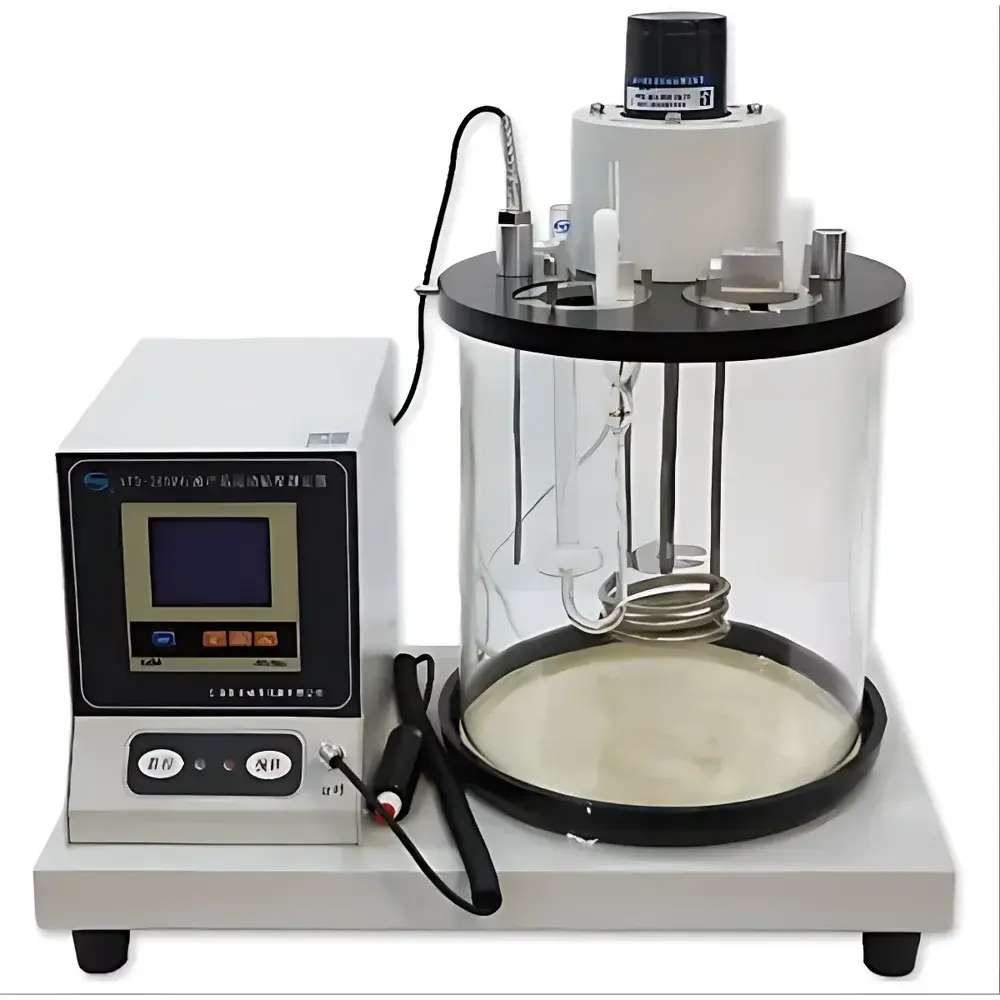
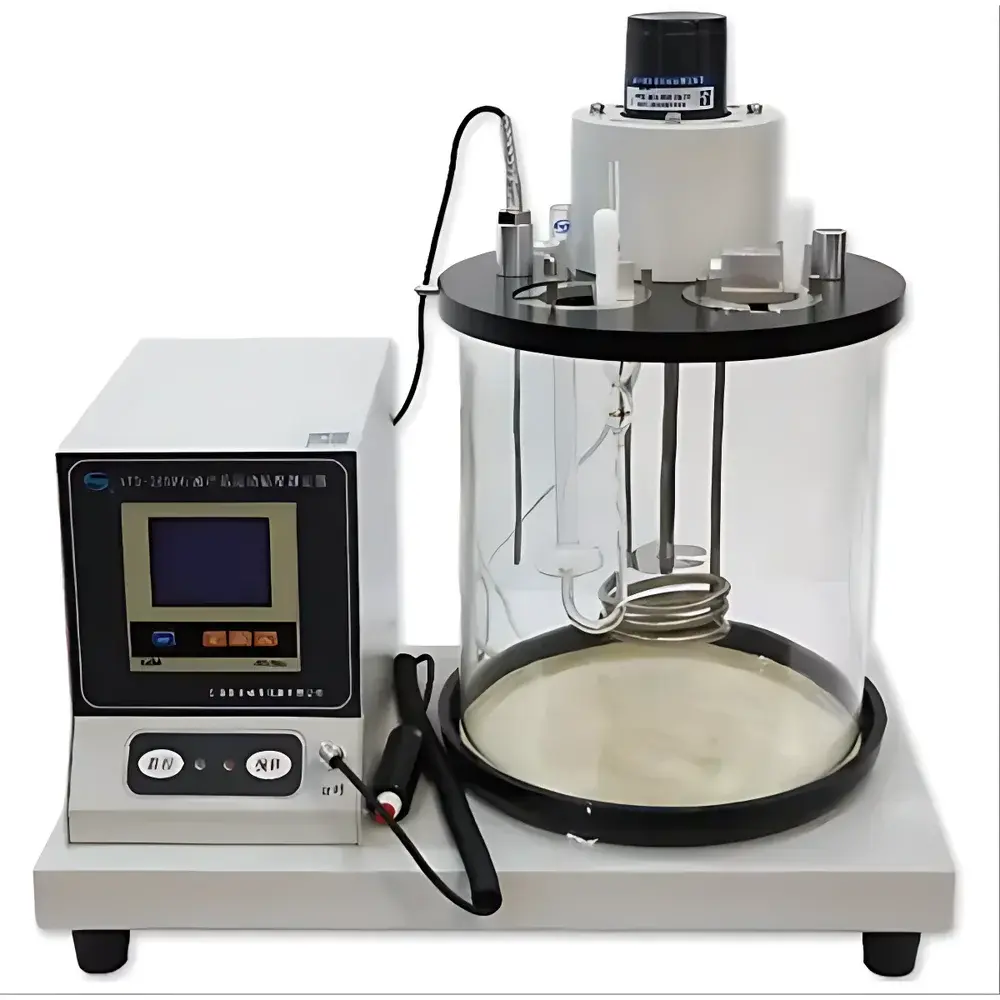
Changji Instruments SYD-265B Kinematic Viscosity Tester
| Brand | Changji Instruments |
|---|---|
| Origin | Shanghai, China |
| Manufacturer Type | Authorized Distributor |
| Region of Manufacture | Domestic (PRC) |
| Model | SYD-265B |
| Pricing | Available Upon Request |
| Power Supply | AC (220 ± 10%) V, 50 Hz |
| Stirring Motor Speed | 1200 rpm |
| Temperature Control Range | Ambient to 100 °C |
| Temperature Stability | ±0.1 °C |
| Compliance | SY/T 5651, GB/T 265 |
| Sample Type | Newtonian Liquids (e.g., lubricating oils, base stocks, diesel, kerosene) |
Overview
The Changji Instruments SYD-265B Kinematic Viscosity Tester is a precision-engineered benchtop instrument designed for the standardized determination of kinematic viscosity in liquid petroleum products under controlled thermal conditions. It operates on the capillary viscometer principle per GB/T 265—China’s national standard equivalent to ISO 3104 and ASTM D445—wherein the time required for a fixed volume of sample to flow through a calibrated glass capillary tube under gravity is measured at a precisely maintained temperature. The instrument integrates a thermostatically regulated oil bath with uniform thermal distribution, enabling repeatable measurements across the full operational range from ambient to 100 °C. Its design adheres strictly to SY/T 5651, the industry-specific technical specification for kinematic viscosity testers in China’s petroleum sector, ensuring metrological traceability and procedural fidelity for QC laboratories conducting routine testing of Newtonian fluids including distillate fuels, lubricants, and refined hydrocarbon streams.
Key Features
- Optically transparent glass bath vessel for unobstructed visual monitoring of capillary flow and sample behavior during measurement
- Integrated high-speed electric stirrer (1200 rpm) ensuring rapid thermal equilibration and minimal axial temperature gradients within the bath medium
- Digital PID temperature controller with ±0.1 °C stability—critical for meeting repeatability requirements specified in GB/T 265 and ISO 3104
- Ergonomic wired remote timing switch for hands-free initiation and termination of efflux time measurement, minimizing operator-induced timing errors
- Modular construction supporting interchangeable Ubbelohde or Cannon-Fenske capillary viscometers (not included), compatible with standard calibration certificate traceability
- Robust aluminum alloy frame with corrosion-resistant surface treatment for long-term reliability in industrial laboratory environments
Sample Compatibility & Compliance
The SYD-265B is validated for use with transparent and translucent Newtonian liquids, including but not limited to: mineral-based lubricating oils, hydraulic fluids, transformer oils, jet fuels (Jet A-1), diesel fuel (EN 590), kerosene, and light naphthenic distillates. It is not intended for non-Newtonian or highly viscous residual fuels (e.g., heavy fuel oil per ISO 12937), which require alternative methodologies such as rotational rheometry. All operational procedures align with GB/T 265 and SY/T 5651, and the instrument’s thermal performance satisfies the bath uniformity and stability criteria referenced in ISO/IEC 17025-accredited testing laboratories. While not certified to ASTM D445 hardware requirements, its functional equivalence supports method transfer validation when paired with NIST-traceable capillaries and certified reference materials.
Software & Data Management
The SYD-265B is a manually operated analog-digital hybrid system with no embedded microprocessor or data logging capability. Timing is performed using an external digital stopwatch or laboratory-grade electronic timer (user-supplied), and calculations follow the standard formula: ν = C × t, where ν is kinematic viscosity (mm²/s), C is the capillary constant (mm²/s²), and t is efflux time (s). Laboratories implementing GLP or GMP workflows may integrate the instrument into validated electronic lab notebooks (ELN) or LIMS platforms via manual data entry, supported by audit-ready calibration records for both the temperature sensor and timing device. Documentation packages include factory calibration certificates for the platinum resistance thermometer (PRT) and verification reports confirming bath homogeneity per SY/T 5651 Annex B.
Applications
- Quality control of finished lubricants prior to shipment per OEM specifications (e.g., API CK-4, ACEA C3)
- In-process monitoring of blending operations for diesel and gasoline fractions in refinery labs
- Viscosity grading of base oils according to ASTM D2006 and ISO 3448
- Stability assessment of biofuel blends (e.g., B5–B20) under accelerated aging protocols
- Verification of cold-flow properties indirectly via viscosity–temperature correlation modeling (e.g., ASTM D341)
- Supporting regulatory submissions requiring GB/T 265-compliant data for domestic market access in China
FAQ
Does the SYD-265B comply with international standards such as ASTM D445 or ISO 3104?
It conforms functionally to the measurement principles and procedural requirements of ASTM D445 and ISO 3104; however, formal certification to these standards requires independent third-party verification of the complete test system—including capillary calibration, thermometer accuracy, and timing device uncertainty—per ISO/IEC 17025.
Can it be used for non-Newtonian samples like polymer-thickened oils?
No. The instrument assumes Newtonian flow behavior. Non-Newtonian fluids require shear-rate-controlled methods such as rotational viscometry (ASTM D2983) or capillary rheometry.
Is a calibration certificate provided with the unit?
Yes—a factory calibration report for the integrated Pt100 temperature sensor is supplied, covering the full 20–100 °C range with documented uncertainties. Capillary viscometers must be calibrated separately per ISO 3105.
What maintenance is required for long-term accuracy?
Regular verification of bath temperature uniformity (using three-point probe mapping), cleaning of the glass bath and stirrer assembly after each solvent use, and annual recalibration of the temperature sensor against a NIST-traceable reference standard are recommended.
Is the instrument suitable for ISO/IEC 17025-accredited laboratories?
Yes—when operated within a documented quality management system, with validated procedures, trained personnel, and traceable calibration of all ancillary equipment (timer, thermometer, capillary), it meets the technical competence requirements of Clause 6.4 and 6.5 of ISO/IEC 17025:2017.
Related Products






