
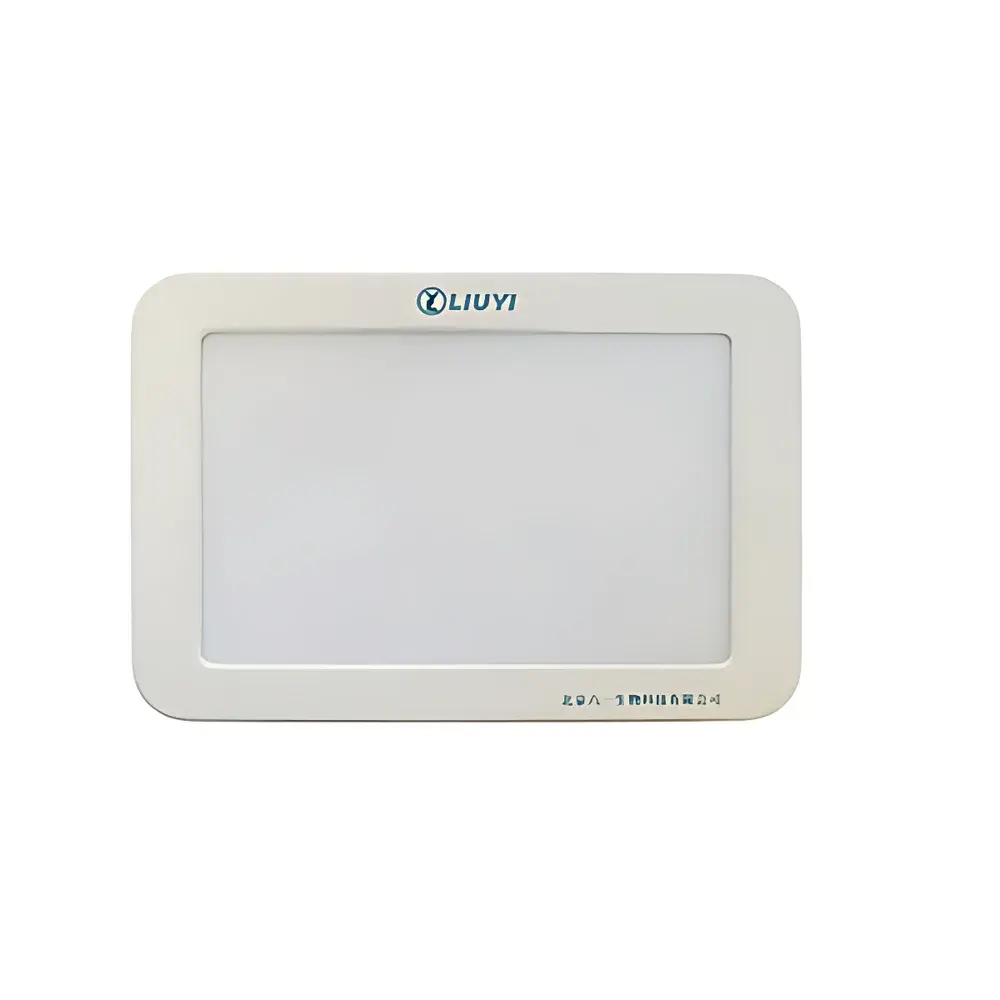
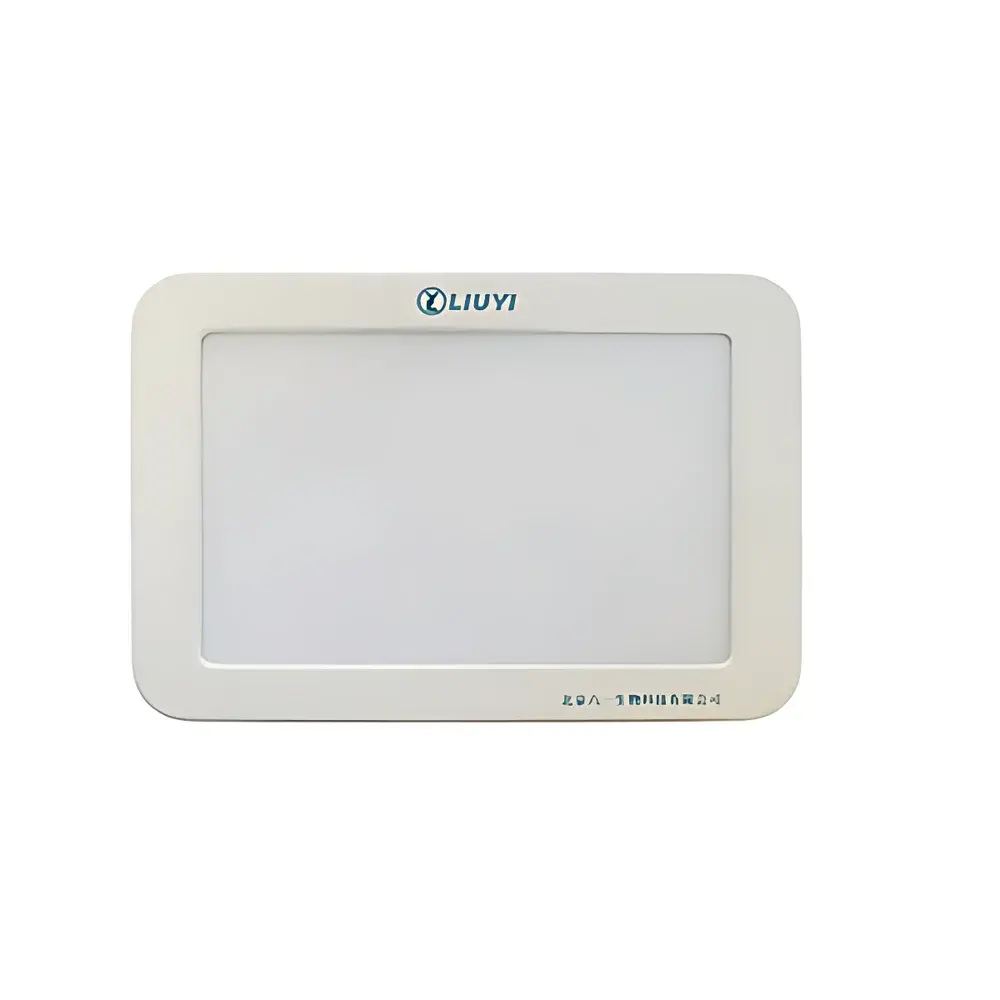
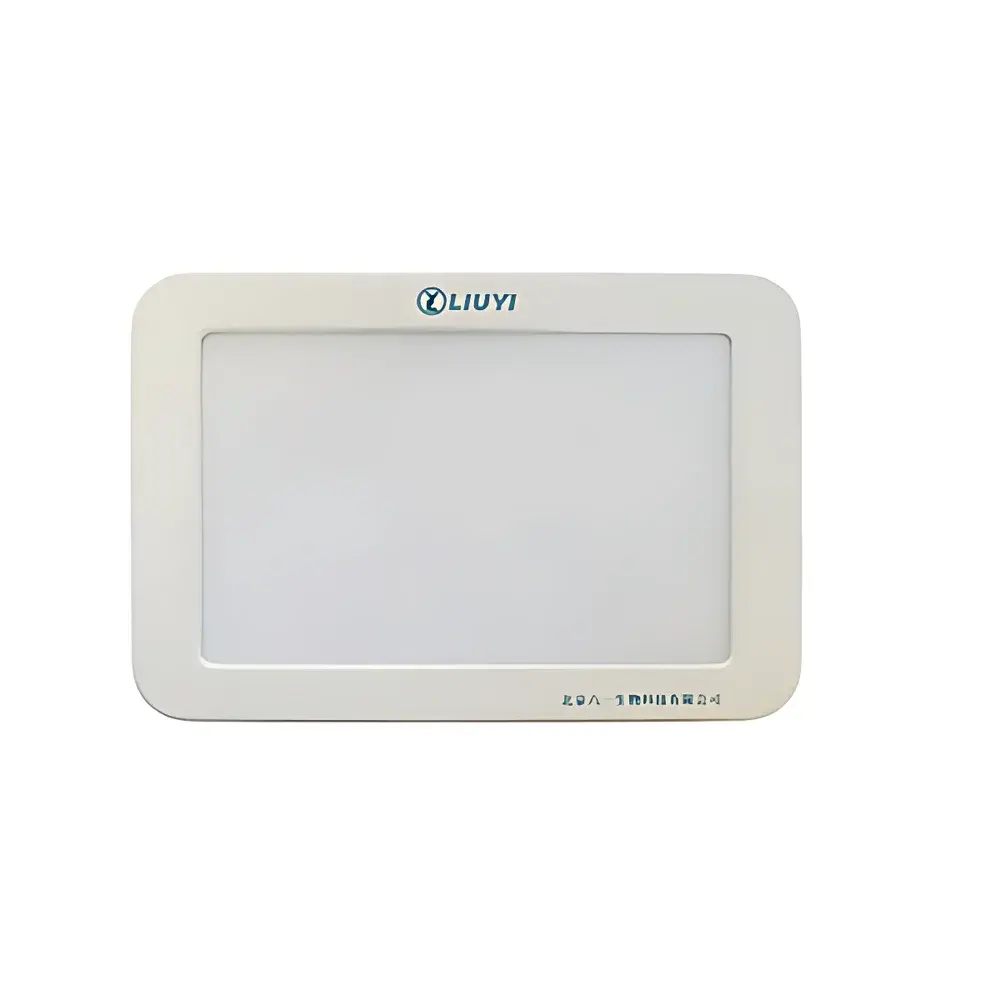
Beijing Liuyi WD-9406A Film Viewer with Adjustable Brightness, Model 130-0610
| Brand | Beijing Liuyi / LY |
|---|---|
| Origin | Beijing, China |
| Manufacturer Type | Authorized Distributor |
| Country of Origin | China |
| Model | 130-0610 |
| Viewing Area | 280 mm × 180 mm |
| Power Consumption | 54 W |
| Brightness | Continuously Adjustable |
| Dimensions (L×W×H) | 360 mm × 250 mm × 46 mm |
| Surface Finish | White Orange-Peel Textured Coating |
| Stage Travel | 280 mm × 180 mm |
Overview
The Beijing Liuyi WD-9406A Film Viewer (Model 130-0610) is a precision-engineered transilluminator designed for high-fidelity visual inspection of radiographic films, photographic negatives, archival microfilms, and other transparent media. Operating on the principle of uniform backlighting, it delivers consistent luminance across its entire 280 mm × 180 mm viewing area—enabling accurate assessment of density gradients, fine structural detail, and subtle contrast variations in transmitted light applications. Unlike generic light boxes, the WD-9406A integrates an optically diffused LED illumination system engineered for spectral stability, minimal heat generation, and long-term photometric repeatability—critical for qualitative and semi-quantitative evaluation in regulated environments such as clinical radiology departments, museum conservation labs, and government archival facilities.
Key Features
- Uniform LED backlighting system with optical diffusion plate to eliminate hotspots and ensure ±5% luminance uniformity across the full viewing surface
- Continuously variable brightness control (0–100%) via front-panel rotary potentiometer, supporting optimal visualization of both high-density X-ray films and low-opacity historical acetate negatives
- Compact, low-profile chassis (360 mm × 250 mm × 46 mm) constructed from rigid white powder-coated steel with orange-peel textured finish for scratch resistance and glare reduction
- Integrated 280 mm × 180 mm precision-machined aluminum stage with smooth linear travel—designed for repeatable positioning of film strips, panoramic radiographs, or multi-frame archival sheets
- Energy-efficient operation at 54 W nominal power draw, compliant with IEC 62368-1 safety standards for Class I electrical equipment
- No fan or moving parts—ensures silent, vibration-free operation suitable for quiet laboratory, reading room, or cleanroom environments
Sample Compatibility & Compliance
The WD-9406A accommodates standard medical radiographic films (e.g., Kodak Industrex, Agfa DRYSTAR), 35 mm/120-format photographic negatives, 16 mm and 35 mm microfilm reels (when mounted on carrier frames), and polyester-based archival documents up to 0.3 mm thickness. Its viewing surface meets ASTM E1799–22 requirements for transmission densitometry support surfaces and is routinely deployed in institutions adhering to ISO 16063-21 (vibration metrology) and ISO 14577 (hardness testing of thin films) workflows where optical alignment stability is essential. While not FDA-cleared as a diagnostic device, the unit conforms to general-purpose illumination standards referenced in ISO 12885 (radiographic image quality evaluation) and supports GLP-compliant documentation when paired with calibrated densitometers.
Software & Data Management
As a standalone analog optical instrument, the WD-9406A does not incorporate embedded firmware or digital connectivity. However, it is fully compatible with third-party imaging systems—including CCD/CMOS document scanners, macro photography rigs, and digital radiography workstations—for downstream digitization and analysis. When integrated into validated imaging pipelines, the viewer’s stable luminance output enables reproducible grayscale calibration per ISO/IEC 17025 Annex A.3 guidelines. Audit trails for manual inspection records—such as film ID, observer name, date/time, and observed anomalies—can be maintained externally using LIMS or ELN platforms compliant with 21 CFR Part 11 requirements.
Applications
- Radiographic QA/QC in non-destructive testing (NDT) laboratories performing ASME Section V or EN ISO 5577 inspections
- Historical document analysis in national archives and university special collections, particularly for fragile nitrate or cellulose acetate film preservation projects
- Dental and veterinary radiograph review in clinic settings requiring side-by-side comparative assessment of serial exposures
- Photographic darkroom education and fine-art print evaluation where spectral neutrality and shadow detail resolution are paramount
- Museum conservation documentation of translucent artifacts, including illuminated manuscripts and stained-glass templates
FAQ
Is the WD-9406A suitable for use with CR (Computed Radiography) phosphor plates?
No—the unit is designed exclusively for passive transmissive media. CR plates require laser scanning and do not produce visible images under ambient or backlight illumination.
Can the brightness control be locked to prevent accidental adjustment during routine use?
The unit does not feature mechanical locking; however, the potentiometer has tactile detent feedback and retains position reliably under normal handling conditions.
Does the device include a timer or automatic shutoff function?
No—this is a manually operated continuous-duty viewer without programmable controls or energy-saving auto-off circuitry.
What is the expected operational lifetime of the LED array?
Rated for ≥50,000 hours at nominal brightness (L70 standard), assuming ambient temperature ≤35°C and proper ventilation.
Is the viewing surface resistant to chemical cleaning agents used in medical or archival settings?
Yes—the tempered glass surface tolerates isopropyl alcohol, ethanol, and neutral pH aqueous cleaners; avoid abrasive pads or chlorinated solvents.



