
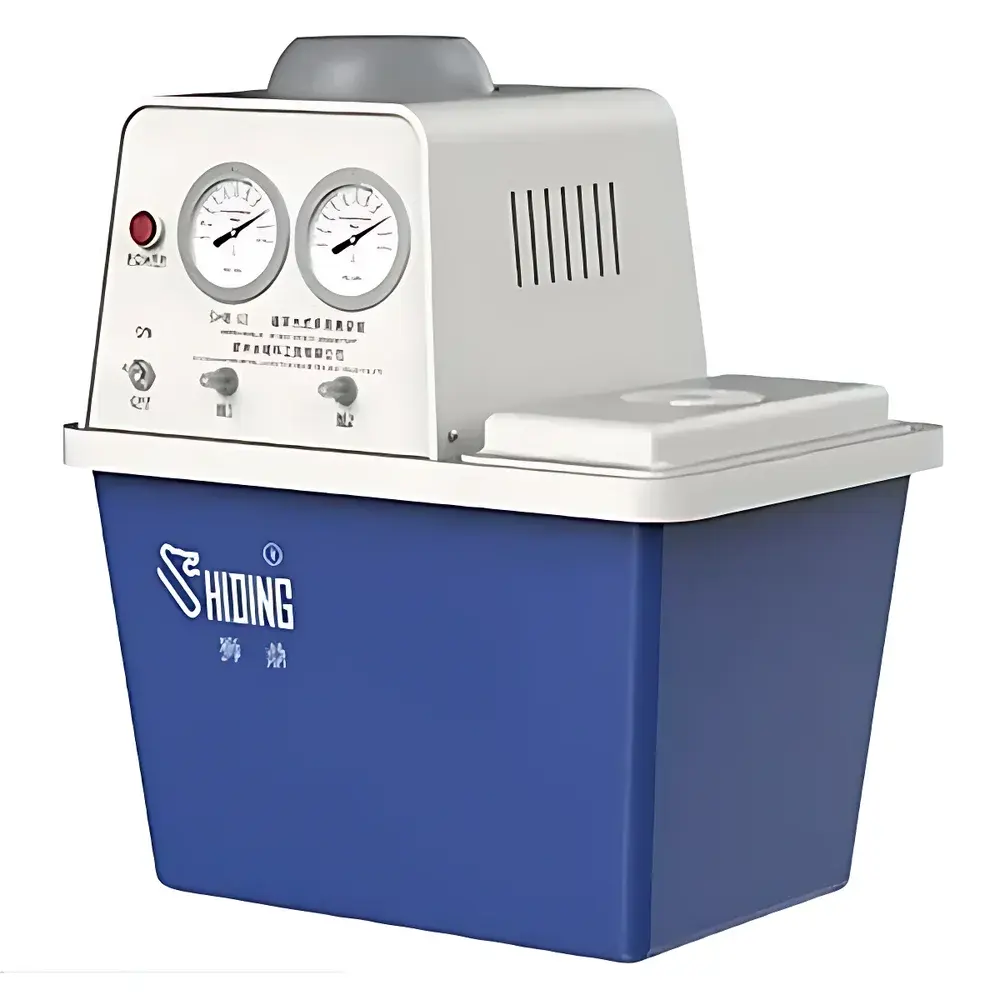
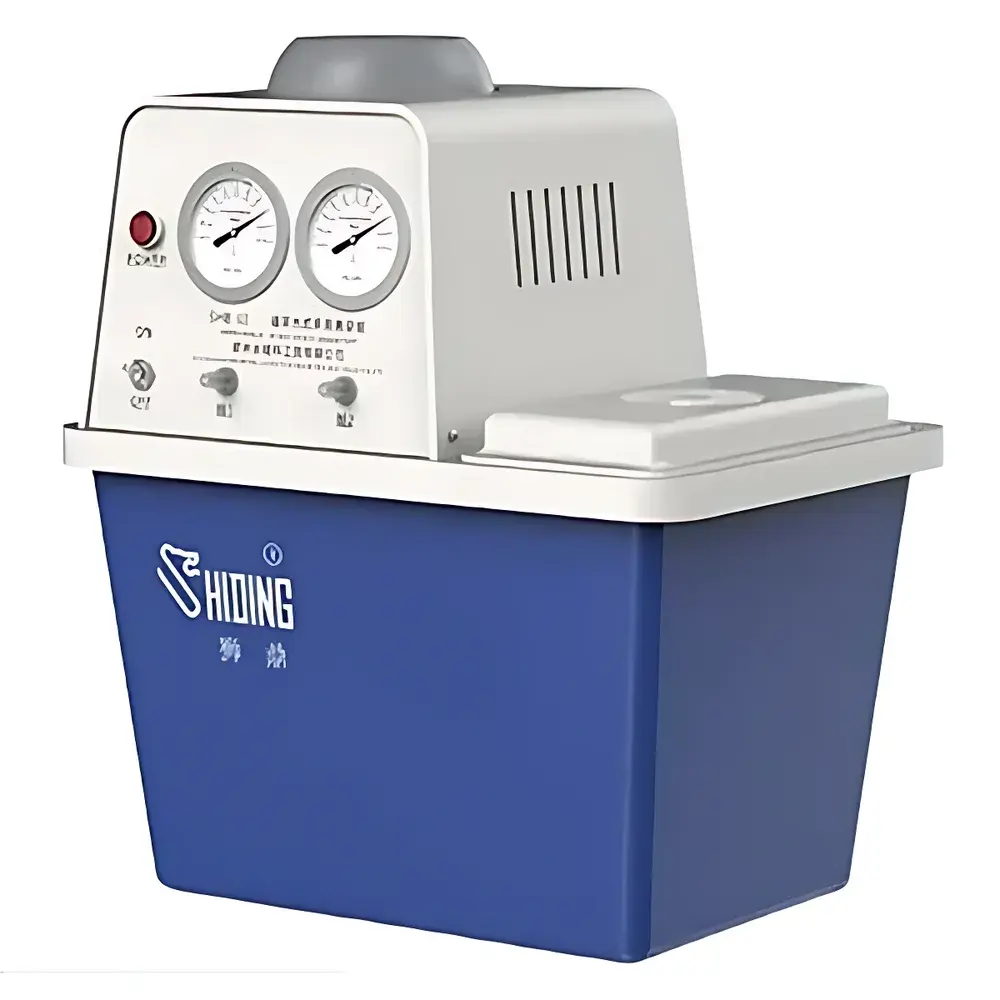
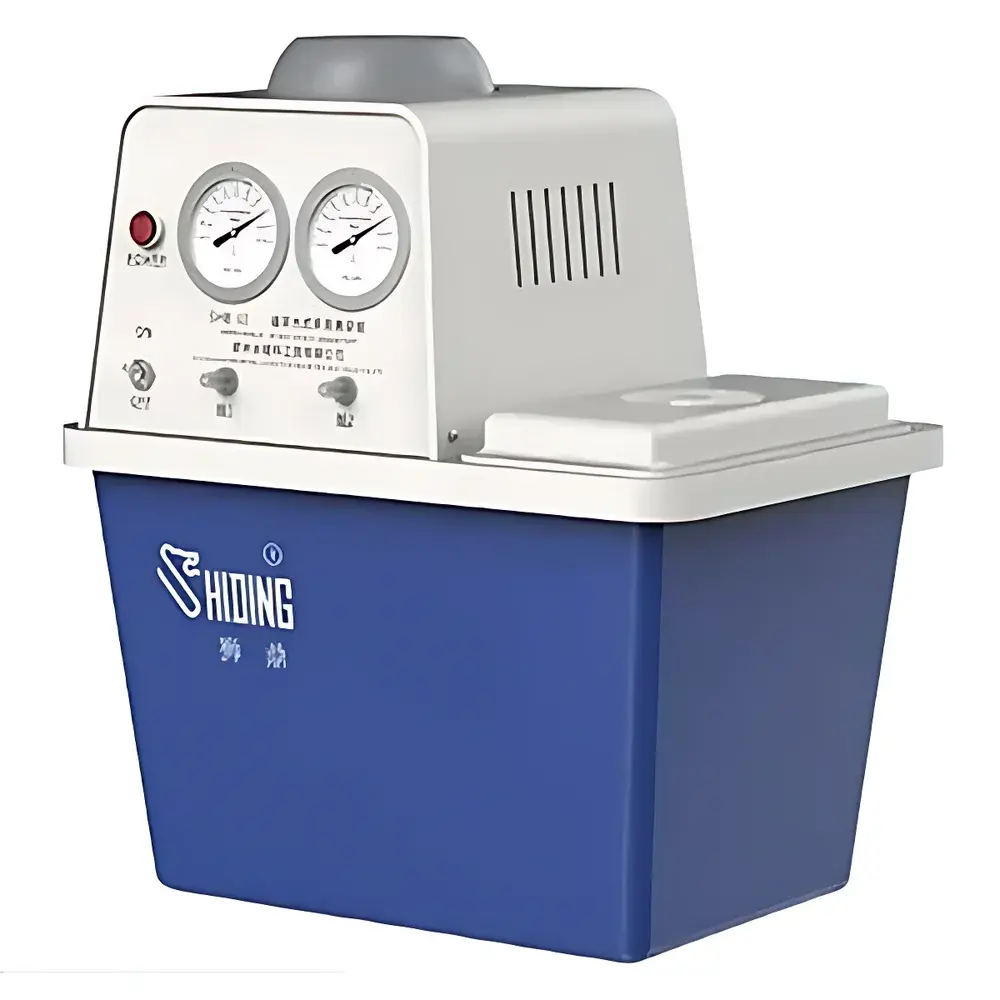
The Great Wall SHB-III Benchtop Water-Circulating Vacuum Pump
| Brand | The Great Wall |
|---|---|
| Origin | Shanghai, China |
| Model | SHB-III |
| Pump Type | Water-Circulating Vacuum Pump |
| Oil-Free Design | Yes |
| Air Displacement Rate | 10 L/min |
| Ultimate Vacuum | 0.098 MPa (20 mbar) |
| Dimensions (W×D×H) | 385 × 280 × 420 mm |
| Weight | 9.5 kg |
| Motor Power | 180 W |
| Water Tank Capacity | 15 L |
| Operating Temperature Range | 5–35 °C |
| Relative Humidity Limit | ≤70% |
| IP Rating | IP20 |
| Dual Vacuum Ports | Yes |
| Integrated Check Valve | Yes |
| Motor Shaft Material | 304 Stainless Steel |
| Sealing Material | Fluoroelastomer (FKM) |
| Fluid Silencer | Integrated |
| Water Reuse System | Closed-loop Circulation |
Overview
The Great Wall SHB-III is a compact, benchtop water-circulating vacuum pump engineered for reliable, low-maintenance vacuum generation in academic, pharmaceutical, and industrial laboratory environments. Unlike oil-lubricated rotary vane pumps, the SHB-III operates on the principle of water-jet aspiration—using recirculated deionized or tap water as both working fluid and coolant. This eliminates oil contamination risks, ensures compatibility with solvent vapors (e.g., ethanol, acetone, ethyl acetate), and supports continuous operation during rotary evaporation, vacuum filtration, distillation, and freeze-drying pre-treatment. Its ultimate vacuum of 0.098 MPa (20 mbar) meets standard requirements for most mild-to-moderate vacuum applications under ambient conditions (25 °C, 50% RH). The pump’s thermally stable design maintains consistent suction performance across its rated operating range (5–35 °C), while its closed-loop water circulation system reduces consumable usage and environmental impact.
Key Features
- Dual independent vacuum ports with individual pressure gauges—enabling simultaneous or isolated operation of two instruments (e.g., one rotary evaporator and one vacuum oven)
- Integrated fluid silencer that minimizes cavitation-induced noise by suppressing entrained air and dampening gas–liquid interfacial turbulence in the water circuit
- Corrosion-resistant wetted components: 304 stainless steel motor shaft, PP or 304 SS pump body and impeller (model-dependent), and PTFE-coated copper or PP jet nozzles for enhanced chemical compatibility
- Non-return valve installed in internal gas pathways to prevent backflow of condensate or solvents into the pump chamber—a critical safeguard during abrupt shutdowns or pressure transients
- FKM (fluoroelastomer) shaft seal providing superior resistance to swelling and degradation when exposed to organic solvents and elevated temperatures
- Built-in 15 L polypropylene water reservoir with level indicator and drain valve for routine maintenance and seasonal water replacement
Sample Compatibility & Compliance
The SHB-III is compatible with aqueous and moderately aggressive organic solvents commonly used in extraction, concentration, and purification workflows. Its water-jet architecture inherently avoids hydrocarbon contamination, making it suitable for GLP-compliant sample preparation prior to GC, HPLC, or ICP-MS analysis. While not certified to ISO 8573 or ASTM D2622, the pump conforms to IEC 61000-6-3 (EMC emission limits) and IEC 61000-6-2 (immunity standards) for laboratory equipment. Its IP20 enclosure rating indicates protection against solid objects ≥12.5 mm but no ingress protection against water—therefore, installation must occur on dry, level surfaces away from splash zones. For regulated environments, users should validate vacuum stability and cross-contamination risk per internal SOPs aligned with USP Analytical Instrument Qualification guidelines.
Software & Data Management
The SHB-III is a standalone analog instrument with no embedded microcontroller, digital interface, or data logging capability. Vacuum pressure is monitored via two mechanical Bourdon-tube gauges (0–0.1 MPa scale), offering immediate visual feedback without calibration drift concerns. As a Class I electrical device (IEC 61010-1), it requires no firmware updates or cybersecurity protocols. Laboratories implementing 21 CFR Part 11 compliance may document operational parameters manually or integrate the pump into broader process logs via external pressure transducers and validated DAQ systems. Routine verification includes daily inspection of water level, absence of air bubbles in the sight glass, and confirmation of gauge responsiveness during startup.
Applications
- Rotary evaporation of heat-sensitive compounds (e.g., natural product isolates, polymer precursors)
- Vacuum-assisted filtration of crystalline APIs or catalyst residues
- Short-path distillation of fragrance oils and essential extracts
- Desiccation of hygroscopic reagents in vacuum desiccators
- Supporting cold traps in cryogenic condensation setups
- Providing negative pressure for membrane filtration manifolds in QC microbiology labs
FAQ
Can the SHB-III be used with volatile organic solvents like diethyl ether or chloroform?
Yes—provided the water reservoir is filled with chilled, deionized water and the system is operated within its 5–35 °C ambient envelope. Solvent vapors are condensed upstream; however, prolonged exposure to highly volatile or halogenated solvents may accelerate degradation of PP components and require more frequent water changes.
Is the water tank equipped with an automatic level sensor or overflow protection?
No—the SHB-III uses a passive, manually monitored water reservoir. Users must visually verify the fill level before each use and drain/refill water weekly or after extended operation to prevent scaling and microbial growth.
What maintenance intervals are recommended for long-term reliability?
Inspect shaft seal integrity and check valve function quarterly; replace fluororubber seals every 18–24 months under continuous use. Clean the water tank and internal tubing with 5% citric acid solution biannually to remove carbonate deposits.
Does the dual-port configuration support differential vacuum control?
No—the two ports share a common vacuum chamber and manifold; pressure equilibrates instantly between them. Independent control requires separate pumps or external vacuum regulators.
Can the SHB-III be mounted vertically or integrated into a fume hood?
It is designed strictly for horizontal benchtop placement. Vertical orientation compromises water circulation dynamics and risks seal failure due to uneven thermal expansion. Installation inside a fume hood is permissible only if airflow does not exceed 0.5 m/s at the intake vent and ambient temperature remains within specification.
Related Products



