
BPC Instruments CSTR/UASB/EGSB/IC Continuous Anaerobic Bioreactor Series
| Brand | BPC Instruments |
|---|---|
| Origin | Zhejiang, China |
| Manufacturer Type | Direct Manufacturer |
| Country of Origin | China |
| Model | 06-0000-01 |
| Volume Options | 2 L, 5 L, 10 L, 15 L (CSTR) |
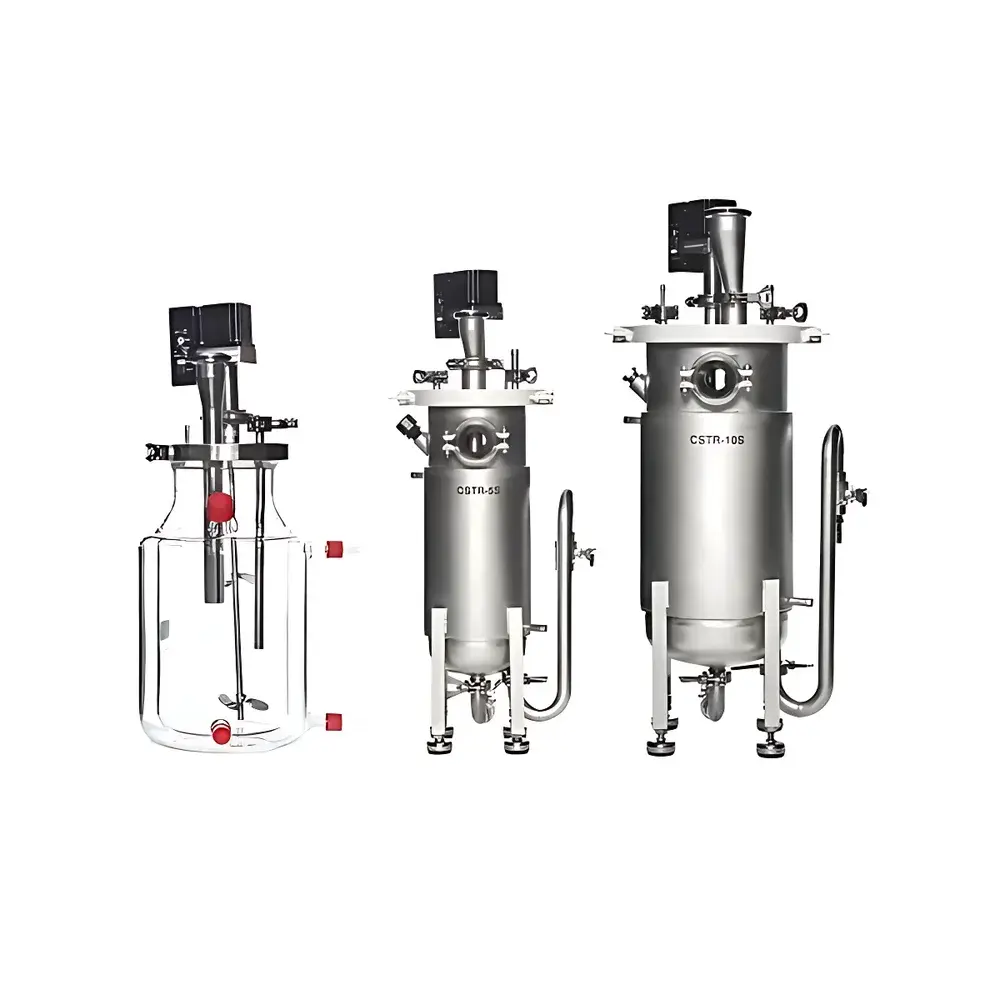
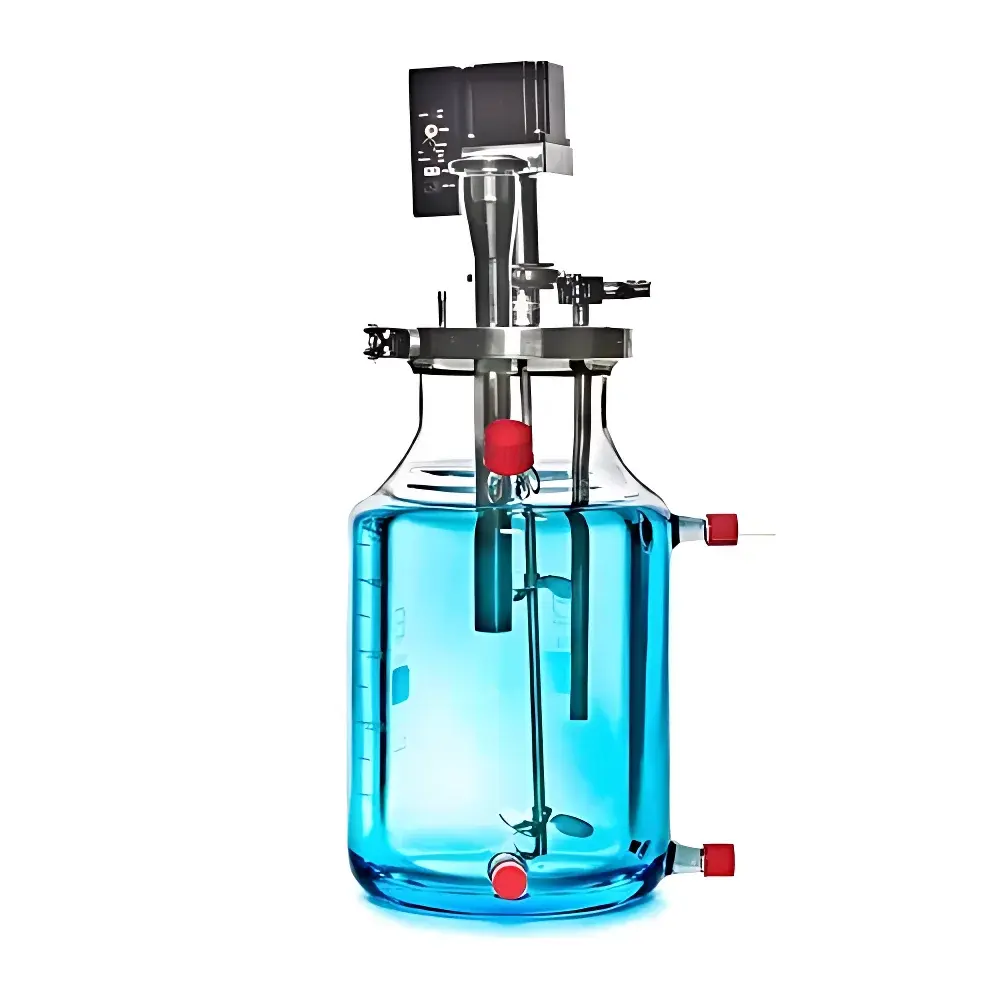
| Construction Materials | Borosilicate Glass or AISI 316 Stainless Steel |
| Stirring System | Brushless Stepper Motor, 0–300 rpm |
| Temperature Control | External Circulating Water Bath + Jacketed Reactor Wall (water bath not included) |
| Sensor Ports | Multiple Standardized Ports for pH, ORP, and Temperature Probes |
| Feed Inlets | Dual-configuration Inlet (for low- and high-solid substrates) |
| Effluent Management | Automatic Digestate Overflow Outlet with Level Control |
| Modular Interface | Tri-clamp Connections for Rapid Assembly/Disassembly |
| Compliance | Designed for GLP-aligned lab-scale anaerobic digestion research |
| Application Domain | Environmental Engineering & Bioenergy R&D |
Overview
The BPC Instruments CSTR/UASB/EGSB/IC Continuous Anaerobic Bioreactor Series is a modular, laboratory-grade platform engineered for precise simulation and kinetic evaluation of anaerobic digestion (AD) processes under controlled, continuous-flow conditions. These reactors operate on fundamental principles of hydraulic retention time (HRT), solid retention time (SRT), and microbial community dynamics—enabling rigorous study of methane yield, volatile fatty acid (VFA) accumulation, alkalinity buffering, and process stability across diverse feedstocks (e.g., food waste, manure, agricultural residues, and wastewater sludge). The series includes four reactor configurations: Completely Stirred Tank Reactors (CSTR), Upflow Anaerobic Sludge Blanket (UASB), Expanded Granular Sludge Bed (EGSB), and Internal Circulation (IC) bioreactors—each constructed to replicate full-scale biogas plant unit operations at bench scale. All units feature jacketed walls compatible with external temperature-controlled water circulation, ensuring uniform thermal distribution critical for mesophilic (35–37 °C) or thermophilic (55 °C) AD studies. The design adheres to ISO 11734 and ASTM D5511 standards for biochemical methane potential (BMP) testing methodology, supporting reproducible, auditable data generation in compliance with GLP frameworks.
Key Features
- Modular tri-clamp interface system enabling rapid assembly, disassembly, and cross-reactor configuration (e.g., CSTR → UASB cascade)
- Dual-feed inlet geometry optimized for both liquid slurries (<10% TS) and semi-solid substrates (up to 25% TS), minimizing clogging and ensuring homogeneous substrate introduction
- Multiple standardized sensor ports (1/4″ NPT or M12) accommodating calibrated pH, ORP, and Pt100 temperature probes with real-time analog output capability
- Integrated digestate overflow outlet with adjustable height for passive liquid level control—eliminating need for external pumps or level sensors during steady-state operation
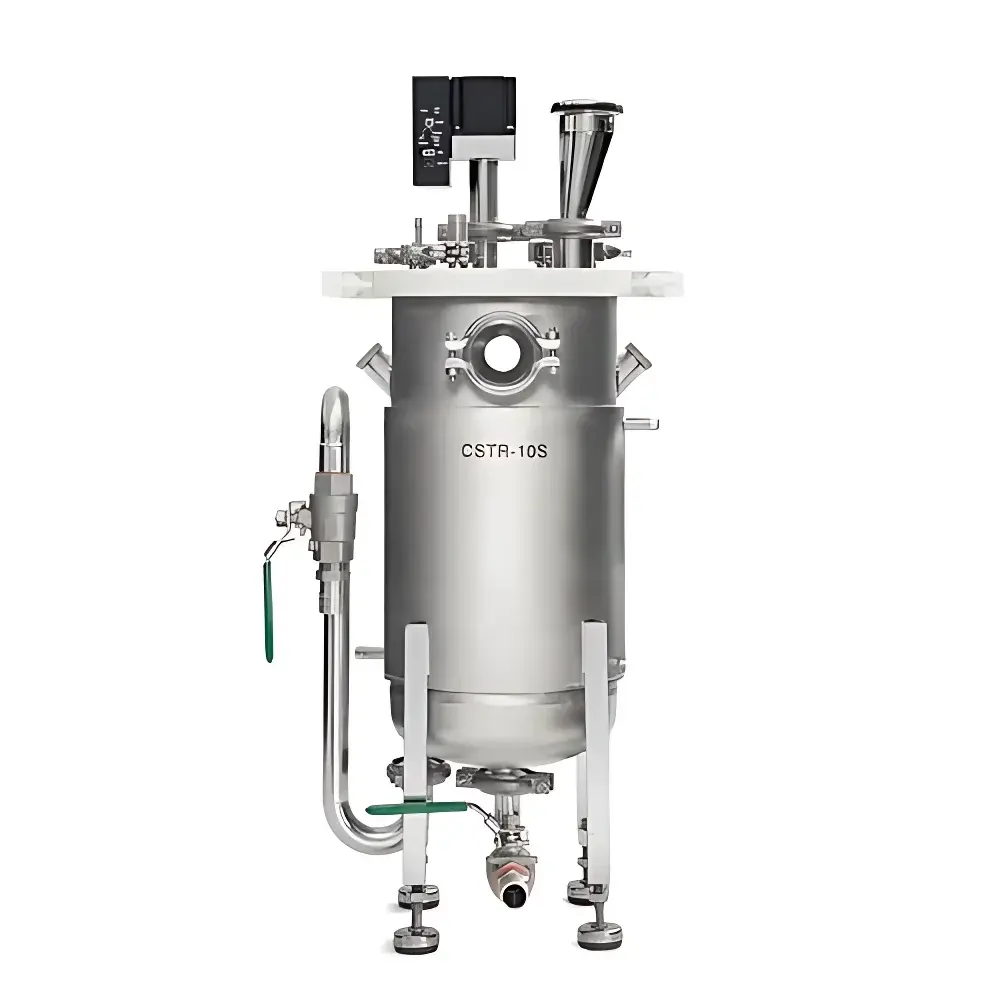
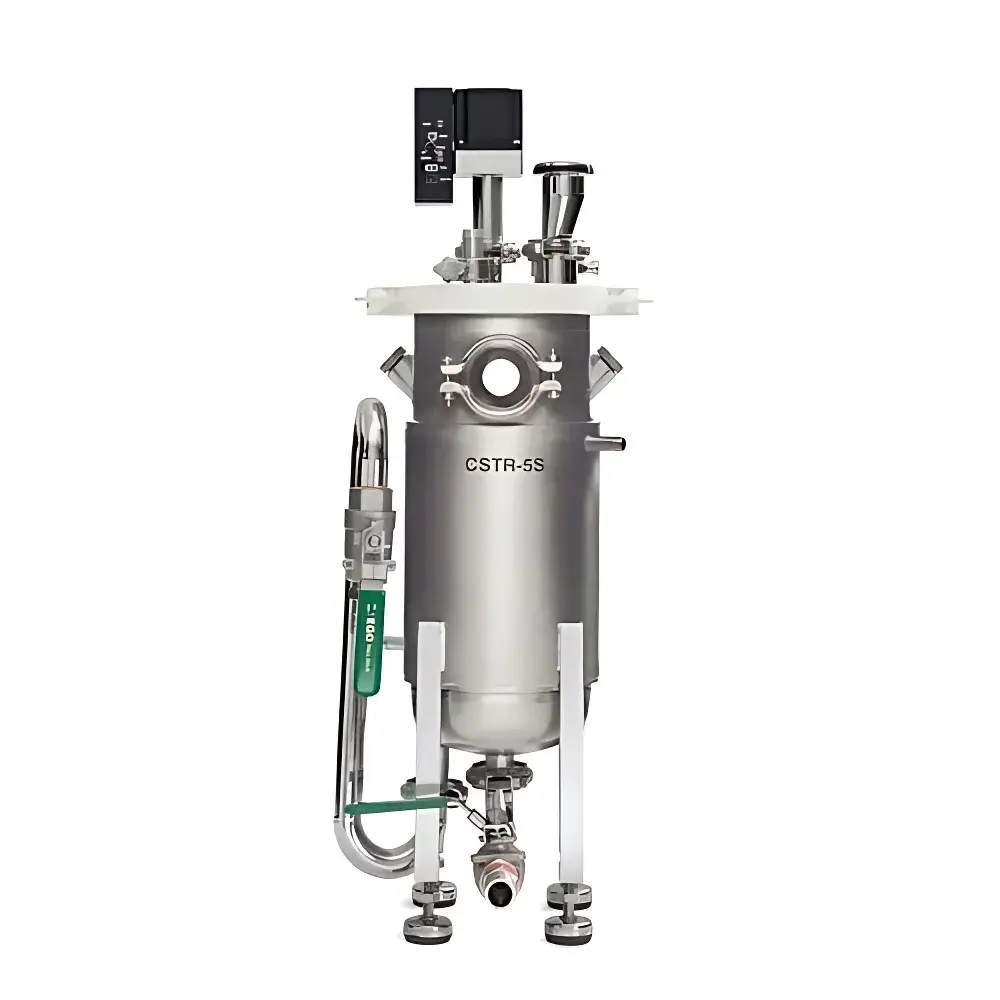
- Borosilicate glass (2 L CSTR-2G) and AISI 316 stainless steel (CSTR-5S, CSTR-10S, UASB/EGSB-20S, IC-20S) construction certified for long-term exposure to sulfide-rich, acidic anaerobic environments
- Brushless stepper motor-driven agitation (0–300 rpm, ±1 rpm resolution) with torque monitoring capability—ensuring consistent mixing intensity without mechanical seal degradation
- Double-sight viewport design on stainless steel units (two 80 mm diam. borosilicate windows) enabling direct visual assessment of granule morphology, scum layer formation, and foam dynamics during operation
- Jacketed wall architecture allowing bidirectional thermal regulation via external circulating water bath—supporting ramp-rate control, isothermal holds, and transient thermal stress experiments
Sample Compatibility & Compliance
The reactor series supports heterogeneous feedstock matrices including municipal organic waste, dairy manure, distillery stillage, and lignocellulosic hydrolysates. Reactor volumes are selected based on required HRT/SRT ratios and gas production rates per ASTM D5210 and ISO 15683 protocols. All stainless steel components comply with FDA 21 CFR Part 178 for indirect food contact, and surface finish meets Ra ≤ 0.8 µm per ASME BPE-2022. Units are validated for operation under Class I, Division 2 hazardous location guidelines when integrated with certified biogas analyzers and explosion-proof peripherals. Documentation packages include material traceability certificates, pressure test reports (1.5× operating pressure), and dimensional conformity verification—facilitating audit readiness for environmental research grants and regulatory submissions.
Software & Data Management
While the reactors themselves are hardware platforms without embedded controllers, they are fully interoperable with third-party data acquisition systems (e.g., LabVIEW, MATLAB, or BioReactor Simulator III) via analog (4–20 mA, 0–10 V) and digital (RS-485 Modbus RTU) interfaces. Sensor port wiring follows IEC 61000-6-2 EMC-compliant shielding practices. When paired with compliant gas flow meters (e.g., mass flow controllers meeting ISO 6145-2), the system supports automated CH₄/CO₂ composition logging aligned with USP <1058> analytical instrument qualification (AIQ) requirements. Audit trails, user access logs, and electronic signatures can be implemented through validated SCADA extensions—meeting 21 CFR Part 11 data integrity expectations for regulated biogas R&D.
Applications
- Biokinetic parameter estimation (e.g., µmax, KS, YCH4) via steady-state and pulse-feeding experiments
- Inhibitor screening (ammonia, VFAs, heavy metals) under continuous operational stress
- Granule acclimatization and stability assessment in UASB/EGSB configurations
- Hydraulic loading rate (HLR) optimization and washout boundary identification
- Co-digestion synergy analysis using multi-influent CSTR cascades
- Technology readiness level (TRL) advancement from TRL 3 (analytical and experimental critical function validation) to TRL 5 (component validation in relevant environment)
- Support for ISO 50001 energy management system implementation through standardized biogas yield benchmarking
FAQ
Are temperature controllers included with the reactor?
No—the jacketed reactor requires an external programmable circulating water bath (e.g., Huber, LAUDA, or Julabo models) for precise thermal control. Reactor jackets accept standard 1/2″ quick-connect fittings.
Can multiple reactors be operated in series?
Yes—tri-clamp interfaces and standardized port dimensions allow seamless hydraulic and instrumentation integration between CSTR, UASB, EGSB, and IC units for multi-stage digestion modeling.
Is corrosion resistance verified for long-term sulfide exposure?
AISI 316 stainless steel components undergo ASTM A967 passivation and are tested per ASTM G31 immersion corrosion protocols in synthetic AD liquor (pH 6.8, 1000 mg/L sulfide) for ≥500 hours with <0.1 mm/yr penetration rate.
Do reactors support automated feeding and effluent sampling?
The platform provides mechanical mounting points and conduit pathways for OEM integration of peristaltic pumps, solenoid valves, and fraction collectors—but these peripherals are not supplied by BPC Instruments.
What documentation is provided for regulatory compliance?
Each unit ships with a Factory Acceptance Test (FAT) report, material certification (EN 10204 3.1), dimensional inspection record, and pressure test certificate—sufficient for GLP audit preparation and EU CE marking support.





