
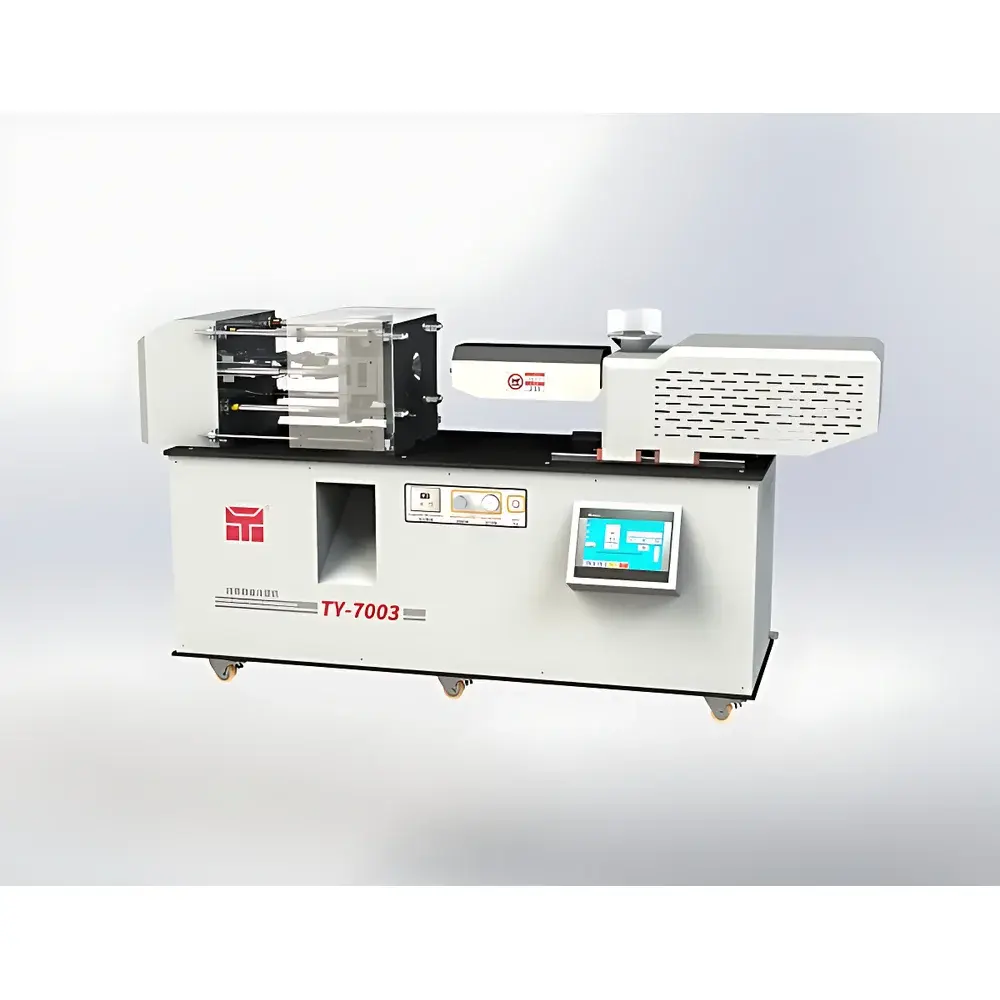
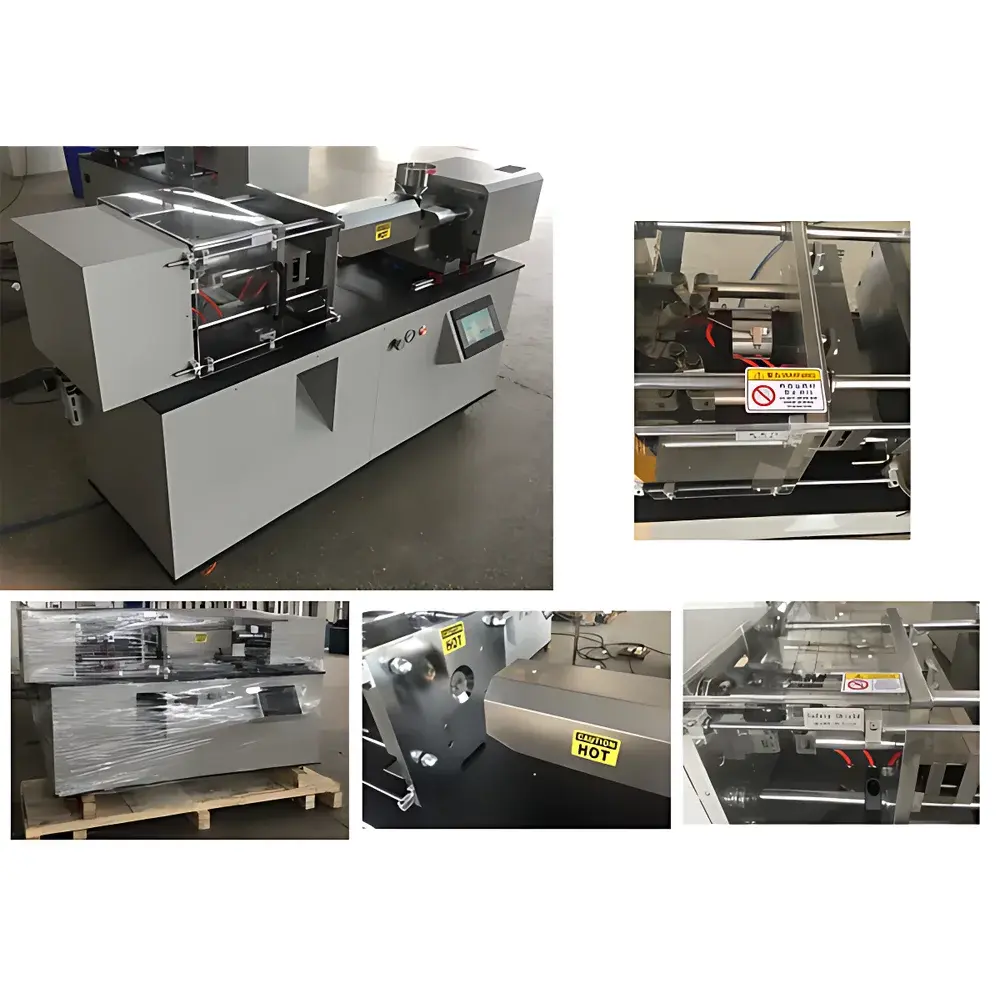
TianYuan TY-7003C Micro Injection Molding Machine for Sample Preparation
| Brand | TianYuan |
|---|---|
| Origin | Jiangsu, China |
| Manufacturer Type | Direct Manufacturer |
| Region | Domestic (China) |
| Model | TY-7003C |
| Price Range | USD 7,000 – 14,000 |
| Screw Diameter | 20 mm |
| Clamping Force | 5 Tons |
| Maximum Shot Volume | 25 cm³ |
| Heating Zone Max Temp | 360 °C (3-zone) |
| Temperature Control Accuracy | ±0.5 °C |
| Power Supply | Single-phase AC 220 V ±10%, 50 Hz, 2.2 kW |
| Air Pressure Requirement | ≥0.8 MPa |
| Mold Dimensions (L×W×H) | 360 × 90 × 72 mm |
| Machine Dimensions (L×W×H) | 1700 × 500 × 950 mm |
| Net Weight | 380 kg |
Overview
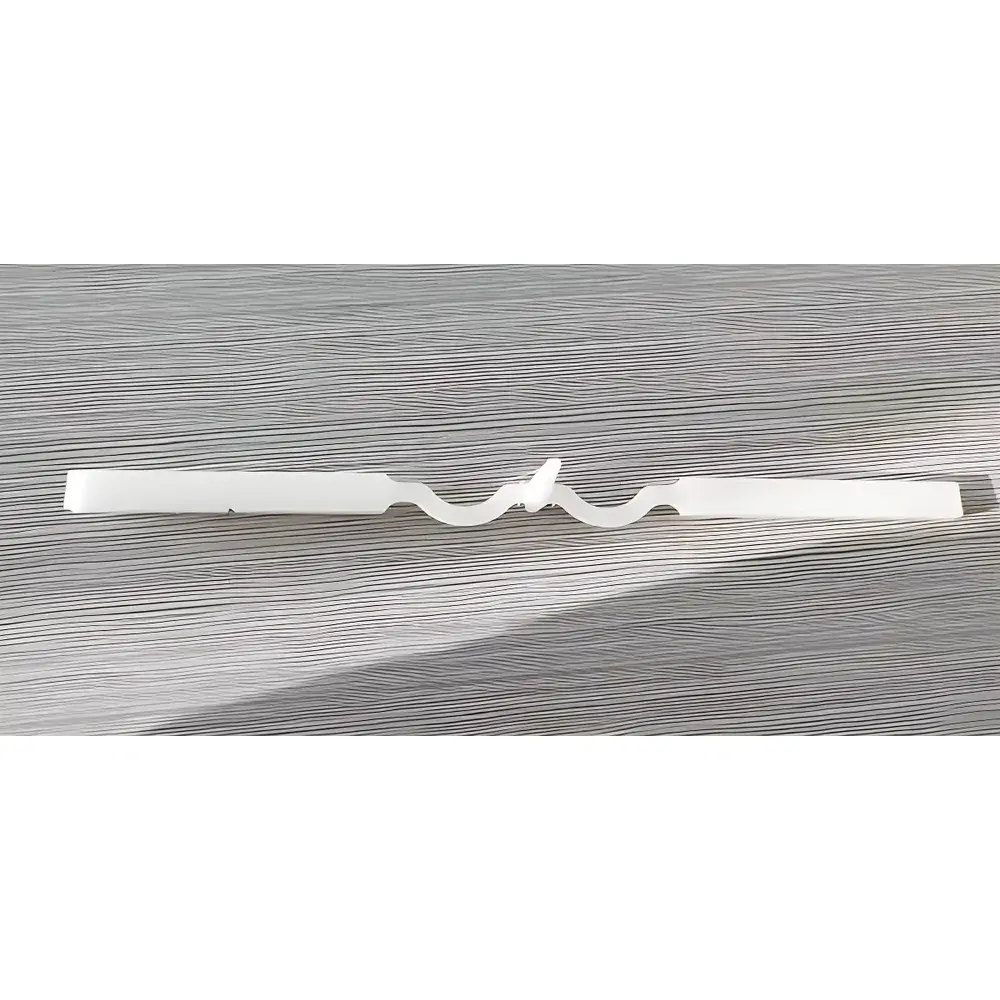
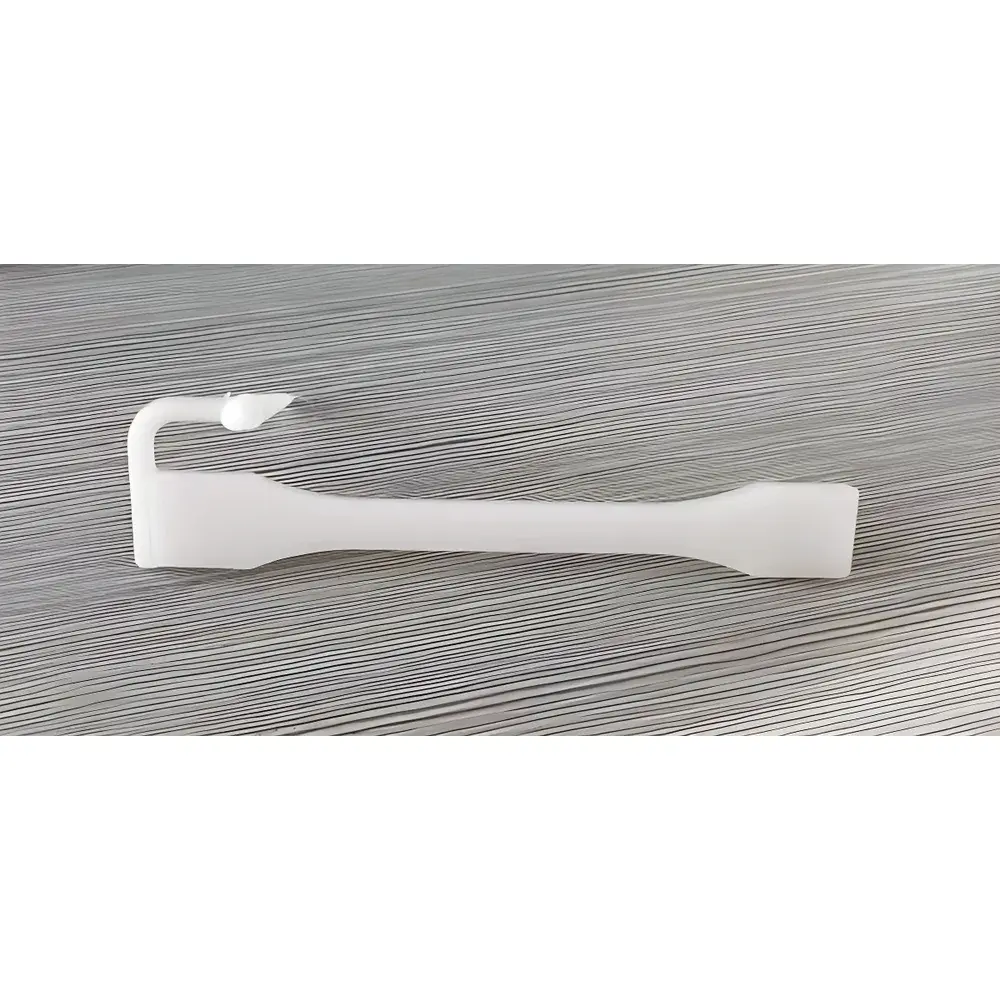
The TianYuan TY-7003C is a compact, benchtop-scale micro injection molding machine engineered specifically for laboratory-scale polymer sample preparation, academic instruction, and material development workflows. Unlike full-scale industrial injection molding systems, the TY-7003C replicates core process mechanics—including plasticization, metering, injection, clamping, and cooling—in a rigorously downscaled architecture optimized for precision, repeatability, and operational safety in non-industrial environments. It operates on standard single-phase 220 V AC power and integrates pneumatic actuation with a planetary servo-driven screw system, eliminating the need for three-phase utility power or hydraulic oil circuits. Its design adheres to fundamental injection molding thermodynamics and rheology principles: solid polymer pellets are conveyed, melted, and homogenized within a heated barrel via rotational shear; melt is then injected under controlled pressure into a cavity defined by interchangeable small-format molds. This enables researchers and educators to generate ASTM/ISO-compliant test specimens—such as tensile bars (ASTM D638), impact notched samples (ASTM D256), or flexural bars (ASTM D790)—using minimal raw material (as little as 2–5 g per shot), thereby reducing cost, waste, and thermal degradation risk during formulation screening.
Key Features
- Compact footprint (1700 × 500 × 950 mm) and modular construction enable deployment in university teaching labs, QC laboratories, and R&D cleanrooms without dedicated industrial infrastructure.
- Planetary servo motor coupled with high-torque reduction gearbox delivers precise screw rotation (0.1–60 rpm) and consistent melt homogenization; torque output up to 105 N·m ensures reliable processing of engineering thermoplastics including PA6, PEEK, PC, and filled composites.
- Three-zone independent heating system (max 360 °C per zone) with ±0.5 °C steady-state temperature stability supports broad polymer compatibility—from low-melt PE and PP to high-temperature LCP and polyimides.
- Integrated dual-safety architecture: mechanical limit switches combined with electronic overload protection prevent over-travel, over-pressure, or thermal runaway during operation.
- Intuitive PLC-based HMI with color touchscreen interface provides one-touch cycle initiation, real-time parameter monitoring (screw position, melt temp, injection pressure), and programmable multi-stage profiles for hold pressure, cooling time, and back pressure.
- Clamping system employs toggle-type mechanical locking (5-ton nominal force), optionally upgradeable with a force-multiplying cylinder to 3.6 tons for high-viscosity or high-precision mold applications.
Sample Compatibility & Compliance
The TY-7003C accommodates standard ISO 294-1 and ASTM D3641-compliant mold bases with a 360 × 90 × 72 mm cavity envelope and 50 mm fixed platen diameter. It supports rapid mold interchangeability for specimen geometry variation—e.g., ASTM D638 Type I tensile bars, ISO 178 flexural specimens, or custom microfluidic or optical lens preforms. Process parameters (melt temp, injection speed, pack pressure, cooling time) are fully configurable to meet material-specific processing windows defined in manufacturer datasheets (e.g., BASF Ultramid®, DuPont Zytel®, Covestro Makrolon®). The machine’s thermal and pressure repeatability supports GLP-aligned documentation requirements; optional audit trail logging (via external USB data logger) satisfies basic 21 CFR Part 11 traceability needs for regulated academic or contract research settings. All electrical components comply with IEC 61000-6-2 (EMC immunity) and IEC 61000-6-4 (EMC emission) standards.
Software & Data Management
While the TY-7003C does not include proprietary cloud-based software, its embedded PLC controller logs all critical cycle parameters—including screw displacement (0–80 mm range, 0.1 mm resolution), melt temperature (per zone), injection pressure, and clamp status—to internal non-volatile memory. Data export is supported via USB flash drive in CSV format for post-processing in MATLAB, Python (Pandas), or Excel. Optional RS-485 Modbus RTU interface allows integration into lab-wide SCADA or LIMS platforms for centralized batch tracking and statistical process control (SPC). Firmware updates are performed locally via SD card, ensuring long-term maintainability without internet dependency—a key requirement for secure institutional networks.
Applications
- Academic polymer science education: hands-on demonstration of viscosity-temperature relationships, shear thinning behavior, and crystallinity effects on shrinkage.
- R&D material screening: rapid prototyping of compound formulations (e.g., nanofiller dispersion, plasticizer optimization, flame-retardant loading) using sub-gram quantities.
- Quality assurance: production of reference specimens for FTIR, DSC, TGA, or mechanical testing prior to full-scale pilot trials.
- Medical device development: fabrication of micro-scale components compliant with ISO 10993 biocompatibility testing protocols (e.g., cytotoxicity extract preparation).
- Recycled polymer characterization: melt flow index correlation studies and degradation kinetics assessment under controlled thermal histories.
FAQ
What power supply is required?
Single-phase AC 220 V ±10%, 50 Hz, 10 A circuit—no three-phase or industrial-grade power distribution is needed.
Is compressed air mandatory?
Yes. A clean, dry air source delivering ≥0.8 MPa at ≥0.17 m³/min is required for clamp actuation and ejection; portable oil-free compressors (60 L tank) are commonly used.
Can the machine process filled or abrasive polymers?
Yes—tungsten-carbide-coated screws and hardened steel barrels are available as factory options for extended service life with glass- or mineral-filled compounds.
What mold standards does it support?
Standard DIN 16749 / ISO 294-1 mold bases with 280 × 186 mm tie-bar spacing and 360 mm maximum mold height; custom mold adapters can be supplied upon request.
Is technical support available internationally?
TianYuan provides remote diagnostics, English-language documentation, and OEM spare parts logistics; field service partnerships exist in North America, EU, and APAC regions.




