
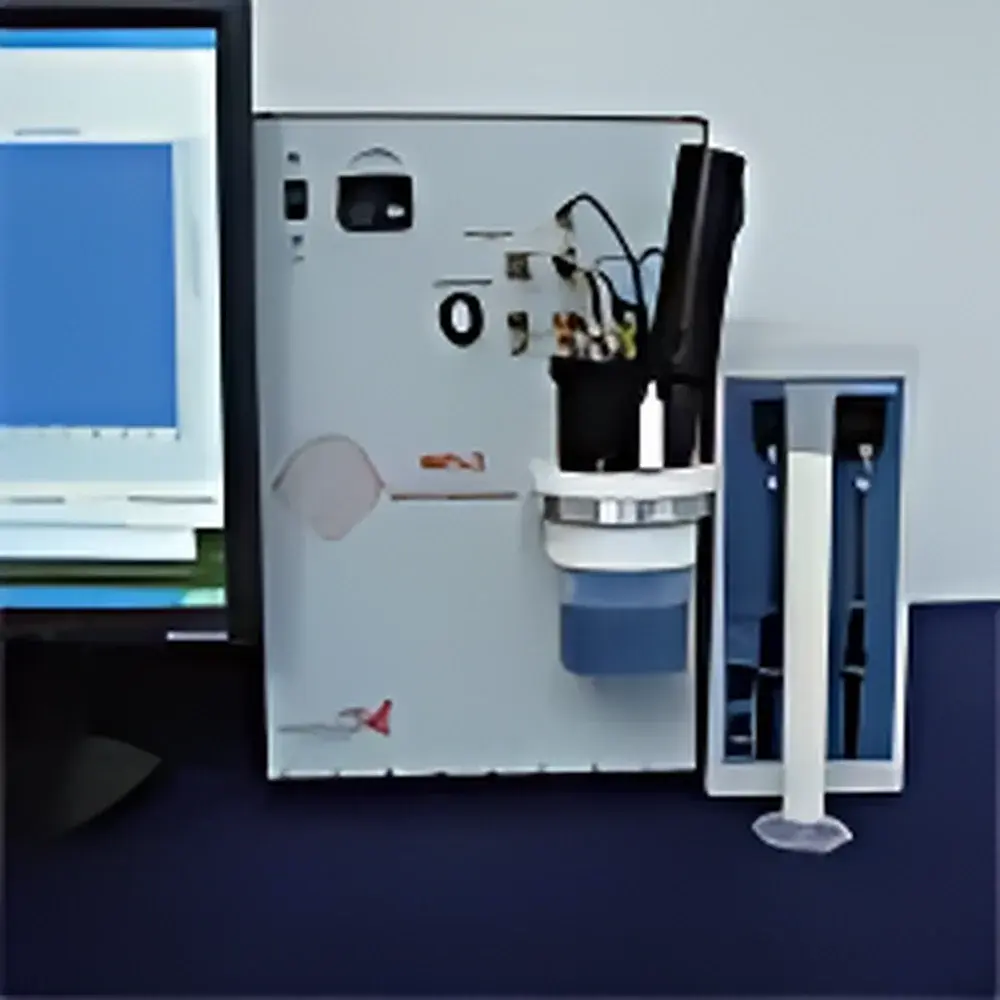
MAS ZetaFinder ZF400 Ultrasonic Particle Sizing and Zeta Potential Analyzer
| Brand | MAS |
|---|---|
| Origin | USA |
| Model | ZetaFinder ZF400 |
| Zeta Potential Range | ±500 mV |
| pH Range | 0–14 |
| Temperature Range | 0–90 °C |
| pH Resolution | ±0.1 |
| Temperature Resolution | ±0.1 °C |
| Accuracy | ±2% |
| Repeatability | ±2% |
| Particle Size Range | 1 nm – 30 µm |
| Sample Concentration Range | 0.1–60% w/v |
| Measurement Principle | Electroacoustic Spectroscopy (EAS) & Colloidal Vibration Current (CVI) |
Overview
The MAS ZetaFinder ZF400 is a high-precision, benchtop ultrasonic particle characterization system engineered for simultaneous measurement of zeta potential, particle size distribution, pH, conductivity, and temperature in concentrated, opaque, or highly viscous colloidal dispersions—without dilution or optical transparency requirements. Unlike laser-based (DLS, LD) or electrophoretic mobility instruments constrained by optical path limitations, the ZF400 employs electroacoustic spectroscopy (EAS), a well-established ISO/ASTM-aligned technique that quantifies the colloidal vibration current (CVI) generated when an alternating electric field induces oscillatory motion of charged particles in suspension. This principle enables direct, in-situ analysis of real-world formulations—including emulsions, slurries, ceramic pastes, polymer dispersions, and biological suspensions—at native concentrations (0.1–60% w/v) and across the full pH scale (0–14). The instrument’s core architecture integrates a digitally controlled high-frequency pulsed electric field generator, a broadband ultrasonic transducer array, and a gold-plated immersion probe designed for robust signal acquisition in heterogeneous media.
Key Features
- Electroacoustic measurement platform eliminates dependence on optical clarity—enables analysis of turbid, colored, or non-aqueous systems where DLS or electrophoretic light scattering fails.
- No sample dilution required: preserves native surface chemistry, interfacial interactions, and aggregation state—critical for accurate zeta potential and stability assessment per ISO 13099-2 and ASTM D7853.
- Integrated multi-parameter sensing: simultaneous real-time acquisition of zeta potential, pH, conductivity, temperature, and acoustic attenuation spectra.
- Gold-coated immersion probe with chemically inert, corrosion-resistant surface—compatible with aggressive solvents, high-salt buffers, and acidic/alkaline media.
- Onboard magnetic stirring and optional peristaltic pumping ensure homogeneous dispersion during measurement—prevents sedimentation artifacts per ASTM D8012 guidelines for colloidal stability testing.
- Automated titration mode supports rapid isoelectric point (IEP) determination and surfactant adsorption kinetics studies without manual reagent addition.
- Wide dynamic range: measures particles from 1 nm to 30 µm in diameter with resolution sufficient to resolve multimodal distributions in complex industrial formulations.
- Low sample volume requirement (as little as 10 mL) with no fixed cell geometry—supports direct sampling from reactors, pipelines, or process vessels.
Sample Compatibility & Compliance
The ZetaFinder ZF400 accommodates aqueous and non-aqueous dispersions—including polar solvents (e.g., ethanol, DMF), hydrocarbon oils, and ionic liquids—without optical window fouling or refractive index calibration. It complies with key regulatory and quality frameworks for material characterization: data integrity meets FDA 21 CFR Part 11 requirements via audit-trail-enabled software; measurement protocols align with ISO 13099 (colloidal characterization), ISO 20998 (ultrasonic particle sizing), and ASTM D7853 (zeta potential of concentrated dispersions). The system supports GLP/GMP documentation workflows, including electronic signatures, user access control, and raw data export in CSV and XML formats traceable to NIST-traceable reference standards.
Software & Data Management
Controlled via Windows-native MAS ZetaSoft™ v5.x, the interface provides fully automated measurement sequences, method scripting, and real-time spectral visualization. Software modules include CVI spectrum deconvolution, zeta potential vs. pH titration modeling, batch comparison tools, and statistical reporting compliant with ICH Q5A and USP <788>. All raw acoustic and electrical signals are stored with metadata (timestamp, operator ID, environmental conditions), supporting retrospective analysis and regulatory inspection readiness. Data export supports LIMS integration and third-party statistical packages (e.g., JMP, MATLAB). Firmware updates and remote diagnostics are supported through secure HTTPS-based cloud connectivity—no on-site service calls required for routine calibration verification.
Applications
The ZF400 serves R&D and QC laboratories in pharmaceuticals (nanomedicine formulation stability), battery materials (anode/cathode slurry zeta optimization), coatings & inks (pigment dispersion robustness), food science (protein aggregate behavior in acidic beverages), and environmental engineering (soil colloid transport modeling). Its ability to quantify zeta potential under process-relevant conditions—e.g., elevated temperature (up to 90 °C), high ionic strength (>1 M NaCl), or extreme pH—makes it indispensable for predicting shelf-life, flocculation onset, membrane fouling, and electrodeposition efficiency. Case studies demonstrate correlation between ZF400-derived IEP shifts and accelerated stability failure modes observed in 6-month real-time storage trials.
FAQ
Does the ZetaFinder ZF400 require optical alignment or cuvette calibration?
No—electroacoustic detection is independent of optical path length or refractive index; no cuvettes, lenses, or alignment procedures are needed.
Can it measure zeta potential in non-aqueous media such as silicone oil or toluene?
Yes—provided the medium supports sufficient ionic conduction for CVI generation; conductivity >10 µS/cm is recommended, and optional high-voltage probes extend compatibility to low-conductivity organics.
Is the gold immersion probe suitable for highly corrosive samples like HF-containing slurries?
The probe features a 2-µm electroplated gold layer over titanium substrate—resistant to pH 0–14 but not compatible with aqua regia or molten halides; alternative platinum-coated probes are available for extreme chemical environments.
How does the system ensure measurement reproducibility across operators and labs?
Built-in NIST-traceable electrical and acoustic reference standards enable daily verification; SOP-driven workflows, electronic signatures, and version-controlled methods enforce inter-laboratory consistency per ISO/IEC 17025.
What validation documentation is provided for regulated industries?
Each unit ships with Factory Acceptance Test (FAT) report, IQ/OQ protocol templates, and 21 CFR Part 11 compliance statement—including audit trail configuration, password policy, and electronic signature implementation details.



