
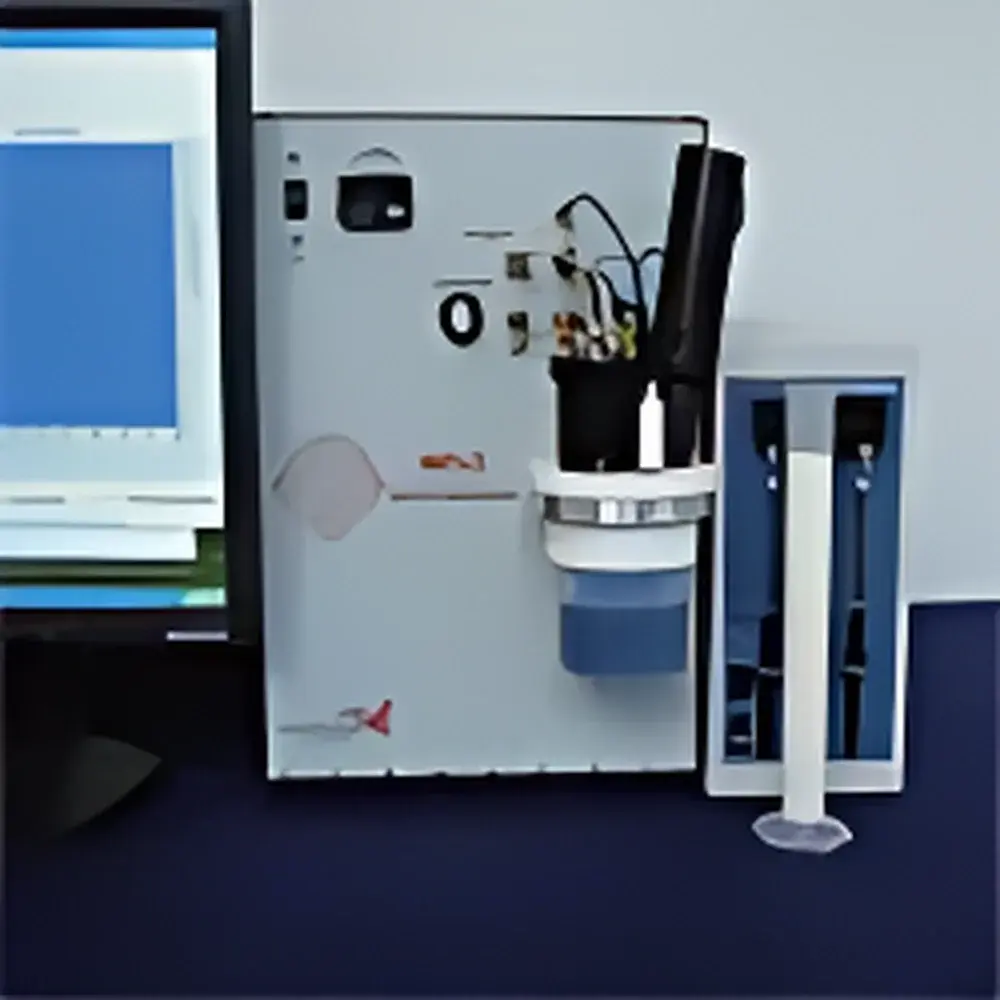
MAS ZetaFinder ZF400 Ultrasonic Electroacoustic Particle Sizer & Zeta Potential Analyzer
| Brand | MAS |
|---|---|
| Origin | USA |
| Model | ZetaFinder ZF400 |
| Zeta Potential Range | ±500 mV |
| pH Range | 0–14 |
| Temperature Range | 0–90 °C |
| pH Resolution | ±0.1 |
| Temperature Resolution | ±0.1 °C |
| Accuracy | ±2% |
| Repeatability | ±2% |
| Particle Size Range | 5 nm – 1000 µm |
| Conductivity Range | 0–10 S/m |
| Sample Concentration | 0.1–60 vol% |
| Sample Volume | 30–230 mL |
| Measured Parameters | Particle Size Distribution, Zeta Potential, Isoelectric Point (IEP), Electroacoustic Amplitude (E5A), Conductivity, pH, Temperature, Acoustic Attenuation, Solid Content |
Overview
The MAS ZetaFinder ZF400 is a benchtop ultrasonic electroacoustic particle characterization system engineered for simultaneous, label-free measurement of particle size distribution and zeta potential in concentrated, opaque, and highly conductive dispersions—without dilution or optical transparency requirements. Unlike conventional laser diffraction or dynamic light scattering (DLS) instruments, the ZF400 employs high-frequency acoustic spectroscopy (2–100 MHz) coupled with electroacoustic spectroscopy (EAS) to quantify particle-induced sound attenuation and colloid vibration current (CVI). This dual-mode physical principle enables robust quantification of both hydrodynamic size and surface charge across complex media—including ceramic slurries, CMP slurries, coal-water mixtures, polymer lattices, non-aqueous inks, and undiluted emulsions—where optical methods fail due to multiple scattering, absorption, or lack of refractive index contrast.
Key Features
- True concentration-independent operation: Direct analysis of samples from 0.1 to 60 vol%, eliminating dilution artifacts and preserving native colloidal stability.
- Wide dynamic range: Measures particles from 5 nm to 1000 µm in a single run—covering nanoparticles, submicron aggregates, and coarse suspensions without mode switching or calibration transfer.
- Electroacoustic zeta potential measurement: Uses multi-frequency CVI detection to determine zeta potential without prior knowledge of particle size, double-layer model assumptions, or dielectric constant inputs.
- Zero-charge capability: Accurately resolves particle size even at the isoelectric point (IEP), where electrophoretic mobility vanishes and traditional microelectrophoresis fails.
- Non-aqueous compatibility: Validated for use in organic solvents (e.g., toluene, ethanol, ethyl acetate), ionic liquids, and high-conductivity electrolytes (up to 10 S/m).
- Integrated physicochemical monitoring: Simultaneously records pH, temperature, conductivity, and acoustic attenuation spectra—enabling real-time process correlation and stability mapping.
- Automated titration module: Supports programmable acid/base or salt addition for IEP determination and surface charge titration under GLP-compliant conditions.
Sample Compatibility & Compliance
The ZetaFinder ZF400 accommodates heterogeneous, polydisperse, and optically dense systems commonly encountered in industrial R&D and QC labs—including cementitious suspensions, pigment dispersions, pharmaceutical nanosuspensions, battery electrode slurries, and food-grade emulsions. It complies with ASTM D7854 (Standard Test Method for Zeta Potential of Colloidal Dispersions by Electroacoustic Measurement) and supports audit-ready data integrity per FDA 21 CFR Part 11 when configured with MAS SecureLog software. All measurements adhere to ISO 13322-2 (acoustic particle sizing) and ISO 21784 (electroacoustic zeta potential), with traceable calibration using NIST-traceable reference materials for conductivity and pH.
Software & Data Management
MAS ZetaSoft v5.2 provides a validated, role-based interface for instrument control, method development, and statistical reporting. The software includes automated baseline correction, multi-peak deconvolution for bimodal distributions, IEP curve fitting with confidence intervals, and export to CSV, PDF, and XML formats compatible with LIMS and ELN platforms. Audit trails record user actions, parameter changes, and raw acoustic spectra with time-stamped metadata. Optional 21 CFR Part 11 compliance package delivers electronic signatures, password-protected access levels, and immutable archive storage.
Applications
- Materials science: Optimization of ceramic green bodies, graphite anode slurries, and metal-organic framework (MOF) dispersions.
- Chemical mechanical polishing (CMP): Real-time monitoring of silica and ceria slurry stability during formulation and shelf-life testing.
- Pharmaceuticals: Characterization of nanocrystal suspensions and lipid nanoparticles without surfactant interference or dilution-induced aggregation.
- Coatings & inks: Quantifying pigment dispersion quality in high-solids, low-VOC formulations and assessing flocculation onset under shear.
- Environmental engineering: Analysis of coal-water slurries, tailings, and remediation colloids in high-ionic-strength groundwater simulants.
- Food & cosmetics: Stability assessment of protein-stabilized emulsions, starch granules, and solid lipid nanoparticles in complex matrices.
FAQ
Can the ZF400 measure zeta potential in non-aqueous solvents?
Yes—the instrument uses electroacoustic spectroscopy, which does not require solvent conductivity or dielectric constant inputs; it has been validated in ethanol, propylene glycol, and silicone oil.
Is sample dilution ever required?
No. The ZF400 is designed for undiluted, as-manufactured dispersions up to 60 vol% solids, preserving interparticle interactions critical to stability assessment.
How does it handle highly conductive samples (e.g., >1 S/m)?
Unlike electrophoretic methods, electroacoustic detection remains stable and quantitative up to 10 S/m conductivity—making it suitable for brine-based drilling fluids and battery electrolyte suspensions.
Does it require optical transparency or refractive index data?
No. Acoustic and electroacoustic signals are independent of optical properties, enabling analysis of black pigments, carbon nanotubes, and turbid biological suspensions.
Can it identify the isoelectric point (IEP) of mixed-component systems?
Yes—via automated pH titration with concurrent zeta potential and size tracking, the system resolves IEPs even in multi-polymer or hybrid nanoparticle systems.



