
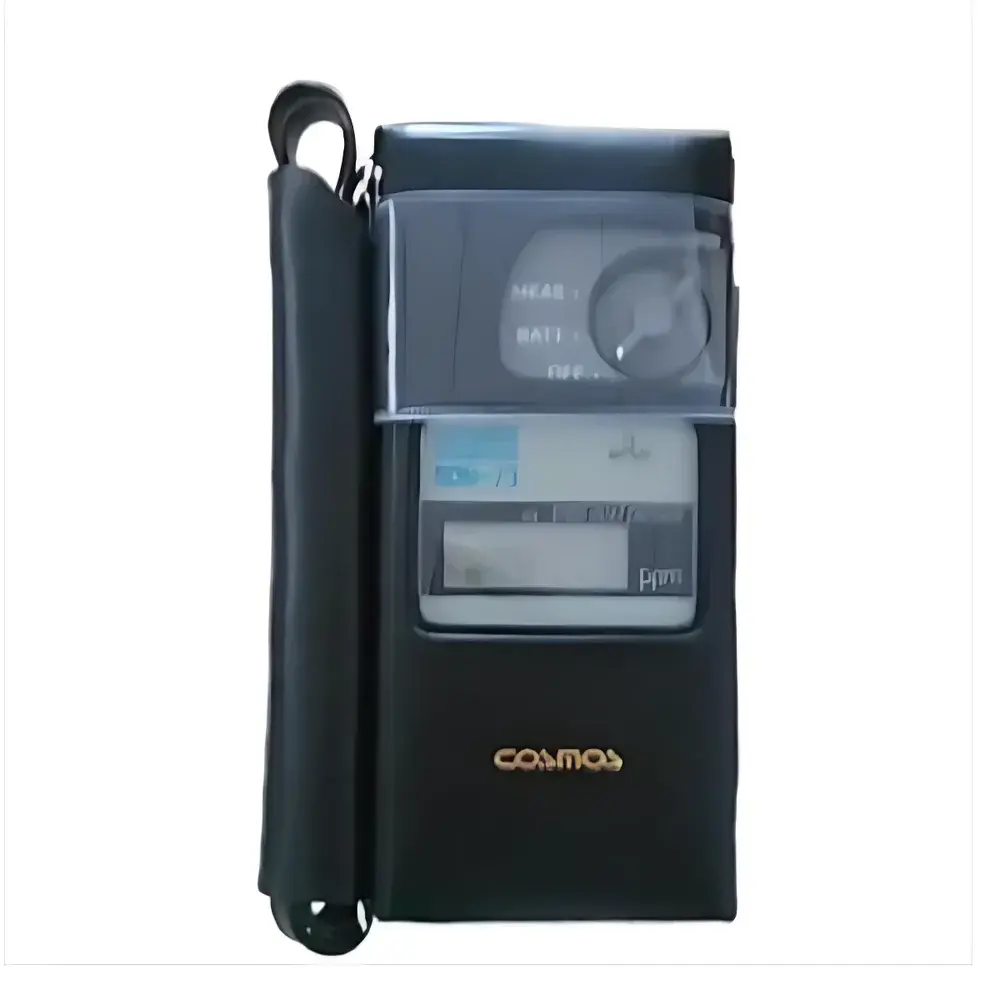
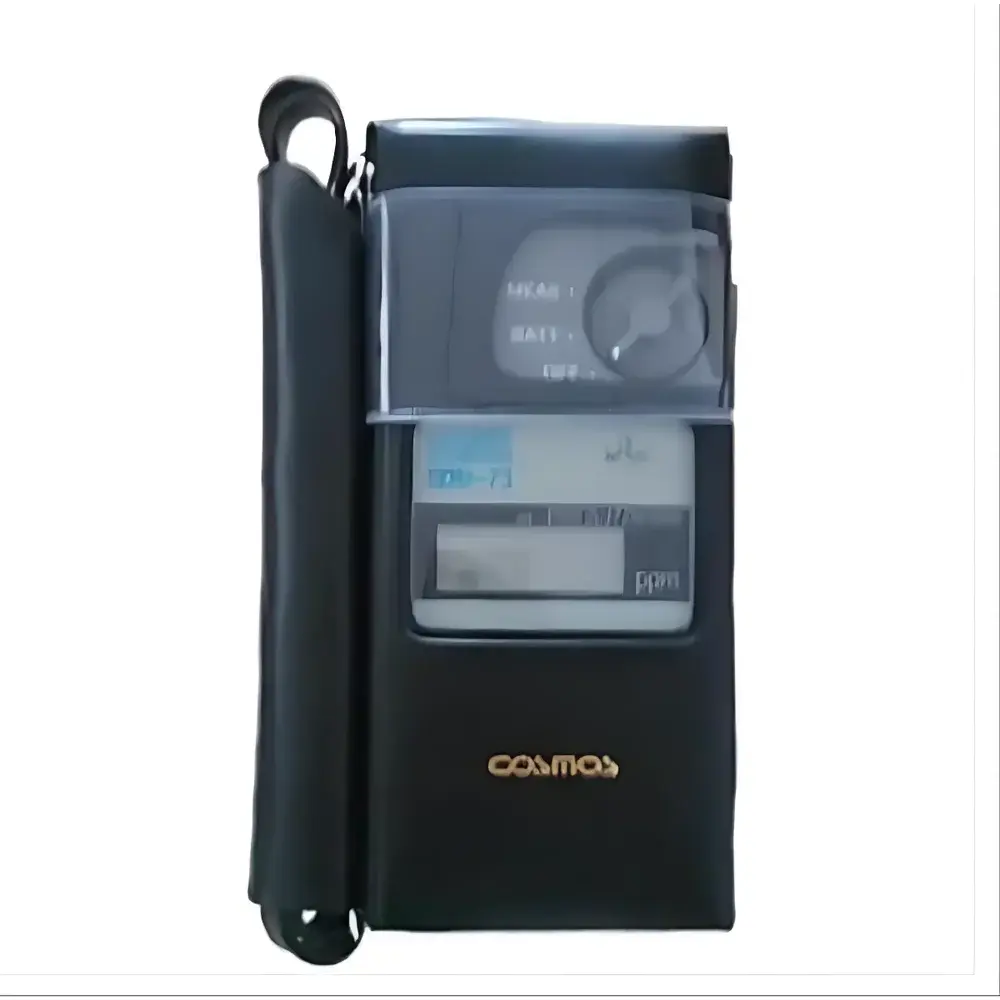
Shinwa SDM-73 Ferrous Particle Concentration Meter for Lubricating Oil
| Brand | Shinwa |
|---|---|
| Origin | Japan |
| Model | SDM-73 |
| Measurement Principle | Magnetic Balance Electromagnetic Induction |
| Measuring Range | 0–19,999 ppm (wt) |
| Minimum Resolution | 1 ppm (wt) |
| Sample Volume | ~1.5 mL |
| Power Supply | 4 × AA Alkaline Batteries or Optional AC Adapter |
| Battery Life | ~30 hours (alkaline) |
| Operating Temperature | 0–40 °C |
| Dimensions | 84 × 190 × 40 mm (W × H × D) |
| Weight | ~500 g (including batteries) |
| Accessories | Carrying Case, Five 2-mL Syringes, Two Sampling Nozzles, Syringe Holder |
Overview
The Shinwa SDM-73 Ferrous Particle Concentration Meter is a portable, field-deployable instrument engineered for rapid, on-site quantification of ferrous wear debris in lubricating oils and hydraulic fluids. It operates on the magnetic balance electromagnetic induction principle — a well-established method for detecting and measuring magnetically susceptible iron-based particles suspended in non-conductive media. Unlike optical or gravimetric methods, this technique provides direct, linear correlation between induced magnetic flux variation and total ferrous mass concentration (expressed in weight parts per million), independent of particle shape or size distribution within the operational range. The SDM-73 is specifically designed for predictive maintenance programs in industrial rotating equipment, where early detection of abnormal wear — particularly from bearings, gears, and hydraulic cylinders — is critical to avoiding unplanned downtime and catastrophic failure. Its compact form factor, battery-powered operation, and minimal sample requirement (~1.5 mL) enable routine oil analysis directly at the machine point-of-use, eliminating delays associated with off-site laboratory submission.
Key Features
- Real-time ferrous concentration measurement from 0 to 19,999 ppm (wt) with 1 ppm resolution — sufficient to detect incipient wear stages and track progressive degradation trends.
- Automatic zero-point calibration ensures measurement stability across ambient temperature fluctuations (0–40 °C operating range) and repeated use without manual recalibration.
- Integrated magnetic sensor architecture eliminates moving parts and consumable reagents, delivering high long-term reproducibility and low cost of ownership.
- Lightweight (≈500 g including batteries) and ergonomic handheld design facilitates one-handed operation in confined or elevated mechanical spaces.
- Dual power options: four standard AA alkaline batteries (providing ≈30 hours of continuous use) or optional AC adapter for benchtop or workshop deployment.
- Robust housing with IP-rated ingress protection (equivalent to IP54 per internal design validation) safeguards against incidental oil splashes and workshop dust exposure.
Sample Compatibility & Compliance
The SDM-73 is validated for use with mineral-based, synthetic, and semi-synthetic lubricants, as well as hydraulic working oils and grinding fluids — provided the base fluid exhibits low electrical conductivity and negligible paramagnetic interference. It is not intended for use with water-glycol or highly conductive emulsions. While the instrument itself does not carry formal ISO/IEC 17025 accreditation, its measurement methodology aligns with the physical principles referenced in ASTM D5183 (Standard Test Method for Determining Ferrous Wear Debris in Lubricating Oils Using a Ferrographic Analyzer) and supports data traceability required under ISO 55001 asset management frameworks. Routine use complies with common OEM oil analysis specifications (e.g., Caterpillar S•O•S, Komatsu KOMTRAX, Siemens Predictive Maintenance Guidelines) for ferrous debris trending.
Software & Data Management
The SDM-73 is a standalone, microprocessor-controlled meter with no embedded Bluetooth, USB, or cloud connectivity. All measurements are displayed on a high-contrast LCD screen and retained in volatile memory for immediate review (up to 99 readings). For enterprise-level data integration, users typically record values manually into CMMS platforms (e.g., IBM Maximo, SAP PM) or spreadsheet-based trend logs. Though the device lacks FDA 21 CFR Part 11-compliant audit trails or electronic signature capability, its deterministic analog signal path and automatic zeroing provide inherent measurement integrity suitable for GLP-aligned internal maintenance records. Optional AC adapter support enables stable power during extended data logging sessions in fixed-location monitoring setups.
Applications
- Routine condition monitoring of gearboxes, turbine bearings, and reciprocating compressors in power generation and manufacturing facilities.
- On-site verification of filtration efficiency in hydraulic systems before and after filter changeouts.
- Field triage of lubricant contamination incidents — distinguishing ferrous wear debris from external iron particulate ingress (e.g., rust flakes, machining swarf).
- Supporting ISO 4406:2017 particulate contamination codes by cross-referencing ferrous load with particle counter data for root-cause wear mode identification (e.g., fatigue vs. abrasion vs. adhesion).
- Preventive maintenance audits in marine propulsion systems, wind turbine gearboxes, and heavy-duty mobile hydraulics where lab turnaround time exceeds operational risk tolerance.
FAQ
Does the SDM-73 distinguish between different types of iron particles (e.g., cast iron vs. steel)?
No. It measures total ferrous mass concentration regardless of alloy composition or oxidation state. Differentiation requires ferrography or SEM-EDS analysis.
Can it be used with used engine oil containing soot or sludge?
Yes — provided viscosity remains within typical operating range (<300 cSt at 40 °C). Heavy sludge may require pre-filtration through a 10-µm mesh to prevent nozzle clogging, but this must be documented as a deviation from standard protocol.
Is calibration traceable to NIST or JIS standards?
The instrument is factory-calibrated using certified ferrofluid standards traceable to JIS Z 8015. End-user recalibration is not supported; periodic verification against reference samples is recommended annually.
What is the effect of air bubbles in the sample?
Air entrainment causes signal noise and underreporting. Samples must be degassed by gentle inversion or allowed to settle for ≥30 seconds prior to aspiration.
Does temperature compensation apply to the oil sample or ambient environment?
Compensation is ambient-temperature-based only. Oil temperature should be stabilized near ambient prior to measurement to minimize thermal convection artifacts.




