
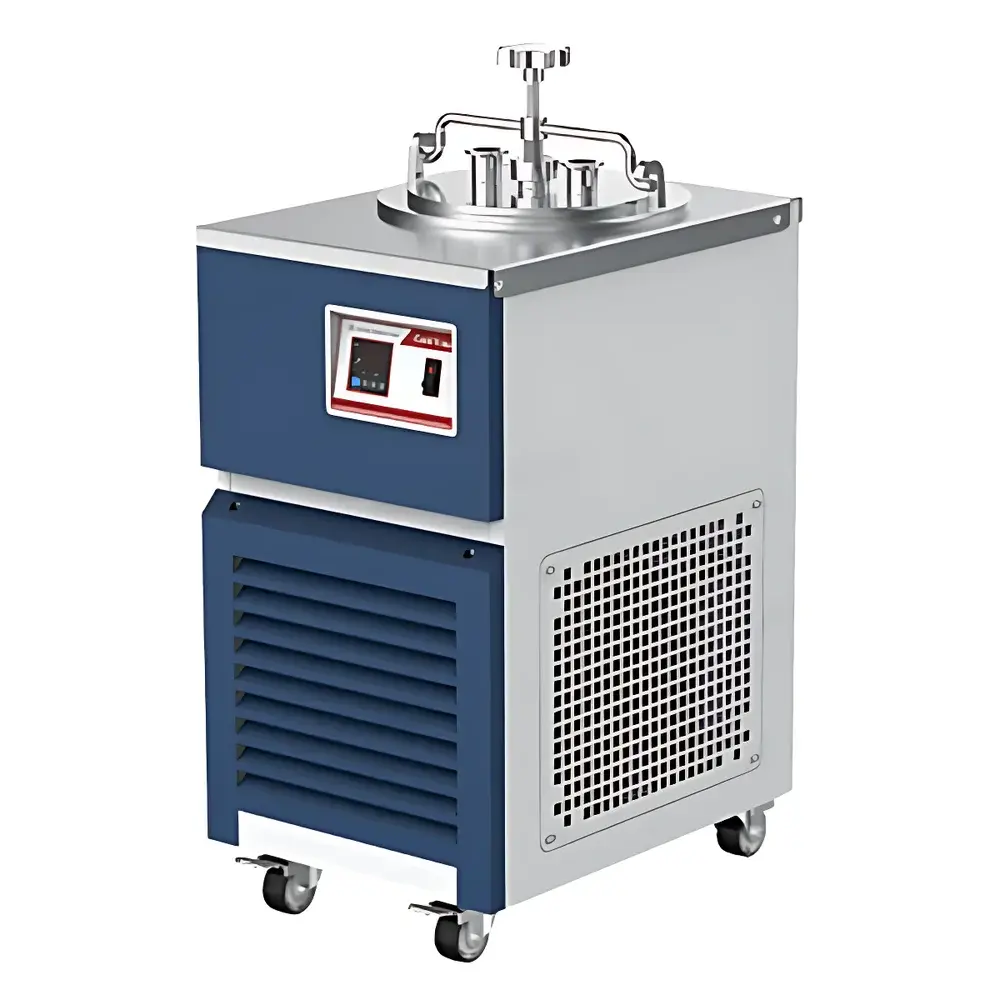
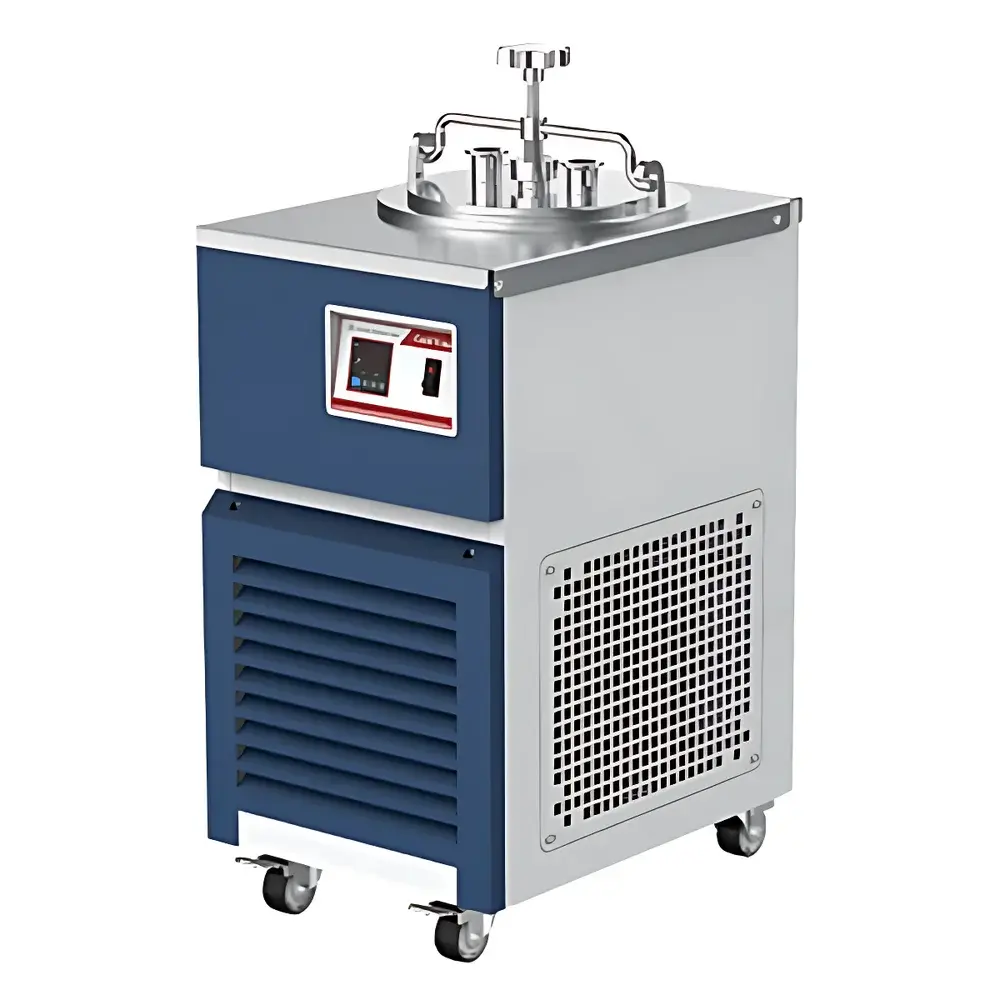
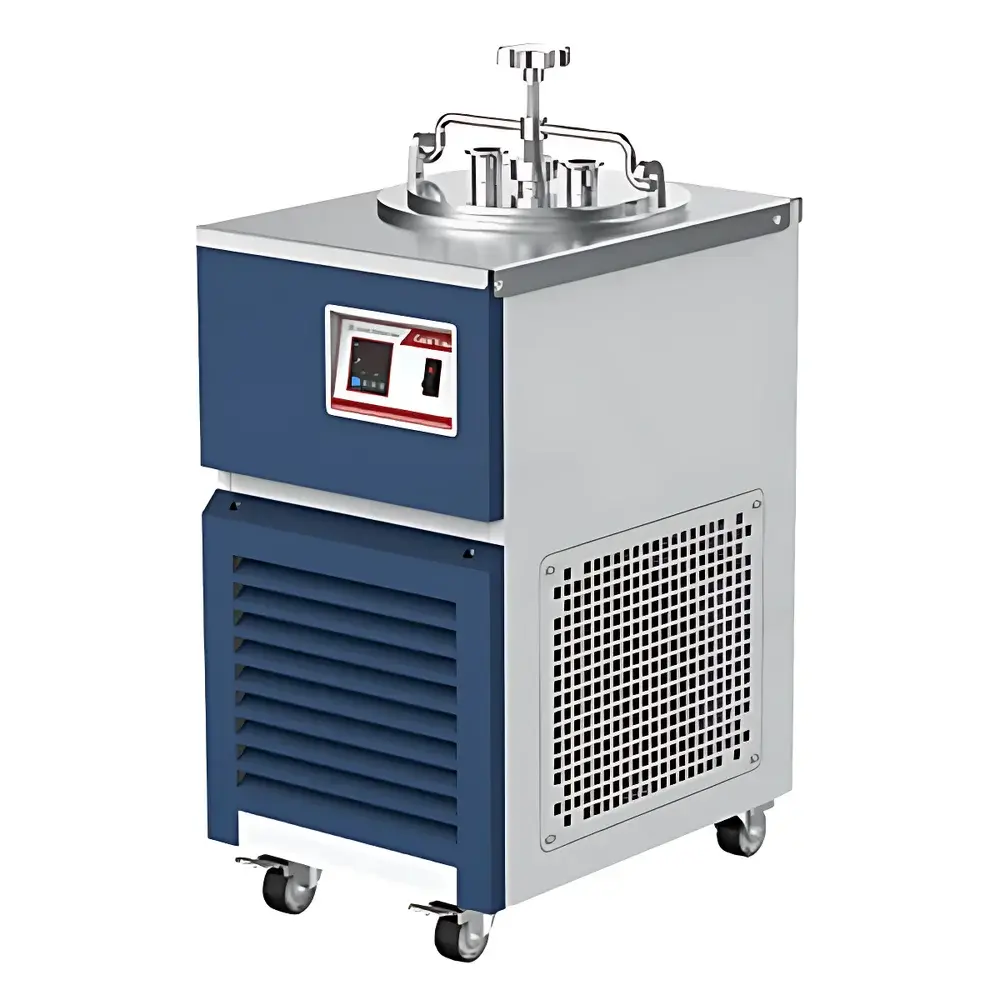
The Great Wall CT-40-V4 Cryogenic Trap
| Brand | The Great Wall |
|---|---|
| Origin | Henan, China |
| Manufacturer Type | Authorized Distributor |
| Country of Origin | China |
| Model | CT-40-V4 |
| Price | Upon Request |
| Empty Load Temperature | −40 °C |
| Cooling Method | Indirect (Glass Flask Immersion) |
| Temperature Display | Digital, Pt100 Sensor |
| Temperature Setting Range | Adjustable Within Operating Range |
| Safety Protections | Delay Start, Overcurrent, Overheat, High-Pressure Cut-off |
| Refrigerant | R404A |
| Cooling Capacity | 300 W at −10 °C, 250 W at −20 °C, 150 W at −30 °C, 50 W at −35 °C |
| Cryobath Dimensions | Ø160 × 250 mm |
| Cold Trap Flask Dimensions | Ø50 × 300 mm (Qty: 3) |
| Flask Material | Borosilicate Glass 3.3 (DIN ISO 3585) |
| Cryobath Material | 06Cr19Ni10 (AISI 304 Stainless Steel) |
| Drain Valve | Integrated |
| Vacuum Port | Ø12 mm Soft Tubing Fitting |
| Ambient Operating Conditions | 5–35 °C, ≤70% RH |
| Power Supply | 220 V~, 60 Hz |
| Total Power Consumption | 730 W |
| Rated Current | 4.2 A |
| Overall Dimensions (W×D×H) | 350 × 470 × 811 mm |
| Net Weight | 45 kg |
| Additional Functions | Pre-freezing Bath, Low-Temperature Constant-Temperature Bath |
Overview
The Great Wall CT-40-V4 Cryogenic Trap is a compact, self-contained refrigerated cold trap engineered for high-efficiency vapor capture in vacuum-based laboratory processes. It operates on a closed-cycle mechanical refrigeration principle using R404A refrigerant and achieves an empty-load operating temperature of −40 °C—sufficient to condense water vapor, low-boiling organic solvents (e.g., acetone, ethyl acetate, dichloromethane), and acidic vapors commonly encountered during rotary evaporation, vacuum drying, and solvent removal workflows. Unlike cryogen-dependent traps, the CT-40-V4 eliminates logistical constraints associated with dry ice handling or liquid nitrogen supply, delivering consistent thermal performance without consumable cryogens. Its indirect cooling architecture immerses high-purity borosilicate glass 3.3 flasks into a precisely temperature-controlled stainless steel cryobath—ensuring uniform thermal transfer while preserving chemical compatibility and mechanical integrity across aggressive media.
Key Features
- Stainless steel cryobath constructed from 06Cr19Ni10 (AISI 304) with integrated drain valve for safe, residue-free removal of condensed liquids and thermal fluid maintenance
- Triple-set borosilicate glass 3.3 (DIN ISO 3585 compliant) cold trap flasks (Ø50 × 300 mm), chemically resistant to aqueous, acidic, and organic solvent environments
- Digital temperature display with Pt100 RTD sensor, enabling real-time monitoring and precise setpoint control within the full operational range
- Multi-layer safety system including delayed compressor start-up, overcurrent protection, thermal cut-off, and high-pressure shutdown—designed to meet IEC 61010-1 requirements for laboratory equipment
- Compact footprint (350 × 470 × 811 mm) with locking casters for stable repositioning between fume hoods, rotary evaporators, and vacuum manifolds
- Refrigeration system optimized for continuous operation under variable load conditions; rated cooling capacity degrades predictably with decreasing temperature (300 W at −10 °C → 50 W at −35 °C)
Sample Compatibility & Compliance
The CT-40-V4 supports broad chemical compatibility due to its all-glass vapor path and inert stainless steel bath. The borosilicate 3.3 flasks resist thermal shock and corrosion from HCl, HNO₃, acetic acid, methanol, THF, and chlorinated solvents—making it suitable for applications governed by ASTM E2654 (standard practice for solvent recovery), ISO 14001-compliant waste minimization protocols, and GLP-aligned vacuum processing. While not certified to UL/CSA standards out-of-box, its electrical architecture complies with basic insulation and grounding provisions per IEC 61010-1. For regulated QC/QA environments, users may integrate the unit into systems validated under FDA 21 CFR Part 11 via external data logging and audit trail documentation.
Software & Data Management
The CT-40-V4 operates as a standalone analog-regulated instrument with no embedded microprocessor or digital communication interface. Temperature setpoints are adjusted manually via front-panel controls; real-time readings are displayed digitally but not logged or exportable. For laboratories requiring traceable temperature records, integration with third-party data acquisition systems (e.g., LabVIEW, Delta Tau PMAC, or Modbus-enabled PLCs) is feasible via optional analog voltage output (0–10 V) or relay status signals (available upon request with OEM modification). This architecture prioritizes operational robustness and electromagnetic immunity over software dependency—ideal for Class II biosafety cabinets or RF-sensitive instrumentation suites.
Applications
- Vapor trapping upstream of oil-sealed or diaphragm vacuum pumps to reduce solvent backstreaming, oil contamination, and pump oil degradation
- Enhancing vacuum integrity during lyophilization pre-freezing stages and low-pressure drying of heat-labile pharmaceutical intermediates
- Condensing volatile reaction byproducts (e.g., HCl gas, SO₂, low-MW esters) in Schlenk line or vacuum manifold configurations
- Serving as a stable −40 °C pre-cooling bath for sample conditioning prior to cryo-SEM stub mounting or low-temperature spectroscopy
- Enabling solvent recycling workflows where recovered condensates are collected, quantified, and reintroduced into synthesis batches per ISO 14040 life cycle assessment guidelines
FAQ
Does the CT-40-V4 require periodic refrigerant recharging?
No—R404A is sealed within a hermetic refrigeration circuit. Under normal use and proper maintenance (e.g., keeping condenser coils clean and ambient airflow unobstructed), the system requires no refrigerant top-up over its service life.
Can the unit operate continuously at −40 °C under full vapor load?
The −40 °C rating is specified under no-load (empty bath) conditions. Under sustained high-vapor-load operation, equilibrium temperature will rise depending on solvent type, flow rate, and ambient conditions. Users should size the trap based on expected vapor mass flux and consult application engineering for duty-cycle validation.
Is the glass flask assembly autoclavable?
Borosilicate 3.3 glass flasks are autoclave-compatible at 121 °C/15 psi, but repeated thermal cycling between −40 °C and 121 °C is not recommended due to cumulative thermal stress. Standard cleaning protocols using ethanol, acetone, or mild alkaline solutions are preferred.
What vacuum line configurations are supported?
The unit features a standard Ø12 mm barbed fitting compatible with reinforced silicone or Viton tubing (ID 10–12 mm). For high-vacuum applications (<10⁻² mbar), users should install a secondary metal-sealed adapter and verify leak integrity using helium mass spectrometry per ASTM E493.



