
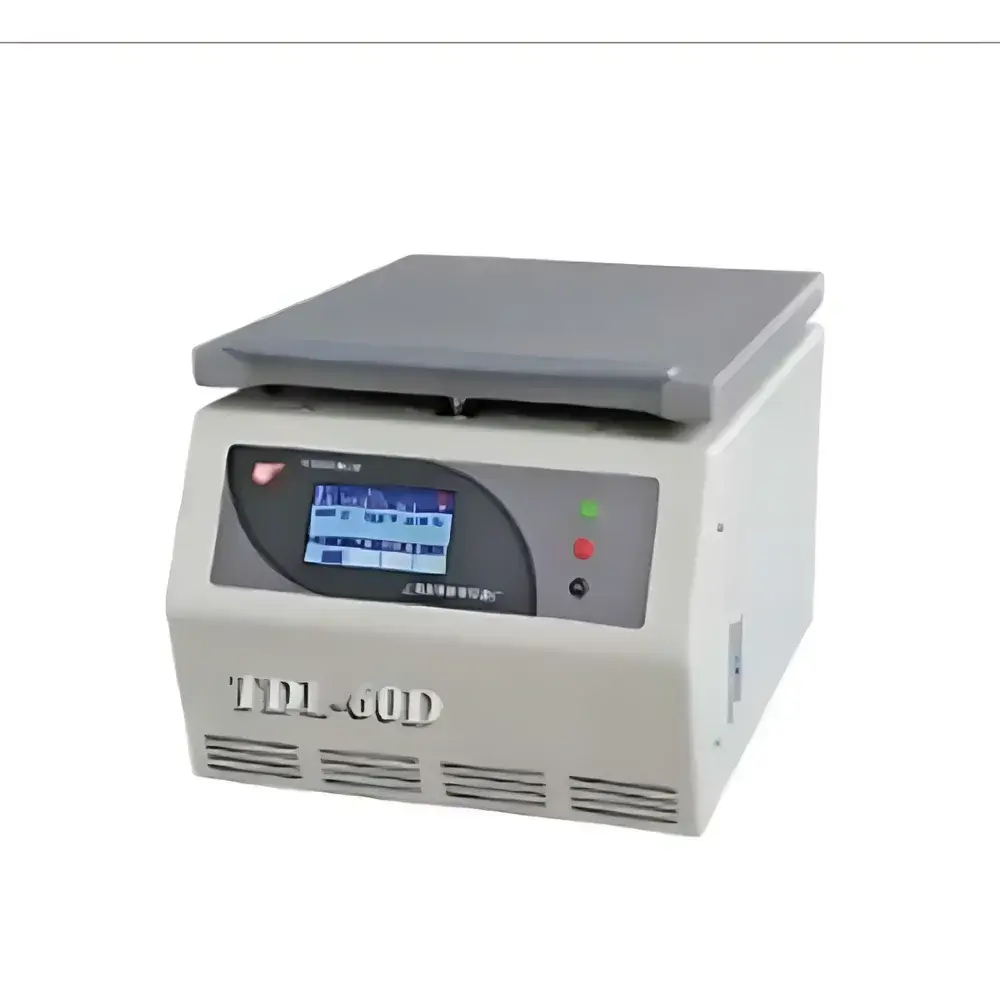
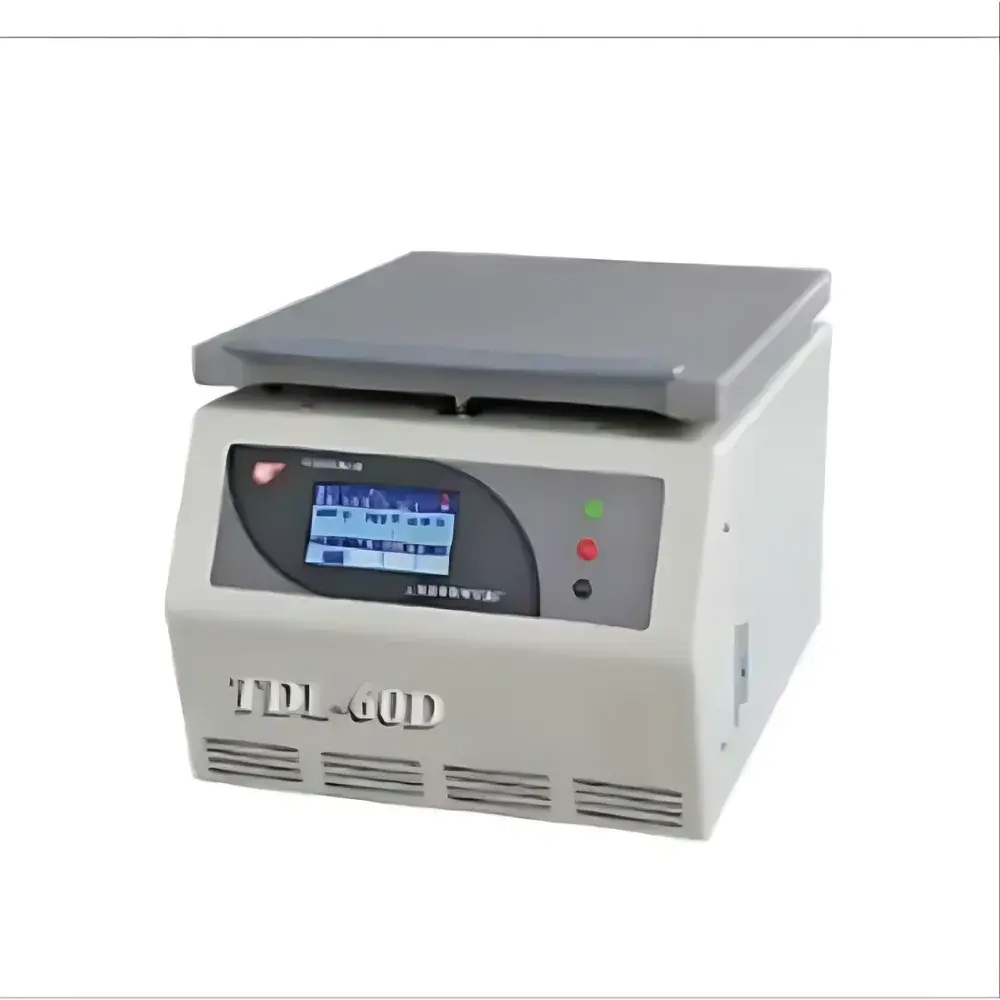
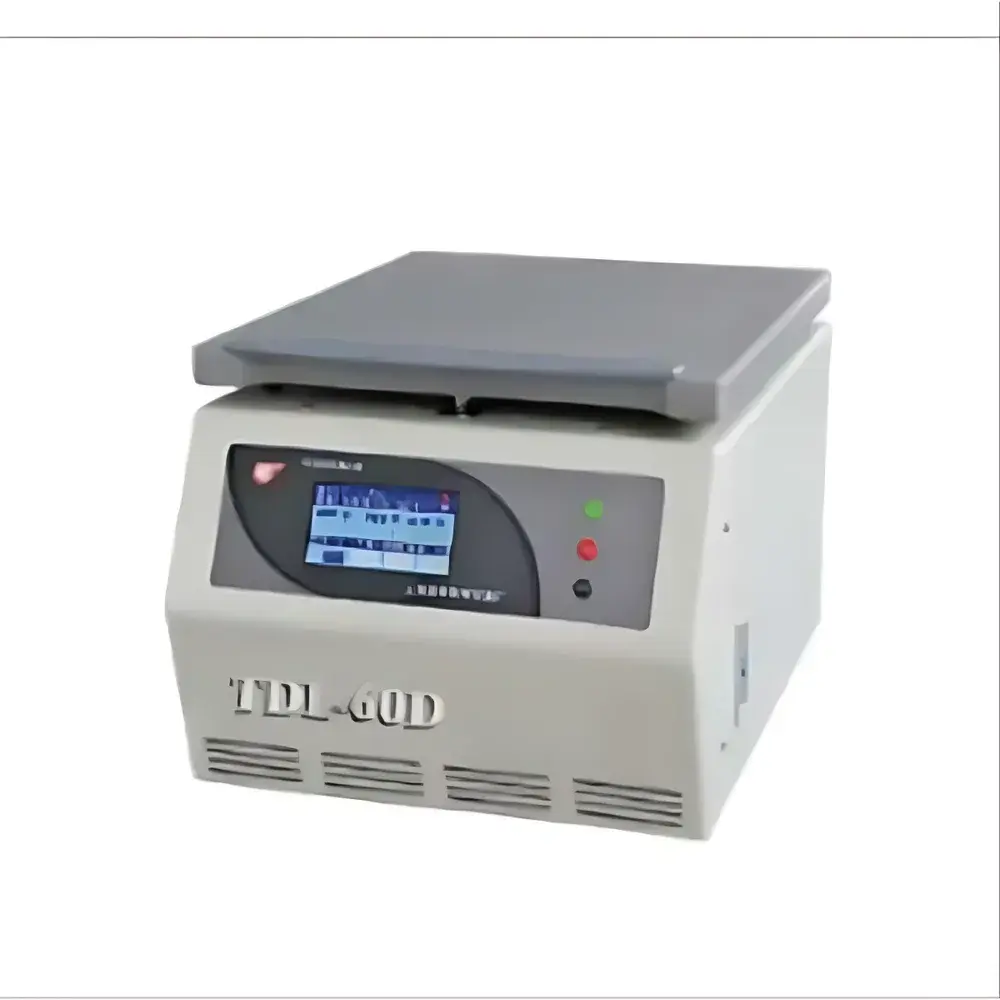
AnTing TDL-60D Benchtop Low-Speed Centrifuge
| Brand | AnTing |
|---|---|
| Origin | Shanghai, China |
| Model | TDL-60D |
| Type | Benchtop Centrifuge |
| Speed Range | 0–6000 rpm |
| Max RCF | 5000 ×g |
| Rotor Type | Fixed-Angle |
| Rotor Capacity | 15 mL × 12 |
| Horizontal Rotor Capacity | 50 mL × 6 |
| Temperature Control | None (Non-refrigerated) |
| Timer Range | 0–99 min |
| Power Supply | 220 V, 50 Hz, 400 W |
| Dimensions (L×W×H) | 380 × 480 × 330 mm |
| Weight | 60 kg |
| Construction | Reinforced polymer housing with precision-machined rotor chamber |
| Safety | Electronic lid interlock system |
| Compliance | Designed to meet IEC 61010-1 safety requirements for laboratory electrical equipment |
Overview
The AnTing TDL-60D is a robust, microprocessor-controlled benchtop low-speed centrifuge engineered for routine separation tasks in clinical laboratories, quality control environments, and academic research settings. It operates on the principle of sedimentation under centrifugal force—accelerating phase separation based on particle density, size, and medium viscosity. Unlike high-speed or ultracentrifuges, the TDL-60D is optimized for gentle pelleting of cells, precipitates, and suspended particulates where thermal stability and mechanical integrity are prioritized over ultra-high g-forces. Its fixed-angle rotor configuration enables rapid, reproducible sedimentation of small-volume samples (e.g., blood, cell cultures, polymer solutions), while the horizontal rotor option supports larger-volume tubes (up to 50 mL) for preparative applications such as serum harvesting or buffer exchange.
Key Features
- Microprocessor-based speed and time control with digital display and touch-sensitive interface for precise parameter setting and real-time monitoring.
- Brushless DC motor with variable-frequency drive ensures smooth acceleration/deceleration, minimal vibration, and extended service life—critical for long-duration runs and repeated daily use.
- Reinforced polymer chassis with vibration-damping base provides structural rigidity and operational stability at maximum rated speed (6000 rpm), achieving ≤0.5 mm/s RMS vibration amplitude per ISO 10816-3.
- Integrated electronic lid lock prevents operation unless the rotor chamber is fully closed and sealed, complying with IEC 61010-2-020 safety standards for centrifuge-specific hazards.
- No refrigeration system—designed for ambient-temperature operation only; suitable for applications where sample temperature sensitivity is low or external cold-room integration is feasible.
- Two standard rotor configurations: (1) 12-place fixed-angle rotor for 15 mL conical tubes, delivering up to 5000 ×g; (2) 6-place horizontal rotor accommodating six 50 mL tubes, yielding ~3000 ×g at full speed.
Sample Compatibility & Compliance
The TDL-60D accommodates common laboratory tube formats including polypropylene and polycarbonate conical centrifuge tubes (15 mL and 50 mL), as well as glass test tubes up to 18 mm diameter. It is compatible with aqueous buffers, saline solutions, diluted organic solvents (e.g., ethanol/water mixtures), and biological suspensions containing mammalian cells, yeast, or bacterial pellets. The device conforms to IEC 61010-1:2010 for electrical safety in laboratory equipment and includes CE marking for the European Economic Area. While not certified for GLP/GMP production environments out-of-the-box, its audit-ready timer logs and non-volatile parameter memory support traceability when integrated into validated workflows. Note: Not compliant with FDA 21 CFR Part 11 due to absence of electronic signature capability and audit trail generation.
Software & Data Management
The TDL-60D features embedded firmware with no external PC connectivity or proprietary software suite. All operational parameters—including speed (rpm), run time (minutes), and rotor identification—are stored in non-volatile memory and recalled upon power-up. The touch interface records the last five run histories (start time, duration, final speed, rotor type), accessible via menu navigation. No data export functionality (USB, Ethernet, or Bluetooth) is included. For laboratories requiring electronic recordkeeping, manual transcription into LIMS or ELN systems is recommended. Firmware updates are performed exclusively by authorized AnTing service technicians using diagnostic hardware interfaces.
Applications
- Clinical hematology: Separation of whole blood into serum/plasma and cellular fractions prior to immunoassay or hematocrit analysis.
- Pharmaceutical QC: Clarification of suspension formulations, excipient compatibility testing, and residual solvent removal from active pharmaceutical ingredient (API) slurries.
- Academic life sciences: Harvesting adherent or suspension mammalian cells, pelleting plasmid DNA after alkaline lysis, and concentrating viral vectors in transient transfection protocols.
- Environmental testing: Solid-liquid separation of soil leachates and wastewater filtrates for subsequent metal ion analysis by ICP-OES or AAS.
- Food & beverage labs: Determination of fat content in milk homogenates (Gerber method), starch granule isolation, and yeast viability assessment in fermentation broths.
FAQ
Is the TDL-60D a refrigerated centrifuge?
No. It operates at ambient temperature only and does not include a compressor-based cooling system.
Can I use this centrifuge for radioactive or biohazardous samples?
Yes—provided appropriate secondary containment (e.g., sealed buckets or sealed rotors) is used and local biosafety or radiation safety protocols are followed.
What maintenance is required for long-term reliability?
Routine cleaning of the rotor chamber and lid gasket with 70% ethanol; annual calibration of speed and timer accuracy by an AnTing-certified technician.
Does the TDL-60D support rotor auto-identification?
No. Rotor type must be manually selected via the interface before initiating a run.
Is there a warranty, and what does it cover?
AnTing provides a 12-month limited warranty covering defects in materials and workmanship, excluding consumables (rotors, tubes) and damage from misuse or unauthorized modification.



