
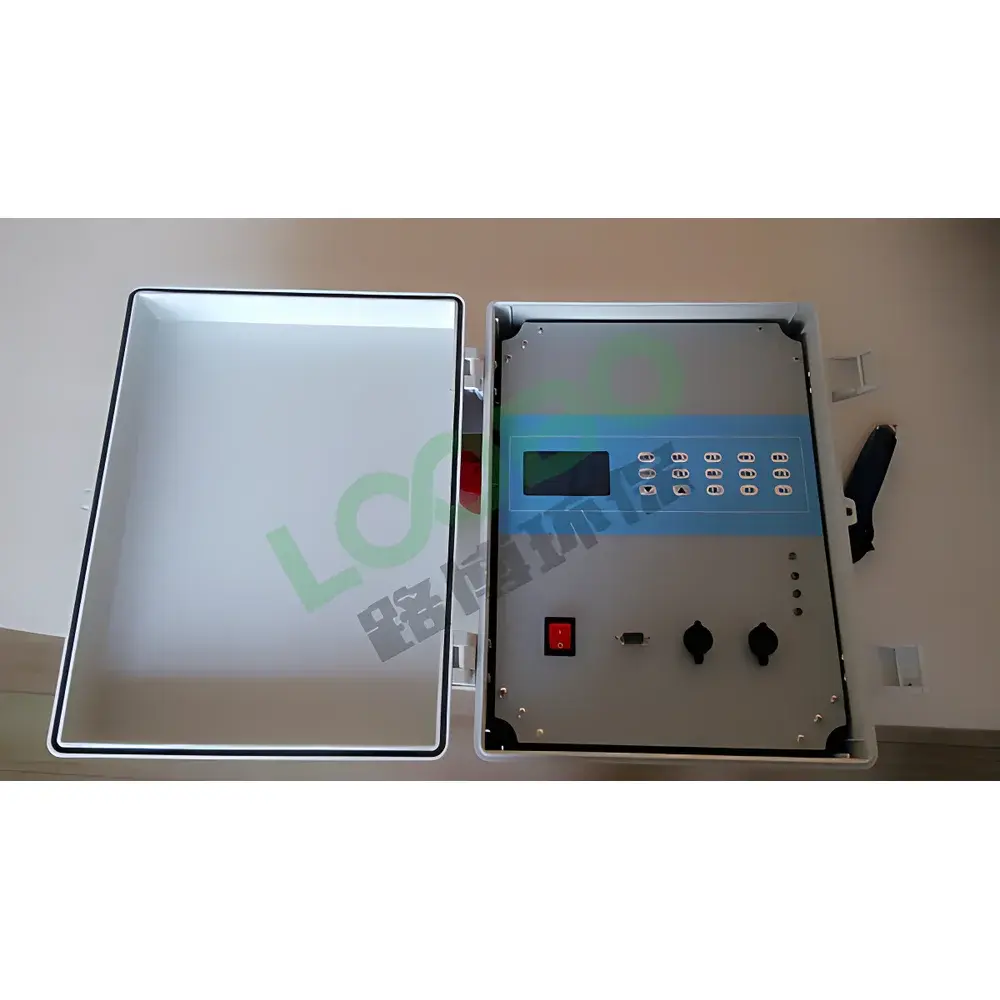
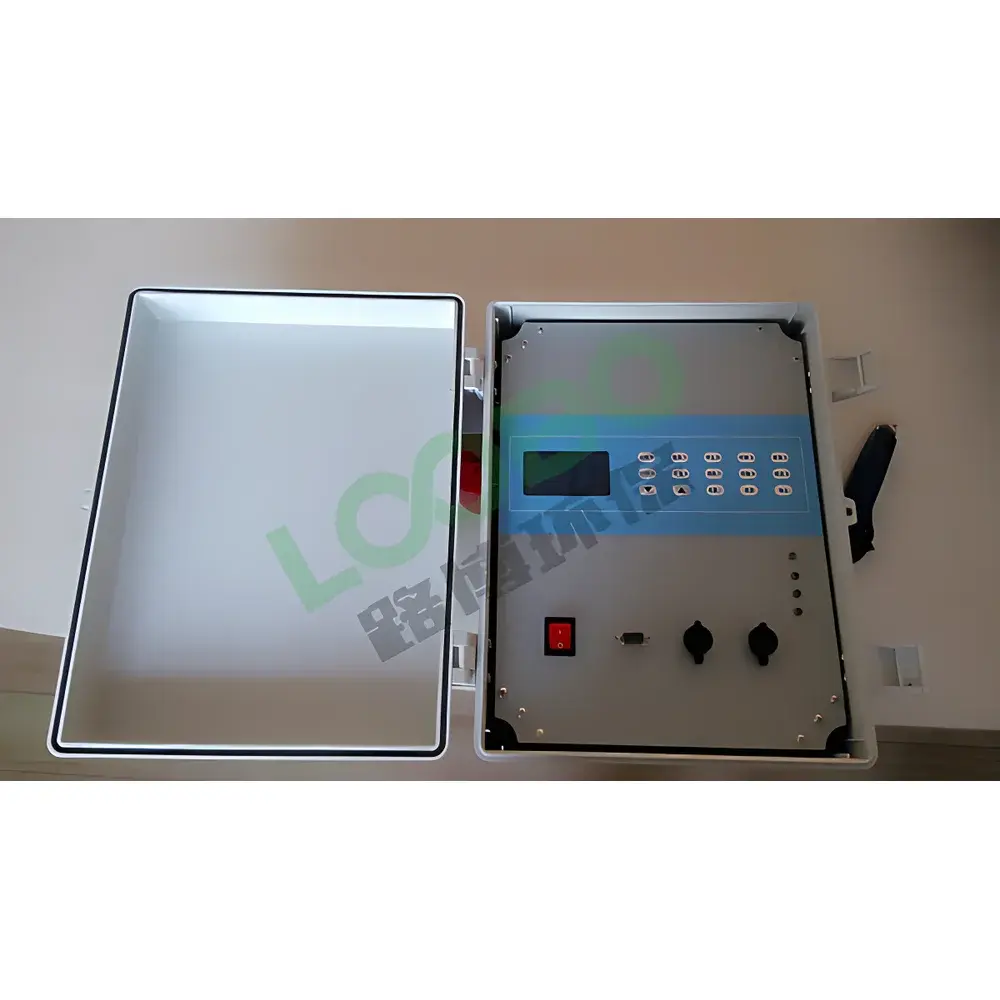
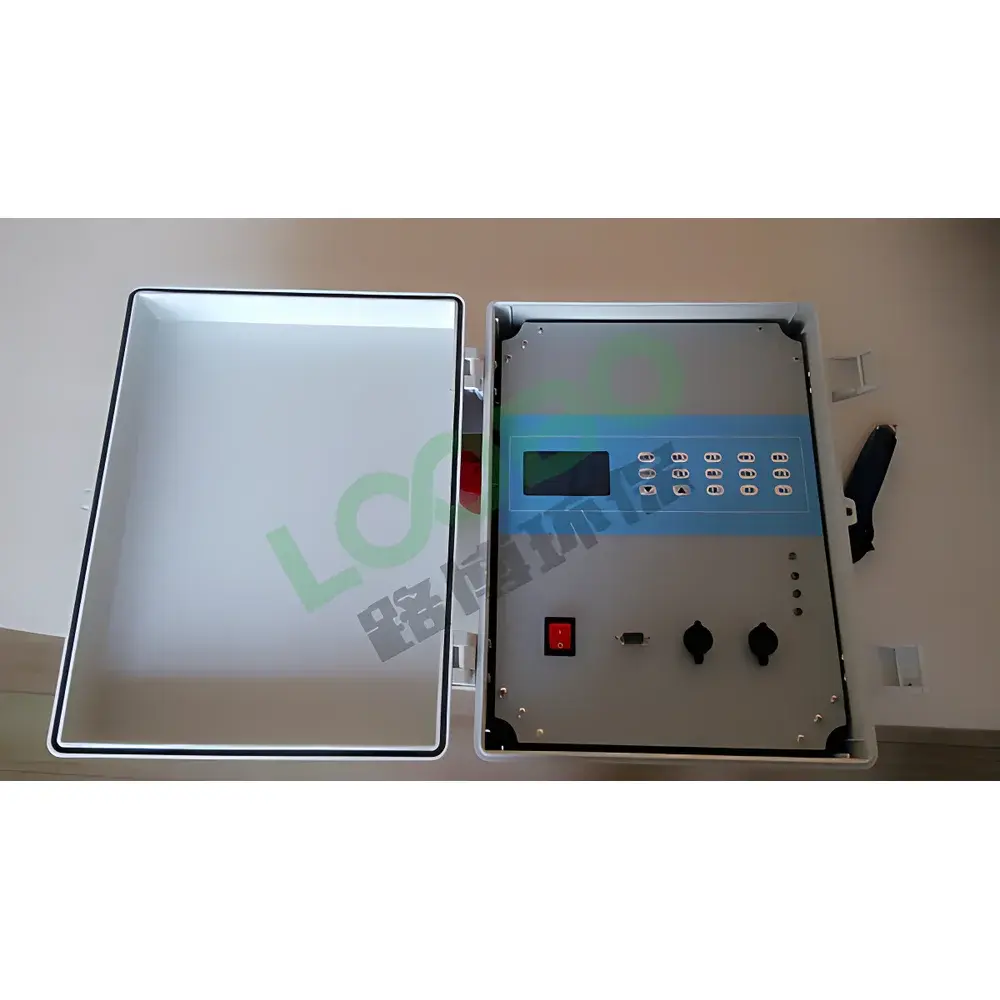
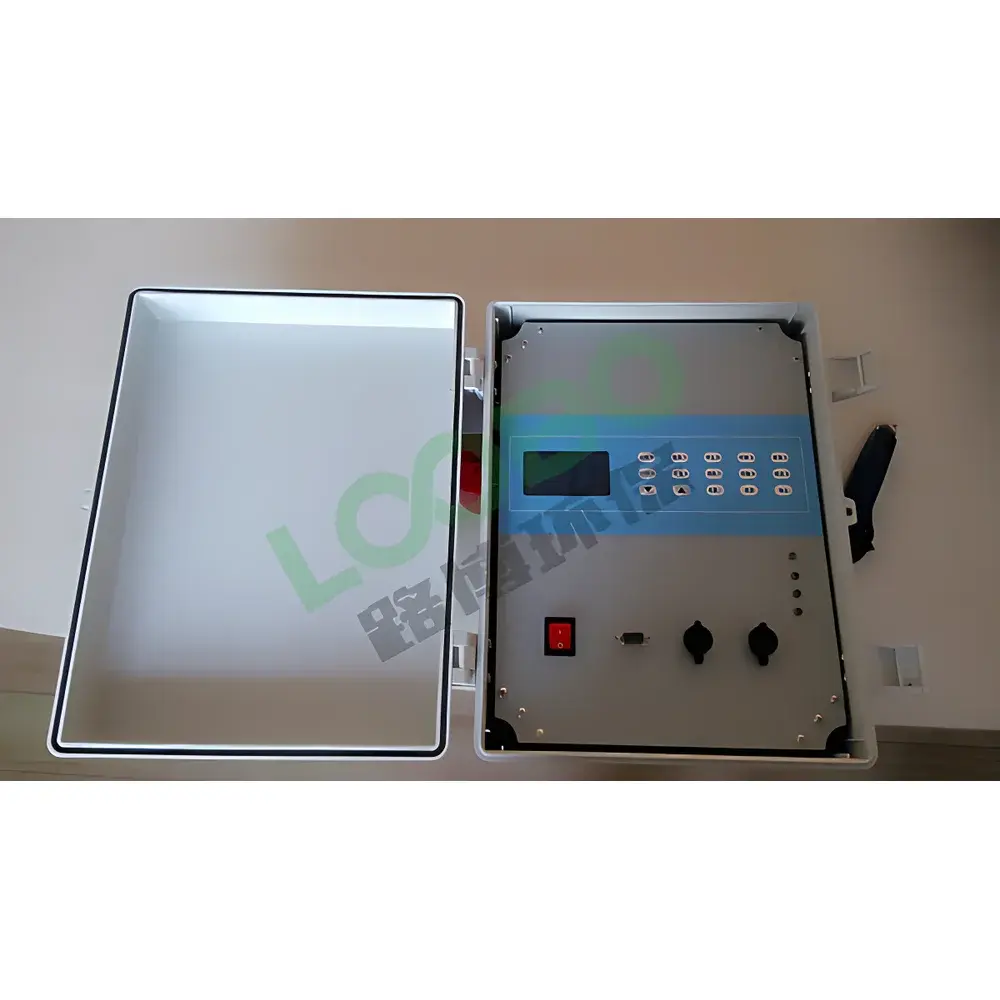
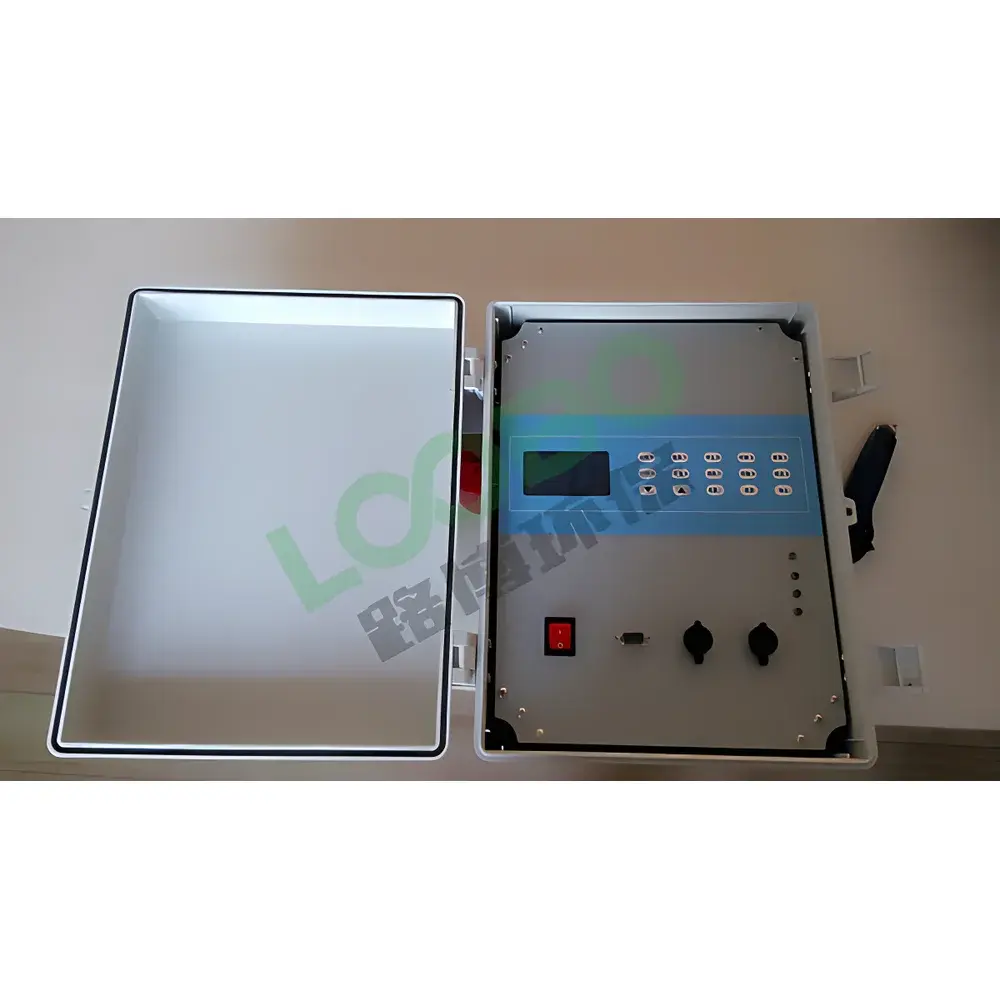
Loobo LB-ZXF Online Laser Dust Monitor
| Brand | Loobo |
|---|---|
| Origin | Shandong, China |
| Manufacturer Type | Authorized Distributor |
| Country of Origin | China |
| Model | LB-ZXF |
| Price Range | USD 1,400–4,200 (FOB) |
| Measurement Principle | Laser Light Scattering |
| Safety Classification | Non-Explosive Atmosphere Rated |
| Measurement Range | 0.001–10 mg/m³ |
| Resolution | 0.001 mg/m³ |
| Accuracy | ≤5% FS |
| Relative Error | ≤±10% |
| Particle Size Selectivity | PM₂.₅, PM₁₀, and TSP (via electronic virtual impactor algorithm) |
| Operating Environment | Temperature –10°C to +50°C |
| Power Supply | Rechargeable Li-ion battery (12 h continuous operation) + AC/DC adapter |
| Communication Interfaces | RS232, RS485 (standard) |
| Data Storage | 100,000 records (timestamped, with real-time clock) |
| Display | Backlit LCD with Chinese/English bilingual interface |
| Dimensions | 400 × 300 × 170 mm |
| Weight | 1.0 kg |
Overview
The Loobo LB-ZXF Online Laser Dust Monitor is an industrial-grade, real-time particulate matter (PM) monitoring instrument engineered for continuous ambient or workplace air quality surveillance. It operates on the principle of forward-scattered laser light detection—where a collimated 650 nm diode laser beam interacts with suspended aerosol particles, and the intensity of scattered light is quantitatively correlated to mass concentration via Mie scattering theory calibration. The device delivers direct readout of dust mass concentration in mg/m³ across three standardized size fractions: respirable PM₂.₅, thoracic PM₁₀, and total suspended particulates (TSP), achieved through software-defined virtual impactor algorithms rather than mechanical cyclones. This eliminates maintenance-intensive hardware swaps and ensures stable metrological traceability over extended deployment cycles. Designed for fixed-site installation or mobile monitoring carts, the LB-ZXF complies with long-standing occupational hygiene frameworks—including GBZ1-2002 (Industrial Workplace Hygiene Standards), GBZ2-2002 (Occupational Exposure Limits), and WS/T206-2001 (Public Health PM₁₀ Measurement by Light Scattering)—and supports regulatory alignment with ISO 7708:1995 (Airborne particles—size-selective sampling criteria) and EN 481:1993 (Respirable dust definition).
Key Features
- Triple-mode particle sizing: Simultaneous real-time reporting of PM₂.₅, PM₁₀, and TSP concentrations using embedded multi-channel digital signal processing and calibrated optical response curves.
- High-sensitivity photodetector system with 0.001 mg/m³ resolution and ≤5% full-scale accuracy under controlled reference conditions (NIST-traceable calibration aerosols).
- Integrated environmental sensors: Onboard temperature and relative humidity measurement (±0.5°C, ±3% RH) for automatic density compensation and data contextualization.
- Configurable time-weighted averaging: User-definable sampling intervals from 1 second to 99 minutes per data point, with up to 10 pre-programmed schedules.
- On-device data visualization: Real-time concentration trend plotting with auto-scaling axes, enabling immediate identification of transient events or baseline drift.
- Comprehensive local data management: 100,000 timestamped records stored in non-volatile memory (retained ≥10 years without power), each including date/time, PM fraction, concentration, temperature, humidity, and alarm status.
- Dual-power architecture: Field-replaceable lithium-ion battery pack (12 h typical runtime) plus universal AC/DC input (100–240 VAC, 50/60 Hz), supporting uninterrupted operation during grid fluctuations.
- Flexible I/O options: Standard RS232/RS485 serial interfaces for Modbus RTU integration into SCADA or BMS systems; optional 4–20 mA or 0–5 V analog outputs for PLC interfacing.
Sample Compatibility & Compliance
The LB-ZXF is validated for use in indoor air quality (IAQ) assessment, occupational health monitoring (e.g., construction, mining, foundry, pharmaceutical manufacturing), and municipal environmental surveillance. Its optical design accommodates polydisperse aerosols ranging from submicron combustion soot to coarse mineral dusts (0.3–10 µm aerodynamic diameter). While not certified for Class I Div 1 hazardous locations, it meets IP54 ingress protection requirements for dust resistance and limited water splashing. Regulatory conformance includes adherence to Chinese national standards GBZ1-2002, GBZ2-2002, WS/T206-2001, LD98-1996, and TB/T2323-92—each referencing gravimetric validation protocols and light-scattering equivalence criteria. Though not FDA 21 CFR Part 11–compliant out-of-the-box, audit-ready data export (CSV/Excel) and immutable timestamping support GLP-aligned recordkeeping when deployed with documented SOPs.
Software & Data Management
Data retrieval is supported via USB-to-serial cable or optional Wi-Fi module (firmware v3.2+). The proprietary Loobo DustView desktop application (Windows 10/11 compatible) enables batch download, spectral histogram generation, time-series overlay analysis, and customizable report export (PDF, Excel). All stored records include ISO 8601 timestamps, sensor diagnostics flags, and firmware revision metadata. The software enforces write-once archival logic: once downloaded, raw files are digitally signed and cannot be edited—facilitating internal QA audits. For enterprise integration, ASCII-formatted RS485 output supports direct ingestion into Historian platforms (e.g., Ignition, Siemens Desigo CC) without middleware.
Applications
- Continuous compliance monitoring in semiconductor cleanrooms where PM₂.₅ excursions threaten wafer yield.
- Real-time exposure assessment for workers handling nanomaterials or crystalline silica in R&D labs and pilot plants.
- Stack emission pre-screening at small-scale industrial facilities prior to formal gravimetric stack testing.
- Indoor air quality verification in hospitals, schools, and office buildings per WHO Air Quality Guidelines (2021) thresholds.
- Mobile monitoring on environmental inspection vehicles equipped with GPS-synced geotagged logging.
- Baseline characterization during site remediation projects involving asbestos or lead-contaminated dust.
FAQ
Does the LB-ZXF require annual factory recalibration?
No mandatory annual recalibration is specified; however, Loobo recommends biannual verification using NIST-traceable PSL (polystyrene latex) aerosol standards (e.g., 1.0 µm and 2.5 µm) to confirm optical alignment and scattering coefficient stability.
Can the device distinguish between organic and inorganic dust composition?
No—the LB-ZXF measures total mass concentration only. Elemental or compositional analysis requires offline lab techniques (e.g., SEM-EDS, XRF, or IC) performed on filter-collected samples obtained via its integrated isokinetic sampling port.
Is remote firmware update supported?
Yes—firmware updates (v3.0 and later) can be applied via USB stick or secure HTTPS upload through the DustView software, with version rollback capability and checksum validation.
What is the recommended maintenance interval for the optical chamber?
Visual inspection every 3 months; cleaning of the laser window and detector lens with lint-free swabs and isopropyl alcohol is advised if visible contamination is observed—no disassembly required.
Does the instrument meet EU CE marking requirements for environmental monitoring equipment?
It carries CE marking under the EMC Directive 2014/30/EU and RoHS 2011/65/EU; however, it does not bear the CE mark under the Measuring Instruments Directive (MID) as it is not classified as a legal metrology device in the EU context.







