
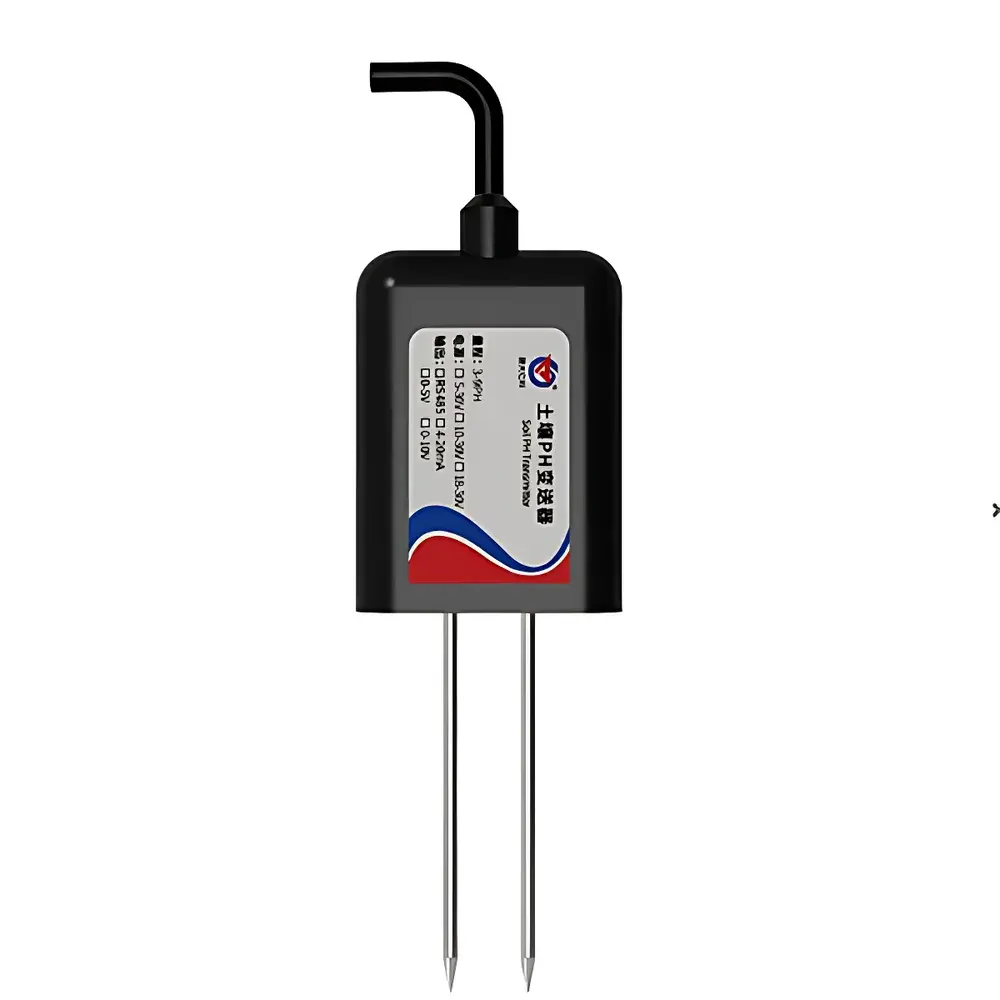
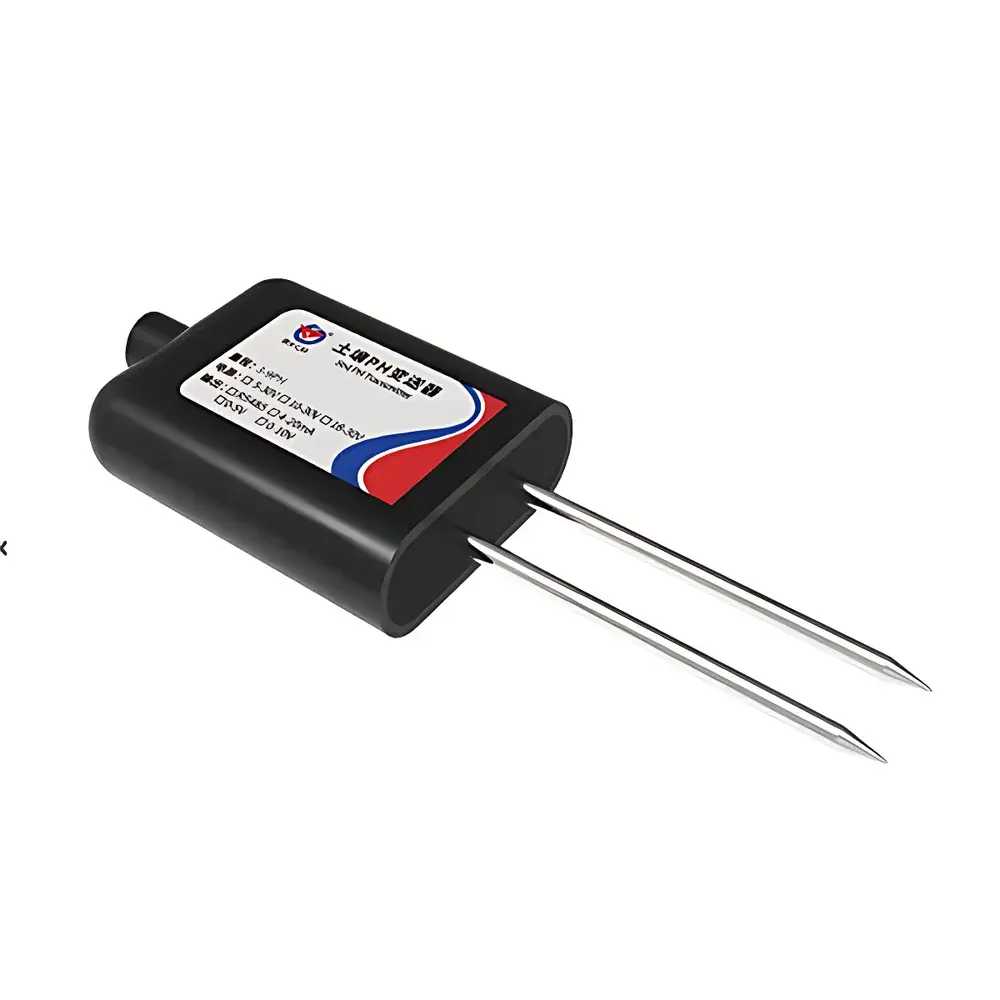
RenKe RS-PH-N01 Soil pH Transmitter with RS485 Output (Modbus-RTU)
| Brand | RenKe |
|---|---|
| Origin | Shandong, China |
| Manufacturer Type | Manufacturer |
| Country of Origin | China |
| Model | RS-PH-N01 |
| Instrument Type | Soil Moisture & pH Analyzer |
| Power Supply | DC 5–30 V |
| Power Consumption | 0.5 W (at 24 V DC) |
| Measurement Range | 3–9 pH |
| Resolution | 0.1 pH |
| Accuracy | ±0.3 pH |
| Operating Temperature | −20 °C to +60 °C |
| Long-Term Stability | ≤5 %/year |
| Response Time | ≤10 s |
| Protection Rating | IP68 |
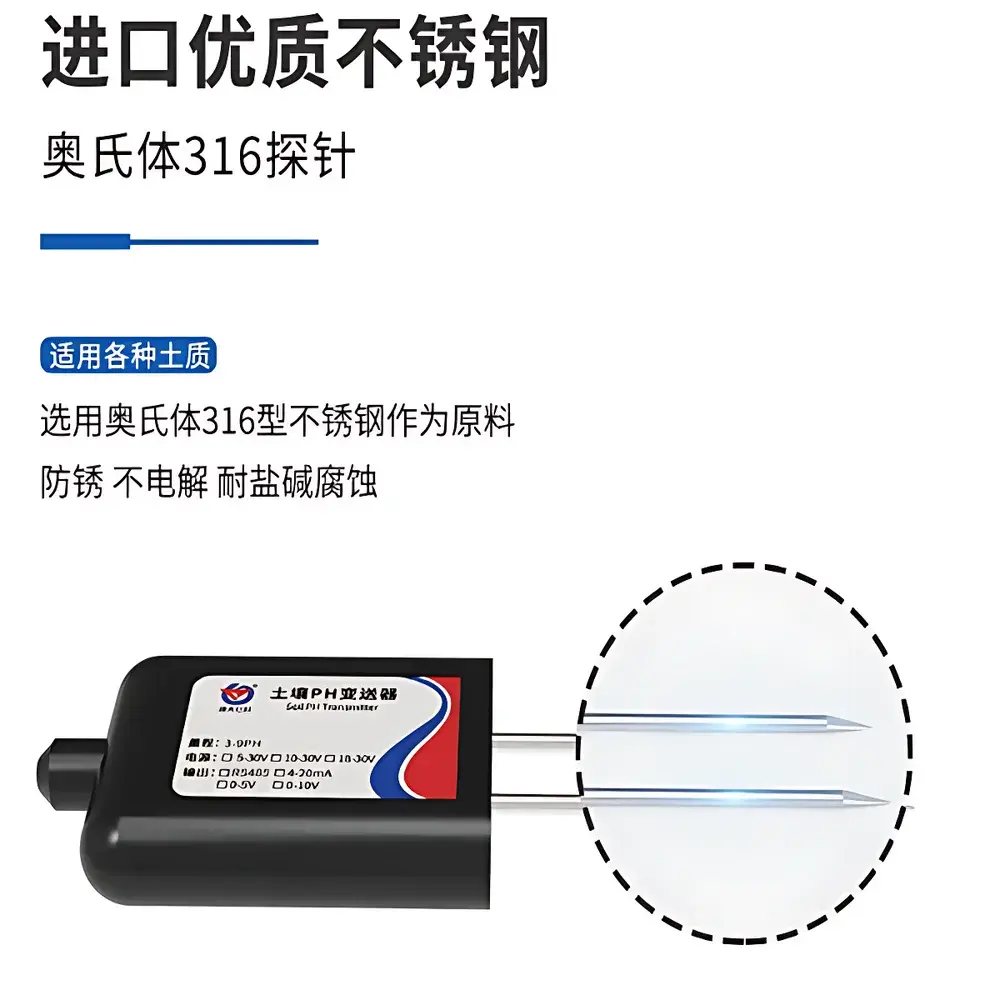
| Probe Material | Corrosion-Resistant Alloy Electrode |
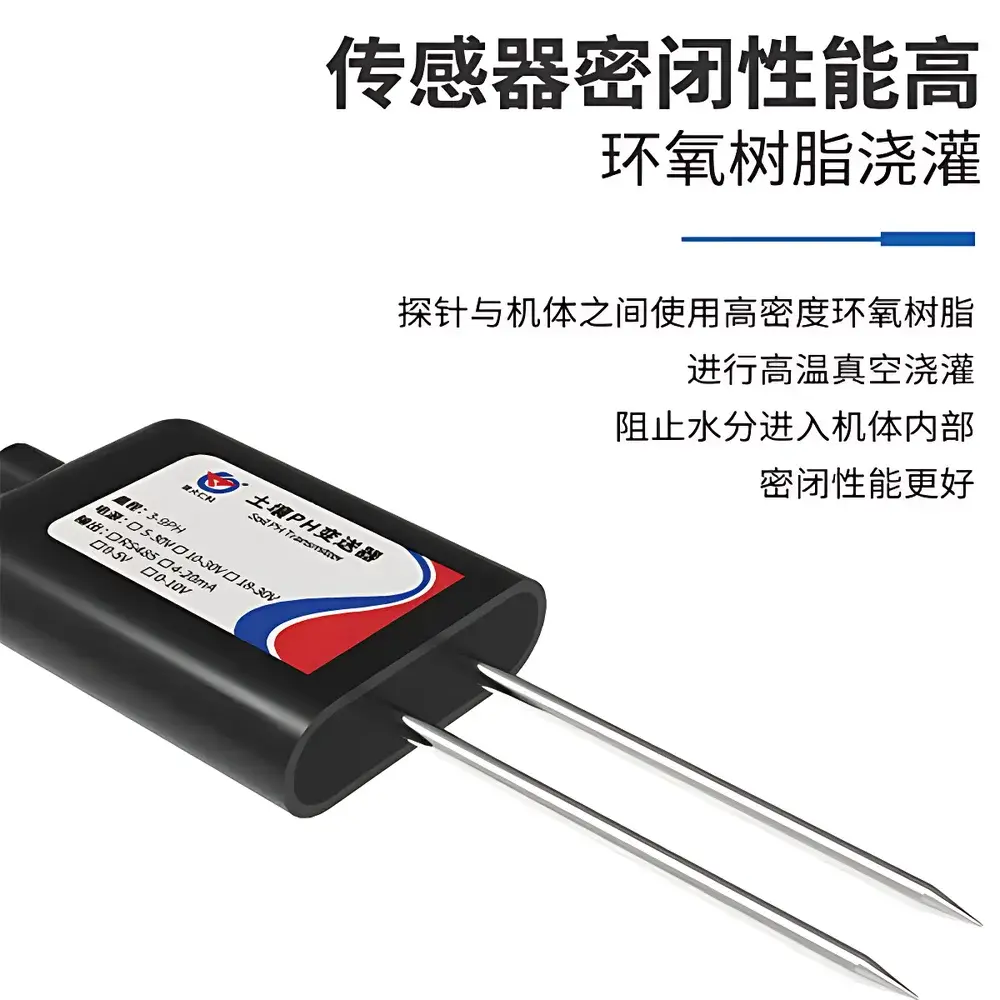
| Encapsulation Material | Black Flame-Retardant Epoxy Resin |
| Dimensions | 45 × 15 × 123 mm |
| Output Signal | RS485 (Modbus-RTU Protocol) |
Overview
The RenKe RS-PH-N01 Soil pH Transmitter is a rugged, field-deployable electrochemical sensor engineered for continuous in-situ monitoring of soil acidity (pH) across agricultural, ecological, and environmental research applications. It operates on the principle of potentiometric measurement using a solid-state reference electrode and a corrosion-resistant alloy sensing element, eliminating the need for liquid electrolytes or frequent recalibration. Unlike traditional glass-electrode-based systems, the RS-PH-N01 employs vacuum-encapsulated, epoxy-sealed construction to ensure long-term stability under variable moisture, salinity, and redox conditions typical of undisturbed soil profiles. Its design conforms to the operational requirements of unattended, multi-month deployments—common in precision agriculture trials, watershed health assessments, and long-term ecological monitoring networks.
Key Features
- High-reliability potentiometric pH sensing with ±0.3 pH accuracy over the 3–9 pH range, validated against NIST-traceable buffer standards (pH 4.01, 7.00, 10.01) under controlled soil-mimicking matrices.
- IP68-rated hermetic encapsulation using flame-retardant black epoxy resin—enabling full submersion, resistance to organic solvents, and immunity to root exudates and microbial biofilm formation.
- Robust probe geometry: dual-pin insertion configuration optimized for minimal soil disturbance; active sensing zone localized between electrodes to reduce edge effects and enhance spatial representativeness within a 5 cm cylindrical volume.
- Low-power operation (0.5 W at 24 V DC), compatible with solar-powered data loggers and battery-operated telemetry gateways—supporting deployments in off-grid locations.
- RS485 digital output compliant with Modbus-RTU protocol (default address 0x01, configurable via software command), enabling daisy-chaining of up to 32 sensors on a single bus without signal degradation.
- Mechanically reinforced alloy electrodes withstand repeated insertion into compacted clay, gravelly loam, and rocky substrates without deformation or calibration drift.
Sample Compatibility & Compliance
The RS-PH-N01 is validated for direct insertion into mineral soils (sandy, silty, and clayey textures), peat-based growing media, and compost-amended substrates. It is not intended for use in highly conductive hydroponic solutions or strongly oxidizing environments (e.g., acid mine drainage soils with Eh > +600 mV). While not certified to ISO/IEC 17025, its measurement traceability aligns with ASTM D4972 (Standard Test Method for pH of Soils) for field screening applications. The device meets CE electromagnetic compatibility (EMC) Class B requirements and complies with RoHS Directive 2011/65/EU for hazardous substance restrictions. For GLP-compliant studies, users are advised to perform initial field calibration using two-point buffer verification (pH 4.01 and 7.00) prior to deployment and document sensor ID, date, and calibration coefficients in audit-ready logs.
Software & Data Management
Data acquisition is supported via standard Modbus-RTU master devices—including Campbell Scientific CR series loggers, HOBO RX3000 gateways, and open-source platforms such as Node-RED or Python-based Modbus libraries (e.g., pymodbus). The transmitter outputs raw pH values as 16-bit signed integers (scaled ×10, e.g., 68 = pH 6.8) and includes status flags for sensor fault detection (e.g., open-circuit, short-circuit, out-of-range). Firmware supports remote address reconfiguration and readout of internal temperature compensation values (NTC-based, −20–60 °C). No proprietary software is required; configuration and diagnostics can be performed using generic Modbus utilities (e.g., QModMaster, ModScan). All communication adheres to Modbus Function Code 03 (Read Holding Registers), ensuring interoperability with SCADA systems and cloud platforms (e.g., ThingsBoard, AWS IoT Core) when paired with an RS485-to-MQTT gateway.
Applications
- Precision irrigation management: real-time pH feedback integrated with EC and volumetric water content sensors to optimize lime amendment scheduling and nutrient availability modeling.
- Revegetation and restoration ecology: longitudinal tracking of rhizosphere pH shifts during native species establishment in post-mining or degraded soils.
- Long-term soil health monitoring: inclusion in ILVO-type or USDA-NRCS benchmark network nodes where multi-year pH trends inform carbon sequestration and cation exchange capacity (CEC) projections.
- Greenhouse substrate monitoring: embedded deployment in containerized horticultural media to detect acidification from ammonium-based fertilizers or nitrification-driven H⁺ accumulation.
- Acid sulfate soil risk assessment: early-warning detection of pH decline in coastal floodplains and drained wetlands prone to pyrite oxidation.
FAQ
Can the RS-PH-N01 be used in saturated or flooded soils?
Yes—the IP68 rating and fully encapsulated probe allow continuous operation in waterlogged and intermittently submerged conditions. However, prolonged exposure to standing water above pH 9.0 may accelerate surface passivation; periodic field verification is recommended.
Is temperature compensation automatic?
Yes—onboard NTC thermistor provides real-time temperature readings (−20 to +60 °C), and pH output is internally compensated per the Nernst equation slope (−0.198 mV/pH/°C at 25 °C). Raw temperature data is also accessible via Modbus register.
What is the recommended recalibration interval?
For research-grade applications, biannual two-point calibration (pH 4.01 and 7.00) is advised. In stable agricultural soils with low buffering variability, annual verification suffices—provided no mechanical damage or visible electrode fouling occurs.
Does the sensor require soil-specific calibration?
No—factory calibration uses standardized buffer solutions and is transferable across soil types. However, users working with high-organic or saline soils (>4 dS/m) should validate accuracy against laboratory pH measurements of extracted saturated paste.
Can multiple RS-PH-N01 units share one RS485 bus?
Yes—up to 32 units can operate on a single twisted-pair RS485 line with proper termination (120 Ω) and address assignment. Ensure differential signal integrity by limiting total bus length to 1,200 meters (with repeaters for extended topologies).







