Biaozhuo JJ-2A Fully Automated Inclinometer Calibration System (Digital Dividing Head)
| Brand | Biaozhuo |
|---|---|
| Origin | Shanghai, China |
| Model | JJ-2A |
| Measurement Range | 0°–360° |
| Angular Resolution | <1 arcsecond |
| Accuracy | <4 arcseconds |
| Base Material | Granite |
| Main Shaft Bearing | Dual-sphere rolling mechanism |
| Operating Temperature | 20 °C ±3 °C |
| Relative Humidity | 40–60 % RH |
| Mass | 350 kg |
Overview
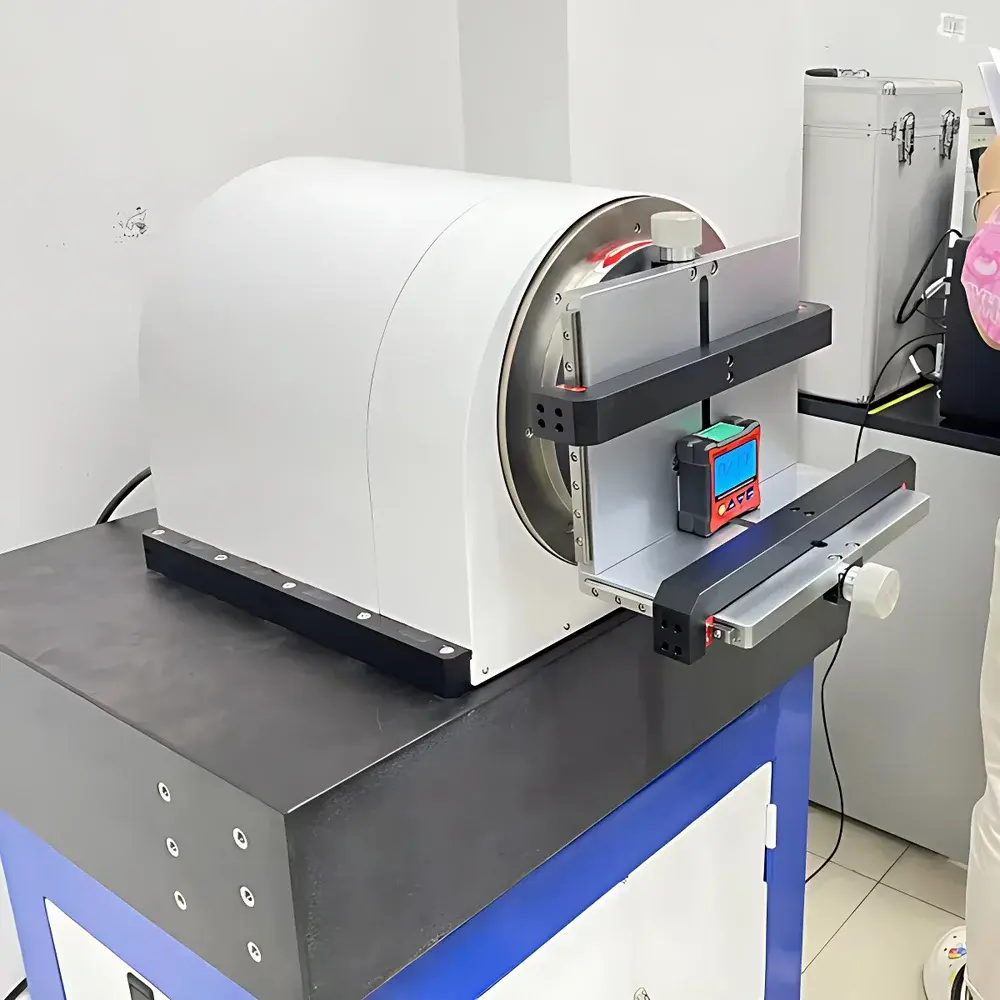
The Biaozhuo JJ-2A Fully Automated Inclinometer Calibration System is a primary-angle metrology standard designed and validated in strict accordance with the Chinese National Calibration Specification JJF 1915–2021, “Calibration of Inclinometers.” It functions as a high-stability angular reference platform for traceable calibration of inclinometers, tilt sensors, digital clinometers, slope indicators, and other angular displacement transducers. The system operates on the principle of absolute angular positioning using a high-resolution optical encoder—specifically, a precision imported circular grating—as its primary angle measurement reference. This architecture ensures long-term repeatability and minimal hysteresis during bidirectional rotation. Unlike manual or semi-automated calibrators, the JJ-2A integrates closed-loop motion control, real-time angular feedback, and synchronized data acquisition to deliver fully automated, script-driven calibration sequences—including multi-point error mapping, reversal error analysis, and repeatability assessment per ISO 10012 and VDI/VDE 2617 Part 11.
Key Features
- Precision optical angular reference: Imported high-stability circular grating with <1 arcsecond resolution, providing traceable angular subdivision without interpolation artifacts.
- Dual-sphere rolling main shaft: Engineered for low-torque, zero-backlash rotation across the full 0°–360° range; optimized for both static positioning and dynamic step-and-hold maneuvers.
- Granite base structure: 350 kg monolithic granite base ensures thermal inertia, vibration damping, and dimensional stability under laboratory environmental conditions (20 °C ±3 °C, 40–60 % RH).
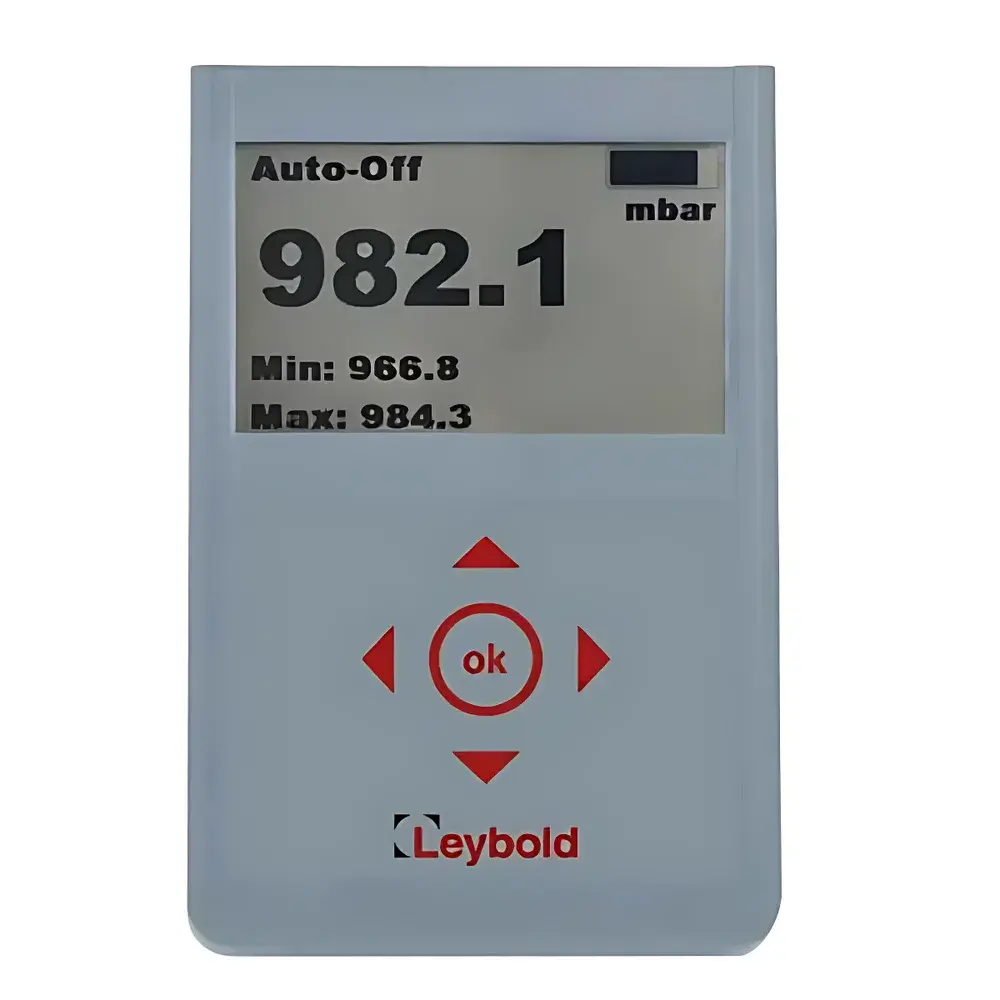
- Digital angular display interface: Real-time output of angle values in DMS (degrees-minutes-seconds) format, synchronized with host PC software for audit-ready record generation.
- Automated calibration sequencing: Supports programmable point lists, dwell times, direction reversal, and auto-compensation for cosine error and axis misalignment per ISO/IEC 17025 requirements.
Sample Compatibility & Compliance
The JJ-2A accommodates a broad class of angular sensing devices—including electrolytic, MEMS-based, servo-level, and pendulum-type inclinometers—with mounting interfaces configurable via standardized kinematic fixtures (e.g., M6 tapped holes, Ø50 mm reference flange). It complies with national metrological verification protocols outlined in JJF 1915–2021 and supports alignment procedures aligned with ISO 10360-2 (coordinate measuring machines) and ISO 230-2 (test for positioning accuracy). Its uncertainty budget is documented per GUM (JCGM 100:2008) and suitable for use in accredited calibration laboratories operating under CNAS-CL01 (equivalent to ISO/IEC 17025:2017). Environmental conditioning requirements are explicitly defined to minimize thermal drift contributions to angular uncertainty.
Software & Data Management
The system includes dedicated Windows-based calibration software supporting XML-based calibration report generation, customizable certificate templates, and embedded uncertainty calculation modules. All measurement events—including setpoint commands, actual encoder readings, environmental sensor logs (temperature/humidity), and operator annotations—are time-stamped and stored in encrypted binary archives compliant with GLP data integrity principles. Audit trails are enabled by default, recording user login, parameter changes, and report exports in accordance with FDA 21 CFR Part 11 requirements for electronic records and signatures. Raw data export is available in CSV and ASCII formats for third-party statistical analysis (e.g., MSA, Gage R&R).
Applications
- Primary calibration of inclinometers used in structural health monitoring (SHM), geotechnical instrumentation, and civil engineering surveying equipment.
- Verification and adjustment of angular sensors integrated into aerospace inertial platforms, robotic joint encoders, and autonomous vehicle pitch/roll estimation systems.
- Periodic verification of angle-measuring instruments in metrology labs, national institutes, and third-party calibration service providers.
- Research-grade angular characterization for development of novel tilt-sensing technologies, including fiber-optic inclinometers and quantum-enhanced gravimetric tiltmeters.
- Support for inter-laboratory comparison exercises organized under APMP or BIPM frameworks for angle metrology.
FAQ
What calibration standards does the JJ-2A comply with?
It is designed and verified per JJF 1915–2021 and supports implementation of ISO/IEC 17025-compliant calibration procedures.
Is the system suitable for ISO/IEC 17025-accredited laboratories?
Yes—its documented uncertainty budget, environmental controls, traceable encoder reference, and audit-trail-capable software meet key technical requirements for accreditation.
Can the JJ-2A perform reversal error and hysteresis testing?
Yes—the bidirectional positioning capability and encoder-based feedback enable systematic reversal error mapping per VDI/VDE 2617 Part 11.
What environmental conditions must be maintained during operation?
Laboratory temperature must be stabilized at 20 °C ±3 °C with relative humidity between 40 % and 60 % RH to ensure specified angular accuracy.
Does the system support custom calibration point sequences?
Yes—users can define arbitrary angular point lists, dwell durations, and directional sequences via the configuration module.